hofferwood
Well-known member
Hey gang,
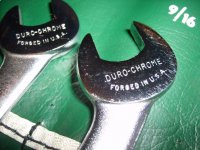
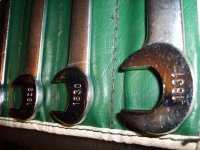
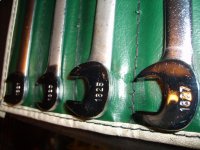
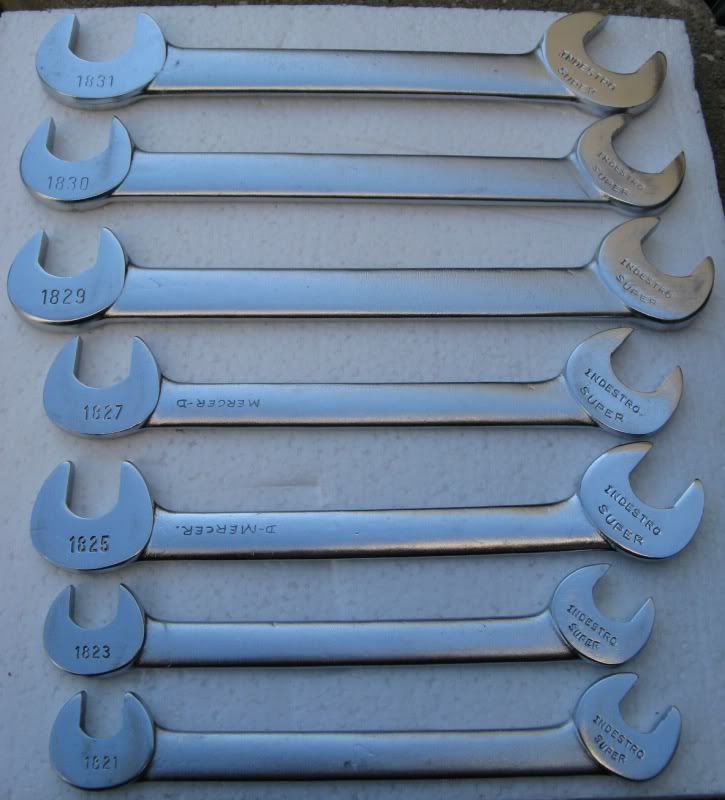
I've had these wrenches for 30 some years. and it's always bothered me,does that 3/4 belong?
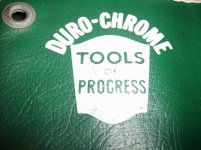
Done a tiny bit of research, Alloy Artifacts http://home.comcast.net/~alloy-artifacts/duro-indestro.html, this is just a portion.
A casual observer might at first think that Duro and Indestro were unrelated businesses, but on closer examination Duro and Indestro look and behave more like a single company, with a dual organization set up to promote the branding of their products.
For example, both companies listed their headquarters at the same address, 2649 N. Kildare Ave. in Chicago, and both companies' catalogs show the same two illustrations of their factory buildings. Numerous items in the Duro catalogs were actually products branded Indestro, and Indestro products often listed patents granted to Duro Metal Products. The Indestro catalogs show most of the same products as the Duro catalogs, but with different model numbers assigned to the Indestro pieces.
Obstruction Wrenches
By the early to mid 1930s Duro and Indestro were offering obstruction wrenches with an interesting design, using equal openings with one 90 degree offset and one 65 degree offset. This wrench design is believed to have originated with Herbrand, as by 1931 Herbrand was supplying obstruction wrenches of this style to Western Auto Supply. Duro's obstruction wrenches are almost identical to the Herbrand counterparts -- even down to the model number -- suggesting that Duro was trying to win the Western Auto business. (Duro and Indestro were fiercely competitive in the high-volume low-cost market.)
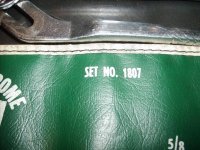
Our earliest catalog reference for these wrenches is the 1935 Duro Metal Products catalog. It lists obstruction wrenches in seven models, 1821 (3/8), 1823 (7/16), 1825 (1/2), 1827 (9/16), 1829 (5/8), 1830 (11/16), and 1831 (3/4). A set of the seven wrenches in a leatherette roll was available as the No. 18007 set with a $7.30 list price.
Mine is newer, missing a 0 in the set#, But it seems it may be orig. to it,
What do yall think, hell they coulda run out of 3/4" and went across the plant to fill the order.
Chuck
I've had these wrenches for 30 some years. and it's always bothered me,does that 3/4 belong?
Done a tiny bit of research, Alloy Artifacts http://home.comcast.net/~alloy-artifacts/duro-indestro.html, this is just a portion.
A casual observer might at first think that Duro and Indestro were unrelated businesses, but on closer examination Duro and Indestro look and behave more like a single company, with a dual organization set up to promote the branding of their products.
For example, both companies listed their headquarters at the same address, 2649 N. Kildare Ave. in Chicago, and both companies' catalogs show the same two illustrations of their factory buildings. Numerous items in the Duro catalogs were actually products branded Indestro, and Indestro products often listed patents granted to Duro Metal Products. The Indestro catalogs show most of the same products as the Duro catalogs, but with different model numbers assigned to the Indestro pieces.
Obstruction Wrenches
By the early to mid 1930s Duro and Indestro were offering obstruction wrenches with an interesting design, using equal openings with one 90 degree offset and one 65 degree offset. This wrench design is believed to have originated with Herbrand, as by 1931 Herbrand was supplying obstruction wrenches of this style to Western Auto Supply. Duro's obstruction wrenches are almost identical to the Herbrand counterparts -- even down to the model number -- suggesting that Duro was trying to win the Western Auto business. (Duro and Indestro were fiercely competitive in the high-volume low-cost market.)
Our earliest catalog reference for these wrenches is the 1935 Duro Metal Products catalog. It lists obstruction wrenches in seven models, 1821 (3/8), 1823 (7/16), 1825 (1/2), 1827 (9/16), 1829 (5/8), 1830 (11/16), and 1831 (3/4). A set of the seven wrenches in a leatherette roll was available as the No. 18007 set with a $7.30 list price.
Mine is newer, missing a 0 in the set#, But it seems it may be orig. to it,
What do yall think, hell they coulda run out of 3/4" and went across the plant to fill the order.
Chuck