To avoid these ads, REGISTER NOW!

2 x 120v from genny into sub-panel?

skeer

Well-known member
Joined
Sep 14, 2021
Messages
1,049
Location
Standish, MI Area
So.. I might get ridiculed for this question but I'm going to ask it anyway because I just don't know the answer.

What happens if you feed two 120v receptacles from a generator that are on breakers that are plugged into opposing busses? I'm thinking in my head, that I can feed two circuits off the genny into the entire panel. Obviously in the event it's needed I'd kill the mains, as well as every breaker other than the couple that I intend to feed: namely the fridge and deep freeze. All of which is 120v, not feeding anything that requires 220v.

So, would this work and work safetly or is it a stupid idea?
 
To avoid these ads, REGISTER NOW!

PCustoms

Well-known member
Joined
Jul 23, 2011
Messages
23,684
Location
VT
What happens if you feed two 120v receptacles from a generator that are on breakers that are plugged into opposing busses? I'm thinking in my head, that I can feed two circuits off the genny into the entire panel. Obviously in the event it's needed I'd kill the mains, as well as every breaker other than the couple that I intend to feed: namely the fridge and deep freeze. All of which is 120v, not feeding anything that requires 220v.

So, would this work and work safetly or is it a stupid idea?
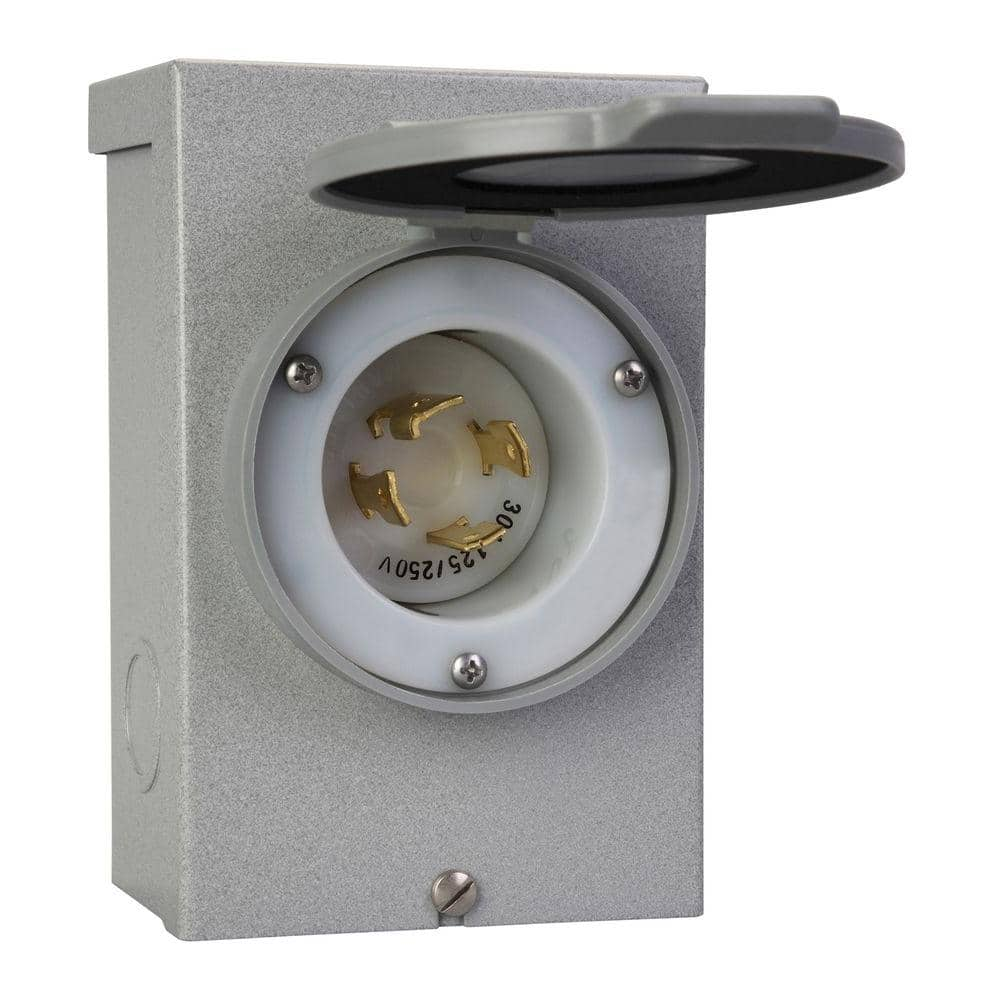
It's stupid

But let me clarify.

You want to backfeed from the generator to outlet #1 in the house, then run a separate feed to outlet #2 in the house?

Now you have 2 suicide cords.

You also have too coordinate opposite phases/busses (as you sort of pointed out).

You also won't have an interlock to prevent backfeeding the grid.

Add an interlock and a proper inlet, less the $100 and a lot safer.
 
OP
S

skeer

Well-known member
Joined
Sep 14, 2021
Messages
1,049
Location
Standish, MI Area
It's stupid

But let me clarify.

You want to backfeed from the generator to outlet #1 in the house, then run a separate feed to outlet #2 in the house?

Now you have 2 suicide cords.

You also have too coordinate opposite phases/busses (as you sort of pointed out).

You also won't have an interlock to prevent backfeeding the grid.

Add an interlock and a proper inlet, less the $100 and a lot safer.
Thanks but.. well, yes and no. I want to backfeed the generator to outlet #1. Outlet#1's breaker would backfeed both the sub and main panels. But only with specific breakers energized.

I know it's nowhere near ideal. The thought is we've got a huge winter storm bearing down to arrive tomorrow. I'm looking for a way to power the fridge and freezer and a phone charger or two without draping extension cords through the house is the base idea.

But I think i get what you are saying.. it's a dumb idea.

Can you help me understand the why on the buss part? I realize that 220 needs the opposite phases, but 120 does not. If Im backfeeding two breakers that are on opposite busses with the same phase, thats bad I'm assuming. If so would it work if you fed two breakers on teh same buss? Sorry if these are super elementary questions, phase and how it interacts with things is above me.
 

The Cobbler

Super Moderator
Staff member
Joined
Oct 24, 2013
Messages
26,151
Location
Niagara Region, Ontario, Canada
that is a 120 volt generator, maximum 25 amp . it might run both fridge & freezer but that would be about it.
you cannot feed the panel as you had hoped , and in all honesty, backfeeding is not a good idea . mainly safety of the power line workers & your family .
just get some extension cords ... lets hope the storm doesn't do too much damage and we won't need generators
 
OP
S

skeer

Well-known member
Joined
Sep 14, 2021
Messages
1,049
Location
Standish, MI Area
Correct, We've powered a couple smaller things over the fridge and freezer. I know what I've got I was just looking for a better way to handle the house connection since I've still got all the tools and parts out from putting in the sub panel is all. I always trip the mains when we lose power here just out of habit. Consumers here likes to play with your emotions by flickering power for a bit before it's stable. My servers and networking equipment are protected but the tv's and other things not so much. It makes me feel better.
 

mike93lx

ALLIANCE MEMBER
Joined
Dec 9, 2013
Messages
38,398
Location
Richmond, VA
You can feed both buss bars, but they will be 120v only so you will have to turn off anything 240v and you will be limited on how much you can run.

I would set it up with an interlock and inlet and then in the cord, just tie the two hots together. You'll have to turn off all 240v breakers before connecting the generator
 

ripperd

Well-known member
Joined
Jul 2, 2014
Messages
2,057
Location
Twin Cities, MN
You can feed both buss bars, but they will be 120v only so you will have to turn off anything 240v and you will be limited on how much you can run.

I would set it up with an interlock and inlet and then in the cord, just tie the two hots together. You'll have to turn off all 240v breakers before connecting the generator

You don't even need to tie the two hots together if you do it right.

Set everything up as true 240, including inlet. Then just use a tt30 to l14-30r cable between the generator and inlet and the cable will combine the two hots internally. This way, if someone swings by with our you upgrade to a 240v generator, you can plug it in with the right cable and 240 will just work.
 

mike93lx

ALLIANCE MEMBER
Joined
Dec 9, 2013
Messages
38,398
Location
Richmond, VA
You don't even need to tie the two hots together if you do it right.

Set everything up as true 240, including inlet. Then just use a tt30 to l14-30r cable between the generator and inlet and the cable will combine the two hots internally. This way, if someone swings by with our you upgrade to a 240v generator, you can plug it in with the right cable and 240 will just work.
My post was about doing it in tbe cable. Your suggestion is essentially the same
 
OP
S

skeer

Well-known member
Joined
Sep 14, 2021
Messages
1,049
Location
Standish, MI Area
Thanks fellas, much appreciated. Last thing.. just to be sure can someone define 'inlet' in this scenario? I'm assuming the physical panel entry but want to be sure.
And yeah I've got a real interlock ordered :)

I'm a dolt, found it. I knew what these were, just didn't realize they were called inlets, lol.
 

wyliesdiesels

Well-known member
Joined
Aug 14, 2012
Messages
20,219
Location
Modesto, CA
So.. I might get ridiculed for this question but I'm going to ask it anyway because I just don't know the answer.

What happens if you feed two 120v receptacles from a generator that are on breakers that are plugged into opposing busses? I'm thinking in my head, that I can feed two circuits off the genny into the entire panel. Obviously in the event it's needed I'd kill the mains, as well as every breaker other than the couple that I intend to feed: namely the fridge and deep freeze. All of which is 120v, not feeding anything that requires 220v.

So, would this work and work safetly or is it a stupid idea?
A lot to unpack here

Are the receptacles on the same breaker on the generator? If so, then youre limited to 15 or 20a.

If theyre on separate breakers, you have more amapcity but may not have 240v.... doesnt sound like you need 240v

So nothing will really happen to the gen but.... how are you intending to feed the panel? Through receptacles in the house? Not a good idea as now you have a suicide cord. And no safe way to isolate the gen power from the grid....

Get yourself an inlet and an interlock... if the generator is only 120v, you could use a 4-wire cord and plug on the inlet side (along with 4-wire inlet and jumper the 2 ungrounded legs...

What brand and model generator do you have?
 
To avoid these ads, REGISTER NOW!

wyliesdiesels

Well-known member
Joined
Aug 14, 2012
Messages
20,219
Location
Modesto, CA
No idea and from what I can tell it's not a simple thing to determine phase with a standard multimeter.. unless Im wrong.
Actually you can. You would be checking for 240v potential between 2 receptacles on the generator. If you meter between the hot terminals on 2 receptacles and get 0v, then they are on the same leg on the genny. If you get 240v, then obviously theyre on separate legs.... but your genny may not even be 240v capble
 
  • Like
Reactions: Max

wyliesdiesels

Well-known member
Joined
Aug 14, 2012
Messages
20,219
Location
Modesto, CA
Thanks but.. well, yes and no. I want to backfeed the generator to outlet #1. Outlet#1's breaker would backfeed both the sub and main panels. But only with specific breakers energized.

I know it's nowhere near ideal. The thought is we've got a huge winter storm bearing down to arrive tomorrow. I'm looking for a way to power the fridge and freezer and a phone charger or two without draping extension cords through the house is the base idea.

But I think i get what you are saying.. it's a dumb idea.

Can you help me understand the why on the buss part? I realize that 220 needs the opposite phases, but 120 does not. If Im backfeeding two breakers that are on opposite busses with the same phase, thats bad I'm assuming. If so would it work if you fed two breakers on teh same buss? Sorry if these are super elementary questions, phase and how it interacts with things is above me.
It’s a horrible idea because A) you’re using suicide cords and B) you have no way to isolate the generator power from the grid. Don’t do either
 

wyliesdiesels

Well-known member
Joined
Aug 14, 2012
Messages
20,219
Location
Modesto, CA
You don't even need to tie the two hots together if you do it right.

Set everything up as true 240, including inlet. Then just use a tt30 to l14-30r cable between the generator and inlet and the cable will combine the two hots internally. This way, if someone swings by with our you upgrade to a 240v generator, you can plug it in with the right cable and 240 will just work.
Actually you would need to tie the two hot terminals on the 14-30 to the single hot terminal on the TT-30. How else would you energize both hot terminals on the 14–30?
 

dave*99

Well-known member
Joined
May 5, 2009
Messages
4,337
Location
Coastal NJ
You can feed both buss bars, but they will be 120v only so you will have to turn off anything 240v and you will be limited on how much you can run.

I would set it up with an interlock and inlet and then in the cord, just tie the two hots together. You'll have to turn off all 240v breakers before connecting the generator
Why do you have to turn them off? There would be zero volts across the 2 legs.
 

mike93lx

ALLIANCE MEMBER
Joined
Dec 9, 2013
Messages
38,398
Location
Richmond, VA
Why do you have to turn them off? There would be zero volts across the 2 legs.
Good point.

Most of the 240v stuff in my house is pretty expensive, so I guess it's out of an abundance of caution .

I shut that stuff off anyway during power issues just to protect from voltage issues as service is restored. No need to lose an a/c compressor when I am not running it anyway
 
OP
S

skeer

Well-known member
Joined
Sep 14, 2021
Messages
1,049
Location
Standish, MI Area
So here's a related follow if I may.. How does the amperage output for 220 equate to your 120v load? Umm.. **** I don;t think I worded that very well. Like I'm wondering if the generator is capable of say 30amps on the 120 side, and 30amps on the 220 side. Am I correct in understanding that you'd actually have a (potentially) higher total available wattage available than just feeding 120 into your panel?
 

dave*99

Well-known member
Joined
May 5, 2009
Messages
4,337
Location
Coastal NJ
And keep in mind your generator is powered by an engine.... rated in horsepower. There are 746 watts in 1 horsepower. Generators are not 100% efficient. So it takes approximately 2 HP to make 1000W in a small generator.
 
OP
S

skeer

Well-known member
Joined
Sep 14, 2021
Messages
1,049
Location
Standish, MI Area
Roger that, I've been wanting to hook up an external voltage/current monitor anyway. The builtin one I don't trust anymore and it was showing the frequency as high as 71Hz a few times. Generators aren't the cleanest source of power (invertors might be better).
 

mike93lx

ALLIANCE MEMBER
Joined
Dec 9, 2013
Messages
38,398
Location
Richmond, VA
Roger that, I've been wanting to hook up an external voltage/current monitor anyway. The builtin one I don't trust anymore and it was showing the frequency as high as 71Hz a few times. Generators aren't the cleanest source of power (invertors might be better).
If you are getting 71hz, you likely have a governor issue causing the rpms to be too high. They have to be right at 3600rpm to make 60hz. Inverters are much better as that becomes a non-issue
 
OP
S

skeer

Well-known member
Joined
Sep 14, 2021
Messages
1,049
Location
Standish, MI Area
If you are getting 71hz, you likely have a governor issue causing the rpms to be too high. They have to be right at 3600rpm to make 60hz. Inverters are much better as that becomes a non-issue
Yup, I learned that while this thread was building ;)
I've got an RPM meter ordered as well. For a short while later last year I had an unknown carb issue. One of the jets was partially clogged, it's been cleaned and tested now but yeah for a while there the freq was erratic.
 

Mallen

Well-known member
Joined
Aug 11, 2021
Messages
649
So.. I might get ridiculed for this question but I'm going to ask it anyway because I just don't know the answer.

What happens if you feed two 120v receptacles from a generator that are on breakers that are plugged into opposing busses? I'm thinking in my head, that I can feed two circuits off the genny into the entire panel. Obviously in the event it's needed I'd kill the mains, as well as every breaker other than the couple that I intend to feed: namely the fridge and deep freeze. All of which is 120v, not feeding anything that requires 220v.

So, would this work and work safetly or is it a stupid idea?
You at the very least need to have it setup so that the generator and the mains are switched exclusively. You do t want to have the ability to switch both on at the same time. To try to do it manually and make sure that they are not by simply remembering to switch one off then the other on is asking for a disaster. That's the difference between rigging something up in an emergency, where it's only going to be so e once, or making a permenant installation. I get that you do what you gotta do sometimes, but if your putting in something permenant , even if you decide to ignore electrical codes (inadvisable, but I get it. They don't exactly cover everything) , at least do it in the "most right" way you can.

I think you run into a similar problem if you power both sides. You have to go an manually disconnect the 220v circuits. That's a bad idea. Your better off powering one 120v leg and leaving the other dead. Just accept that it's an emergency solution and it's not perfect. Chose the one that powers your critical items. If you absolutely need something in a room that all the circuits are dead in, run an extension cord.

Personally, I would not even bother. I would just run an couple extention cords to the freezer and refrigerator, and maybe power a TV the same way. Then just use flashlights to go to the bathroom and call it good. If your going to do a permanent installation, you might as well just buy a generator that can do what you want and I stall a proper transfer switch.
 

BreeStephany

ALLIANCE MEMBER
Joined
May 19, 2012
Messages
868
Location
Oregon
The biggest issue with using 2x 120V generators to provide power to a 120/240V panel is that the generators would not provide power perfectly out of phase of one another, so this would not be able to provide proper, clean 240V to any 240V connected loads in the panel. If ALL the loads in the panel being provided by the panel were 120V, it would work, but if you need to provide power for 240V pump motors, heaters, or especially any 240V electronic equipment, equipment damage would most like arise from providing power in this manner.

If this is going to be used in a backup power situation, its also important to keep in mind that there needs to be transfer switch or breaker-interlock transfer lock between the main breaker feeding the panel and the breakers from your generators to ensure that the generator circuit and primary power feeding the panel cannot energize the panel at the same time, as this would allow for the service to be backfed from the generator, which would energize the incoming utility lines when incoming power is turned off by utility company, creating a dangerous energized environment for utility workers.

Breaker interlocks / transfer switches are the only way to ensure that this never happens, which is why they are required by code for backup power installations.

It is also important to remember that if you have any 240V loads on the panel and don't have both generators connected, the connection point (often times a male twistlock) would be energized at the point of connection of the disconnected generator, which would create an unsafe environment of having exposed conductors.

Your best bet would be to use a properly sized 120/240V 4-wire (Line 1, Line 2, neutral, ground) generator with a proper transfer switch or feed breaker interlock to ensure that the electrical system is safe, not just for yourself, but for everyone that may use it, now and in the future, when you may not be the one utilizing the system or working on the system.

Just my two cents.
 

dcg9381

Well-known member
Joined
Jun 20, 2018
Messages
11,989
Location
Austin, TX
The biggest issue with using 2x 120V generators to provide power to a 120/240V panel is that the generators would not provide power perfectly out of phase of one another, so this would not be able to provide proper, clean 240V to any 240V connected loads in the panel. If ALL the loads in the panel being provided by the panel were 120V, it would work, but if you need to provide power for 240V pump motors, heaters, or especially any 240V electronic equipment, equipment damage would most like arise from providing power in this manner.
I believe the OP is talking about feeding from a single generator using two separately breakered outlets on that generator. As such, they would be in phase.

I agree with others, as long as the 240V breakers are "off" - this should work in theory.

And yea, no back feeding anything without an interlock - as you have two input breakers here, sounds like one will not be interlocked.. That's be a big no-no.

Where I'm a little confused - RVs are 120V deals. But RV "50A connections" are 240V. So are RV panels which have 2 ACs really just pulling from both hot legs and using the neutral, but never utilize the hot to hot connection? How does that work when you use a 30A (120V) to 50A RV adapter?
 
To avoid these ads, REGISTER NOW!
Top Bottom