To avoid these ads, REGISTER NOW!

Are all flat panel LED lights equal?

lardy1

Well-known member
Joined
Mar 17, 2019
Messages
3,419
Location
Michigan
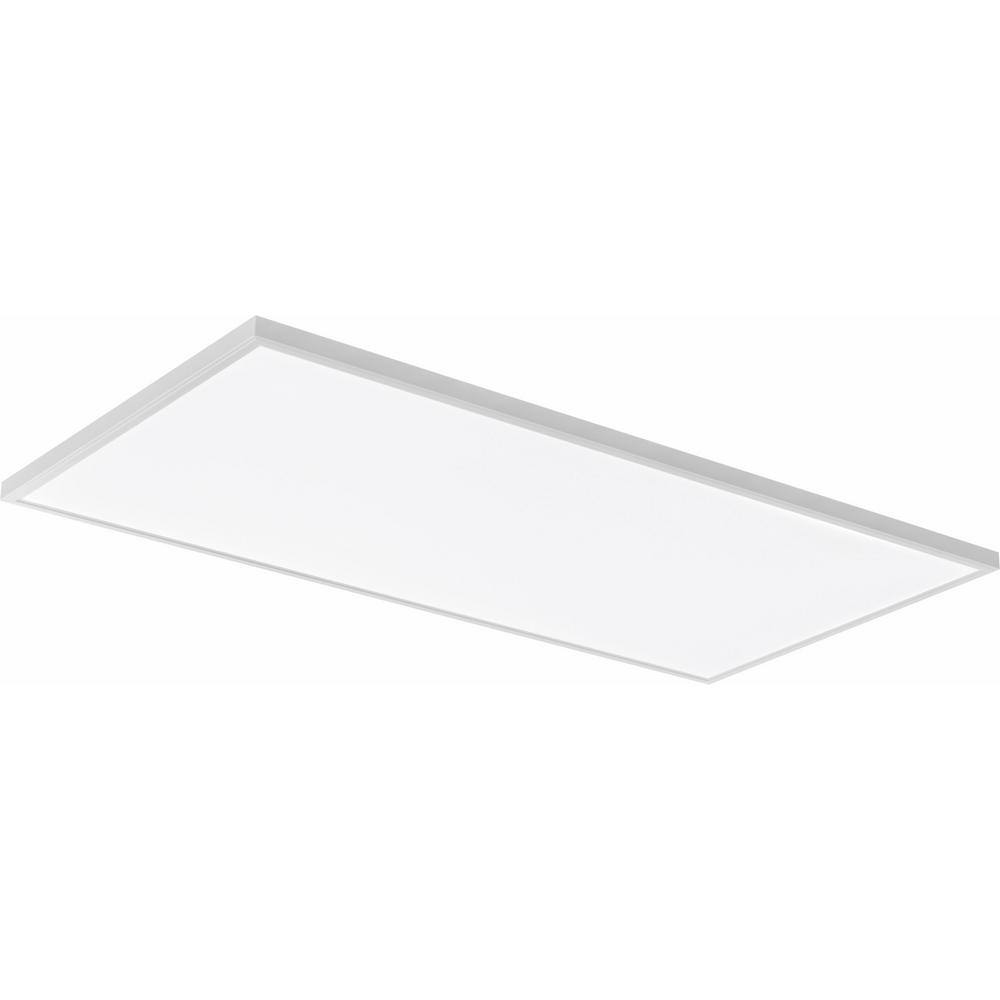
Looking to install a handful of 2x2 led lights into a grid ceiling in my basement. Are there brands to avoid? Should I avoid big box brands or jump on the value? Does dimmable bring problems to the table?

I'm doing all the work myself and would appreciate input from those more knowledgeable regarding products and features. I'm trying to make semi-informed decisions and I apologize if this is a redundant topic.

TIA.
 
To avoid these ads, REGISTER NOW!

mikedodge

Well-known member
Joined
Jun 27, 2017
Messages
2,861
Usually I would say stick with name brand but for home use it probably doesn't matter. A lot of them are usually dimmable and color selectable.
 

SlappyWhite

Well-known member
Joined
Oct 3, 2012
Messages
1,819
Location
Upper Canada
I assume these are the ones with built in "bulb" ie not replaceable/serviceable?

They should have a long life BUT something to consider if they are not serviceable is what will you do if one fails in a few years and the same model is no longer available?

Personally I prefer to mostly use fixtures that are serviceable (use bulbs that can be replaced)--getting harder to do in some cases. I do use the non-serviceable ones for areas I want something cheap and I will not loose any sleep about binning it and slapping something different up. Having a room with a bunch or matching ones.....
 
Last edited:

rust in the eye

Well-known member
Joined
Oct 2, 2017
Messages
2,820
Location
Chicagoland
Here are my thoughts.
Assuming the expensive ones are any better I'd only use them if difficult access.
My experience with box store LED lighting is they fail with amazing regularity but since they cost only a fraction the price of stuff from your local lighting house are an equitable trade unless you need to hire a pro to replace or climb to some inaccessible area.
BUT finding a replacement to match existing box store fixtures is often problematic as well. I have ten LED can lights in my kitchen, I lose about one a year and almost never do I find the exact same unit to replace the failed one with. Seems the next "offshore" vendor to bid a penny lower will get the big box store's next order and the new product will be somewhat different.
 

dave*99

Well-known member
Joined
May 5, 2009
Messages
4,289
Location
Coastal NJ
I used Lithonia panels with 0-10v dimming. The dimming works perfectly.

These are 6000 lumens. Many are only 4000. I needed 6000 for my layout with 11 foot ceilings

 
Last edited:

cybrdyke

Well-known member
Joined
Sep 9, 2014
Messages
3,449
Location
USA
Looking to install a handful of 2x2 led lights into a grid ceiling in my basement. Are there brands to avoid? Should I avoid big box brands or jump on the value? Does dimmable bring problems to the table?
Yes, there are differences between big box flat panels and pro-grade flat panels, but only real lighting nerd would be able to tell. And for the limited hours that you'll have the basement lights "on", you shouldn't run into a problem. The good news is that you can get a decent brand name at a big box store. It's the internet that you have to watch out for. That's where the real garbage is sold. Acuity, Metalux, etc., are good brands at competitive prices at the big box. These days, most of them will have a brightness selector and a color selector, so you can choose the settings that you like the most. As for dimming, it's done with 0-10VDC. Understand that normal dimmers wont work with them. You need one specifically for 0-10VDC.
good luck,
CD
 

Racer_X

Well-known member
Joined
Jun 25, 2007
Messages
367
Location
MI

sparky 1971

Well-known member
Joined
Oct 9, 2018
Messages
8,029
Location
Central Iowa
I've been using Lithonia for a few years just because that's what the local supply house sells. They are fine, nothing special, but nothing inherently wrong with them either. There has been only one place where the dimmer function was used, it was fine too.
 

the_emi_guy

Member
Joined
Dec 15, 2025
Messages
6
I used Lithonia panels with 0-10v dimming. The dimming works perfectly.

These are 6000 lumens. Many are only 4000. I needed 6000 for my layout with 11 foot ceilings

How did you wire in the AC? The video shows wire nutting the internal 16AWG with a round white cable with similar size wire. Is this low voltage coming from another box?
 

dave*99

Well-known member
Joined
May 5, 2009
Messages
4,289
Location
Coastal NJ
I ran the low voltage wire separately from the power. The LV wire enters the junction box housing the dimmer and then daisy chains its way from light to light. Similar to the power wires.

As I understood the applicable code at the time, the LV cable specifically associated with the fixtures is allowed inside the boxes carrying power. Normally LV and power must be separated but this is an allowed case.

There are some separation requirements and they are detailed in this site.


There is an NM-B duo cable available that puts the power and LV cables in one jacket.
 
To avoid these ads, REGISTER NOW!

the_emi_guy

Member
Joined
Dec 15, 2025
Messages
6
What I meant was how is 120V getting into the light? The video seems to show it routed from external small round cable.
 

dave*99

Well-known member
Joined
May 5, 2009
Messages
4,289
Location
Coastal NJ
Power can come in via NM-B through a knockout in the fixture.
I don’t know the specific video image you are referring to.
 

the_emi_guy

Member
Joined
Dec 15, 2025
Messages
6
Power can come in via NM-B through a knockout in the fixture.
I don’t know the specific video image you are referring to.
This link (I though it was from earlier in the thread, apparently not): It looks like they are bringing AC in on a 18AWG from somewhere outside. I am attempting to install this light and am faced with bringing 12AWG into that small box though clamp in knockout, and wire nutting it to that 18AWG and tucking it inside.
 
Last edited:

dave*99

Well-known member
Joined
May 5, 2009
Messages
4,289
Location
Coastal NJ
This link (I though it was from earlier in the thread, apparently not): It looks like they are bringing AC in on a 18AWG from somewhere outside. I am attempting to install this light and am faced with bringing 12AWG into that small box though clamp in knockout, and wire nutting it to that 18AWG and tucking it inside.
I see what you mean. That does not look like building wire. It looks like flexible cordage.
 

the_emi_guy

Member
Joined
Dec 15, 2025
Messages
6
I'm trying to decide between running 12AWG Romex to the LED panel box (and having to support the cable with staples), or running a flexible lighting whip with 16AWG THHN (another $30 per lamp) from the electrical box near the lamp, but no strict requirements for supporting the whip other than not having it dangle onto tiles. Just wondering how others typically do it.
It looks like the 12AWG will fit into the LED panel box with abrupt right angle on the inside, so looks like both options are doable.
 

pbon

Well-known member
Joined
May 14, 2017
Messages
3,498
In a commercial setting you will find armored cable from junction boxes. I have done a bunch of these and it is not hard. The armored cable is typically zip tied or otherwise secured off the dropped ceiling within a few feet of the fixture.

I would not bother with 12 gauge for LED lighting unless it is required. Your idea of running it to a junction box and then smaller cable from there could also work but I do not mix cable gauges. 12 gauge is not as small or flexible for getting into the box on the lights. At my home garage I used 14 gauge romex not armored cable and ran separate 600V rated 16 gauge for the dimmers and brought that cable right into the switch box along with the 14 gauge romex, using paddle switches with sliding dimmers.

I am just a DIYer and not an electrician so pay more attention to what the pros say.
 

the_emi_guy

Member
Joined
Dec 15, 2025
Messages
6
In a commercial setting you will find armored cable from junction boxes. I have done a bunch of these and it is not hard. The armored cable is typically zip tied or otherwise secured off the dropped ceiling within a few feet of the fixture.

I would not bother with 12 gauge for LED lighting unless it is required. Your idea of running it to a junction box and then smaller cable from there could also work but I do not mix cable gauges. 12 gauge is not as small or flexible for getting into the box on the lights. At my home garage I used 14 gauge romex not armored cable and ran separate 600V rated 16 gauge for the dimmers and brought that cable right into the switch box along with the 14 gauge romex, using paddle switches with sliding dimmers.

I am just a DIYer and not an electrician so pay more attention to what the pros say.
I have to use 12 gauge romex because breaker is 20A. Downsizing romex is not allowed, but smaller gauge lamp/fixture whips apparently are ok, just something else to purchase.
 

pbon

Well-known member
Joined
May 14, 2017
Messages
3,498
So 12 gauge to the junction box. From there can you link lights on the circuit with 14 gauge? 14 from box to light to next light to next light, etc., or do all your 14 gauges have to be home runs from the junction box to each light?
 

the_emi_guy

Member
Joined
Dec 15, 2025
Messages
6
My understanding is that you can't put 14 gauge romex on any part of a line served by 20A breaker. The idea being 14AWG needs to be protected with 15A breaker since the expectation is that it can be carrying 15A continuously. Lamp whips, on the other hand, are premitted to be smaller, like 16AWG since they only carry the lamp load. That's why I am wondering if folks are typically paying the extra $$ for lamp whips or just squeezing 12AWG (or 14AWG if on a 15A breaker) into LED panel's small box.
 
Last edited:
To avoid these ads, REGISTER NOW!
Top Bottom