To avoid these ads, REGISTER NOW!

from 1 subpanel to next subpanel

PoorOwner

Well-known member
Joined
Feb 10, 2007
Messages
5,032
Location
CA
I am trying to learn, I found there is a way to add a subpanel 1 before subpanel 2 by tapping the feeder on the way to the second subpanel, by using load center that has feed through lugs?

But then the panels selection /w feed thru lugs is fairly limited, can you do it like the picture below and just use a regular load center, and use the original main lug as the feed thru lug? I understand a hold down / retainer kit is needed.

Of course next thing is the amps, if the feeder wire is 6AWG and protected by 50A breaker upstream before subpanel 1, then what should the backfeed breaker size be, also 50A?

Everything is in same dwelling so no extra ground rod is needed, correct?

I think the 2 approaches are different because the feed thru panel passes through the bus bar and doing "backfeed" passes all the load through that breaker first.

attachment.php
 

Attachments

  • Screen Shot 2018-03-04 at 8.29.03 PM.jpg
    Screen Shot 2018-03-04 at 8.29.03 PM.jpg
    19.6 KB · Views: 161
Last edited:
To avoid these ads, REGISTER NOW!

wyliesdiesels

Well-known member
Joined
Aug 14, 2012
Messages
20,279
Location
Modesto, CA
Youre making this harder than it has to be.

Take the existing feeder, terminate it in the new subpanel either on main breaker or main lug(as long as there will be 6 or less branch breakers), then via a new breaker in the new subpanel, connect the feeder going to the existing subpanel.

No grounding electrode needed for same structure.

One question: is the feeder 3-wire or 4-wire?
 
OP
P

PoorOwner

Well-known member
Joined
Feb 10, 2007
Messages
5,032
Location
CA
I didn’t think of that. Oops. So it can be 50A to panel 1 and 50A to feed panel 2 again?

It is a 4 wire feeder.

Can you explain the 6 branch breaker thing? Not counting the breaker feeding downstream right ?
 

wyliesdiesels

Well-known member
Joined
Aug 14, 2012
Messages
20,279
Location
Modesto, CA
I didn’t think of that. Oops. So it can be 50A to panel 1 and 50A to feed panel 2 again?

It is a 4 wire feeder.

Can you explain the 6 branch breaker thing? Not counting the breaker feeding downstream right?

Not sure what type of wire you ran.

#6 NM-b is 50a.

#6 THWN is actually rated for 55a. 55a is not a standard breaker/fuse size so you can go to next standard breaker size IF the load is 55a or less.

If there will be more than 6 breaker handles then the panel MUST have a main disconnect.

The breaker feeding subpanel 2 would count in that 6.

EDIT: My brain is so used to thinking about panels in detached structures. The 6 handle rule wont apply in your situation because the panels are all in the same dwelling as the main.
 
Last edited:

pattenp

Well-known member
Joined
Jun 4, 2008
Messages
10,175
Location
Virginia - USA
Not sure what type of wire you ran.

#6 NM-b is 50a.

#6 THWN is actually rated for 55a. 55a is not a standard breaker/fuse size so you can go to next standard breaker size IF the load is 55a or less.

If there will be more than 6 breaker handles then the panel MUST have a main disconnect.

The breaker feeding subpanel 2 would count in that 6.

The 6 breaker limit without a main disconnect only applies to panels in a structure that is separate from the structure where the main service panel is located.
 
To avoid these ads, REGISTER NOW!
OP
P

PoorOwner

Well-known member
Joined
Feb 10, 2007
Messages
5,032
Location
CA
Can I tap the neutral and ground wire off the feeder wires with 3 way splice connectors in a separate junction box then bring it into panel 1?

Instead of having a neutral connected to the neutral bus of panel 1 then bringing it downstream again?

Do you see a problem doing the neutral that way? Let's say in theory I shut off the feed to work on panel 2 while panel 1 is all energized (except the feed breaker to panel 2 turned off) will panel 1's neutral current flow to panel 2 creating a dangerous condition?

I looked at it tapping rules and it can get complicated, doing its with a breaker (sub to sub) is not considered tapping right? And it seems like tapping rules only applies to ungrounded conductors, not with ground and neutral.


By the way I am redoing the feeder ground wires between the panels THHN AWG 10. It seems it is allowed below 60 Amps. The neutral and 2 hots are THHN AWG 6 to all the places, in conduit
 
Last edited:

TRWham

Well-known member
Joined
Aug 11, 2017
Messages
2,021
Location
East Cobb County, Georgia
Addressing your neutral question in post 7: it would make no difference, as the neutral is not disconnected during service in either case. Keep in mind that a circuit breaker does not disconnect the neutral. I would do as posted above and feed panel 2 from a breaker in panel 1 with the neutral terminated on the neutral bar in panel 1. Don't forget to isolate the grounds and neutrals in both subs.
 

matt_i

Well-known member
Joined
Mar 14, 2008
Messages
10,828
Location
SE Michigan
Just from a connectivity standpoint you could use a 3-way polaris-type connector for the neutral, but its just extra cost. The neutral bar is right there anyway and presumably has plenty of free holes for "new work".

It would be wise in my opinion to label the "downstream feed" neutral so it doesn't get disconnected (remove screw) in the future inadvertently, if one were relocating some white-jacket conductors. As that would disable the downstream subpanel and could draw an arc depending on load. Usually there's a visual clue because of the large conductor size but always good to label. Memories get shorter every year ;)
 
OP
P

PoorOwner

Well-known member
Joined
Feb 10, 2007
Messages
5,032
Location
CA
Hello after further study NEC Tap rules
I realized if I tap the feeder awg 6 with awg 6 would not be a tap because a NEC Tap means smaller wire. So I am forgetting about feed though panels etc.

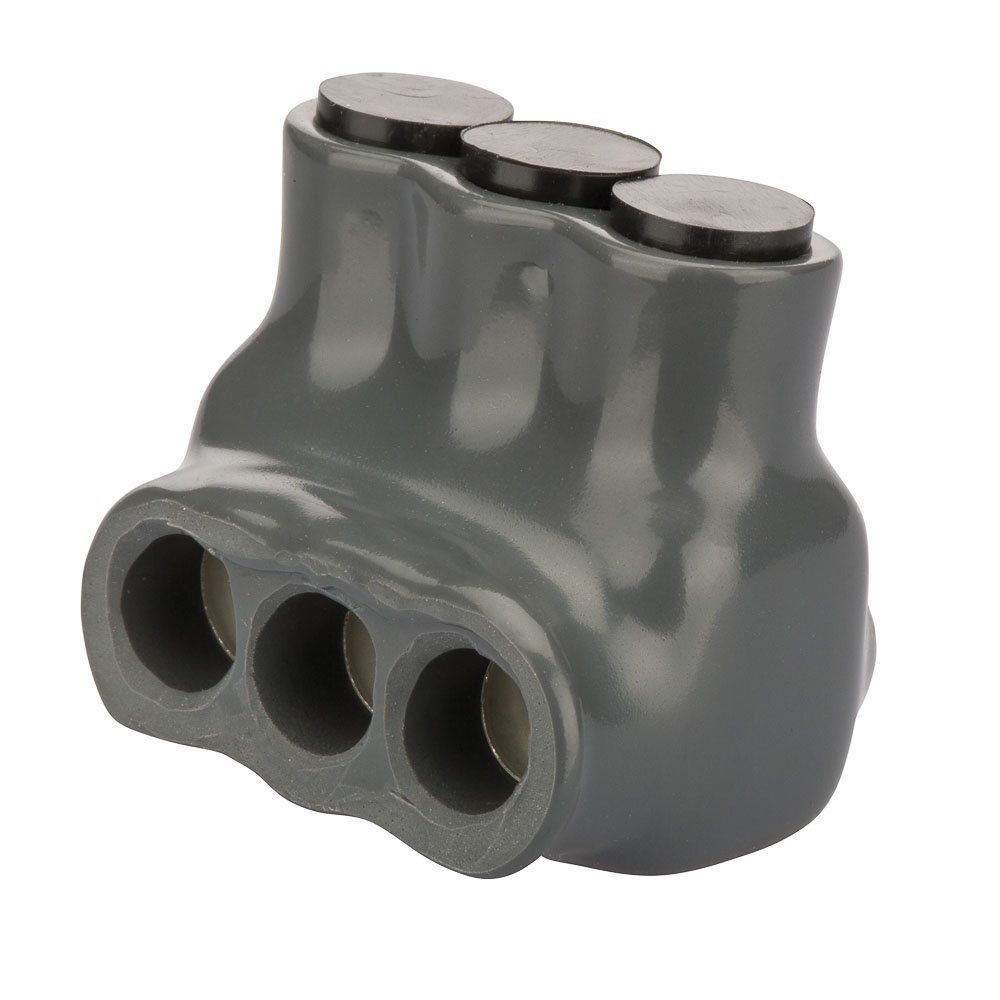
I now plan to splce the feeder including the ground and neutral with a 3 way Polaris connector instead of doing with a breaker from 1 to 2. The splice will happen in a big pvc box 12”x12”. With 3 conduit drilled. a new wire will be run from splice point to 2 so there is slack. The cut wire is reused to go the panel 1.

The main reason is there is some fill issues with conduit I plan to use going back and forth when wiring in series as was suggested.
As far as I know both ways are legal. Please let me know if otherwise.

I plan to replace the 50a with 60a at the upstream. I realize 55a is max working current but a 5A extra capacity could be useful. I do plan to make a label at each panel and what is the max rating of upstream OPCD.

I also plan to buy the new load center with 6 spaces so there isn’t ample free space to overload with breakers. I only use full size breakers at this point.
At the sub panel now There is a 20a 120v breaker for an receptacle and I am going to identify it’s phase and put another 120v at the opposite phase at the other panel. Since I already established the potential load with the one breaker I see no extra load (or penalty) adding another on the other leg overall. As I understand the upstream breaker trips when either leg exceeds the amperage. Chances of exceeding is equal for both phases with the extra outlet. I debated if I need a utility outlet on that side since I was debating if I need the neutral. That’s probably handy to have.

gray-boxes-brackets-r5133713-64_1000.jpg

61CACJNVpNL._SL1000_.jpg
 
Last edited:
To avoid these ads, REGISTER NOW!
Top Bottom