To avoid these ads, REGISTER NOW!

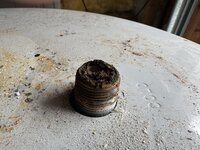
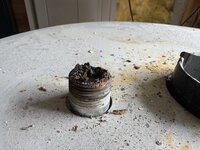
Galvanic corrosion sample

mrvm

Well-known member
Joined
Feb 12, 2014
Messages
3,857
Location
PA
15 years ago I recall removing the plastic inserts from the water heater input/output stubs. Been a bit concerned for several years about potential corrosion but never had signs of external issues. Fast forward to today for a water heater replacement at the same rental property due to a leak from the bottom of the tank. Just posting this to help other novices like myself that galvanic corrosion is a thing if there is any doubt. IMG_7341.jpegIMG_7340.jpeg
 
To avoid these ads, REGISTER NOW!

gahrajmahal

Well-known member
Joined
Dec 12, 2008
Messages
2,556
Location
Cincinnati, Ohio
Question, can water get into the bottom housing if it is sitting in an external water source. I ask because today the Mrs announced the water heater was leaking. It is a gas unit with blower exhaust. It sits right next to our furnace/central air unit. I turned off the cold water to the water heater. I soaked up the water on the floor with many towels, then I started to explore all the fittings to see if the leak was external. It was installed in 2017, so 8 yrs old. It has only one removable cover, low on the front where the gas line enters the burner. It is packed tight with insulation, so makeup air for the gas flame must be coming from the blower unit. I poked my finger down inside the bottom of the housing and there was about 3/8” of water inside there and the bottom insulation was soaked.

So I started the disassembly and found the exact replacement at Lowe’s . After returning with the new unit I was surprised that the floor was wet again. I had attached a hose and drained the tank. When I walked around the furnace to see the back side of the water heater I found the AC unit was actually draining out of the housing and not the drain line.

So do I have two problems, or just the central air clogged up causing the water heater bottom to allow that water inside?

I like your galvanic corrosion example and plan to get the isolator couplings for the new one.
 

HoosierBuddy

Well-known member
Joined
May 9, 2006
Messages
2,937
Location
Southern Indiana
Water heater tanks are typically coated with a ceramic coating to limit the amount of points that rust can occur inside the tank.

Where any defects exist in this coating and water can contact the steel, rust can occur. If it does occur it will quickly work it's way through the tank wall, causing a leak and effectively scrapping the water heater.

Water heater manufacturers don't want this to happen, at least during the warranty period, so they install a galvanic anode rod inside the water heater. That rod (typically magnesium) has a higher anodic potential than the steel tank. This means the corrosion that would normally occur in the tank occurs instead at the anode rod.

Basically the anode is using galvanic corrosion TO PROTECT your water heater tank by sacrificing itself to protect the tank. In fact, sometimes we call these anodes "sacrificial" anodes.

However, if your metallic plumbing is connected directly to the water heater (with no dielectric union or other insulator) your water heater anode is now trying to protect not only the inside of the tank but also the inside of all of any electrically continuous metallic house piping. Worst case this could be trying to protect the city's cast iron water main even. That's 1000 times more protection than the water heater's anode can accomplish....so failure of the tank will occur quite quickly.

Typically water heaters with a longer warranty include a LARGER anode rod that will take longer to corrode away completely.

About 2 years ago, I replaced the anode rod on my 5 year old power vent NG water heater. It was totally consumed. I'm going to replace it again in about a year and see if it lasted 3 years.

I'm pretty confident that if I can keep that anode rod in good shape, I can make that water heater tank last longer than I will.

A new anode rod was $29 from Amazon. I had to get one that was flexible because I don't have the headroom over the top of the water heater to install a solid one. If I did, I 'd get a solid one.

https://www.amazon.com/dp/B082VG7TVR?tag=atomicindus08-20
 
Last edited:

fitter30

Well-known member
Joined
Jun 23, 2019
Messages
2,999
Location
Peace Valley,mo
Original anode rod is a job to get it removed with the thread sealant they use. Buy a spare segmented rod inspect them every two years and flush the tank at the same time. You tube has good videos on both.
 
To avoid these ads, REGISTER NOW!

75gmck25

Well-known member
Joined
Jul 21, 2014
Messages
1,328
Location
Alexandria, VA
I'm not sure if water on the floor from your A/C would end up in the pan, but it seems possible. I would sort out the A/C drain issue before going forward.

My A/C is in the attic, so it has a drain pan and two points where water can run out. I also added a water sensor near the top of the pan, and it alarms if water gets above the secondary drain. It's taken several years, but the primary drain apparently plugged up enough that during a recent set of hot days it drained very slowly and the pan started to fill up. I had mounted the water alarm a little too low on the side of the pan, so at about midnight one hot day the water got high enough to reach the sensor and I awoke to a screeching from my alarm system. Not fun when it wakes you up, but it works as designed.

My point is that if you have had humid weather and you have not cleaned the drain from the A/C unit it may not be draining fast enough to clear the water. I usually just take off the cover over the coil area and use a simple flexible plastic brush to snake the drain as far as it will reach. On a unit with a really long drain hose you can also get an adapter for a garden hose and give it a blast of water down the drain. However, I doubt your drain is that long if its in a basement and runs to a floor drain.
 

HoosierBuddy

Well-known member
Joined
May 9, 2006
Messages
2,937
Location
Southern Indiana
Original anode rod is a job to get it removed with the thread sealant they use. Buy a spare segmented rod inspect them every two years and flush the tank at the same time. You tube has good videos on both.
I had to use an impact. A standard breaker bar/cheater wanted to spin the whole tank without breaking the anode rod loose.

An impact got it out in about 3 seconds.

Before I bought my cordless impact, I was a little hesitant because I already had a pneumatic one and the only place I ever used an impact was in the garage within 30 feet of my air compressor. Once I had a cordless one, I figured out all kinds of places where an impact is handy to have.
 

bonneyman

Well-known member
Joined
Apr 22, 2010
Messages
8,857
Location
Desert SW
I'm not sure if water on the floor from your A/C would end up in the pan, but it seems possible. I would sort out the A/C drain issue before going forward.

My A/C is in the attic, so it has a drain pan and two points where water can run out. I also added a water sensor near the top of the pan, and it alarms if water gets above the secondary drain. It's taken several years, but the primary drain apparently plugged up enough that during a recent set of hot days it drained very slowly and the pan started to fill up. I had mounted the water alarm a little too low on the side of the pan, so at about midnight one hot day the water got high enough to reach the sensor and I awoke to a screeching from my alarm system. Not fun when it wakes you up, but it works as designed.

My point is that if you have had humid weather and you have not cleaned the drain from the A/C unit it may not be draining fast enough to clear the water. I usually just take off the cover over the coil area and use a simple flexible plastic brush to snake the drain as far as it will reach. On a unit with a really long drain hose you can also get an adapter for a garden hose and give it a blast of water down the drain. However, I doubt your drain is that long if its in a basement and runs to a floor drain.
There are several good market alternatives I've seen for keeping condensate lines clean. More for A/C condensate lines but some might work on WH drains.

The E-Z Trap

The Swoosh gun

The Drain dog, which you can use water or compressed gad with just an added fitting. (For use on the inlet end).

The drain vac attachment where you can use whatever vacuum you want. (Use on the outside end).
 

fitter30

Well-known member
Joined
Jun 23, 2019
Messages
2,999
Location
Peace Valley,mo
15 years ago I recall removing the plastic inserts from the water heater input/output stubs. Been a bit concerned for several years about potential corrosion but never had signs of external issues. Fast forward to today for a water heater replacement at the same rental property due to a leak from the bottom of the tank. Just posting this to help other novices like myself that galvanic corrosion is a thing if there is any doubt. IMG_7341.jpegIMG_7340.jpeg
Why did u remove the plastic inserts? Beside to stop galvanic corrosion they usually have a heat trap incorporated.
 
To avoid these ads, REGISTER NOW!
Top Bottom