To avoid these ads, REGISTER NOW!

Is there significant difference between different off-corner loading designs?

Hakeem

Well-known member
Joined
Jan 22, 2024
Messages
1,258
Location
Chicago
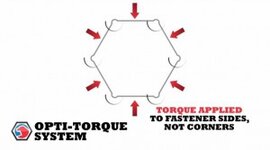
Flank drive socket design was patented by Snap-on in 1965 (although I believe Bonney was the first manufacturer to bring the concept to market). Since then, it seems like every major toolmaker has come out with their own version of it, and they all talk about how THEIR version is the BEST off-corner loading design

Here are just a few examples:

Stahlwille:
IMG_1704.jpeg

Wright Tool:

IMG_1705.jpeg

And Williams:
IMG_1706.jpeg

IMG_1708.jpeg


Is this all just marketing talk for the same thing? Or are there actual “real” differences between the off-corner loading design of say, Snap-on Flank Drive and Wright Tools Wright Drive? It all looks like mostly the same thing at a glance.

Compare this with the anti-slip designs of open-ended wrenches. Even though they all have the same intended purpose, Flank Drive+ is obviously different from WrightGrip, which is obviously different from Proto ASD, which is obviously different from the ICON/Carlyle/Milwaukee anti-slip design, etc. Is there a similar degree of variation between anti-slip box end designs?

Hope this line of questioning makes sense :)
 
To avoid these ads, REGISTER NOW!

jblnut

ALLIANCE MEMBER
Joined
Jan 17, 2015
Messages
7,032
Location
In the Middle of MN
It all looks like mostly the same thing at a glance.
Doesn’t matter how new and improved it is, my old man will still find a way to turn hex heads into raised carriage heads. Never fails. Put the uggadugga machine on and blast away. Use some finesse once in a while !! /rant.

I’d also like to see Project Farm test them.
 

Fedwrench

ALLIANCE MEMBER
Joined
Dec 9, 2007
Messages
14,955
Location
Valley of the sun
In six-point sockets, I think the short answer is NO. There's only so much room for off corner engagement unless you change the design to perhaps Ko-Ken's surface drive.
However, in 12-point sockets and the 12-point boxed ends of wrenches I personally feel there a difference in the amount of wiggle room between brands. :beer:
 

Ohio Andy

Well-known member
Joined
Jul 31, 2024
Messages
2,304
Location
Columbus, Ohio
I expect that there are a few specific things:

  1. Contact area
  2. Contact location
  3. Grabbiness, friction... Right tools wrenches version 2.0 literally leaves indentations in the fastener. There's a reason it really grabs.
 
OP
H

Hakeem

Well-known member
Joined
Jan 22, 2024
Messages
1,258
Location
Chicago
Sounds like something Project Farm should test. It's an interesting question.
I agree, but I think there are so many confounding factors between the wrench designs that it would be difficult to isolate the effect of the off-corner loading design. Some designs do look like the points are more rounded than others but it’s hard to say what effect it has on performance.

I’m kinda hoping one of the resident engineers will chime in….
In six-point sockets, I think the short answer is NO. There's only so much room for off corner engagement unless you change the design to perhaps Ko-Ken's surface drive.
However, in 12-point sockets and the 12-point boxed ends of wrenches I personally feel there a difference in the amount of wiggle room between brands. :beer:
absolutely. It’s hard to say how much size tolerance comes into play, though.
 

Ohio Andy

Well-known member
Joined
Jul 31, 2024
Messages
2,304
Location
Columbus, Ohio
I agree, but I think there are so many confounding factors between the wrench designs that it would be difficult to isolate the effect of the off-corner loading design. Some designs do look like the points are more rounded than others but it’s hard to say what effect it has on performance.

I’m kinda hoping one of the resident engineers will chime in….

absolutely. It’s hard to say how much size tolerance comes into play, though.
Especially since for this to work the right tool open-ended wrenches are a little loose so that they get better grabbing on their RBT
 

2ndGearRubber

Well-known member
Joined
Mar 24, 2014
Messages
14,185
Location
Pittsburgh
I think it's going to be very hard to test this, because the sockets aren't identical otherwise. Sort of like comparing engines ability to complete a 0-60 run in different chassis with different trans ratios and different tires.

For instance the best way to grab mushy garbage hardware may not be the best angle of attack to 12.9. And the tolerance over the exact fastener size, say 19.05 for a 19mm fastener, may change between brands and sizes as well. Wear is another factor, some sockets will wear more quickly so despite having a good fit they will degrade faster than others. I found nothing wore as well as my USA craftsman sockets from the 2000s. Too much lead in taper, bulky, fit okay, but they just did not wear at all. Those would hold performance over time better than other brands which fit better but seem to wear out easier, despite the peak performance being lower.


I'd agree with Fedwrench, it's probably something that could be perfectly calculated, and most sockets are in the ball park. The biggest factor IMO is lead-in taper, you get something with too much and there's just less metal actually engaged to turn the fastener. The socket with less effective off-corner engagement, but 1/2 the lead in taper, will likely out perform the socket with better geometry.
 

kbeefy

Well-known member
Joined
Sep 14, 2013
Messages
3,453
Location
Harington, Eastern Washington
I think it's going to be very hard to test this, because the sockets aren't identical otherwise.

And neither are most fasteners.

In my experience (probably not as much as some others around here, but more than a lot) the metallurgy of the tool (quality and hardness of steel) contribute more than actual design. I have rounded off a non rusted fastener with a sub-par tool and then removed the same fastener with a higher quality tool. No difference in design, just a better tool. I have seen cheap tools flex and/or stretch resulting in a rounded fastener. Then removed the rounded fastener with a much nicer wrench.
 

kbeefy

Well-known member
Joined
Sep 14, 2013
Messages
3,453
Location
Harington, Eastern Washington
I have rounded off a non rusted fastener with a sub-par tool and then removed the same fastener with a higher quality tool. No difference in design, just a better tool. I have seen cheap tools flex and/or stretch resulting in a rounded fastener. Then removed the rounded fastener with a much nicer wrench.

And to quantify this, the cheap tool was craftsman and the expensive tool was snap-on, both from the '80's or '90's.
 

Achilleus

Well-known member
Joined
May 30, 2011
Messages
160
I got my Koken socket set a few months ago and was shocked at how loose the sockets were. I almost sent it back. But I did a quick test and compared it with my snap-on equivalent and was surprised that the koken won hands down.

1741581727987.png

I was using 6021 aluminum as a softer material to not destroy the expensive sockets. You can see in the image the aluminum in the koken case remained almost completely hexagonal while the snap-on rounded over with way less force. I kept the koken set.
 

AEAdam

Well-known member
Joined
May 27, 2023
Messages
2,762
Location
SE PA
The theory of off corner engagement is all the same. The ad copy may vary, but the physics is the same.

The execution of the theory is all over the place. This thread (really series of threads) won’t give you a definitive answer for which socket is best, but it does clearly show the difference in actual contact location for different off corner engagement sockets.

Here’s what you need to look for:

The torque you apply to a socket is reacted by the nut or bolt head. If you apply 50lbs of force at the end of a 1’ long ratchet, you are producing 50ftlbs of torque.

Assuming the bolt doesn’t budge, it reacts 100% of that 50ftlbs regardless of whether the ratchet defects etc.

Just assume the bolt head is not a perfect hex, such that, instead of contacting all 6 sides, the socket only hits 2 sides of the hex bolt. For a 13mm bolt, the perfect corners are 0.148” from the center of rotation. That means your 50ftlbs of applied torque produces a force of…

50ftlbs/(.148” x 2 (for 2 sides)/12 (to convert to feet) =2000lbs.

Obviously, you could divide this force by 3 to get more realistic force per flat. We can quibble about how many bolt faces really pick up load etc. But this is why you can break a socket or why a socket can dent a bolt head. The forces the sockets apply are greatly magnified from the force you apply at the end of a ratchet.

Suppose the socket, instead of contacting the perfect theoretical corner, contacted closer to the centerline of the bolt. Suppose it’s just .015” off the corner. That would protect that bolt's corner. Rerunning the equation above, that off corner engagement socket would increase the load the bolt head sees proportionately. .015 is about 10% less moment arm, so the load would bump up by 10%.

So the off corner engagement sockets increase the load the socket produces and the bolt head reacts. The more off corner they are, the higher the load. So socket manufacturers want their sockets to contact as close to the edge as they can get away with, but not so close that the socket contacts the corner. Tiny differences matter because the moment arms of the bolt heads are so small.

One more thing you need to know: When you look at the contact patches, the thickness of the contact patch matters. Stress = force/area, so the thin contact patches may act like a cold chisel, cutting into your bolt head. That can be good or bad, depending on what you want. The thicker lines are less stress, but I would say the moment is reacted in the middle of that thick contact patch, so while the stress may be lower, the force could be higher. Point is, this is a tricky balancing act.

So to answer the question, yes all off corner engagement sockets are theoretically the same, but differ greatly in performance based on the mech properties of the socket and detailed geometry of their contact patches. Armed with this info, look again at the linked thread again. You will also quickly realize why you can’t compare sockets by measuring across their internal flats. Because of the stress paragraph above, most good off corner sockets have no “flats”.

Hope this makes sense and I got my math right.
 
Last edited:

Ohio Andy

Well-known member
Joined
Jul 31, 2024
Messages
2,304
Location
Columbus, Ohio
The theory of off corner engagement is all the same. The ad copy may vary, but the physics is the same.

The execution of the theory is all over the place. This thread (really series of threads) won’t give you a definitive answer for which socket is best, but it does clearly show the difference in actual contact location for different off corner engagement sockets.

Heres what you need to look for:

The torque you apply to a socket via a handle of whatever sort is reacted by the nut or bolt head. If you apply 50lbs of force at the end of a 1’ long ratchet, you are producing 50ftlbs of torque.

Assuming the bolt doesn’t budge, it reacts 100% of that 50ftlbs regardless of whether the ratchet defects etc.

Just assume the bolt head is not a perfect hex, such that, instead of contacting all 6 sides, the socket only hits 2 sides of the hex bolt. For a 13mm bolt, the perfect corners are 0.148” from the center of rotation. That means your 50ftlbs of applied torque produces a force of…

50ftlbs/(.148” x 2 (for 2 sides)/12 (to convert to feet) =2000lbs.

Obviously, you could divide this number by 3 to get more realistic force per flat. We can quibble about how many bolt faces realky pick up load etc. But this is why you can break a socket or why a socket can dent a bolt head. The forces the sockets apply are greatly magnified from the force you apply at the end of a ratchet.

Suppose the socket, instead of contacting the perfect theoretical corner, contacted closer to the centerline of the bolt. Suppose it’s just .015” off the corner. That would protect that bolt's corner. Rerunning the equation above, that off corner engagement socket would increase the load the bolt head sees proportionately. .015 is about 10% less moment arm, so the load would bump up by 10%.

So the off corner engagement sockets increase the load the socket produces and the bolt head reacts. The more off corner they are, the higher the load. So socket manufacturers want their sockets as close to the edge as they can get away with, but not so close that the socket contacts the corner. Tiny differences matter because the moment arms of the bolt heads are so small.

One more thing you need to know: When you look at the contact patches, the thickness of the contact patch matters. Stress = force/area, so the thin contact patches may act like a cold chisel, cutting into your bolt head. That can be good or bad, depending on what you want. The thicker lines are less stress, but I would say the moment is reacted in the middle of that thick contact patch, so while the stress may be lower, the force could be higher. Point is, this is a tricky balancing act.

So to answer the question, yes all off corner engagement sockets are theoretically the same, but differ greatly in performance based on the mech properties of the socket and detailed geometry of their contact patches. Armed with this info, look again at the linked thread again with wonderment. You will also quickly realize why you can’t compare sockets by measuring across their internal flats. Because of the stress paragraph above, most good off corner sockets have no “flats”.

Hope this makes sense and I got my math right.
I would give you an award if this system supported that

Even though you missed the crucial step of assuming everything was a sphere to make modeling easier... Flashback to physics in school.
 

Achilleus

Well-known member
Joined
May 30, 2011
Messages
160
Just assume the bolt head is not a perfect hex, such that, instead of contacting all 6 sides, the socket only hits 2 sides of the hex bolt.
I don't believe that. Either the socket or the bolt will bend / deform a little to contact all 6 sides.
 
To avoid these ads, REGISTER NOW!

dscheidt

Well-known member
Joined
Apr 26, 2017
Messages
2,894
I don't believe that. Either the socket or the bolt will bend / deform a little to contact all 6 sides.
There's also a surprisingly large amount of deformation in the square drive joints. The basic point, that the contact areas are pretty small which makes the pressures high, is sound though.
 

AEAdam

Well-known member
Joined
May 27, 2023
Messages
2,762
Location
SE PA
I don't believe that. Either the socket or the bolt will bend / deform a little to contact all 6 sides.
100% right. Even grit and grime will make the load transferred different on each face though. I could have left 2 sides or 6 sides out of my post. The point would still be the same. But I thought someone whose actually broken a socket would say:

“there weren’t 6 cracks, just one, why is that if the load is divided by 6? Did my socket have a manufacturing defect?”
 
Last edited:

AEAdam

Well-known member
Joined
May 27, 2023
Messages
2,762
Location
SE PA
There's also a surprisingly large amount of deformation in the square drive joints. The basic point, that the contact areas are pretty small which makes the pressures high, is sound though.
yeah, if you think about it, the load transfer to a 3/8" square drive is even more because there are fewer sides and the moment arms are smaller.
 

Dakotadadv8

Well-known member
Joined
May 30, 2021
Messages
1,487
Always wondered why some will say sockets don’t matter buy any brand, ratchets are more important?
 

Lasu

Well-known member
Joined
Oct 20, 2010
Messages
171
Location
Finland
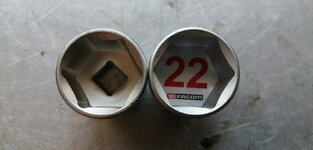
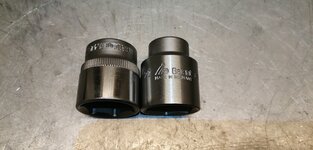
There are differences, made in tw sockets have always been different compared to those made in Germany / euro made. The Stahlwille profile & drive end is better. Of course the tw socket also opens and tightens the bolt. tw-de.jpg
 

Attachments

  • stahlw2.jpg
    stahlw2.jpg
    372.7 KB · Views: 38
  • 3.jpg
    3.jpg
    671 KB · Views: 32
  • 4.jpg
    4.jpg
    760.1 KB · Views: 36
Last edited:

seber

Well-known member
Joined
May 31, 2016
Messages
4,196
Location
Deep East Tx.
Project Farm is fun, but I'd like to see Torque Test channel test these. His system gives actual real world numbers.
 

AEAdam

Well-known member
Joined
May 27, 2023
Messages
2,762
Location
SE PA
I got my Koken socket set a few months ago and was shocked at how loose the sockets were. I almost sent it back. But I did a quick test and compared it with my snap-on equivalent and was surprised that the koken won hands down.

1741581727987.png

I was using 6021 aluminum as a softer material to not destroy the expensive sockets. You can see in the image the aluminum in the koken case remained almost completely hexagonal while the snap-on rounded over with way less force. I kept the koken set.
This is a really nonsense test. Same with the nylon hex bar. What this measures is how far back from the corner a tool hits, and the size of the contact patch. Snap On used (invented?) this parlor trick to differentiate flankdrive plus from flank drive.

In reality, sockets are more complicated than this. You really want to hit as close to the corner as you can. The further back you go, the higher the contact stress. That stress is easily high enough (on steel hardware) to elastically deform the socket. This is why this test is flawed.

When you test using soft hardware you see one aspect only of how a socket works. That’s why TTC repeated the Icon v Snap wrench test and Snap on won on real hardware.

These kinds of tricks are okay for salesmen on trucks or at a tool show. They are obviously effective at getting hits for your TikTok channel. Not so much for understanding how sockets work or comparison testing.

Test after test show Snap on tools at the top or very nearly (usually depending on tool size. For example thicker wrenches perform better than thinner, same with sockets). The fits are tight, the steel is very hard and very strong, yes harder and stronger than most others. Snap On’s one test downfall is that they make their tools a little on the thin side to help flat rate mechanics access parts. Snap on wrenches are often among the thinnest, their shallow sockets are very shallow and very thin.

Hope this helps
 
Last edited:

Steve_P

Well-known member
Joined
Sep 15, 2010
Messages
5,185
I did some testing on this years ago tightening and loosening a bunch of nuts that I colored with a black sharpie. I think I only used 12 point wrenches, but compared the differences between brands and designs. The worst were the old designs that don't have the off-corner engagement feature- the contact line shown in the sharpie (it removes the black so you see a silver line) is literally on the corner of the nut- which you don't want. The stuff with off corner engagement had the contact line ~.03" away from the corner, much better. I'm sure the newer designed stuff like the Wrightgrip 2.0, Proto ASD.... are even better. And of course, you can see contact on all six sides because there will be localized yielding.
 

seber

Well-known member
Joined
May 31, 2016
Messages
4,196
Location
Deep East Tx.
The biggest difference is not in design but in fit. The tighter the fit, the further from the corner will be the contact. This is why you pay more for high quality tools.
 

Steve_P

Well-known member
Joined
Sep 15, 2010
Messages
5,185
The biggest difference is not in design but in fit. The tighter the fit, the further from the corner will be the contact. This is why you pay more for high quality tools.


All of the stuff I tested was "quality". USA made. Proto, Williams, Craftsman, Craftsman Professional, KD.... The clear losers were 100% the designs that didn't have off corner engagement; they all literally contacted on the corner of the nut. Right on it. A newer Cman RP wrench with off corner engagement was vastly superior to an old USA proto, Williams, Craftsman.... without off corner engagement.

There is a reason everyone switched to off corner engagement right after the patent expired - it works.
 

seber

Well-known member
Joined
May 31, 2016
Messages
4,196
Location
Deep East Tx.
All of the stuff I tested was "quality". USA made. Proto, Williams, Craftsman, Craftsman Professional, KD.... The clear losers were 100% the designs that didn't have off corner engagement; they all literally contacted on the corner of the nut. Right on it. A newer Cman RP wrench with off corner engagement was vastly superior to an old USA proto, Williams, Craftsman.... without off corner engagement.

There is a reason everyone switched to off corner engagement right after the patent expired - it works.
I should have qualified that to refer to off corner design only.
 
To avoid these ads, REGISTER NOW!
Top Bottom