To avoid these ads, REGISTER NOW!

soldering a coper lug on 2 gauge wire

tpolley

Well-known member
Joined
Dec 26, 2008
Messages
2,166
Location
kansas city
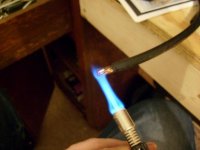
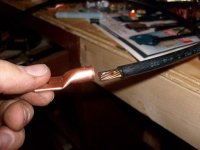
what the $%#@ am i doing wrong? i'd like to think i know how to solder. here's what i'm trying to do. i've got 2 gauge stranded wire and ultimately i want to put a copper lug on the end. i figured i would tin the wire with solder then put the lug on it and heat the lug untill the solder melts and just keep adding solder. i should use one of them little crack pipe torches you buy from harbor freight to heat up the wire then add solder to the wire right??
well i held the torch on the wire for a few minutes and attempted to tin the wire. solder wouldnt melt. held the torch on for a few more minutes. still wouldn't melt solder. held it a few more minutes, no luck. finally i ran out of gas in the torch. i know a big wire dissipates alot of heat but after 5 or 6 minutes of constant heat you'd think it'd melt solder. at some point i'm gonna end up melting the **** out of the insulation. any suggestions???
 

Attachments

  • lug and wire.JPG
    lug and wire.JPG
    57 KB · Views: 55
  • wire and fire.JPG
    wire and fire.JPG
    53.5 KB · Views: 59
To avoid these ads, REGISTER NOW!

mrb

Well-known member
Joined
Dec 31, 2008
Messages
3,734
ive had to do those, ive always put the wire into the lug, then heated the lug with a regular propane torch then fed tons of solder into the lug. If you dont have thick solder unspool a bunch and fold it over 4 or 5 times so youre feeding a whole bundle in.
 

snyder

Well-known member
Joined
Dec 18, 2008
Messages
545
Location
Baltimore md.
Yep, what he said. Smear some flux on both peices, put the end on. Crimp it with a hammer and chisel on a vise, heat with a propane plumbers torch til the flux starts steaming a bit and add solder. I take it that your using regular solder not silver solder, correct?
 

nissan_crawler

Well-known member
Joined
Jan 12, 2008
Messages
9,638
Location
Wichita, KS
ack....get real tools. get the liquid flux, it goes through the wire nice. Then get solder pellets. Put the lug in a vice, and put the required amount of solder pellets in the lug. Set the wire in as far as it will go. Heat with a regular propane torch, not that dinky thing. When the solder melts, push the wire completely into the lug, hold tight without moving until it cools.
 

timgr

Well-known member
Joined
Dec 19, 2006
Messages
544
Location
Medford, MA USA
A solder pot works, but that too is another tool that you don't have. You need something with a lot of heat capacity - either a whomping big iron (not an electric iron) or a torch - so that the bare copper heats up faster than the heat is conducted away. The iron or the solder pot is preferred because it oxidizes the end of the wire less. I've had good luck with paste rosin flux - be sure whatever flux you use is intended for electrical work, not plumbing. The flux core wire solder will be inadequate for a large wire like this.

A solder pot is nice because it has a large heat capacity and you are guaranteed to be at the right temperature. The iron is almost as good, because you can touch the iron to the opposite side of the wire from your solder wire, and hold it there until the solder melts. A torch is harder, because you can't easily apply the torch and the solder at the same time. If you overheat the wire end with the torch, you'll burn off the flux and oxidize the copper - not good for tinning. If you watch the flux on the wire, you can gauge the temperature of the wire to some degree. Melt, then boil = almost ready. Wire changes color = too hot.

I think you should be able to do this with the little torch if you put flux on the wire, heat the end of the wire until the flux melts/boils, and touch your wire solder to the heated metal. Don't melt the solder with the torch - take the torch away - the heated wire should melt the solder, not the flame. If the insulation melts back before the solder melts, then you aren't working fast enough; you need a bigger iron or torch.

You also need to use a good quality electronics solder. Kester 60/40 is good. Not the solder you'd use for plumbing.

Also, old wire needs a lot of flux. Use a lot of flux.

hth!
 
Last edited:

jwith68

Well-known member
Joined
Jan 10, 2006
Messages
1,639
Location
EC Missouri
ack....get real tools. get the liquid flux, it goes through the wire nice. Then get solder pellets. Put the lug in a vice, and put the required amount of solder pellets in the lug. Set the wire in as far as it will go. Heat with a regular propane torch, not that dinky thing. When the solder melts, push the wire completely into the lug, hold tight without moving until it cools.

What he said. Concentrate on heating the lug w/solder in it, not the wire. This past summer I made up a new set of four 1/0 battery cables for a tractor this way, worked just fine on even larger wire and lugs.
 

nadogail

Well-known member
Joined
Jan 23, 2009
Messages
32,062
Location
Coronado, CA
Lots of heat, paste flux, and Tin Lead Solder (at least 50/50) eutectic if you have it.

The lug has to be hot enough to melt the solder. Holding the lug with pliers or vise grips would be a mistake, they would just act like a "heat sink" and **** the heat away from the lug.

Nadogail
Journeyman Marine Electrician
 

SCutchins

Well-known member
Joined
Sep 16, 2008
Messages
54
I did this on my truck with a blow torch, but I also did this at a friend's house with the little mini blow torch you have and it worked fine.

What we did was put the lug in a vice with the opening facing up (you could also lay vice grips flat on a table and use those to hold the lug) and heat the lug with the torch while adding solder to it. Eventually you get it fairly full, maybe 3/4 of the way, with liquid solder. Then just put the wire (put flux on the wire) into the lug, add a little more solder if you have to, and then let it cool.
 
OP
T

tpolley

Well-known member
Joined
Dec 26, 2008
Messages
2,166
Location
kansas city
i just bought a bernzomatic torch and the guy at ace hardware said this solder/flux kit would work...... i just re-read the post and someone said not to use the plumer solder or flux... will it work at all or should i take it back before i open it??
 

Attachments

  • solder.JPG
    solder.JPG
    77.4 KB · Views: 24
Last edited:

malibu101

Well-known member
Joined
Jul 1, 2005
Messages
3,909
Location
Walnutport PA
Plumbing flux is often acid based. It will corrode the copper over time.
Rosin paste is usually speced for electrical connections.
 

timgr

Well-known member
Joined
Dec 19, 2006
Messages
544
Location
Medford, MA USA
Take it back unopened. Lead free is bad for this application. The lead lowers the melting temperature of the solder a lot.

Plumbers have to use lead-free for pipes now, but it's not good for electronics (or cables ... any wiring).

You want rosin paste flux... noncorrosive! If I can read it, that paste flux says "non-electrical" right on the can. You want a paste flux that says it's specifically for electrical use, or at least does not say "non-electrical" on the can!

http://www.action-electronics.com /kester.htm?zoom_highlight=solder

The little tube of Alpha electronics solder on a card would work fine - no need to buy a 1 lb spool unless you plan to do this kind of stuff a lot.
 
Last edited:

rinny_tin_tin

Well-known member
Joined
Dec 20, 2008
Messages
636
Location
Northern Virginia
i just bought a bernzomatic torch and the guy at ace hardware said this solder/flux kit would work...... i just re-read the post and someone said not to use the plumer solder or flux... will it work at all or should i take it back before i open it??

Actually, in this case, I would use the acid flux in lieu of the rosin, since you are essentially welding a copper pipe cap on a (flex) copper rod. In both cases you will eventually see green copper oxide. I would first use 000 steel wool to clean the inside of the lug until it was as bright as you can make it (you can't get copper too clean) and then clean the surfaces of the twisted wire until bright bright. Immerse the wire in ample flux, same with the inside of the lug (more is better). Keep the lug upside down with the wire inserted so it is tight on the bottom and square with the lug, then direct the flame at the lug end. When the flux bubbles, put your solder on the cable and let it flow down into the lug until filled. Let it set about 5 min. If you are worried about melting the insulation, consider heat shrink tubing
 

Torque1st

MEMBER EMERITUS
Joined
Sep 14, 2008
Messages
5,668
Location
KC Metro, Kansas
To really activate the surfaces I clean the wire and lug with Muriatic acid then rinse thoroughly and dry. Do not immerse the insulation in the acid. Then I crimp the lug on the wire and get out the ROSIN CORE ELECTRICAL SOLDER and heat the joint with a propane torch. Do not heat the solder with the torch. Use a solder of the appropriate size for the job. BTW. the insulation will melt a little on the wire, heat shrink tubing will repair it.
 
OP
T

tpolley

Well-known member
Joined
Dec 26, 2008
Messages
2,166
Location
kansas city
i got it. i took the plumers stuff back and got a roll of rosin flux core solder. it was all they had. i got the lug soldered on like i wanted. it feels pretty solid.


thanks for all your help
 

rinny_tin_tin

Well-known member
Joined
Dec 20, 2008
Messages
636
Location
Northern Virginia
To really activate the surfaces I clean the wire and lug with Muriatic acid then rinse thoroughly and dry. Do not immerse the insulation in the acid. Then I crimp the lug on the wire and get out the ROSIN CORE ELECTRICAL SOLDER and heat the joint with a propane torch. Do not heat the solder with the torch. Use a solder of the appropriate size for the job. BTW. the insulation will melt a little on the wire, heat shrink tubing will repair it.


This is puzzling - you stress use of Rosin Core Solder in lieu of acid core - ostensibly and presumably to eliminate corrosion effects owed to the acid, yet you encourage first cleaning with hydrochloric acid (Muriatric) -- why?
 
To avoid these ads, REGISTER NOW!

helgrind

Well-known member
Joined
Jan 5, 2007
Messages
56
Location
South NJ
That little butane torch directly on the wire is going to oxidize the copper. I don't know how critical this connection is, maybe you can try a swaged on fitting?

A good hot iron, like a weller "gun" style works... lots of heat is what you need; quickly. Propane torch as previously stated works wonders as well. Use flux. Never seen soldering pellets, I'll have to look into those, thanks nissan.
 

FakeName

Well-known member
Joined
Nov 10, 2008
Messages
171
Location
San Diego, CA
Finish it off with marine-type shrink tubing. The marine type has a heat-activated glue on the inside which seals the connection from air/water/whathaveyou. I did a complete set of primary wires for my old ford truck #2 (not 2/0) wires throughout, two batteries, etc. All soldered lugs and terminals, all marine heatshrink sealed. I'll NEVER have to do it again.
 

Torque1st

MEMBER EMERITUS
Joined
Sep 14, 2008
Messages
5,668
Location
KC Metro, Kansas
This is puzzling - you stress use of Rosin Core Solder in lieu of acid core - ostensibly and presumably to eliminate corrosion effects owed to the acid, yet you encourage first cleaning with hydrochloric acid (Muriatric) -- why?
The acid cleans better.

Notice that I said not to get the insulation in the acid. This is to make sure none of the acid gets up under the insulation. Then I said to rinse thoroughly and dry. This makes sure no acid remains on the wire. I use a container of water to rinse in. In my area the water is alkaline anyway so I do not need any baking soda to neutralize acid. If your local water is not alkaline you may need to add a pinch of baking soda to the first rinse water. With regular acid core solder the acid would remain on the wire and probably flowed under the insulation during soldering also. My joints made with my method do not turn green.
 

rinny_tin_tin

Well-known member
Joined
Dec 20, 2008
Messages
636
Location
Northern Virginia
The acid cleans better.

Notice that I said not to get the insulation in the acid. This is to make sure none of the acid gets up under the insulation. Then I said to rinse thoroughly and dry. This makes sure no acid remains on the wire. I use a container of water to rinse in. In my area the water is alkaline anyway so I do not need any baking soda to neutralize acid. If your local water is not alkaline you may need to add a pinch of baking soda to the first rinse water. With regular acid core solder the acid would remain on the wire and probably flowed under the insulation during soldering also. My joints made with my method do not turn green.

Exposed copper will eventually turn green no matter what. Acid core solder is less acidic (pH =5.8) than Hydrochloric acid (pH=2 to 4) So - if you find the muriatric acid is working better, perhaps its too acidic. However, if you do rinse well, then it should not be a problem. The reason industry stresses rosin in lieu of acid core for elex is more because of close traces on circuit boards, and the risks of oxidation build up owed to excess acid and the crossing of adjacent traces. However, if you clean the board, etc..its a non-issue. However, for the subject application where one has to join a fat copper conductor with another electrical fitting, acid core with a Silver solder is the best.
 

Torque1st

MEMBER EMERITUS
Joined
Sep 14, 2008
Messages
5,668
Location
KC Metro, Kansas
Exposed copper will eventually turn green no matter what. Acid core solder is less acidic (pH =5.8) than Hydrochloric acid (pH=2 to 4) So - if you find the muriatric acid is working better, perhaps its too acidic. However, if you do rinse well, then it should not be a problem. The reason industry stresses rosin in lieu of acid core for elex is more because of close traces on circuit boards, and the risks of oxidation build up owed to excess acid and the crossing of adjacent traces. However, if you clean the board, etc..its a non-issue. However, for the subject application where one has to join a fat copper conductor with another electrical fitting, acid core with a Silver solder is the best.
Around KC clean copper turns brown. The muriatic acid is indeed stronger and just cleans better because of that strength. The acid must be removed tho. Cleaning with muriatic acid makes it easy to remove the acid residue. Acid flux used during soldering is not easily cleaned. The corrosion due to acid left on the joint will eventually cause the wire to fracture. Do not ever use acid core solder or acid flux to solder electrical wire.
 

rinny_tin_tin

Well-known member
Joined
Dec 20, 2008
Messages
636
Location
Northern Virginia
Around KC clean copper turns brown. The muriatic acid is indeed stronger and just cleans better because of that strength. The acid must be removed tho. Cleaning with muriatic acid makes it easy to remove the acid residue. Acid flux used during soldering is not easily cleaned. The corrosion due to acid left on the joint will eventually cause the wire to fracture. Do not ever use acid core solder or acid flux to solder electrical wire.

If your copper is turning brown or black - it sounds like exposure to Sulfur - which frequently happens with well water copper piping - at least that is where I have seen it prior, and on the liquid sulfur carriers and impacts on brass/copper, etc. Although I don't use acid core for finer electrical applications, I readily use it (and prefer it) in soldering and joining switchboard bus bars prior to fastening and silver plating, and in applications joining larger copper members - as presented itself in this case. However, I follow with cleaning using either Acetone or MEK, but that is more to remove oils and other impurities prior to plating.
 

Torque1st

MEMBER EMERITUS
Joined
Sep 14, 2008
Messages
5,668
Location
KC Metro, Kansas
The sulfur is in the air?... Where are you.....on Mars? LOL

There is little difference between Cu bus bars and Cu 000 stranded cable.

:lol_hitti


I think you are highly confused there bud. :headscrat Where do you live, on the MOON or maybe you live in a vacuum???:lol_hitti

There is sulfur everywhere in the atmosphere on Earth. It is a pollutant from many industrial processes and also comes from many natural processes. Ever been to Yellowstone Park? Ever heard of low sulfur diesel fuel or coal? Conversely there is high sulfur fuel and coal also. Ever hear of sulfur dioxide? Sulphuric acid maybe??????? Sulfur is all around us on Earth.:spit:

The BIG difference is that bus bars are solid and the surfaces after soldering can be cleaned. A cable is made up of individual strands of copper wire with spaces in between them that flux wicks into as well as the solder. The small spaces inside the cable and under the insulation can not be cleaned effectively. That acid from flux corrodes the copper wire. Never use acid core solder or flux on electrical wire.:thumbup:
 

rinny_tin_tin

Well-known member
Joined
Dec 20, 2008
Messages
636
Location
Northern Virginia
I think you are highly confused there bud. :headscrat Where do you live, on the MOON or maybe you live in a vacuum???:lol_hitti

There is sulfur everywhere in the atmosphere on Earth. It is a pollutant from many industrial processes and also comes from many natural processes. Ever been to Yellowstone Park? Ever heard of low sulfur diesel fuel or coal? Conversely there is high sulfur fuel and coal also. Ever hear of sulfur dioxide? Sulphuric acid maybe??????? Sulfur is all around us on Earth.:spit:

The BIG difference is that bus bars are solid and the surfaces after soldering can be cleaned. A cable is made up of individual strands of copper wire with spaces in between them that flux wicks into as well as the solder. The small spaces inside the cable and under the insulation can not be cleaned effectively. That acid from flux corrodes the copper wire. Never use acid core solder or flux on electrical wire.:thumbup:

Yes......you are indeed correct - Sulfur is *everywhere*. and except for unusual circumstances, and some you identified (such as Yellowstone Park and of course Mars where you obviously live) it does not *normally* exist in the concentrations you identify to routinely cause copper pipes to turn black, except of course on Mars. If this were the case, then everything would need be NEMA 4X. You see..here on the East coast, copper does not routinely turn brown or black - only green..unless of course, Sulfur is present in a relatively high concentration. If indeed you reside in a pH 4 or less environment, then you must live, walk, and sleep in a Level A suit...please send a photo.

However, all this is getting far afield and there is no point arguing..you have not convinced me, and as evidenced by your histrionics ... have not convinced yourself. :drool:
 

Torque1st

MEMBER EMERITUS
Joined
Sep 14, 2008
Messages
5,668
Location
KC Metro, Kansas
Yes......you are indeed correct - Sulfur is *everywhere*. and except for unusual circumstances, and some you identified (such as Yellowstone Park and of course Mars where you obviously live) it does not *normally* exist in the concentrations you identify to routinely cause copper pipes to turn black, except of course on Mars. If this were the case, then everything would need be NEMA 4X. You see..here on the East coast, copper does not routinely turn brown or black - only green..unless of course, Sulfur is present in a relatively high concentration. If indeed you reside in a pH 4 or less environment, then you must live, walk, and sleep in a Level A suit...please send a photo.

However, all this is getting far afield and there is no point arguing..you have not convinced me, and as evidenced by your histrionics ... have not convinced yourself. :drool:

We have smog here at times but not much. Certainly not the pea soup you have back East. It does not take much to turn copper brown. Maybe around you copper turns black from your fumes. Copper wires do turn green here if they are exposed to acid or salt from the environment or after someone has mistakenly soldered them with acid flux solder etc.

I think the uncertainty, questions, any histrionics, and Mars comment were yours. I know how to solder copper pipe,tubing, sheet, cable, bar, printed circuits, and wires. -and have been doing so for 45 years with excellent results, even to Mil specs.

I hope you have at least learned the difference between bus bars and cable now.:beer:
 

rinny_tin_tin

Well-known member
Joined
Dec 20, 2008
Messages
636
Location
Northern Virginia
We have smog here at times but not much. Certainly not the pea soup you have back East. It does not take much to turn copper brown. Maybe around you copper turns black from your fumes. Copper wires do turn green here if they are exposed to acid or salt from the environment or after someone has mistakenly soldered them with acid flux solder etc.

I think the uncertainty, questions, any histrionics, and Mars comment were yours. I know how to solder copper pipe,tubing, sheet, cable, bar, printed circuits, and wires. -and have been doing so for 45 years with excellent results, even to Mil specs.

I hope you have at least learned the difference between bus bars and cable now.:beer:


"I hope you have at least learned the difference between bus bars and cable now."

Yasssuuh....and I owe it all to your wisdom and experience :bowdown:
 

Junkman

Well-known member
Joined
Dec 18, 2006
Messages
6,654
Location
Northeastern CT
Torque1st........... better be careful........ rinny_tin_tin might have rabies... I think he is starting to foam at the mouth.
 

Attachments

  • don__t_feed_the_troll.jpg
    don__t_feed_the_troll.jpg
    20.6 KB · Views: 2
To avoid these ads, REGISTER NOW!
Top Bottom