To avoid these ads, REGISTER NOW!

Sure Switch Multi volt switch

fitter30

Well-known member
Joined
Jun 23, 2019
Messages
3,022
Location
Peace Valley,mo
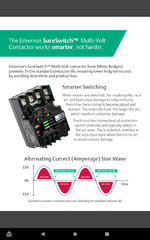
Question for electronic person. Emerson shows the contact closes when the 60 cycle sine wave is at zero. This switch has two different timing circuits plus brown out protection. Knowing that half a cycle is 16.6 ms. Is this just looking at voltage to close a contact or ?Screenshot_20230907-171506.png
 
To avoid these ads, REGISTER NOW!

BrandonV

Well-known member
Joined
Jun 9, 2023
Messages
4,030
Location
Arizona
Nope. As far as I know what these do is they use a optical sensor which watches the contactor for arcing and starts timing/adjusting to minimize the arc.
 

American Locomotive

Well-known member
Joined
Jan 8, 2017
Messages
11,128
Location
Rhode Island
It will have a zero cross detection circuit using a comparator or a fast enough microprocessor constantly looking at input voltage. They'll likely start engaging the relay just before the zero crossing. Modern high efficiency power supplies also use zero cross detection to turn the transistors on/off at 0v. Much more efficient that way. Neat to see it being applied to mechanical relays as well.
 

MBfreak

MEMBER EMERITUS
Joined
Dec 10, 2010
Messages
2,301
Location
Linkoping , Sweden
When switching off an electric motor load, current and voltage are typically 15 degrees ( around 1,3 ms) apart.
It is likely that the most contact erosion is from "no zero" current circuit being opened.
However, I would suggest using a correctly rated contactor that will last many thousands operations.

Ola
 
To avoid these ads, REGISTER NOW!

cybrdyke

Well-known member
Joined
Sep 9, 2014
Messages
3,452
Location
USA
Zero cross switching isn't new. It switches when AMPS are at zero as shown in the chart.
CD
 

BrandonV

Well-known member
Joined
Jun 9, 2023
Messages
4,030
Location
Arizona
I'd be curious to tear one of these apart to see the ICs on the board but I really don't think this thing is using a zero cross detection circuit. It sounds like they're doing some sort of timing by watching the arc.


American Locomotive

Well-known member
Joined
Jan 8, 2017
Messages
11,128
Location
Rhode Island
The salesman/rep doesn't have the full story.

Just think about it. Contactor opens up and it arcs. Sensor detects arc. Then what? How would it know when to time the contacts next time the thermostat satisfies? It wouldn't be able to. Because there would be nothing to reference to.

Imagine you're playing catch with your eyes closed and your partner allows you to open your eyes at the end of each pitch to see if you caught the ball or not. It doesn't matter that you can check if you caught the ball or not - it will not improve your odds of catching the ball the next pitch. That's because you have no idea when the pitch will even be thrown.

If you have your eyes open the entire time, you can see when the pitch is thrown, and then adjust your timing to be able to catch the pitch.

This thing will have a zero cross detection circuit, and then it will use the optical sensor to compensate for the mechanical delay and mechanical wear of the relay. The relay will have a certain "dead time" between when the processor commands it to close/open, and when it actually does.
 

BrandonV

Well-known member
Joined
Jun 9, 2023
Messages
4,030
Location
Arizona
The salesman/rep doesn't have the full story.

Just think about it. Contactor opens up and it arcs. Sensor detects arc. Then what? How would it know when to time the contacts next time the thermostat satisfies? It wouldn't be able to. Because there would be nothing to reference to.

Imagine you're playing catch with your eyes closed and your partner allows you to open your eyes at the end of each pitch to see if you caught the ball or not. It doesn't matter that you can check if you caught the ball or not - it will not improve your odds of catching the ball the next pitch. That's because you have no idea when the pitch will even be thrown.

If you have your eyes open the entire time, you can see when the pitch is thrown, and then adjust your timing to be able to catch the pitch.

This thing will have a zero cross detection circuit, and then it will use the optical sensor to compensate for the mechanical delay and mechanical wear of the relay. The relay will have a certain "dead time" between when the processor commands it to close/open, and when it actually does.

I opened one up and it does look like they're using the FSEZ1216B to do this. Might play around with it a bit more.

Thanks for the information.
 
To avoid these ads, REGISTER NOW!
Top Bottom