micahd1997
Well-known member
- Joined
- Apr 27, 2022
- Messages
- 251
At the generous advice of a longtime GJ member and passionate fellow historian, I’m creating this new thread to bring awareness to the oldest Prentiss vises and encourage YOU to do your part. As a researcher, historian, and collector of the Prentiss Vise Company for the last three years, it’s my passion to establish a line of verified breadcrumbs that can provide clarity to the wider vise community and either debunk, reinforce, or refine the hearsay and half truths currently in circulation. That said, I’m only one man (and a fallible one at that), so I look forward to YOUR help in this team effort.
________________________________________
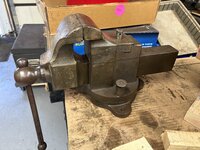
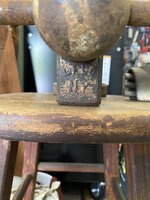
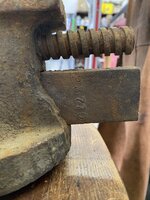
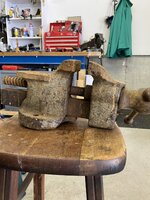
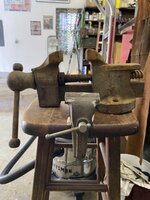
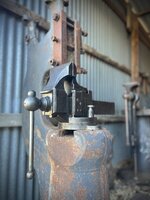
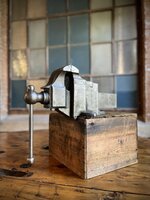
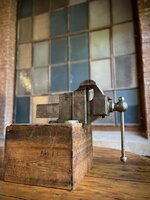
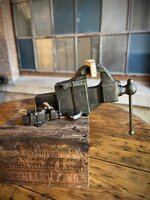
Recently, I was overjoyed to have found this very early, very rare 4” Prentiss vise. I identified it a couple months ago, and a good friend picked it up and shipped it to me from Pennsylvania.
Long Story Short:
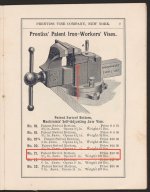
This 4”, 52lb Prentiss vise bears the “dog” fastening feature for retaining the main screw (as opposed to the typical collar and grub screw combination). Based on available advertisements and statements made by the Prentiss Vise Company, this vise and specific feature almost irrefutably date back to the early 1890s (but certainly no later than 1897). To the masses and even the avid vise collector, it makes sense that the “dog” fastening feature isn’t noted, photographed, or even acknowledged. After all, it’s not objectively glamorous or spectacular, and even though it’s certainly different, most people would chalk it up to an aftermarket adaptation or simply give it a “Hmm…interesting” before forgetting about it. Because of this, though this early style IS truly rare, I also believe there are MORE out there than we might think. So please – Check YOUR Prentiss vise’s undercarriage and post a picture if you see a “dog” staring back at you.
Prior to and since purchasing this vise, I’ve been excited to purchase another (a 7” swivel base) and learn of several more.
Short Story Long:
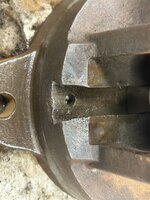
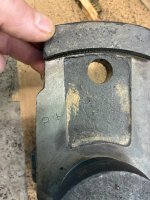
As mentioned above, all available records indicate that the main screw of the earliest Prentiss vises were held in place by (what Prentiss referred to as) a “dog” fastening. Unlike the common collar and grub screw that we’re familiar with, this “dog” bolted to the underside of the dynamic jaw and held the screw in place by means of a little clip or foot. If you’ve ever had the pleasure of owning or handling a Prentiss jeweler’s (2”) or watchmaker’s (1 3/4”) vise, then you’ve seen this “dog” fastening before. Presumably, given the tight tolerances inside their jeweler and watchmaker vises and the difficulty of manufacturing such a small corresponding collar/grub screw, Prentiss kept the “dog” fastening for its jeweler and watchmaker vise lines throughout their entire existence. However, for reasons only to be speculated on (likely for easier casting and machining), Prentiss switched from the “dog” fastening to the collar style very early in their history. Based on multiple sources, it seems that this switch occurred between 1889 and 1891, and I believe this vise to be from during that time frame.
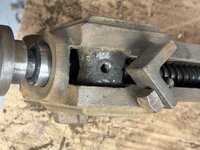
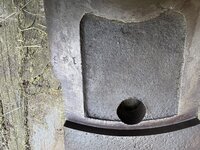
Another feature present in every known “dog” style Prentiss (one without ANY reference, depiction, or explanation on record) is that the nut for the main screw is “trapped” inside the casting of the static jaw. Rather than a dovetailed slot that the nut slides into (as with all other Prentiss vises), the base of the nut is encased on all sides by the casting of the vise. The nut jiggles just slightly, and the existing hole on the underside of the static jaw reveals a smooth, machined surface on the bottom of the nut. Because of this, I have no other explanation as to how this nut is held than that they were pressed into the cavity of the casting.
Other Notes:
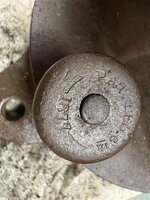
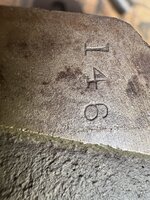
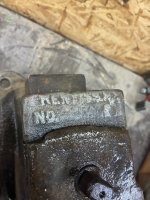
There is no identified correlation between the digit stamps on Prentiss vises (in this case, 52) and any other characteristic of the same vise. Though the weight of this vise just so happens to be 52lbs, there are other vises of the same size/style with wildly different stamps. These are thought be nothing more than batch numbers used internally by Bagley & Sewall.
It’s hidden well (IMHO), but unfortunately the rear foot broke off the vise during shipping due to an existing crack. Thankfully, the casting matches up seamlessly, and I’m working with a machinist for a no-weld repair.
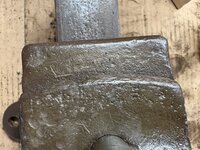
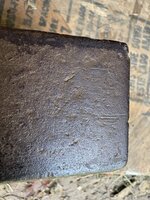
I only stripped this vise down to bare steel because 1) there was no preserving any semblance of an original finish given the thick rust, grease, and paint present and 2) the usefulness of any markings and casting impressions on the bare surface is very high.
As a researcher of all aspects of Prentiss’ history, I hope sincerely that more of these early vises come to light. Again, please check YOUR Prentiss vises and post pictures if any of them bear the “dog” fastening style.
________________________________________
Recently, I was overjoyed to have found this very early, very rare 4” Prentiss vise. I identified it a couple months ago, and a good friend picked it up and shipped it to me from Pennsylvania.
Long Story Short:
This 4”, 52lb Prentiss vise bears the “dog” fastening feature for retaining the main screw (as opposed to the typical collar and grub screw combination). Based on available advertisements and statements made by the Prentiss Vise Company, this vise and specific feature almost irrefutably date back to the early 1890s (but certainly no later than 1897). To the masses and even the avid vise collector, it makes sense that the “dog” fastening feature isn’t noted, photographed, or even acknowledged. After all, it’s not objectively glamorous or spectacular, and even though it’s certainly different, most people would chalk it up to an aftermarket adaptation or simply give it a “Hmm…interesting” before forgetting about it. Because of this, though this early style IS truly rare, I also believe there are MORE out there than we might think. So please – Check YOUR Prentiss vise’s undercarriage and post a picture if you see a “dog” staring back at you.
Prior to and since purchasing this vise, I’ve been excited to purchase another (a 7” swivel base) and learn of several more.
Short Story Long:
As mentioned above, all available records indicate that the main screw of the earliest Prentiss vises were held in place by (what Prentiss referred to as) a “dog” fastening. Unlike the common collar and grub screw that we’re familiar with, this “dog” bolted to the underside of the dynamic jaw and held the screw in place by means of a little clip or foot. If you’ve ever had the pleasure of owning or handling a Prentiss jeweler’s (2”) or watchmaker’s (1 3/4”) vise, then you’ve seen this “dog” fastening before. Presumably, given the tight tolerances inside their jeweler and watchmaker vises and the difficulty of manufacturing such a small corresponding collar/grub screw, Prentiss kept the “dog” fastening for its jeweler and watchmaker vise lines throughout their entire existence. However, for reasons only to be speculated on (likely for easier casting and machining), Prentiss switched from the “dog” fastening to the collar style very early in their history. Based on multiple sources, it seems that this switch occurred between 1889 and 1891, and I believe this vise to be from during that time frame.
Another feature present in every known “dog” style Prentiss (one without ANY reference, depiction, or explanation on record) is that the nut for the main screw is “trapped” inside the casting of the static jaw. Rather than a dovetailed slot that the nut slides into (as with all other Prentiss vises), the base of the nut is encased on all sides by the casting of the vise. The nut jiggles just slightly, and the existing hole on the underside of the static jaw reveals a smooth, machined surface on the bottom of the nut. Because of this, I have no other explanation as to how this nut is held than that they were pressed into the cavity of the casting.
Other Notes:
There is no identified correlation between the digit stamps on Prentiss vises (in this case, 52) and any other characteristic of the same vise. Though the weight of this vise just so happens to be 52lbs, there are other vises of the same size/style with wildly different stamps. These are thought be nothing more than batch numbers used internally by Bagley & Sewall.
It’s hidden well (IMHO), but unfortunately the rear foot broke off the vise during shipping due to an existing crack. Thankfully, the casting matches up seamlessly, and I’m working with a machinist for a no-weld repair.
I only stripped this vise down to bare steel because 1) there was no preserving any semblance of an original finish given the thick rust, grease, and paint present and 2) the usefulness of any markings and casting impressions on the bare surface is very high.
As a researcher of all aspects of Prentiss’ history, I hope sincerely that more of these early vises come to light. Again, please check YOUR Prentiss vises and post pictures if any of them bear the “dog” fastening style.
Attachments
-
 IMG_2762.jpeg612.9 KB · Views: 117
 -
 IMG_2761.jpeg589.9 KB · Views: 94
 -
 IMG_2768.jpeg495.1 KB · Views: 85
 -
 IMG_2784.jpeg394 KB · Views: 82
 -
 IMG_2789.jpeg447 KB · Views: 84
 -
 IMG_2776.jpeg442.6 KB · Views: 80
 -
 IMG_2791.jpeg387.8 KB · Views: 88
 -
 IMG_2744.jpeg769 KB · Views: 89
 -
 IMG_2738.jpeg732.7 KB · Views: 87
 -
 IMG_2810.jpeg376.8 KB · Views: 70