To avoid these ads, REGISTER NOW!

Weight limit on heated floors?

Joined
Jan 9, 2010
Messages
1
Location
Carbonado, WA
Looking for any advice, or companies or help or whatever on my new house...

We just bought a new home out near the base of Mt Rainier in WA state (Wet side, Pierce county). It has a 60x60 pole barn with 14ft cielings, with a 36x36 horse stall barn attached to the side of it with roughly a 12ft tapering to 8ft ceiling. The roof appears to be insulated sheetmetal.

Im into horsePOWER, not horses, so Im looking at my options for enclosing the 60x60, and pouring a pad. Im really interested in the heated floor option, but Im concerned with how close the tubing has to be to the surface, and the fact I will be running some heavy loads over my floor. My truck alone weighs over 8000lbs, and my toyhauler is rated for more than that at full load. Im worried that if I lifted either of those with a floorjack, that Id risk cracking the floor if I did it over the top of one of the infloor tubes.

Im all for letting an outside contractor deal with it, as long as they come recommended. Im also interested in doing solar hot water to heat the floor since I have such a massive roof, and pretty much should get full sun except for the very darkest winter months when the sun just doesnt get good elevation. (This is based on my reading that the only "green" energy source in WA that remotely pays off is solar hot water at this time, and even that is only about 6 months of the year).

Enough of what I want to do, whats the story about weight loads if I've got loops of pex tubing only 2" down in a 4" pour, and try to lift 6000lbs with a floor jack. Will the weight focused on those 4 small wheels damage the heating system or floor?

Anyone come recommended in this area for doing stuff like this? I can do a 10x10 pour, but a 60x60 monoslab is a bit more than I wanna bite into.
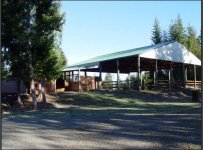
 

Attachments

  • newhouse_first+pics_DSC03683.JPG.slide.jpg
    newhouse_first+pics_DSC03683.JPG.slide.jpg
    44.7 KB · Views: 30
To avoid these ads, REGISTER NOW!

the spyder

Well-known member
Joined
Jan 1, 2007
Messages
589
Location
Oregon
I know nothing about either, but I would pour at least a 6" slab. Your PEX is spaced 20"+ apart. Rebar + correct concrete thickness and PSI should provide more then enough strength.
 

krooser

Well-known member
Joined
Jun 3, 2005
Messages
2,377
Location
Waupaca, Wisconsin
There's a local heavy truck shop with in floor radiant heat... no troubles that I'm aware of... don't know how thick or what specs the slab is...
 

nate379

Banned
Joined
Feb 2, 2009
Messages
7,279
Location
Palmer, AK
Most of our aircraft hangers have slab heat (Air Force).

If you break apart a 6" slab with an 8000lb truck something was done terribly wrong!

the spyder... the PEX is not normally that far apart.... usually around 12"-16" or so.
 

nissan_crawler

Well-known member
Joined
Jan 12, 2008
Messages
9,638
Location
Wichita, KS
I helped break up a perfect concrete floor that was in a FARM shop that burned down...it was 3" at best.

If the base is good, your little 8,000 pound pickup won't do diddly.

My driveway is 2" or so, and at least 30 years old from records I can find (house is 60 years old), and I've jacked the car trailer with vehicles on it, both with a floor-jack, and with a hi-lift.
 

walrus

Well-known member
Joined
Nov 12, 2008
Messages
11,693
Location
Maine
I have radiant heat, not hooked up yet but I've jacked my freighted 3500 series PU on the floor with no issues. Get a contractor who knows what they are doing and you'll have no issues. If you want to put a lift in make sure you spec the concrete right and don't have radiant where you want to bolt it down.
 

tdkkart

Well-known member
Joined
Jun 17, 2006
Messages
6,887
Location
Eastern Iowa
I seriously doubt that the inclusion of radiant heat tubing in a concrete slab causes any more than a few percentage points difference in the strength of the slab. Quite frankly, 4" of concrete is probably far more than most of us need as long as it's poured on a firm base.
 

A_Pmech

Well-known member
Joined
May 8, 2007
Messages
8,002
Location
IL
Hi Critter,

I had similar questions when I began researching in-floor heat for my machine shop.

First, I doubt your pickup weighs 8,000lbs. The base 2009 F-350 weighs 5,818 lbs according to Motor Trend:

http://www.motortrend.com/cars/2009/ford/f_350/specifications/index.html

8,000lbs is closer to the empty weight of a 2-ton stake bed truck. You're probably confusing Gross Vehicle Weight Rating (GVWR) for empty weight or "curb weight". A 3/4-ton truck has a curb weight of about 4,500 lbs. If you have a 2-ton stake bed, my mistake!

That said, the limiting factor for under-floor heating systems is a combination of the insulating barrier foam and the concrete thickness and reinforcement.

The insulating foam usually has a live load rating about 20% of the minimum crushing strength. Thicker concrete with more reinforcement will distribute point loads over a larger area, increasing the point load rating of the floor.

Owens Corning Foamular products are available in ratings up to 100PSI crushing strength. I have read of this product being used under industrial floors with live loads in excess of 100,000 lbs being moved on them. It's also used in quantity in cold storage warehouses with heavy forklift traffic. A standard little 5,000lb cushion tire forklift with load exerts a ground pressure about 30X that of a passenger vehicle.

As Nate said, in-floor heat is becoming commonplace in large aircraft hangars as well. The Boeing 777-300ER has an empty weight in the range of 375,000lbs as I recall. The floors are 3' thick, but the same principle applies - spreading the point load across the foam insulation.

So, it's all about proper design. For what you want to do, I think the requirements should be easy for a qualified contractor to meet.
 
Last edited:

VC-Racing

Well-known member
Joined
Mar 28, 2009
Messages
156
Location
Coastal SC on The Edisto River
Hi Critter,

I had similar questions when I began researching in-floor heat for my machine shop.

First, I doubt your pickup weighs 8,000lbs. The base 2009 F-350 weighs 5,818 lbs according to Motor Trend:

http://www.motortrend.com/cars/2009/ford/f_350/specifications/index.html

8,000lbs is closer to the empty weight of a 2-ton stake bed truck. You're probably confusing Gross Vehicle Weight Rating (GVWR) for empty weight or "curb weight". A 3/4-ton truck has a curb weight of about 4,500 lbs. If you have a 2-ton stake bed, my mistake!

.

My 01 F350 CC 4x4 with 7.3 L PowerStroke weighs in at 8400lbs with no passengers and full of fuel , and its a single rear wheel.
The base 09 F-350 you refer to has a v-8 gas engine and a single cab.
 
To avoid these ads, REGISTER NOW!

A_Pmech

Well-known member
Joined
May 8, 2007
Messages
8,002
Location
IL
My 01 F350 CC 4x4 with 7.3 L PowerStroke weighs in at 8400lbs with no passengers and full of fuel , and its a single rear wheel.
The base 09 F-350 you refer to has a v-8 gas engine and a single cab.

Interesting...

I dug a little deeper and you're right. Maybe his does weigh that much! My 1-ton certainly doesn't. I guess pickup trucks are becoming more car-like and less truck-like. No wonder the payload capacity of pickup trucks is so crappy! They weigh too much!

An F-350 is 8,400ish empty with a GVWR around 12,000lbs Thus, the empty weight is 8,400 / 12,000 = 70% of the GVWR! :wtf:

By comparison, the Oshkosh MPT series Municipal Motor Patrol truck is about 15,000ish in cab and chassis form and grosses around 42,000lbs. Figure a bed weighs about 2 tons bringing the empty weight up to 17,000lbs. 17,000 / 42,000 = 40.5% of the GVWR.

I can't find any data on the empty weight of the Oshkosh P series, their extra-heavy municipal / airport plow truck, but I seem to recall about 25,000lbs +- depending on equipment. Gross weight is up to 83,000lbs depending on tire choices. 25,000 / 83,000 = 30.1% of the GVWR.

Trucks don't get much more heavily built than an Oshkosh, yet per pound of carrying capacity, a pickup truck weighs over twice as much as it needs to as compared to an Oshkosh.

Data sources:

MotorTrend.com

Oshkoshsnow.com
 
Last edited:

nate379

Banned
Joined
Feb 2, 2009
Messages
7,279
Location
Palmer, AK
I had a 2" slab at my place in Idaho and it was busted up really bad from parking vehicles on it, using jacks, etc.

It was an old slab though, I think a shed at one point maybe. My neighbor across the street moved there in the 60s and she didn't remember anything being there then even.

The sidewalk was still in great shape and that was poured in 1944 according to the info plate they stuck into.


Around these parts, garage and house slabs are normally 6".


My driveway is 2" or so, and at least 30 years old from records I can find (house is 60 years old), and I've jacked the car trailer with vehicles on it, both with a floor-jack, and with a hi-lift.
 

PSNBYE

New member
Joined
Jan 7, 2010
Messages
3
I drive a concrete truck for a living and I have seen lots of rediant floor heat. It's usually 6" thick with the tubing about 12 to 16 inches apart. Concrete gets harder over time and with proper rebar your slab will support anything you can fit in your garage. Your garage sounds like an AWESOME project and I bet you will have lots of fun! Finding a contractor shouldn't be too hard, call any big buisness that has had concrete work done recently and ask who they have used and if they were satisfied. You have probably seen contractors driving around too, call 'em up and ask for a quote. Good luck!
 

jayoldschool

Well-known member
Joined
Apr 23, 2006
Messages
2,125
Location
Canada
Just think about the principles that cause hydraulic systems to work: you can't compress a liquid. With your tubes full, there will be no issues.
 

matt_i

Well-known member
Joined
Mar 14, 2008
Messages
10,796
Location
SE Michigan
Jay, that's true if the ends of the tube were sealed and the tubing rated for whatever pressure developed. My info on PEX tubing is that it expands/flexes/increases in diameter when water freezes, hence it will be a sort of a "soft" spot in the floor.

Just to add I'd say a well compacted sub-base that's free of organic matter is going to be key. Having the horses run over it and being inside is also a step ahead of starting greenfield.

The Owens Corning Foamular is one I'd definitely use if I was doing a PEX slab...but for my area I just don't need heating that often - cooling performance is more of the issue. I would agree with a 6" x 3500 psi mix, minimum of welded wire mat but rebar is going to help as well.

Last gentle caution is not to do too much "customization". I always try to think of having to sell my property at some point in the future, not knowing exactly what their unique needs are - and integrate your needs but try not to dismantle the existing features related to horses - as you might be attempting to market to horse owners at some time in the future.
 

timewarp

Well-known member
Joined
Feb 24, 2008
Messages
272
Location
Silverdale, WA
Knew I'd seen that picture before, saw it over at Skagen's site. Sounds like a great build. I would think that if you find a good contractor that has done some heated floors before that you will have no problems with the floor.

Caleb
 

jayoldschool

Well-known member
Joined
Apr 23, 2006
Messages
2,125
Location
Canada
My info on PEX tubing is that it expands/flexes/increases in diameter when water freezes

You don't run water in a zone that is subjected to freezing temps. You run glycol ;)
 

willymakeit

Well-known member
Joined
Apr 27, 2009
Messages
1,251
Location
Springfield Mo.
Most concrete for floors is 3500 psi and up depending on mix. 6'' will be fine. We pull dozers in on a 6'' floor, with a 2X12 under the tracks.
 
To avoid these ads, REGISTER NOW!
Top Bottom