To avoid these ads, REGISTER NOW!

Wire and conduit size for detached shop building?

krifenbu

New member
Joined
Sep 13, 2010
Messages
3
Hello all. I am running power to detached shop on a hobby farm in rural Missouri. For the work, permits and inspections are not required.
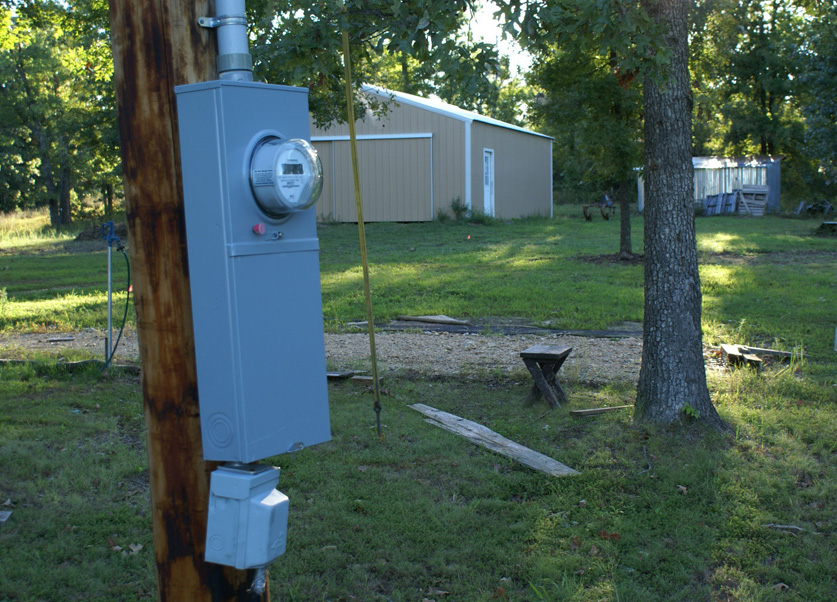
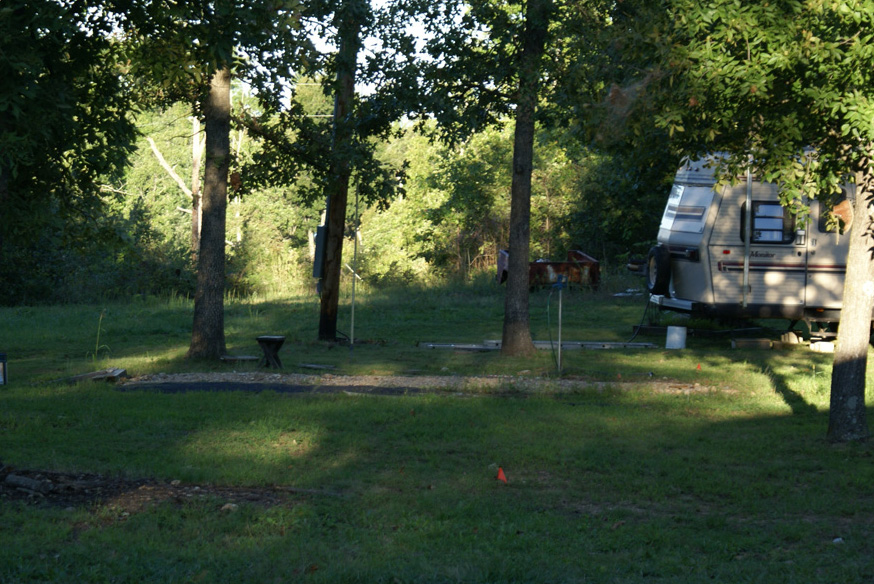
outside to shop.jpg

outside to meter.jpg

meter03.jpg


Power will come from 200 Amp meter box. Straight run to breaker box will be 130'. Trench will have to be moved over some to avoid corner of double wide (that isn't there yet). I am figuring 160' wire length from meter, through trench, and up to breaker box. Breaker box has 100 amp main that will accept 1/0 wire.

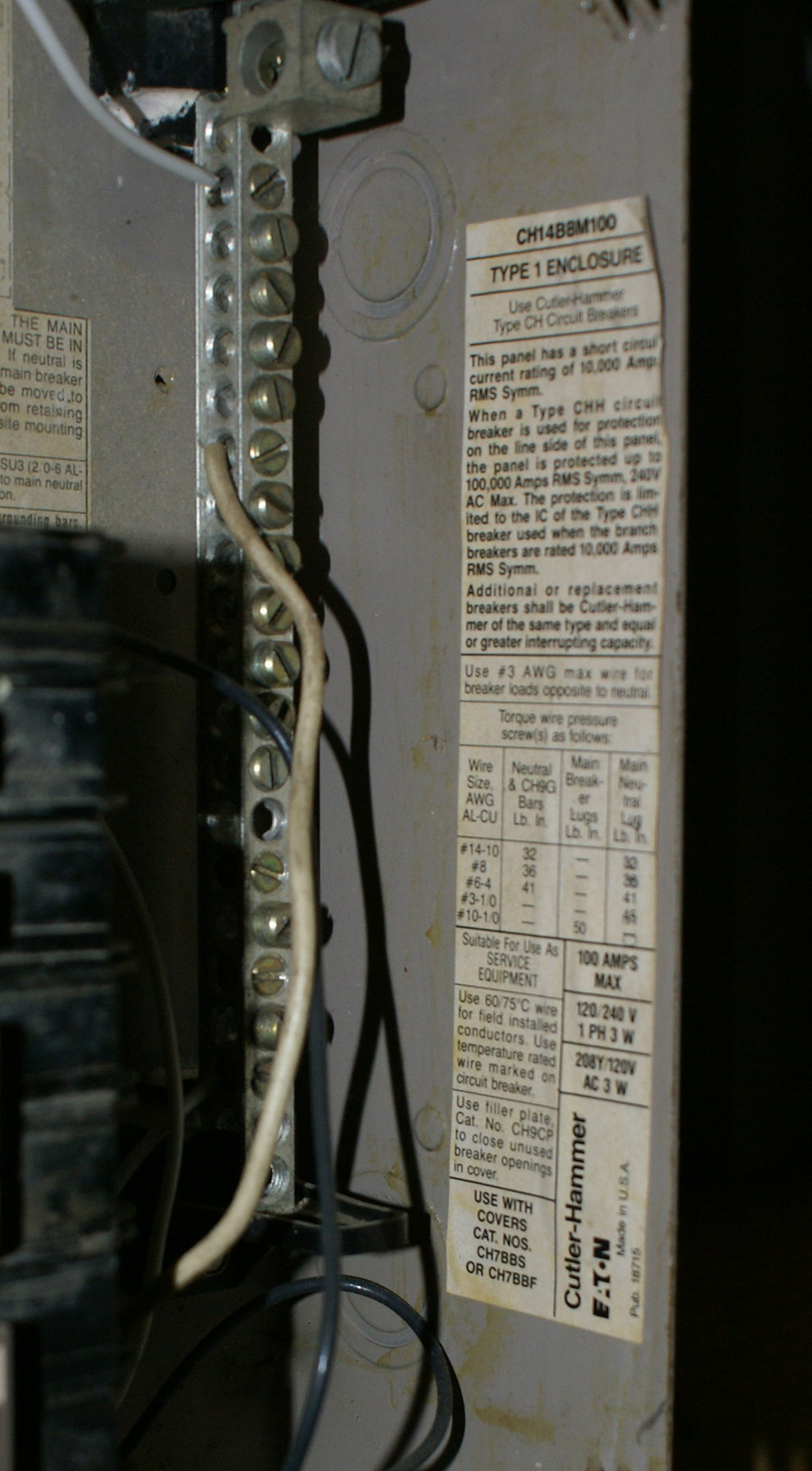
shop02.jpg

shop04.jpg


Will be using 230 volt 50amp lincoln 225 arc welder on occasion for equipment repairs. There will be a 3HP 110v air compressor there also. Other electric items will be drills or circular saws on occasion and in the winter we will have a block heater for the tractor plugged in sometimes.

To figure wire size, can I just add up the amps from all the items that I might be using at the same time, or is it supposed to be rated for the breaker size.

The guy at the local supply store suggested 2-2-4 aluminum bury grade cable. Can this be put in conduit?

Voltage at the meter box is 125v. If I have a voltage drop of 10 volts in the wire, does this mean I will have 115v at the shop? Is this enough to keep the motors in the tools happy?

On grounding, can I run a ground wire from the breaker box to a nearby freeze proof water hydrant, or should I still plan on puting in a grounding rod? Should the ground and neutral in the breaker box be bonded? I did notice in the breaker box I have that there is only a neutral bus. Do I need to get another bus for ground?

I know this is a lot of questions, but the more I try to read, the more confused I get. I have put some pictures here, if a picture is worth a thousand words, think of how long this post would have been without the pictures :)

Thank you for your time.

Kevin
 
Last edited:
To avoid these ads, REGISTER NOW!

Norcal

Well-known member
Joined
Mar 16, 2008
Messages
13,792
I see a 200A main breaker & #2 AWG AL is only good for 90A,and the Midwest power outlet wiring is positively scary, for all intents & purposes, there is no protection of those conductors, one good thing about inspections is sometimes a inspector catches flunky wiring, back to the shop feed, if overcurrent protecton is provided at the pole there will be no problems in doing what you want.
 
OP
K

krifenbu

New member
Joined
Sep 13, 2010
Messages
3
Yeah, the Midwest outlet is wrong. When I first put it in, there was a 100 amp service and all the small ground lugs were used up.

When the utility put the 200 amp service in, they just put it back the way it was, leaving the ground undone and now there is a chance for 200 amps to go through the wires if there is a short. :shocking:

Should be unhooking the outlet next week. In fact, I will be taking the camper tomorrow and it probably won't be plugged back in there.

Kevin
 
OP
K

krifenbu

New member
Joined
Sep 13, 2010
Messages
3
Norcal, thank you for the reply. I had expected more comments, since there was several views on my thread. Also, on my last post I would have put a little smile guy that was on fire instead of the shock guy, but I didn't see one that I liked.

I have bought the 1/0, 1/0, 2, aluminum direct burial wire and 1-1/2" pvc conduit. I am now waiting for the guy to dig the trench.

How do you stand on drilling a hole in the bottom of the conduit on the low end to make sure water doesn't build in the pipe?

Thanks again.
 

Norcal

Well-known member
Joined
Mar 16, 2008
Messages
13,792
Water is normal in UG conduits, for that reason the NEC considers them to be a "wet location", so unless it's likely to gush out on a lower end, there is not a lot to worry about. What edition of the NEC has your area adopted if 2008, a grounding conductor is required to be run w/ your feed +NEC art. 250.122( B ) comes into play.

Copy & paste of 250.122 ( B ) 2008 edition.

(B) Increased in Size. Where ungrounded conductors are
increased in size, equipment grounding conductors, where
installed, shall be increased in size proportionately according
to the circular mil area of the ungrounded conductors.
 

LEVE

Well-known member
Joined
Jun 23, 2008
Messages
1,727
Location
On the Willapa
I just did a 115' run to my garage last year.

Be sure you're using 90° "long sweeps", and not normal 90s when you assemble the conduit. Also, lay out the run to minimize the use of 90's. It night be a whole lot easier to go to 2" schedule 80 if you can... not much more expensive than the 1.5" conduit. It's always nice to have a much room inside the conduit to pull the cable as you can get.

I did not drill any holes, underground, in the conduit to let out moisture. You want that sealed. If it's glued correctly, there shouldn't be a problem with moisture.

If you have already bought the 1.5" conduit, lay it in the same trench with the 2" conduit and use it for running a telephone line, or perhaps Cat-5 cable for a computer network. I do run a wired-networked computer in the garage. It makes things a whole lot easier if you want to add stuff in the future. 1.5" conduit may seem a little big, but again it's nice to have the room in the conduit and makes the pull a lot easier. Once you have even one wire installed it is harder to pull another. I also have a pull string installed and left in place for future use, if needed.
 

Norcal

Well-known member
Joined
Mar 16, 2008
Messages
13,792
SCH 80 is a bit of overkill for a UG conduit, the exposed portions,yes & it may even be a PoCo requirement on a pole mounted service. A conduit will fill w/ water just from condensation not much can be done to stop it....
 

LEVE

Well-known member
Joined
Jun 23, 2008
Messages
1,727
Location
On the Willapa
SCH 80 is a bit of overkill for a UG conduit
Yep, Schedule 80 was overkill... but I like over kill (just don't read my thread on PVC for compressed air plumbing). I only needed Schedule 80 for the sections of conduit that was not buried, the sections coming up to the L-boxes and entering the wall. Schedule 40 could have been used for everything else.
A conduit will fill w/ water just from condensation not much can be done to stop it....
True... not much you can do about that, but it's just going to drown the critters crawling around there...
 

fefarms

Well-known member
Joined
Jan 25, 2007
Messages
186
1/0 1/0 2 direct bury cable exceeds the conduit fill limits of 1.5 inch PVC schedule 80.

It would work (barely) if you used THWN-2 wires, but the USE-2 you probably have has insulation that is thicker than that. You need to step up to 2 inch.

I would consider the pole mounted breaker to be your service connection and the line to the shop to be a feeder, not a service entrance. Even though there might be a code legal exception allowing a separate ground in this feeder to be omitted, I wouldn't do it. I like to keep ground and neutral separate, especially for rural buildings that might house animals one day, plus the shop is "at grade" and you are likely to be touching exposed metal conduit, air compressors, and the like. This all argues for running a 4AWG aluminum grounding conductor along with the 2/0 2/0 2.

You need a proper ground at the pole. Two 8 foot ground rods driven at least 6 feet apart connected to the neutral/ground lug with 4AWG copper (it can be bare or green). You will also need a proper ground at the shop. Again, two 8 foot ground rods driven at least 6 feet apart. You might as well use 4AWG copper to these as well.

Get a small 200 amp rated main lug panel with at least 4 spaces. Mount that on the pole below your existing meter combo panel. Connect the lugs of this panel to your 200 amp breaker legs with 2/0 copper. Buy a separate ground bar (you can get them at Home Depot) and mount that in the main lug panel. From here on, ground and neutral should be kept separate. Connect the ground/neutral lug in the meter panel to this ground bar with some more of your 4AWG copper. Install another added ground bar in the shop panel and connect the 4AWG copper from the building ground rods and the 4AWG aluminum you'll pull through the conduit.

Install a 100 amp 2 pole breaker in the main lug panel and connect your shop feeder to that. You can add a separate 20 or 30 amp breaker to the other two spaces and have a second feeder to supply your camper or mobile home in the future, or step it up to 100 amps if you build a home, second garage, or whatever.
 

Norcal

Well-known member
Joined
Mar 16, 2008
Messages
13,792
2/0 is not suitable for 200A it is only rated for 175 amperes based on the 75 degree column of NEC table 310.16, and the intended use does not meet the criteria allowing it to be undersized on a 200A residential service, 3/0 copper is the min size.
 
To avoid these ads, REGISTER NOW!

hillbilly1

Well-known member
Joined
Sep 16, 2010
Messages
99
2/0 is not suitable for 200A it is only rated for 175 amperes based on the 75 degree column of NEC table 310.16, and the intended use does not meet the criteria allowing it to be undersized on a 200A residential service, 3/0 copper is the min size.

It is at Home Depot LOL! The 30 amp RV receptacle fused at 200 amps is a little scary too! The likelyhood of them overloading the 2/0 is low though, but if I did the install that way it would endanger my license. The price difference between 1/0 AL and 4/0 is not that great, (by the time you add the 200 amp sub panel at the pole, then a 100 amp breaker in it, or a 100 amp disconnect next to it using the tap rule) so I would leave the 200 amp main at the service and run 4/0 quadraplex to the building and be done with it.
 
Last edited:

hillbilly1

Well-known member
Joined
Sep 16, 2010
Messages
99
Oh, by the way I just noticed the picture of the panel in the barn, looks to be 100 amp, you will need to put a main in that panel, or a single disconnect on the outside before it goes into the panel. A ground bar will also need to be installed in that panel.
 

Norcal

Well-known member
Joined
Mar 16, 2008
Messages
13,792
It is at Home Depot LOL! The 30 amp RV receptacle fused at 200 amps is a little scary too! The likelyhood of them overloading the 2/0 is low though, but if I did the install that way it would endanger my license. The price difference between 1/0 AL and 4/0 is not that great, (by the time you add the 200 amp sub panel at the pole, then a 100 amp breaker in it, or a 100 amp disconnect next to it using the tap rule) so I would leave the 200 amp main at the service and run 4/0 quadraplex to the building and be done with it.


4/0 is still not code compliant for 200A.
 

hillbilly1

Well-known member
Joined
Sep 16, 2010
Messages
99
4/0 is still not code compliant for 200A.

Try finding some 250 Kcmil quadraplex! Since he is not permitting it, and the chances of overloading the 4/0 is extremly remote, and its a lot better than what was originally planned.
 

Norcal

Well-known member
Joined
Mar 16, 2008
Messages
13,792
Try finding some 250 Kcmil quadraplex! Since he is not permitting it, and the chances of overloading the 4/0 is extremly remote, and its a lot better than what was originally planned.

And it's still wrong! Since it was said that a double-wide is in the future a 200A feed through load center (8 spaces + 200A feed through lugs) would be the most code compliant way to do it,since it would be the main feed to a dwelling unit 4/0 AL to the trailer would be fine, it's not kosher going to a outbuilding, the loadcenter would allow a 100A breaker for the shop & a 30A breaker could be used for the travel trailer power outlet.
 

hillbilly1

Well-known member
Joined
Sep 16, 2010
Messages
99
And it's still wrong! Since it was said that a double-wide is in the future a 200A feed through load center (8 spaces + 200A feed through lugs) would be the most code compliant way to do it,since it would be the main feed to a dwelling unit 4/0 AL to the trailer would be fine, it's not kosher going to a outbuilding, the loadcenter would allow a 100A breaker for the shop & a 30A breaker could be used for the travel trailer power outlet.

Didn't see the part about the doublewide, so the sub panel option would be the way to go, a j box and feeder taps would be too involved for a DIY'er. Also it states the panel has a 100 amp main, since I don't see any lugs on the buss, I would say it was factory, so adding a outside disconnect would not be required. I would be more concerned on how all of this is grounded than the wire being one size too small. The wire that the utility brought to the 200 amp service is 1/0 or smaller. Your sweating a detail that is minimal in the grand scheme of things.:)
 

Norcal

Well-known member
Joined
Mar 16, 2008
Messages
13,792
Didn't see the part about the doublewide, so the sub panel option would be the way to go, a j box and feeder taps would be too involved for a DIY'er. Also it states the panel has a 100 amp main, since I don't see any lugs on the buss, I would say it was factory, so adding a outside disconnect would not be required. I would be more concerned on how all of this is grounded than the wire being one size too small. The wire that the utility brought to the 200 amp service is 1/0 or smaller. Your sweating a detail that is minimal in the grand scheme of things.:)[/QUOTE]


Utilities work under different rules & are not covered by the NEC.
 
Last edited:

hillbilly1

Well-known member
Joined
Sep 16, 2010
Messages
99
Didn't see the part about the doublewide, so the sub panel option would be the way to go, a j box and feeder taps would be too involved for a DIY'er. Also it states the panel has a 100 amp main, since I don't see any lugs on the buss, I would say it was factory, so adding a outside disconnect would not be required. I would be more concerned on how all of this is grounded than the wire being one size too small. The wire that the utility brought to the 200 amp service is 1/0 or smaller. Your sweating a detail that is minimal in the grand scheme of things.:)[/QUOTE]


Utilities work under differernt rules & are not covered by the NEC.

Didn't say they were. My guess is your a inspector or home inspector. An electrician would know that for this paticular installation, 250 Kcmil will not make any difference over 4/0 as far as safety is concerned.
 

Norcal

Well-known member
Joined
Mar 16, 2008
Messages
13,792
Code is code and doing hack work is still wrong..

BTW not a HI or a inspector, I do agree it would work but it still does not comply w/ the NEC & that is a good way to lose a lic.
 
To avoid these ads, REGISTER NOW!
Top Bottom