

You are using an out of date browser. It may not display this or other websites correctly.
You should upgrade or use an alternative browser.
You should upgrade or use an alternative browser.
The VISES of Garage Journal
- Thread starter mjozefow
- Start date
Outlawmws
Well-known member
Condolences to you adn your family on losing your FIL - he had good taste in vises.
KMScott
Well-known member
Looks like the die head that threaded your spindle was run with little or no cutting oil. Threads were cut with a die head on a one shot thread operation, this is after the rod is friction welded to the handle end. It’s hard to tell if the threads are square or acme. I used to run screw machine in the 70’s and ran across this issue when the cutting oil got low.has anyone seen these markings on a main spindle from a very old vise, the trailing edge has machine marks every quarter turn or so, they are not chips. It doesn’t represent a thread cut on a traditional lathe
Attachments

has anyone seen these markings on a main spindle from a very old vise, the trailing edge has machine marks every quarter turn or so, they are not chips. It doesn’t represent a thread cut on a traditional lathe

Looks like the die head that threaded your spindle was run with little or no cutting oil. Threads were cut with a die head on a one shot thread operation, this is after the rod is friction welded to the handle end. It’s hard to tell if the threads are square or acme. I used to run screw machine in the 70’s and ran across this issue when the cutting oil got low.
What brand / model vise was this on?
Mike
What brand / model vise was this on?
Mike
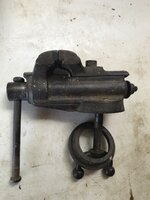
not sure make yet, possibly European circa 1900 although the front looked very much like the early Erie vises
threads are square
craftsman creep
Well-known member
- Joined
- Dec 28, 2022
- Messages
- 300
Here’s my little guy actually surprisingly useful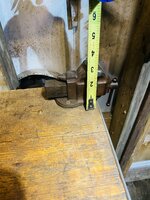
actually surprisingly useful Maxcustody
Well-known member
Thank you.Condolences to you adn your family on losing your FIL - he had good taste in vises.
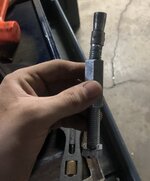
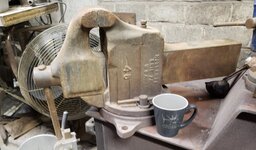
I got a hollands 46 recently and was finally able to pop the pin out using the screw jack method I saw here and a little help from the blow torch. Naively I thought as soon as the pin was out the jaw would move but it’s still stuck hard.
Does anyone have suggestions for ways of getting the swivel jaw unstuck once the pins out? I’ve been using penetrating oil too but not the good stuff just liquid wrench and some “safe cracker” I found at work. Of course I’ve been beating on it too. Thanks
Does anyone have suggestions for ways of getting the swivel jaw unstuck once the pins out? I’ve been using penetrating oil too but not the good stuff just liquid wrench and some “safe cracker” I found at work. Of course I’ve been beating on it too. Thanks
Attachments


Mr. Wonderful
Well-known member
I have that same exact vise. Mine was also stuck. I wound up using a big brass drift and a copper hammer to drive the back side of the swivel jaw sideways. I would drive it a little one way and get some oil in there then work it back the other way. I don’t think it went completely free until about the last quarter of the rotation. Take your time and use plenty of oil and it’ll work free. Good luck!I got a hollands 46 recently and was finally able to pop the pin out using the screw jack method I saw here and a little help from the blow torch. Naively I thought as soon as the pin was out the jaw would move but it’s still stuck hard.
Does anyone have suggestions for ways of getting the swivel jaw unstuck once the pins out? I’ve been using penetrating oil too but not the good stuff just liquid wrench and some “safe cracker” I found at work. Of course I’ve been beating on it too. Thanks
Chris Christiansen
Well-known member
I've been restoring tools for a long time. I was introduced to KROIL some years ago. When I worked as a GE field engineer on steam turbines, we bought KROIL by the 55 gallon drum. KROIL website
If you can find KROIL (not in aerosol) then soak that vise in KROIL for a week or month. Then it most certainly will free up. OBTW, other folks swear by 50-50 mix of acetone and automatic transmission fluid. I've never used that, but I'd give that a try first before KROIL. Good luck and let us know about your plan and if it works!
Check out this GJ thread: Garage Journal Thread KROIL vs 50-50 acetone/ATF
If you can find KROIL (not in aerosol) then soak that vise in KROIL for a week or month. Then it most certainly will free up. OBTW, other folks swear by 50-50 mix of acetone and automatic transmission fluid. I've never used that, but I'd give that a try first before KROIL. Good luck and let us know about your plan and if it works!
Check out this GJ thread: Garage Journal Thread KROIL vs 50-50 acetone/ATF
Last edited:
Thank you I guess I’ll have to keep hammering and be patientI have that same exact vise. Mine was also stuck. I wound up using a big brass drift and a copper hammer to drive the back side of the swivel jaw sideways. I would drive it a little one way and get some oil in there then work it back the other way. I don’t think it went completely free until about the last quarter of the rotation. Take your time and use plenty of oil and it’ll work free. Good luck!
I’ll probably have to bolt it down so it doesn’t just move around when I hit it
I’ll have to try that acetone and atf mixI've been restoring tools for a long time. I was introduced to KROIL some years ago. When I worked as a GE field engineer on steam turbines, we bought KROIL by the 55 gallon drum. KROIL website
If you can find KROIL (not in aerosol) then soak that vise in KROIL for a week or month. Then it most certainly will free up. OBTW, other folks swear by 50-50 mix of acetone and automatic transmission fluid. I've never used that, but I'd give that a try first before KROIL. Good luck and let us know about your plan and if it works!
Check out this GJ thread: Garage Journal Thread KROIL vs 50-50 acetone/ATF
I already have acetone would just need the atf thank you
Mr. Wonderful
Well-known member
That’s also what I used in a small syringe to try to force it into the area. This one is mine after a few years.I’ll have to try that acetone and atf mix
I already have acetone would just need the atf thank you


Shiftless
Well-known member
It might help to preload some force on that stuck swivel jaw. With the vise assembled, clamp something like a chunk of steel off center between the jaws and crank down on the handle. Then tap sideways on the back edge like you have been doing.
I have dealt with more than one stuck swivel jaw. Lots of penetrating oil, tapping back and forth and you’ll get it freed up. Be patient and don’t break anything. That’s a great old vise.
I have its baby brother. Not so much of a baby at a healthy 76 pounds.
I have dealt with more than one stuck swivel jaw. Lots of penetrating oil, tapping back and forth and you’ll get it freed up. Be patient and don’t break anything. That’s a great old vise.
I have its baby brother. Not so much of a baby at a healthy 76 pounds.
Last edited:
banditbigdog
Well-known member
Apparently vice enthusiasm is not limited to the US,
Across the pond there's a substantial history of some well-built / hell for stout vise's.
SHOW US YOUR BENCH VICE(S)
Couple examples from the first few pages


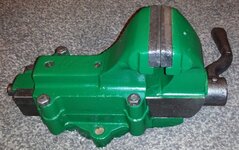
Then substiantial to the next level:
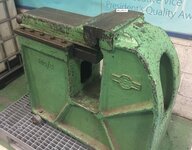
Across the pond there's a substantial history of some well-built / hell for stout vise's.
SHOW US YOUR BENCH VICE(S)
Couple examples from the first few pages
Then substiantial to the next level:
Last edited:
Yours looks great!It might help to preload some force on that stuck swivel jaw. With the vise assembled, clamp something like a chunk of steel off center between the jaws and crank down on the handle. Then tap sideways on the back edge like you have been doing.
I have dealt with more than one stuck swivel jaw. Lots of penetrating oil, tapping back and forth and you’ll get it freed up. Be patient and don’t break anything. That’s a great old vise.
I have its baby brother. Not so much of a baby at a healthy 76 pounds.
Is that an original hollands color or did you pick one you liked? I’m not sure if I want to leave it raw cast iron or paint it. I’ve heard some people say it’s better to leave larger buses unpainted.
Shiftless
Well-known member
Thanks!
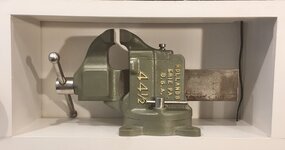
My Hollands 44 1/2 is painted Italian Olive
I like color and I also like bare iron protected by boiled linseed oil or stained with black oil.
“Your vise, your color”
My Hollands 44 1/2 is painted Italian Olive
I like color and I also like bare iron protected by boiled linseed oil or stained with black oil.
“Your vise, your color”
Shiftless
Well-known member
I also have this smaller sized double swiveller Hollands.
This one may or may not still be in the original color. The dark green paint is worn in the usual spots but I suspect it is still bearing the repaint from a long ago owner.

This one may or may not still be in the original color. The dark green paint is worn in the usual spots but I suspect it is still bearing the repaint from a long ago owner.
I do like dark green and haven’t done a restoration with that yet so I might go down that path even if it’s not the originalI also have the next size down in the double swiveller Hollands lineup.
This one may or may not still be in the original color. The dark green paint is worn in the usual spots but I suspect it is still bearing the repaint from a long ago owner.
Shiftless
Well-known member
As I said a few minutes ago, your vise, your color. Old machinery painted dark green generally looks handsome. XKE’s in British racing green look GREAT!
Here is a Morgan that somebody painted metallic purple. (Photo from Pinterest)

Here is a Morgan that somebody painted metallic purple. (Photo from Pinterest)
Sounds good to me!As I said a few minutes ago, your vise, your color.
Here is a Morgan that somebody painted metallic purple. (Photo from Pinterest)
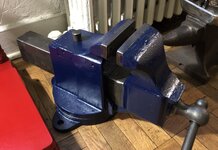
I recently painted a prentiss 22. Unfortunately at some point in its life they broke the swivel jaw and brazed it back in place so now it’s only a stationary jaw. Every think else on it is in great shape though. The slide isn’t split the threads are in great shape nothing else is cracked or broken off.
not sure make yet, possibly European circa 1900 although the front looked very much like the early Erie vises
threads are square
That's pretty cool.
That’s also what I used in a small syringe to try to force it into the area. This one is mine after a few years.
That's a very interesting stand!
Mike
Mr. Wonderful
Well-known member
It was an old semi brake drum and the middle section out of a high pressure gas cylinder. It’s topped with some scrap plate I found. The brake drum has a couple of bags of concrete in it as well.That's pretty cool.
That's a very interesting stand!
Mike
It was an old semi brake drum and the middle section out of a high pressure gas cylinder. It’s topped with some scrap plate I found. The brake drum has a couple of bags of concrete in it as well.
Thanks for filling in those details! I figured that was a brake drum at the bottom. Very creative!
Mike
SkyPuncher
Well-known member
- Joined
- Dec 22, 2014
- Messages
- 243
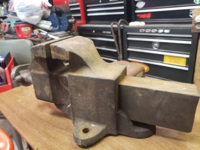

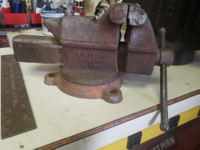
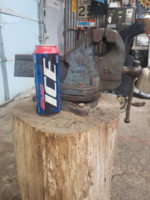
SkyPuncher
Well-known member
- Joined
- Dec 22, 2014
- Messages
- 243
Also, a Record #2 to go along with the others!


Finally Friday! What better time to through up a few pics of finds from the last couple weeks. First is an old crusty Prentiss 515, next a Desmond-Stephan Simplex 350, an old Parkinson 3B on a large stump,

Cool vises!
But, Bud Ice? Did they bring that back?
Mike
SkyPuncher
Well-known member
- Joined
- Dec 22, 2014
- Messages
- 243
Hahaha! Why?..... just trying to get by until payday!Cool vises!
But, Bud Ice? Did they bring that back?
Mike
TheRealZeus
Well-known member
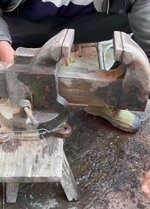
Saw a video of a dude frying cactuses, making dinner with his vise.. 

Sorta hard to one up.
Sorta hard to one up.
Attachments
-
 8D1AE15E-4D55-4951-ACEF-ADA75B3D2E03.jpeg327.2 KB · Views: 73
 -
 24AB2C8E-B37A-424C-A6BF-AF5B3D9D2608.jpeg326.7 KB · Views: 66
 -
 C09605DC-A581-4692-9525-F16BCB6DCA9B.jpeg257 KB · Views: 64
 -
 68BC289A-52AC-4019-95ED-2F169749664E.jpeg297.1 KB · Views: 65
 -
 B37DAE8A-7CCE-4611-9971-E3E7DABC5D53.jpeg347.4 KB · Views: 82
Hahaha! Why?..... just trying to get by until payday!
No, but I always thought that stuff (all "Ice" beers) was so disgusting, I couldn't believe they'd bring it back!
Mike
Found an interesting grinder this week. It’s a Queen City 5HP model from the 50’s. It weighs in at 650 lbs and takes 14”x3” wheels. My front tires were barely touching the ground On the ride home.
Attachments


Outlawmws
Well-known member
Nice Smittty! are you keeping it as a grinder, or getting it for the stand?
I got this for really cheap and my intention was to use the cast iron pedestal for a vise base like you mentioned. Once I saw it in person I started thinking that it would look great in the shop and be a lot of fun to use. They didn’t know if the motor worked and it’s about 75 years old. I have 3 phase 220 so I wired up a plug and gave it a try. It fired up and immediately went to full speed, once off it still turned for a few minutes. I’m going to keep it together and clean it up.Nice Smittty! are you keeping it as a grinder, or getting it for the stand?
I picked up a little Wilton clamp on vise from Amazon. Quality was pretty poor overall. The swivel did not work at all out of the box because the swivel channels were cut off-center There are carriage bolts used for the swivel, and the head was too wide to fit, due to the off-centered cuts. I had to spend 30 minutes with a dremel and angle grinder to get everything working. The Amazon reviews complained about poor quality, so I kind of expected it. I needed a very small vise for little things I do in my office, so this fit what I needed, but it's a shame that they can't seem to send a working product out the door for what they charge.

Outlawmws
Well-known member
That Wilton clamp on is the CBV-100, right? - if so yes, get the QC up to the pricing model.
The Ad is very confusing compared to the pics - is it a 4" jaw? They can't seen to get the terminology in the description to make sense: "4" Vise, 2-1/4" Jaw Opening, 2" Throat" -compared to the pic I'd think 2 or 2-1/2" jaw, 2" throat, and 4" opening?
The Ad is very confusing compared to the pics - is it a 4" jaw? They can't seen to get the terminology in the description to make sense: "4" Vise, 2-1/4" Jaw Opening, 2" Throat" -compared to the pic I'd think 2 or 2-1/2" jaw, 2" throat, and 4" opening?
gdocktor3
Well-known member
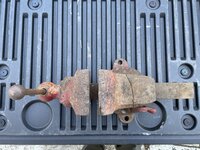
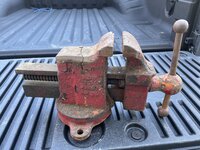
Can anyone tell me anything about this? I can’t read any of the markings. It’s cracked on top. Is it worth anything in this condition?
Attachments

Drill Sergeant Arc
Well-known member
Was that crack from over tightening or pounding? Those quazi anvil spots on vices are perplexing, it’s like the manufacturer doesn’t want you pounding on their product because they can’t control the limits of scale that could be applied in regards to a hammer. Yet they will put something there that invites the user to think “hey I can pound on stuff here”. Some are robust steel and others are just completely bogus machined flat cast iron surface less then a 1/4 thick. When I was a kid my dad and I popped a hole right though one of those machined surfaces on one he had bought at a “TOOLS” tent set up in a parking lot back in the early seventies.
gdocktor3
Well-known member
No idea how crack got there I found it like thatWas that crack from over tightening or pounding? Those quazi anvil spots on vices are perplexing, it’s like the manufacturer doesn’t want you pounding on their product because they can’t control the limits of scale that could be applied in regards to a hammer. Yet they will put something there that invites the user to think “hey I can pound on stuff here”. Some are robust steel and others are just completely bogus machined flat cast iron surface less then a 1/4 thick. When I was a kid my dad and I popped a hole right though one of those machined surfaces on one he had bought at a “TOOLS” tent set up in a parking lot back in the early seventies.
RTM
Well-known member
Looks like this Lewis found upthread at first glanceCan anyone tell me anything about this? I can’t read any of the markings. It’s cracked on top. Is it worth anything in this condition?
Vise Info Thread
Fierljeppen, I can’t thank you enough for your expertise! You can always manage to find something. That’s really cool that this vise is most likely from the late 1890’s. There was absolutely something in the water too 😂 Some really cool style and design came out of that town. I think its...
 www.garagejournal.com
va.grouseman
Well-known member
It's either a Lewis or a Prentiss on the Lewis pattern.---The crack can be repaired by a professional machinist who knows how to weld cast.---It's probably 130 years old.---Made back in the 1800s.---It's rare and you should buy it if their not asking a mint.