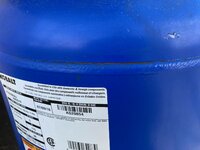
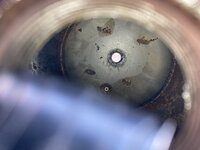
This has been quite the learning experience for me, so I’m glad I did it. Took the bungs off this tank and rinsed it out. I had no idea I could get such a good view of the inside of a tank without a bore scope. Anyway, it definitely looks worse than I had guessed it would. I doubt the first owner ever drained it. There were about 2 shot glasses of rusty sludge at the bottom. This really makes me wonder—what do all my other tanks look like? I run an auto drain, but the condensate coming out is never what I’d call clear. The pictures below are outside, top down, bottom up. It definitely looks like if it’s gonna leak, it’s gonna be on the bottom first.
I went down the hydro test rabbit hole last night and have arrived at this conclusion. I’m willing to hydro test up to the specified max pressure listed on the tank (200psi on this one)—but don’t feel comfortable stress testing a tank beyond that even with water. I’m gonna bring this tank up to 200 with water and feel somewhat comfortable running it at 150psi of air for a couple years. Maybe bring it up to 200 psi with water every few years until it leaks.
I found a few different ways of hydro pressuring a tank, grease gun, power washer etc, but this guy had would I thought was the easiest way to do it—
I spec‘d out a grease gun, Zerks, adapters, a water pressure gauge, etc and found the water pump the British guy in the video is using is actually cheaper, so I ordered the same one off Amazon for $36. Its only rated to 362 psi, but that’s more than I’ll ever need.
thanks again for all the advice.