To avoid these ads, REGISTER NOW!

New Purchase - Delta Rockwell 15-017

To avoid these ads, REGISTER NOW!

Firebrick43

Well-known member
Joined
May 12, 2015
Messages
14,227
Location
West central Indiana
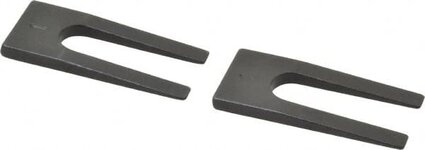
There are wedges to remove the chuck from the spindle.

0859290-23.jpg

They are tapped in with a brass hammer.

Most of the time the run out is wear in the chuck jaws themselves. The wedges are still needed to remove the chuck for rebuild or replacement.

New jacobs chucks/parts are trash after the Chinese bought them out. . I replace with LFA chucks now if I want a keyed chuck or an albricht (SP?) if I want a keyless one.

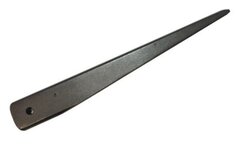
If you move the quill down and there is a slot in the side then its a Morse taper machine. There is a drift to remove the Morse taper to JT33 adapter.

?u=https%3A%2F%2Ftse4.mm.bing.net%2Fth%3Fid%3DOIP.jpg
 
OP
S

Smiles79

Well-known member
Joined
Feb 15, 2018
Messages
290
Location
Northwest Missouri
There are wedges to remove the chuck from the spindle.

0859290-23.jpg

They are tapped in with a brass hammer.

Most of the time the run out is wear in the chuck jaws themselves. The wedges are still needed to remove the chuck for rebuild or replacement.

New jacobs chucks/parts are trash after the Chinese bought them out. . I replace with LFA chucks now if I want a keyed chuck or an albricht (SP?) if I want a keyless one.

If you move the quill down and there is a slot in the side then its a Morse taper machine. There is a drift to remove the Morse taper to JT33 adapter.

?u=https%3A%2F%2Ftse4.mm.bing.net%2Fth%3Fid%3DOIP.jpg
Thanks for the info. How can I tell if the runout is in the chuck without just replacing it? What are the benefits of keyless over keyed, or vise-versa?
 

RTM

Well-known member
Joined
May 13, 2019
Messages
13,259
Location
SF Bay Area
If it was me, (never done this before, so I could be full of excrement) I wouldn't check the runout initially with it running, but twisting by hand, marking high and low spots on the chuck.

Then, loosen and retighten the chuck, twisting the drill in the process. Recheck for low and high, see if they have moved. If so, chuck internals.

Also move up to the chuck and see if your low and high are in the same spots, which says shaft or chuck seating is off .

Then the final question, what level of runout is sufficient for a home user, for wood, metal, etc.?

But in my woodworking world, if it's also that low at the tip, that seems pretty good. But we can always do better.
 

Firebrick43

Well-known member
Joined
May 12, 2015
Messages
14,227
Location
West central Indiana
I will use gauge pins in a chuck to check run out but if it fails I remove the chuck and check the taper first as fretters has said.

As far as advantages/disadvantages of keyed vs keyless chuck.

Keyless is much faster. Especially if you are spotting, drilling, and then reaming mulitiple holes. Switch between the three tools with a keyless chuck can save 1/2 and hour or more on complex jobs.

The biggest disadvantage is keyed chucks advantage. Keyless chucks will self open if ran in reverse. Some can prevent this if you use a pin spanner to tighten the chuck but then its not fast.
 

slowtwitch73

Well-known member
Joined
Apr 18, 2019
Messages
5,876
Location
Hellgate
When using gauge pins etc, its interesting to check the run out dry, and then put a bit of Triflow or whatever on the pin and rechuck and recheck run out... it's usually much better.
 
OP
S

Smiles79

Well-known member
Joined
Feb 15, 2018
Messages
290
Location
Northwest Missouri
I will use gauge pins in a chuck to check run out but if it fails I remove the chuck and check the taper first as fretters has said.

As far as advantages/disadvantages of keyed vs keyless chuck.

Keyless is much faster. Especially if you are spotting, drilling, and then reaming mulitiple holes. Switch between the three tools with a keyless chuck can save 1/2 and hour or more on complex jobs.

The biggest disadvantage is keyed chucks advantage. Keyless chucks will self open if ran in reverse. Some can prevent this if you use a pin spanner to tighten the chuck but then its not fast.
I don't have gauge pins and I don't really want to pick any up for just this use, how accurate do you think my Harbor Freight drill bits are?
 

Firebrick43

Well-known member
Joined
May 12, 2015
Messages
14,227
Location
West central Indiana
I don't have gauge pins and I don't really want to pick any up for just this use, how accurate do you think my Harbor Freight drill bits are?

A single pin is $2.50 on your next Amazon order


My previous experience with harbor freight dill bit set was extremely poor. Where I worked bought the mechs a couple of set cause they thought we didn’t drill a bunch and they were being cheap. So I don’t have faith. However there were a few in the set that were hardened and straight. Just not many. Even the index’s were utter trash. The ended up wasting their money they were so bad. Finally they bought us some Chicago Latrobe and hout indexes. C


Roll them on a relatively flat surface and if you see them wobble don’t use that one. Then find the highest point of run out in the chuck. Put a dot with a sharpie at that point on the chuck and drill bit. Loosen drill bit and turn it 180 degrees and retest. If the runout is still where dot is on the chuck then you have chuck issues. If it followed the drill bit then you have a bent bit.
 
OP
S

Smiles79

Well-known member
Joined
Feb 15, 2018
Messages
290
Location
Northwest Missouri
I did a little more investigation. Obviously the dial indicator shows runout with the spindle retracted. When the spindle is either retracted or fully extended, I can't feel it. When the spindle is halfway or so extended and I push and pull on the chuck, I can hear and feel movement. It sounds like it's coming from within the head casting.

Does this indicate that I need new bearings? Can someone help me locate bearings and replacement instructions?

 
To avoid these ads, REGISTER NOW!

Firebrick43

Well-known member
Joined
May 12, 2015
Messages
14,227
Location
West central Indiana
I did a little more investigation. Obviously the dial indicator shows runout with the spindle retracted. When the spindle is either retracted or fully extended, I can't feel it. When the spindle is halfway or so extended and I push and pull on the chuck, I can hear and feel movement. It sounds like it's coming from within the head casting.

Does this indicate that I need new bearings? Can someone help me locate bearings and replacement instructions?

The casting is split in the front and there is a bolt/nut that if tightened will take up some of the play if the outside of the quill or casting itself is some what worn. It should be tightened until drag is felt moving up and down and just barely backed off so there is no drag.

That also has a quill lock, usually a split cotter but it’s hard to tell by the picture. It may again be a split casting. That is the lower one in the front. When you do your runout test lock it here to make sure your measureing the quills bearings instead of the quill to head casting fit
 
OP
S

Smiles79

Well-known member
Joined
Feb 15, 2018
Messages
290
Location
Northwest Missouri
The casting is split in the front and there is a bolt/nut that if tightened will take up some of the play if the outside of the quill or casting itself is some what worn. It should be tightened until drag is felt moving up and down and just barely backed off so there is no drag.

That also has a quill lock, usually a split cotter but it’s hard to tell by the picture. It may again be a split casting. That is the lower one in the front. When you do your runout test lock it here to make sure your measureing the quills bearings instead of the quill to head casting fit
Thanks for the tips. Next chance I have I'll look at those.
 

NORDFORD

Well-known member
Joined
Jan 25, 2014
Messages
200
Did you tighten each hole in the chuck? That’s the proper way. Did you check runout in the bit?

As far as bearings, google the model and parts diagram. These are easy as pie to work on. Bearing numbers are in the bearings.

These are great units. Good score.
 
OP
S

Smiles79

Well-known member
Joined
Feb 15, 2018
Messages
290
Location
Northwest Missouri
The casting is split in the front and there is a bolt/nut that if tightened will take up some of the play if the outside of the quill or casting itself is some what worn. It should be tightened until drag is felt moving up and down and just barely backed off so there is no drag.

That also has a quill lock, usually a split cotter but it’s hard to tell by the picture. It may again be a split casting. That is the lower one in the front. When you do your runout test lock it here to make sure your measureing the quills bearings instead of the quill to head casting fit
Thanks for the tips. Next chance I have I'll look
Did you tighten each hole in the chuck? That’s the proper way. Did you check runout in the bit?

As far as bearings, google the model and parts diagram. These are easy as pie to work on. Bearing numbers are in the bearings.

These are great units. Good score.
I probably didn't tighten the bit in there properly, I'll redo it. I also have a 0.2" gauge pin on the way.
 
OP
S

Smiles79

Well-known member
Joined
Feb 15, 2018
Messages
290
Location
Northwest Missouri
Finally had some time to look into a few things. First of all, it doesn't look like there's enough room for the wedges I bought to get this chuck off. They say jt6 and jt33 on them. Am I doing something wrong?
The casting is split in the front and there is a bolt/nut that if tightened will take up some of the play if the outside of the quill or casting itself is some what worn. It should be tightened until drag is felt moving up and down and just barely backed off so there is no drag.

That also has a quill lock, usually a split cotter but it’s hard to tell by the picture. It may again be a split casting. That is the lower one in the front. When you do your runout test lock it here to make sure your measureing the quills bearings instead of the quill to head casting fit
I was also tightening one of the adjustments on the front and ended up twisting the head off. Is this the quill lock or the adjustment between the quill and housing? Where can I get a replacement bolt?

 
OP
S

Smiles79

Well-known member
Joined
Feb 15, 2018
Messages
290
Location
Northwest Missouri
The casting is split in the front and there is a bolt/nut that if tightened will take up some of the play if the outside of the quill or casting itself is some what worn. It should be tightened until drag is felt moving up and down and just barely backed off so there is no drag.
I tightened this one up a bit and now I have about .005" when measuring a gauge pin in the chuck with the quill unlocked. Is that a good number?
 

Firebrick43

Well-known member
Joined
May 12, 2015
Messages
14,227
Location
West central Indiana
That is fine for woodworking. If you’re drilling a lot of holes in steel it will result in low drill bit life. Of course if you’re not drilling dozens of holes with the same bit and just a hole here or there and little to no precision reaming its ok.

I am pretty sure that is the quill lock you twisted off.
 
OP
S

Smiles79

Well-known member
Joined
Feb 15, 2018
Messages
290
Location
Northwest Missouri
That is fine for woodworking. If you’re drilling a lot of holes in steel it will result in low drill bit life. Of course if you’re not drilling dozens of holes with the same bit and just a hole here or there and little to no precision reaming its ok.

I am pretty sure that is the quill lock you twisted off.
Thanks. It had about .004" on the spindle with no chuck. How would I even get it any tighter than that?
 

RoninB4

Well-known member
Joined
Jul 22, 2020
Messages
3,621
Location
Under My House
Nothing wrong with trying to clean up, adjust, or rebuild things that are clearly in need of attention. Do bear in mind that it's a drill press and not a precision machine tool. It was never intended or ever will be the equivalent of a jig borer or milling machine. There are techniques and methods to improve hole diameter accuracy and assure a straight, perpendicular hole but that's more about your intended purpose than anything else. Don't get caught up in trying to make it what it will never be or you'll have an expensive rebuild waiting for parts instead of using it as you wanted to. If you're doing average woodworking, drilling holes for clearance/tapping, a .004 runout isn't horrible. Replace the chuck if you really want to or enjoy a project. I'd clean it up and use it as is. If you need better than .004 runout you're using the wrong machine.
 
OP
S

Smiles79

Well-known member
Joined
Feb 15, 2018
Messages
290
Location
Northwest Missouri
Nothing wrong with trying to clean up, adjust, or rebuild things that are clearly in need of attention. Do bear in mind that it's a drill press and not a precision machine tool. It was never intended or ever will be the equivalent of a jig borer or milling machine. There are techniques and methods to improve hole diameter accuracy and assure a straight, perpendicular hole but that's more about your intended purpose than anything else. Don't get caught up in trying to make it what it will never be or you'll have an expensive rebuild waiting for parts instead of using it as you wanted to. If you're doing average woodworking, drilling holes for clearance/tapping, a .004 runout isn't horrible. Replace the chuck if you really want to or enjoy a project. I'd clean it up and use it as is. If you need better than .004 runout you're using the wrong machine.
That was pretty much my thought, I didn't plan on doing much more with it. I would like to also do metalwork with this machine, but I can't imagine I'll be doing anything where .004-.005" runout is an issue.
 

RoninB4

Well-known member
Joined
Jul 22, 2020
Messages
3,621
Location
Under My House
That was pretty much my thought, I didn't plan on doing much more with it. I would like to also do metalwork with this machine, but I can't imagine I'll be doing anything where .004-.005" runout is an issue.
-That will depend upon the metalworking intended. As a retired toolmaker I'm a big advocate of return machinery to service over making a garage queen but that's just me. I say enjoy the ride while it's able to render satisfactory results that meet your needs. Metalworking is a deep, expensive rabbit hole, research will reward and avoid needless wailing and gnashing of teeth. Ask questions, lots of questions when contemplating metalworking. There's a few other members here that have practical advice and plenty here that enjoy the show-n-shine aspect. Both are correct, you just have to decide what speaks to your condition. Congratulations on your purchase.
 
OP
S

Smiles79

Well-known member
Joined
Feb 15, 2018
Messages
290
Location
Northwest Missouri
-That will depend upon the metalworking intended. As a retired toolmaker I'm a big advocate of return machinery to service over making a garage queen but that's just me. I say enjoy the ride while it's able to render satisfactory results that meet your needs. Metalworking is a deep, expensive rabbit hole, research will reward and avoid needless wailing and gnashing of teeth. Ask questions, lots of questions when contemplating metalworking. There's a few other members here that have practical advice and plenty here that enjoy the show-n-shine aspect. Both are correct, you just have to decide what speaks to your condition. Congratulations on your purchase.
Thank you!
 
To avoid these ads, REGISTER NOW!
Top Bottom