To avoid these ads, REGISTER NOW!

Amp clamp opinions...

AA/FC

Well-known member
Joined
Dec 9, 2010
Messages
2,080
Hi guys, I did a search but didn't find anything on the specific model of amp clamp meter that I am looking at.

I am wondering what your opinion is on reading true inrush current? Some say an amp clamp with a min/max setting (or max only setting) will give you max inrush current when a motor or compressor starts. However, others say that the min/max setting is not accurate enough to display a true inrush current. Some meters have a min/max setting along WITH an inrush setting.... they have both. What is your opinion on this? Is the min/max setting accurate enough to get you in the ballpark, or do you really need an inrush setting to get the actual amp draw? For this discussion lets just say we are trying to measure the inrush current of a 3 ton central A/C condensing unit.

Looking at the comparison charts from Klein, I was going to buy the CL390 because it has AC and DC amps, DC micro amps, along with a min/max setting..... but then I stumbled upon an article from a guy who was talking about not getting the real inrush reading when using a meter with only a min/max setting. He claims you needs a meter that specifically has an inrush setting..... so now I am looking a the Klein CL900 because that is the only Klein meter (according to their comparison charts) that has both DC amps along with an true inrush setting. It ALSO has a min/max setting. lol. I can find other meters that have an inrush setting but they typically do not have DC amps at the same time. I want to be able to use this for automotive work so I want it to do both AC and DC amps.... AND I want it to accurately read inrush for when I am doing air conditioning work.

What's your opinion? Do you need a specific inrush option to get a truly accurate reading?

Also, do you know of any other amp clamp meters that will do AC and DC amps, along with inrush on the same meter? regardless of brand....

I did order the CL900 from Zoro and got it for $140.79 after a 20% off coupon code.... Plus tax, free shipping.


Click for larger version:
Klein 2023 clamp meter.png
 
To avoid these ads, REGISTER NOW!

mike93lx

ALLIANCE MEMBER
Joined
Dec 9, 2013
Messages
37,582
Location
Richmond, VA
Max and inrush are different. You need one with inrush if that's something you want to measure. Max is for tracking increases in draw over a period of time, like an energy study. Inrush hits really fast.

I'm surprised that the cl900 does all that for so cheap.
 
OP
A

AA/FC

Well-known member
Joined
Dec 9, 2010
Messages
2,080
Max and inrush are different. You need one with inrush if that's something you want to measure. Max is for tracking increases in draw over a period of time, like an energy study. Inrush hits really fast.

I'm surprised that the cl900 does all that for so cheap.
Thank you for your input, I do appreciate it. You confirmed what I was thinking...

It's funny because the Klein company has a video on YouTube with a Klein employee specifically showing how to measure "inrush" with Klein amp meters that have the min/max setting. The video is shown below. There are people in that comment section asking if there is a difference between inrush and min/max, and if so, why do some meters have both..... And ironically Klein has not answered those question in their own comment section. lol

In my mind, the electrical engineer who designed an amp meter with both inrush and min/max settings would obviously know if there was a difference between the two functions.... and if so, that is why he designed the meter to have both features. I wouldn't think an electrical engineer would program an amp meter to have two completely different function settings that do exactly the same thing. lol


justsam

Well-known member
Joined
Aug 20, 2010
Messages
1,267
Location
Penngrove, California
I would pretty much disregard all of this video. There is no way that fan motor is drawing 100 Amps, assuming 120VAC. He did say he made multiple current loops, if so he should divide by that number to get actual current draw. Not convinced that typical min/max is fast enough to capture in rush but better than nothing.
 
OP
A

AA/FC

Well-known member
Joined
Dec 9, 2010
Messages
2,080
I would pretty much disregard all of this video. There is no way that fan motor is drawing 100 Amps, assuming 120VAC. He did say he made multiple current loops, if so he should divide by that number to get actual current draw. Not convinced that typical min/max is fast enough to capture in rush but better than nothing.
Yeah, I agree. The amp numbers that he got from that little electric motor were obviously bogus. But he did say that he used multiple current loops so that does explain the high amperage numbers. .... and he also did say this was specifically for demonstration purposes only. But regardless of the number of current loops he used in his demonstration, is that method of using max/min good enough to capture ACCURATE inrush current? Like you said, I do not believe the max/min setting is fast enough to capture true inrush. If it was, then why would they ALSO include "Inrush" on some amp clamp meters? No reason to be redundant with an additional setting if max/min is the same thing. But then why would the manufacturer put out a video like this to mislead people? Weird.
 
OP
A

AA/FC

Well-known member
Joined
Dec 9, 2010
Messages
2,080
The only way you will ever get "true" in rush current is insert a shunt and use an oscilloscope.
Yes, I have heard that before. How accurate does it need to be for an air conditioning service tech? (for example) Is the Min/max setting good enough for a technician, is the inrush setting good enough, or should they do as you say with a shunt and oscilloscope?

Or.... are they all good enough for a technician to diagnose and make repairs? lolol. I realize every scenario is different and each one can require different diagnostic techniques.

I am just wondering how accurate the inrush measurement GENERALLY needs to be, and then I want a meter that will give me the best information without breaking bank.

I suspect the Klein CL900 will serve me just fine..... unless someone has a better meter in mind in the $200 range?

Thanks to everyone who has contributed to this thread.
 
Last edited:
To avoid these ads, REGISTER NOW!
OP
A

AA/FC

Well-known member
Joined
Dec 9, 2010
Messages
2,080
why do you care as long as the motor starts.
Well, ONE reason is so I can see just how well soft starters (not hard starters) lower the inrush when I install them. Custmers like to see the before and after numbers. Another reason is it's an indicator of the overall condition of the compressor. Good enough reasons? lolol.
 

wyliesdiesels

Well-known member
Joined
Aug 14, 2012
Messages
20,021
Location
Modesto, CA
min/max is definitely not fast enough nor the correct setting to capture in-rush current. meters w/ in-rush option have specific circuitry to capture the in-rush current.

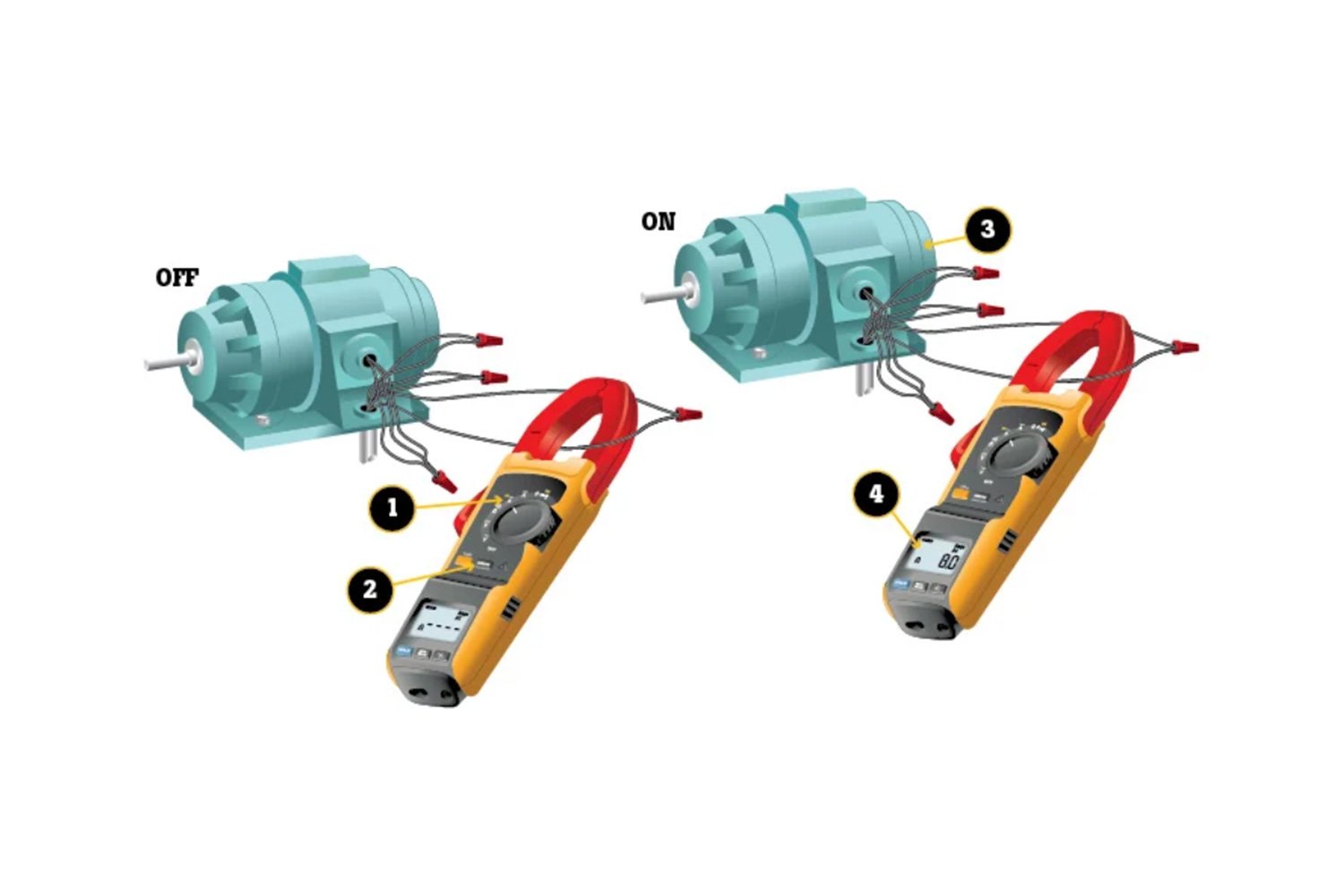
fluke has done extensive testing on this attribute. heres a good article on it

"To provide repeatable motor inrush measurements, advanced clamp meters (such as the Fluke 370 series or the Fluke 381) use a "triggered" mode that synchronizes measurements with the starting current."


wyliesdiesels

Well-known member
Joined
Aug 14, 2012
Messages
20,021
Location
Modesto, CA
why do you care as long as the motor starts.
"Why does this measurement matter? Newer, high-efficiency motors draw more running current than their predecessors. Knowing the value of inrush current can help a technician locate a startup problem, whether it's in the motor or in the starting circuit. Inrush measurements are usually recorded in a preventative maintenance log for future reference."


fitter30

Well-known member
Joined
Jun 23, 2019
Messages
2,981
Location
Peace Valley,mo
There's fluke337 meters on ebay for $200 replaced by newer 376 $250
Fluke 337 Clamp Meter, that will automatically synchronize your measurement starting point with the motor's start point. Your tool's inrush function will take a large number of sample measurements during the startup period, filter them, and calculate the actual starting current.
 

theoldwizard1

Well-known member
Joined
Feb 22, 2011
Messages
43,180
Location
SE MI
Yes, I have heard that before. How accurate does it need to be for an air conditioning service tech? (for example) Is the Min/max setting good enough for a technician, is the inrush setting good enough, or should they do as you say with a shunt and oscilloscope?
Why not just go with the A/C manufacturer recommends ?

If that is still tripping the breaker install a MicroAir EasyStart. This is the only brand I know that actually LIMITS the inrush current. Bigger/more capacitors actually make the problem worse !
 
OP
A

AA/FC

Well-known member
Joined
Dec 9, 2010
Messages
2,080
Why not just go with the A/C manufacturer recommends ?

If that is still tripping the breaker install a MicroAir EasyStart. This is the only brand I know that actually LIMITS the inrush current. Bigger/more capacitors actually make the problem worse !
Yes. That is exactly what I'm doing.

Notice where I said.... soft starters, "not hard starters" in my original comment. Now that I re-read my comment, I see where I mis-spoke (or mis-typed) I should've typed "easy starter" not "soft starter" but I did specify it was "not hard starters" that I was installing.

There is at least one more brand (IMC) of after market easy starter on the market... and maybe even a few now being made by AC manufacturers. (not 100% certain on that) but yes, the MicroAir has been great so far.
 

theoldwizard1

Well-known member
Joined
Feb 22, 2011
Messages
43,180
Location
SE MI
There is at least one more brand (IMC) of after market easy starter on the market... and maybe even a few now being made by AC manufacturers. (not 100% certain on that) but yes, the MicroAir has been great so far.
Most mini-splits use "inverter technology". If I understand it correctly, the incoming voltage is converted to DC and then, in most cases converted to 3 phase AC. Two big benefits. 3 phase motors are MUCH more efficient. The inverter can generate variable frequency so the the motor can operate at an optimal speed.

The real point is, adding current limiting during start up would cost only a couple of $ !
 

Crazyjake8493

Well-known member
Joined
Sep 26, 2014
Messages
3,966
Location
Upstate NY
Not much more I can add except that I've been using the CL800 (no inrush) for 5-6 years now and it's been a great meter for the price. I didn't need inrush at the time I bought it, though I wish it did DC micro amps for flame rod testing, but I have another meter with that.
 
To avoid these ads, REGISTER NOW!
Top Bottom