To avoid these ads, REGISTER NOW!

Ibeam trolley inquiry

kpeklund91

Member
Joined
Jun 11, 2023
Messages
14
Hello, first timer here with what may be a stupid question:

I have an I-beam that spans the entirety of my basement and garage and I've decided to purchase one of those harbor freight 2ton trolleys to ride along that ibeam.

It appears to fit and function very well upon first installation check, but I kind of discovered that the trolley could potentially fall off the beam even when fully secured and cotter pinned. (The Gif image doesn't depict it falling off, as I would have to extremely angle it upwards to get it to fall off, but nonetheless it still has quite a lot of movement.)

ezgif-4-3a07da2aec.gif

This could only happen by applying an angled force sideways, or slightly upwards.. but it has me concerned about it accidentally slipping with a load attached that went off of centerline.

Obviously one would only want to operate a trolley with the load directly underneath and that wouldn't be an issue..

I guess my question is, to anyone with experience or knowledge of these systems.. is it normal for a home-grade trolley system to be like this? I would imagine that with a chain pulley system attached to the eyelet that the bulk of the weight and pivoting would occur there and not on the track system itself, but I am not entirely sure.

Thanks for any help.
 
Last edited:
To avoid these ads, REGISTER NOW!

tarmy

Well-known member
Joined
May 28, 2014
Messages
4,713
Location
Nor Cal
Ummm…no.

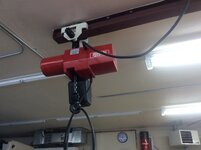
that is not the A) correct sized trolly for the beam, B) a ************* trolley, or C) something that was not designed very well. Zero chance I would use it. This is mine (1 ton Milwaukee) on a 4x4 I beam…no slop like that at all and smooth sliding.IMG_2120.jpegIMG_1980.jpegIMG_0146.jpeg
 
OP
K

kpeklund91

Member
Joined
Jun 11, 2023
Messages
14
Well I've managed to get two answers completely opposite of each other.. but I greatly appreciate the responses.

All I can say is that, there is zero slip side to side, only slop when applying an angular force that causes one side to lift "up"

The gravity thing definitely makes sense to me, but there also a feeling much like the first commenter that just makes me want to find a "bigger" trolley.

My ibeam dimensions are 5 3/16 wide and roughly 7 and 1/2 tall.

The trolley system can go up to 8 inches. Just really torn. But thank you for the input guys.
 
OP
K

kpeklund91

Member
Joined
Jun 11, 2023
Messages
14
That's the thing, if the load was being lifted correctly I can't see how it would ever have any problems. But I just get paranoid about those "what if" moments. (I saw this on another trolley system but this specific model didn't have it.)

I also contemplating drilling out a hole on each side under the beam and running large bolt directly underneath to prevent the upward motion in that event it ever did move. I never plannig to lift more than a few hundred pounds at most, but I really don't know much about this stuff.
 

619DioFan

Well-known member
Joined
Apr 9, 2013
Messages
3,617
Location
San Diego , Ca.
I have that one. Should only be 1/8th inch space between the edge of the beam and the flange of the roller. If this is set right then you should have no problems. Once you hang something from it the slop you show won't be there.
 

kwb

Well-known member
Joined
May 1, 2009
Messages
1,781
Location
PNW
The slop doesn't bother me - what does is your saying you can rock it high enough that on an angle you could get it to come off. If it is properly shimmed I don't see how that would be possible.

Overhead systems and components are usually pretty well engineered against all sorts of abuse and misuse (like not perfectly vertical lifts)
 
OP
K

kpeklund91

Member
Joined
Jun 11, 2023
Messages
14
The slop doesn't bother me - what does is your saying you can rock it high enough that on an angle you could get it to come off. If it is properly shimmed I don't see how that would be possible.

Overhead systems and components are usually pretty well engineered against all sorts of abuse and misuse (like not perfectly vertical lifts)
This what bothers me also.
I do indeed have about .100 space on both sides, maybe even less. I tried with zero space and it will still come off at the right angle.

I just think the beam is large enough that it allows the correct angle to be achieved to slide it off.

The circumstances that would require it to achieve that angle would be laughable though, in my opinion.
 
OP
K

kpeklund91

Member
Joined
Jun 11, 2023
Messages
14
So you have to push up, at and angle, for it to come off?
How is that an issue when there is a load on it? I must be missing something
When you put it like that, yeah, it doesn't really make sense as an issue.

My fear was having a load move sideways causing more of the load to move to one side of the track having it tip upwards on the other side.

I was just under the impression that they were more secure, but it appears that gravity does a lot of the securing from what I'm hearing.

Thanks for all the input.
 

PoorUB

Well-known member
Joined
Mar 29, 2021
Messages
11,721
Location
Fargo, ND
Hello, first timer here with what may be a stupid question:

I have an I-beam that spans the entirety of my basement and garage and I've decided to purchase one of those harbor freight 2ton trolleys to ride along that ibeam.

It appears to fit and function very well upon first installation check, but I kind of discovered that the trolley could potentially fall off the beam even when fully secured and cotter pinned. (The Gif image doesn't depict it falling off, as I would have to extremely angle it upwards to get it to fall off, but nonetheless it still has quite a lot of movement.)

ezgif-4-3a07da2aec.gif

This could only happen by applying an angled force sideways, or slightly upwards.. but it has me concerned about it accidentally slipping with a load attached that went off of centerline.

Obviously one would only want to operate a trolley with the load directly underneath and that wouldn't be an issue..

I guess my question is, to anyone with experience or knowledge of these systems.. is it normal for a home-grade trolley system to be like this? I would imagine that with a chain pulley system attached to the eyelet that the bulk of the weight and pivoting would occur there and not on the track system itself, but I am not entirely sure.

Thanks for any help.

I would shim it tighter to the beam. .100" per side seems like a lot to me.

I made a hoist trolley a few years back and I set it up with very little clearance to the beam, way less that 1/8".
 

tominboise

Well-known member
Joined
Jan 17, 2022
Messages
195
Looks like you could tighten it up on the beam by moving some of the washers to the outside of the trolley.
 
OP
K

kpeklund91

Member
Joined
Jun 11, 2023
Messages
14
Yeah, see all those washers?

Do the needful.
I just think that my beam is really designed for a larger trolley even though this one may mount on it.

The beam is 5 3/16" wide, the distance to the inner webbing is about 2 1/2"
And the wheels are like 3/8" on the contact surface.. so I just think that regardless it's able to pivot off under the right angle and force.

I'll definitely try to tighten it up a little bit to see if that helps.
 

whateg01

Well-known member
Joined
Mar 13, 2006
Messages
11,533
Location
doo dah, kansas, usa
How tf do you think your beam "is designed for a bigger truck"? You have that one about as narrow as it can go already. You think a bigger one will go narrower? And I don't see how it could possibly rock far enough to come off. I'd have to see a picture of it in that position to believe it would.
 

cannuck

Well-known member
Joined
Nov 30, 2021
Messages
4,661
Location
Rural SK
Let's get back to the basics: There are two kinds of "I" beams, Wide Flange (i.e. H series) and S series ("I" beams to most). The HUGE difference in trolleys to run on them is that S beams have a tapered cap strip, so the wheels have a matching taper inside of the flange of the wheels to match the running surface on the "I" beam. Wide flange beams are dead flat on cap strips (the top and bottom parts actually called flanges) so take a very different wheel with no taper. Do NOT run a tapered wheel on a W beam. I have as yet to see a 7 1/2" depth any beam, so not sure what the OP actually has.

The HF trolley (IF it has the right wheels) should do just fine, and most such trolleys can indeed be lifted but not fall off. Have used dozens if not hundreds over the years loaded not only straight down but with loads pulled along from chain fall.
 

kbs2244

Well-known member
Joined
Nov 11, 2006
Messages
14,065
you have an install problem
"Should be fine if adjusted to the right width."
I gave one ob a 4 inch beam with no problems
O did have to follow the install directions
 
To avoid these ads, REGISTER NOW!

oldmachinenut

Well-known member
Joined
Apr 3, 2009
Messages
2,533
Location
Missing, presumed dead in central Pa.
Let's get back to the basics: There are two kinds of "I" beams, Wide Flange (i.e. H series) and S series ("I" beams to most). The HUGE difference in trolleys to run on them is that S beams have a tapered cap strip, so the wheels have a matching taper inside of the flange of the wheels to match the running surface on the "I" beam. Wide flange beams are dead flat on cap strips (the top and bottom parts actually called flanges) so take a very different wheel with no taper. Do NOT run a tapered wheel on a W beam. I have as yet to see a 7 1/2" depth any beam, so not sure what the OP actually has.

The HF trolley (IF it has the right wheels) should do just fine, and most such trolleys can indeed be lifted but not fall off. Have used dozens if not hundreds over the years loaded not only straight down but with loads pulled along from chain fall.
You beat me to it👍
 
OP
K

kpeklund91

Member
Joined
Jun 11, 2023
Messages
14
you have an install problem
"Should be fine if adjusted to the right width."
I gave one ob a 4 inch beam with no problems
O did have to follow the install directions
I literally don't know what else there is to follow in the assembly instructions.

There is zero movement side to side, the flange is literally touching each side of the wheels. I elected to tighten even more to get rid of the 1/8 gap as suggested.

I would love to post a video to show you guys how the trolley is able to come off but sadly I can just do a short GIF image. I can try to get one made.

Again, zero movement side to side, no play. The only play is by lifting upwards at an angle and gaining clearance to make the other side fall off the track.

My dimensions again are 7 3/8" in beam height, 5 3/16" width" 2 1/2" from flange outside to webbing inside and the flanges are 3/8" thick.

My comment about a larger trolley, I meant that maybe it needs a larger wheelbase to not allow the slop.

Like I said, I don't know. I'm just conveying what is going on. I don't know what else I'm supposed to do other than what is listed in the assembly instructions, lol.
 
OP
K

kpeklund91

Member
Joined
Jun 11, 2023
Messages
14
You beat me to it👍
This is my beam. It's not tapered at all. Completely flat. I will try to make a video and convert to gif to show you how I am able to make it come off.

Thanks for the info again.
 

Attachments

  • 20230611_134717.jpg
    20230611_134717.jpg
    709.1 KB · Views: 78
OP
K

kpeklund91

Member
Joined
Jun 11, 2023
Messages
14
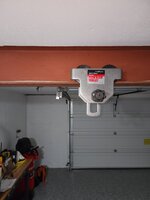
Does anyone else think that @kpeklund91's and @tarmy's trolleys are the same but painted different colors?
They definitely look exactly the same.

But his beam is much smaller in height than mine, his almost fits entirely in the beam.
His would physically not be able to achieve the angle necessary to allow for the clearance for the wheels to fall off track in the event of an upward movement on one side. The top of the beam would prevent the movement.
I have 4 inches of clearance from top of wheel to top of flange.

That's kind of what I'm saying. I just feel like this may not be the most compatible trolley.

Anyhow, thanks again for everyone's input.

I'm starting to just believe I'm just way overthinking this. Will just use light loads until I can perform a few stress tests.
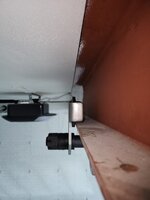
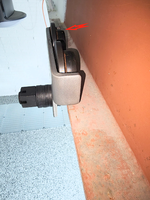
20230612_173455.jpg20230612_173434.jpg20230612_173229.jpg20230612_173051.jpg
 
Last edited:

cannuck

Well-known member
Joined
Nov 30, 2021
Messages
4,661
Location
Rural SK
Thanks for the detailed pics. NOW we can see that there is enough room between the wheel and the shear web for the whole thing to move sideways enough to derail. The solution is quite simple: see the
"ears" beside each wheel (the parts from the main plate bent inwards 90 degrees)? You need to make a "bumper", a piece of flat bar bent 90 degrees each end that you can bolt to the ears and runs behind the wheels to prevent enough sideways movement to get you in trouble. Of course, one each side, drill holes (and tap if you please, not sure room for nuts between backside and wheels) and you can take them off if you need to remove trolley (no real reason to do that - it is more than big enough and the wheels have a nice flat spot to run on wide flange beam).

I have made some cranes that run on one side only of the beam and I weld a similar thing as derailment protection on them. Have actually tested it (on purpose) to make sure it is foolproof (as my 12YO grandson runs that crane fully loaded quite often).
 
OP
K

kpeklund91

Member
Joined
Jun 11, 2023
Messages
14
Thanks for the detailed pics. NOW we can see that there is enough room between the wheel and the shear web for the whole thing to move sideways enough to derail. The solution is quite simple: see the
"ears" beside each wheel (the parts from the main plate bent inwards 90 degrees)? You need to make a "bumper", a piece of flat bar bent 90 degrees each end that you can bolt to the ears and runs behind the wheels to prevent enough sideways movement to get you in trouble. Of course, one each side, drill holes (and tap if you please, not sure room for nuts between backside and wheels) and you can take them off if you need to remove trolley (no real reason to do that - it is more than big enough and the wheels have a nice flat spot to run on wide flange beam).
I will look into this. Thank you very much for your great explanation.

Thanks for sticking with me through the process of trying to convey what is going on. Sometimes the message is lost.

:)
 
OP
K

kpeklund91

Member
Joined
Jun 11, 2023
Messages
14
I will look into this. Thank you very much for your great explanation.

Thanks for sticking with me through the process of trying to convey what is going on. Sometimes the message is lost.

:)

Thanks for the detailed pics. NOW we can see that there is enough room between the wheel and the shear web for the whole thing to move sideways enough to derail. The solution is quite simple: see the
"ears" beside each wheel (the parts from the main plate bent inwards 90 degrees)? You need to make a "bumper", a piece of flat bar bent 90 degrees each end that you can bolt to the ears and runs behind the wheels to prevent enough sideways movement to get you in trouble. Of course, one each side, drill holes (and tap if you please, not sure room for nuts between backside and wheels) and you can take them off if you need to remove trolley (no real reason to do that - it is more than big enough and the wheels have a nice flat spot to run on wide flange beam).

I have made some cranes that run on one side only of the beam and I weld a similar thing as derailment protection on them. Have actually tested it (on purpose) to make sure it is foolproof (as my 12YO grandson runs that crane fully loaded quite often).
If I may ask, what thickness of steel would you recommend for these bumpers?
I can't really imagine they're going to be supporting a load.

I'm not exactly sure how I'm going to go about doing this just yet so im kind of brainstorming some ideas up.

I don't have access to much excess steel or scrap metals to create something like this readily but am going to try to make it work.
All the metals I work with everyday are entirely round and cylindrical, and nothing longer than a few inches, so I will need to either buy some or find some at a scrapyard.

My only alternative is buying some ridiculously expensive and bulky trolley system that is way overkill for me in my little garage.
(I may not even realistically need the bumpers either if everything is lifted correctly but I'm just thinking they really should be done.)
 

cannuck

Well-known member
Joined
Nov 30, 2021
Messages
4,661
Location
Rural SK
The trolley you have is already far bigger than I would expect a residential beam to be able to fully exploit. I would go with 3/16" flat bar, same width as the tabs on the trolley. If the tabs are 12" apart, you would want the inside of the bend to be right on 12". put a 90 degree bend on each end to overlap the tab and allow you to drill 2 little holes (1/4") in the flat bar and tap holes in the tabs to fit. All you are trying to do is have it rub the shear web (center of the beam) IF it starts to go off track (i.e. ride up the beam flange with the wheel flange
 

Attachments

  • 20230612_215531[1].jpg
    20230612_215531[1].jpg
    605.4 KB · Views: 67

FordTruckWench

Well-known member
Joined
Jan 8, 2015
Messages
539
Location
California
All the metals I work with everyday are entirely round and cylindrical, and nothing longer than a few inches, so I will need to either buy some or find some at a scrapyard.

Home Depot and Lowes have both started stocking metal at stores in my area. The selection isn't great, especially for thicker metal, but there must be 50+ SKUs. You can also check the hardware aisle for stuff like gate and barn door hardware. Also the Simpson (i.e. earthquake) hardware.
 

mike93lx

ALLIANCE MEMBER
Joined
Dec 9, 2013
Messages
37,929
Location
Richmond, VA
Home Depot and Lowes have both started stocking metal at stores in my area. The selection isn't great, especially for thicker metal, but there must be 50+ SKUs. You can also check the hardware aisle for stuff like gate and barn door hardware. Also the Simpson (i.e. earthquake) hardware.
Home depot had metal, but it is wicked expensive. I just grabbed a 3' piece of 1" angle from HD and it was nearly $20

Maybe a place like metals supermarket is near by
 

cannuck

Well-known member
Joined
Nov 30, 2021
Messages
4,661
Location
Rural SK
If you are willing to give up adjustability for width, simplest solution might be to go to a small Mom and Pop welding shop and have them fabricate and weld the bumpers to side plates of your trolley. You will need to give them a dimension for distances to the shear web from some reference point on the side plates. Your local Metal Supermarket might be able to cut and bend, not sure if that service is offered. ANYONE who sells less than full length is going to be expensive. Rule of thumb is double the cost of the material (so for hot rolled flats guestimate $2 a pound plus labour)
 
OP
K

kpeklund91

Member
Joined
Jun 11, 2023
Messages
14
The trolley you have is already far bigger than I would expect a residential beam to be able to fully exploit. I would go with 3/16" flat bar, same width as the tabs on the trolley. If the tabs are 12" apart, you would want the inside of the bend to be right on 12". put a 90 degree bend on each end to overlap the tab and allow you to drill 2 little holes (1/4") in the flat bar and tap holes in the tabs to fit. All you are trying to do is have it rub the shear web (center of the beam) IF it starts to go off track (i.e. ride up the beam flange with the wheel flange
This is great information. Thanks for the isometric drawing. Helps a ton. I pictured almost the exact thing in my head.

Thanks to everyone for their input. A lot of knowledge on this forum.
 

Zeke

Well-known member
Joined
Aug 13, 2009
Messages
17,176
Location
Long Beach CA, the sewer by the sea.
The trolley you have is already far bigger than I would expect a residential beam to be able to fully exploit. I would go with 3/16" flat bar, same width as the tabs on the trolley. If the tabs are 12" apart, you would want the inside of the bend to be right on 12". put a 90 degree bend on each end to overlap the tab and allow you to drill 2 little holes (1/4") in the flat bar and tap holes in the tabs to fit. All you are trying to do is have it rub the shear web (center of the beam) IF it starts to go off track (i.e. ride up the beam flange with the wheel flange
@kpeklund91, if you need to do anything, this will take care of it. Shoot, you could accomplish that with some scrap and 4 C-clamps.

This has been a typical over complicated issue created by non other then the Interweb.
 

CraigStu

Well-known member
Joined
May 22, 2014
Messages
4,057
Location
Blacksburg, Va
Back to the 2 types of beams described by cannuck. Looks to me like you have a flat flanged beam and tapered wheels.
trolly.png
Maybe that would have no effect but it doesn't look right to me. BTW, yes I messed w/ the picture brightness and contrast some to make that wheel profile easier to see. It shows up in one of your other pics also.
 
OP
K

kpeklund91

Member
Joined
Jun 11, 2023
Messages
14
Back to the 2 types of beams described by cannuck. Looks to me like you have a flat flanged beam and tapered wheels.
trolly.png
Maybe that would have no effect but it doesn't look right to me. BTW, yes I messed w/ the picture brightness and contrast some to make that wheel profile easier to see. It shows up in one of your other pics also.
They are flat that leads out to a taper, almost a 50/50. They state it can work with tapered or flat beams in the specs.
 
OP
K

kpeklund91

Member
Joined
Jun 11, 2023
Messages
14
Do you even realize how few people would ever identify that projection as "isomeric"?>?>
Damn....you must be almost as old as I am!
(confession time:) I still design EVERYTHING on the board. Engineer friend converts to .dfx if needed.
Hehe, I'm actually 33. Just spent a lot of time in machine shops and a lot of time working with the engineers on call. A lot of our prints have isometric views so I just kind of call any type of drawing like that isometric. Thanks again for your help.
 
To avoid these ads, REGISTER NOW!
Top Bottom