To avoid these ads, REGISTER NOW!

Rooftop sprinkler to assist cooling

jblnut

ALLIANCE MEMBER
Joined
Jan 17, 2015
Messages
7,009
Location
In the Middle of MN
Whilst shooting the breeze with a great uncle of mine who has been there and done that in his 91yrs on this earth we got to talking about life before mechanical air conditioning. He mentioned that they'd have a sprinkler on the house roof to keep it cooler in the house back in the day.

Anyone ever do this ? It got me thinking that it's likely cheaper to run my well pump and mist the roof than run the AC so much. Or maybe not lol.

It was an interesting conversation for sure.
 
To avoid these ads, REGISTER NOW!

rlitman

Well-known member
Joined
Oct 18, 2010
Messages
24,599
Location
Long Island
It might help, if the humidity isn't too high. But it comes with a lot of risks. Minerals in the water can stain your roof, or even lead to corrosion, and continual moisture can lead to mildew and even rot. Condensate is low on minerals and is often used to wet down AC coils to improve efficiency, but it comes with all sorts of dirt from the air. You could use RO water with a high poressure pump to create a mist that evaporates before it hits the surface, but that's energy and parts expensive. There's no free lunch here.
 

Shiftless

Well-known member
Joined
Mar 9, 2014
Messages
14,543
Location
East Bay SFO
With all of the above warnings, maybe it would be better to increase your attic insulation. What R value do you have now? Is it 100% continuous or are there gaps? Is your attic vented? What color is your roof?
 
OP
J

jblnut

ALLIANCE MEMBER
Joined
Jan 17, 2015
Messages
7,009
Location
In the Middle of MN
It might help, if the humidity isn't too high. But it comes with a lot of risks. Minerals in the water can stain your roof, or even lead to corrosion, and continual moisture can lead to mildew and even rot. Condensate is low on minerals and is often used to wet down AC coils to improve efficiency, but it comes with all sorts of dirt from the air. You could use RO water with a high poressure pump to create a mist that evaporates before it hits the surface, but that's energy and parts expensive. There's no free lunch here.
My well water would have the roof looking like a chalkboard in under a day lol. Mostly curious if anyone has done it. I found a ton of fire prevention sprinklers online and it made me curious if anyone had done it for cooling.

I highly doubt my great uncle's parents were concerned with the roof on the old farm house looking shabby lol.

I have a RO system in the mech room that feeds a line to a mister system in my AC already to help it out. I had the system from the old house to clean up the hand dug well water and didn't want to use it for drinking water in the new house so I used it there. It's been in the high 80's the last few days and I left it off yesterday and on today so we'll see what the Emporia app says the difference wasin power usage !!

With all of the above warnings, maybe it would be better to increase your attic insulation. What R value do you have now? Is it 100% continuous or are there gaps? Is your attic vented? What color is your roof?
Attic is R80. 2" spray foam on the bottom of the mat and the rest blown in. It's vented with ridge vents and soffits. Roof is Koko Brown barn steel. The rest is a SIP home so it's well insulated.

I was more so curious if anyone had ever done it vs me actually doing it. I have a to do list 3 football fields long already lol. Our AC now doesn't struggle to cool it whatsoever at this point.
 

dcg9381

Well-known member
Joined
Jun 20, 2018
Messages
11,751
Location
Austin, TX
Interesting idea. I've never seen it done. It make sense to me, especially up north with a well where the water temperature is likely 50 degrees. But if you have "cold" well water, why not use that as part of a "geothermal" cooling system?

Perhaps it's not done because the electrical cost of pumping water exceeds what is gained in terms of cooling?

I noticed that the furnace here has an RO system connected to it, probably for the same reasons that yours has one. Water is "limitless" here. In Texas (where I am water limited), I plumbed our RO drain line into the HVAC drain line with the intention of eventually recapturing it and using it for irrigation.
 

mike in tucson

Well-known member
Joined
Jul 31, 2015
Messages
639
A long time ago, I ate at a restaurant in Georgia that had a system to trickle water down the roof continuously. It was too humid there for a swamp cooler so they simply used the cool well water for conduction cooling.... seemed to work reasonably well. Of course, they had a well so the water was "free." They collected the runoff and used it for plant watering.
 

toyotadriver

Well-known member
Joined
Dec 30, 2010
Messages
1,586
There is a large Corps of Engineers lake not too far from me and we boat on the lake. There are lots of marinas on the lake and a fair number of restaurants. Many of them have uninsulated roofs over the dining areas. On hot days, they pipe lake water up to the roof and it runs down, thus keeping the dining areas cooler. They don't keep it COLD....just cooler than the ambient air. Combined with the shade, they stay fairly comfortable. I would NOT do the same thing to my expensive house or shop roof.
 

pcmeiners

Well-known member
Joined
Aug 13, 2009
Messages
7,901
Location
In the only town in Pennsylvania, Bloomsburg.
"I have a to do list 3 football fields long already lol."

My list would allow jets to land. :thumbup:

Kidding aside, years back we had a two prong approach, we placed sprinkler hose on the roof for cooling, then the water was diverted from the down spout into a pool to warm it up.
Well I quess it helped cool the roof, but as to cooling the house, you would need scientific instruments to see the difference in temperature....basically a waste of time.
 

nadogail

Well-known member
Joined
Jan 23, 2009
Messages
31,952
Location
Coronado, CA
I remember my father doing that during a Heat Wave in Portland, Oregon about 1949. Our city water was known for being very soft.
It really made a difference.
 

Citation

Well-known member
Joined
Jan 20, 2016
Messages
3,214
Location
Indy
I think I saw a YT video about this recently. The big help was that the water evaporates thus removing a lot of heat energy from the roof. The temperature drop was something like 20+ degrees on a hot day.
 

fitter30

Well-known member
Joined
Jun 23, 2019
Messages
2,974
Location
Peace Valley,mo
My well water would have the roof looking like a chalkboard in under a day lol. Mostly curious if anyone has done it. I found a ton of fire prevention sprinklers online and it made me curious if anyone had done it for cooling.

I highly doubt my great uncle's parents were concerned with the roof on the old farm house looking shabby lol.

I have a RO system in the mech room that feeds a line to a mister system in my AC already to help it out. I had the system from the old house to clean up the hand dug well water and didn't want to use it for drinking water in the new house so I used it there. It's been in the high 80's the last few days and I left it off yesterday and on today so we'll see what the Emporia app says the difference wasin power usage !!


Attic is R80. 2" spray foam on the bottom of the mat and the rest blown in. It's vented with ridge vents and soffits. Roof is Koko Brown barn steel. The rest is a SIP home so it's well insulated.

I was more so curious if anyone had ever done it vs me actually doing it. I have a to do list 3 football fields long already lol. Our AC now doesn't struggle to cool it whatsoever at this point.
RO water very aggressive and corrodes aluminium and steel. Where does the mister spray?
 
OP
J

jblnut

ALLIANCE MEMBER
Joined
Jan 17, 2015
Messages
7,009
Location
In the Middle of MN
RO water very aggressive and corrodes aluminium and steel. Where does the mister spray?
I have a ring of 10mm Festo air line with tiny holes poked into it that sits on the bottom of the unit spraying up at the coil. I checked last night and it all looks great in there still but I still unplugged the RO unit. I knew it was hard on things but the link to it being hard in the AC wasn't made mentally for some reason.

The mister decreased the AC run time by about 25% yesterday so it works. I wonder if regular ol' soft water would work fine without scaling up.
 

Citation

Well-known member
Joined
Jan 20, 2016
Messages
3,214
Location
Indy
Here's something to consider. If you evaporate 1 gallon of water off the roof per hour that's 8080 BTU of heat removed from the roof. That's not insignificant for something the size of a garage.
 
To avoid these ads, REGISTER NOW!
OP
J

jblnut

ALLIANCE MEMBER
Joined
Jan 17, 2015
Messages
7,009
Location
In the Middle of MN
Here's something to consider. If you evaporate 1 gallon of water off the roof per hour that's 8080 BTU of heat removed from the roof. That's not insignificant for something the size of a garage.
1 gallon of water only ?? That seems crazy. That gallon would be gone in a minute on my brown roof. That may indeed be something to try :dunno:

I have a little over 5,000sq/ft of roof on my shop that I could mist at least the unvisable south side of to see what happens I guess. I am 100% sure my well water will stain the roof though.

A couple garden soaker hoses and away we go !!
 

Citation

Well-known member
Joined
Jan 20, 2016
Messages
3,214
Location
Indy
The math says it's so. It takes about 540 calories of heat to vaporize 1 gram of water. A gallon is 3785 grams. A watthour is 860 calories. 1 BTU is 0.293 watt hour

So 540*3785 calories per gallon in one hour is 2376 watts per hour-> 2376 watt hours / 0.293 wh per btu = 8111 BTU (looks like my rounding errors and different conversions added up)

Of course that's heat from the outside of the roof so it still has to go through the insulation. However with my little, uninsulated garage it might really help. Note that this assumes 100% evaporation and doesn't ask about minerals left on the roof.
 
OP
J

jblnut

ALLIANCE MEMBER
Joined
Jan 17, 2015
Messages
7,009
Location
In the Middle of MN
The math says it's so. It takes about 540 calories of heat to vaporize 1 gram of water. A gallon is 3785 grams. A watthour is 860 calories. 1 BTU is 0.293 watt hour

So 540*3785 calories per gallon in one hour is 2376 watts per hour-> 2376 watt hours / 0.293 wh per btu = 8111 BTU (looks like my rounding errors and different conversions added up)

Of course that's heat from the outside of the roof so it still has to go through the insulation. However with my little, uninsulated garage it might really help. Note that this assumes 100% evaporation and doesn't ask about minerals left on the roof.
Damn right I love math !!!

That's neat.

If I didn't have nice new rooves I'd set a sprinkler up there in a heartbeat. I doubt Mama Bear wants her new roof looking like a chalkboard :lol_hitti

As I'm typing this I'm watching my cool pads work on the chicken barn. One 50' pad on each side. Yesterday they both evaporated 955 gallons of water in 10ish hours. So that was 774,600ish BTU's/hr or 64.5 tons of AC. Good grief that's wild !!

KIMG2183.JPG
 

CamMark

Well-known member
Joined
Oct 1, 2020
Messages
77
Location
Palmetto State
Just thinking through the effect this would have and the desired result: a more comfortable interior air temperature?

The cooling effect is on the roof structure itself through conduction to the water. The water either runs off the roof carrying the heat with it or it evaporates, or both. Now the roof is cooler.

So cooling the roof does what? I think mostly this would impact the heat radiated into the space below since the air heated by convection/conduction in contact with the underside of the roof would mostly stay there since it would want to rise.

If my assumptions are correct then adding a radiant barrier to the roof would get similar results if the two methods have similar efficiency.
 

cherokee

Well-known member
Joined
Mar 2, 2010
Messages
980
Location
Kansas City MO
Here where I work (county .gov) when the building had issues with the A/C the maint crew ran a hose up on the roof and ran water on the AC. It helped, we can't ever "close" so someone has to be here. The roof started leaking, the AC had bearings that went out, it was one huge mess.....and one very hot summer. We bought those portable AC units you run a hose out the window, they don't work well but if you are stuck at a desk (911) what can you do.
 

fitter30

Well-known member
Joined
Jun 23, 2019
Messages
2,974
Location
Peace Valley,mo
I have a ring of 10mm Festo air line with tiny holes poked into it that sits on the bottom of the unit spraying up at the coil. I checked last night and it all looks great in there still but I still unplugged the RO unit. I knew it was hard on things but the link to it being hard in the AC wasn't made mentally for some reason.

The mister decreased the AC run time by about 25% yesterday so it works. I wonder if regular ol' soft water would work fine without scaling up.
Not if but when the coil gets mineral up then you can buy a unit or at least a condenser coil. First sign needing a coil when the amount of water used needs more or the mineral build up you start to see it on the face its in between the fins also.
 

Denwood

Well-known member
Joined
Sep 22, 2014
Messages
4,186
Location
Thunder Bay, Ontario, Canada
I keep data on our pool solar rooftop heaters. Water in them typically exits at about 82-87 F with a flow rate of 4GPM per panel. This means the roof deck underneath is never more than that. The sensor on the roof (black shingles) is often at 120F-125F.

Zero water wasted, and you get a cooler roof too. The pool pumps use about 3.7 amps@120V to move water through the panels and are inputting 90K BTU of heat to the pool in full sun. That’s a fair bit of energy removed from the roof/attic that definitely reduces AC use in the home.
 
Last edited:
OP
J

jblnut

ALLIANCE MEMBER
Joined
Jan 17, 2015
Messages
7,009
Location
In the Middle of MN
For sheer reason of I was standing outside by the window AC unit in the shop and was drinking a bottle of water I decided to dump some on the outside radiator. I checked my energy usage app and it dropped a lot when the coil was wet. Makes sense but I didn't expect it to drop that much !!
Screenshot_20230819-170322.png
 

jkeyser14

Well-known member
Joined
Dec 19, 2008
Messages
1,819
Location
(rural) Maryland
A lot of commercial HVAC automation systems I worked on (college intern) in large buildings did this. It was called evaporative cooling. They misted the roof lightly, let it evaporate, and then a little later would repeat.
 

fitter30

Well-known member
Joined
Jun 23, 2019
Messages
2,974
Location
Peace Valley,mo
A lot of commercial HVAC automation systems I worked on (college intern) in large buildings did this. It was called evaporative cooling. They misted the roof lightly, let it evaporate, and then a little later would repeat.
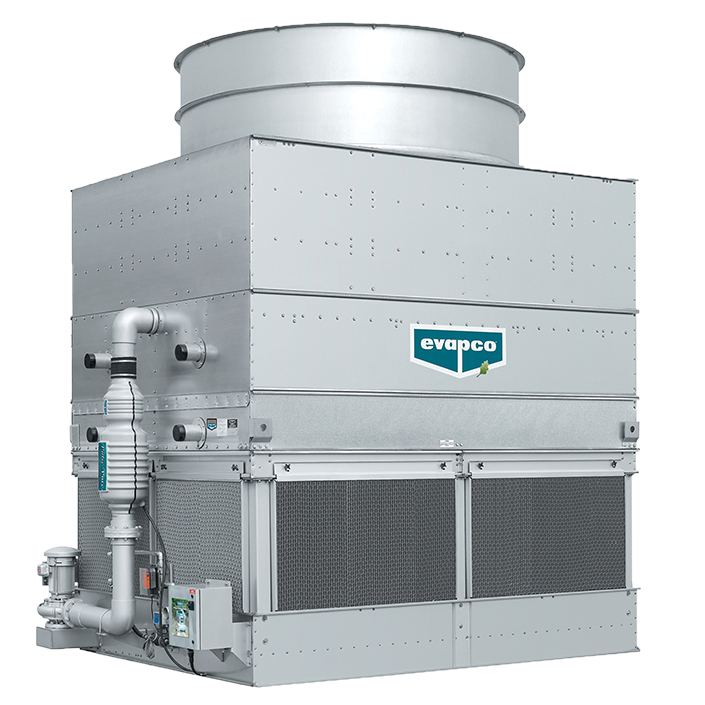
Evap cooling is done total different. Scroll down the link for a video
They also use treated water.
 

nadogail

Well-known member
Joined
Jan 23, 2009
Messages
31,952
Location
Coronado, CA
This takes me back to sometime around 1948 when Portland Oregon was experiencing a Heat Wave. We were living in a housing project built for WW2 Shipyard Workers. There was no insulation on anything and the sun was making those Black tarpaper roofs hot.
My father took our sprinkler and put it on the roof, we could feel the house cooling as soon as he turned on the water.
At that time the Portland water was so soft you could add it directly to a battery.
There was no noticeable staining on the roof, to the absolute best of my recollection.
We didn’t have either a water or electric meter at the time, the Electric Meter was installed about 1949 or 1950, again to the best of my recollection.
 

kbeefy

Well-known member
Joined
Sep 14, 2013
Messages
3,453
Location
Harington, Eastern Washington
My friend did that on his metal, uninsulated shop before he got some swamp coolers.
He used a soaker hose on the ridge and put it on a timer so I ran for about 10 minute cycles.
It worked pretty well, want to say it dropped the roof temp 20-30 degrees. In full summer sun my roof is about 140, I think his was about the same.

The key was to use evaporation, not just running water.
 
To avoid these ads, REGISTER NOW!
Top Bottom