
To avoid these ads, REGISTER NOW!

Air Compressor Leaking

Kenskip1

Well-known member
Joined
Dec 30, 2013
Messages
657
Location
Missouri
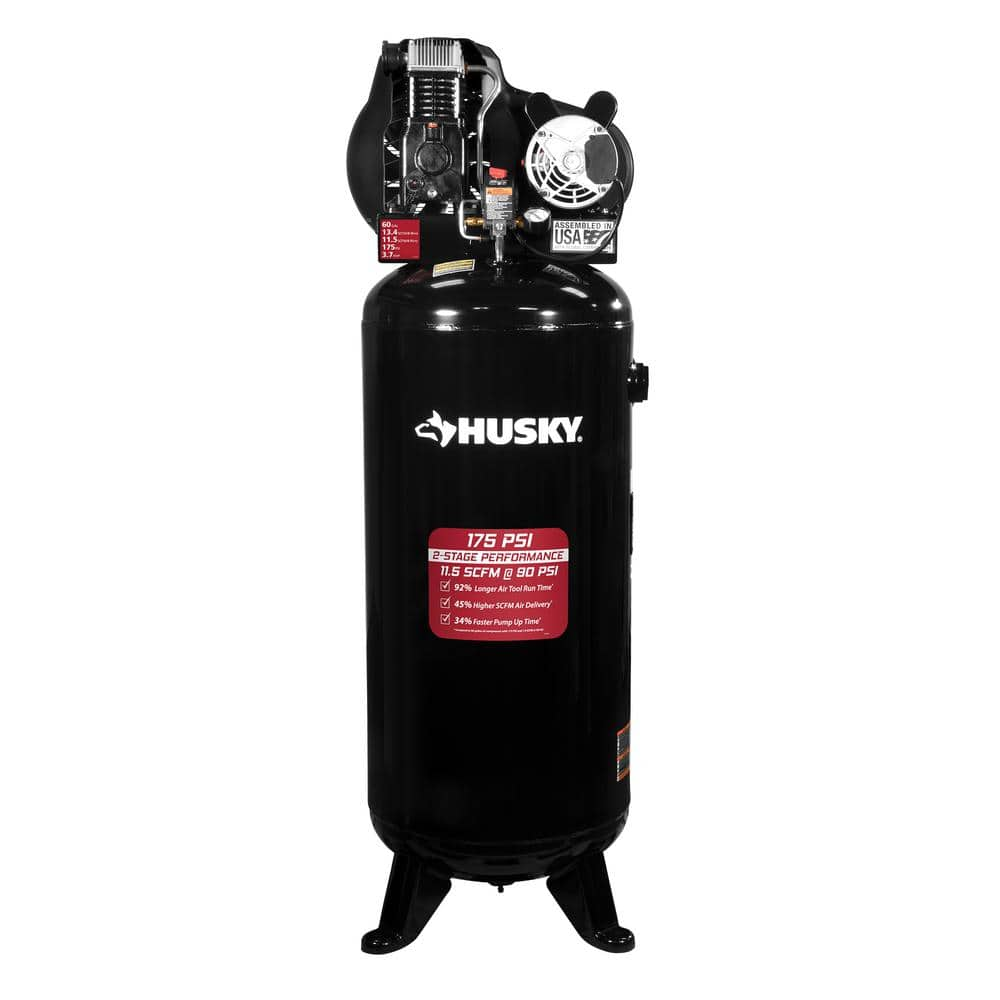
OK, So my Husky 60 gallon air compressor has been leaking around 60 pounds over night. It is a vertical 60 gallon with a 3.7 hp. I have sprayed soapy water all around the exposed lines. No leaks found. I drain the moisture out of the bottom weekly. The compressor is now about 4 years old. Any suggestion/ideas? Otherwise it has been flawless. The compressor still works fine. Thanks Ken
 
To avoid these ads, REGISTER NOW!

1612cutter

Member
Joined
Apr 12, 2022
Messages
8
It’s probably not a plumbed connection that’s leaking. Check the regulator or pressure switch. You can also check for leaks at the drain. If you’re leaking that much air, I’m surprised that you can’t hear exactly where the leak is coming from.
 
OP
K

Kenskip1

Well-known member
Joined
Dec 30, 2013
Messages
657
Location
Missouri
It’s probably not a plumbed connection that’s leaking. Check the regulator or pressure switch. You can also check for leaks at the drain. If you’re leaking that much air, I’m surprised that you can’t hear exactly where the leak is coming from.
I have a bad case of tinnitus. My hearing is way below par. Thanks for the reply.
 

GeoBruin

Well-known member
Joined
May 5, 2018
Messages
3,738
Mix up some dish soap and water and spray all the fittings. Even if you can't hear it, you'll see the bubbles.
 

Kuma601

Well-known member
Joined
Dec 24, 2020
Messages
960
Location
Cali
On mine a leak has been from the regulator gauge. One compressor used a nylon composite material that eventually split allowing it to leak but only when the tank was near maximum capacity. When the PSI dropped to sub 90 it didn't leak.
 

The Cobbler

Super Moderator
Staff member
Joined
Oct 24, 2013
Messages
25,858
Location
Niagara Region, Ontario, Canada
given what you've done already, and if you're sure there's no leak in the tank, the first place I would check is the check valve. take off the discharge line from the compressor at the check valve and do your soap check . if that's not leaking, start looking at other things like gauges, couplers etc .
 

GeoBruin

Well-known member
Joined
May 5, 2018
Messages
3,738
Sir if you have not reread post number one Thank you.
You're absolutely right. I definitely skimmed the post and missed that part. I hate when people pop in to threads, don't read for context, and offer redundant information or solutions and in this case I'm the perpetrator. Consider my hand slapped.

Separately, thank you for being so polite about it.
 
OP
K

Kenskip1

Well-known member
Joined
Dec 30, 2013
Messages
657
Location
Missouri
There is a switch that has a ring on it. Like a key ring. Anyway I pulled it and air came shooting out. I pressed it back in and now pressure is holding steady at 140PSI. Only time will tell. However I used a small paint brush with a mixture of 50/ 50 dish detergent and water. I did not locate any leaks.
 

The Cobbler

Super Moderator
Staff member
Joined
Oct 24, 2013
Messages
25,858
Location
Niagara Region, Ontario, Canada
that switch with the key ring is an overpressure relief . I've never seen one fail to leak , but no doubt it could
best, in my opinion when doing soap test is a spray bottle to flood the area well so all surfaces are covered
 
OP
K

Kenskip1

Well-known member
Joined
Dec 30, 2013
Messages
657
Location
Missouri
Still leaking. Now down to 125. All connections are showing no signs of leakage. The main line to the shop is disconnected. Could this be a leaking diaphragm beneath the pressure switch? All fittings do not show any signs of leakage. If so, wear can I purchase one? Thanks, Ken
 

no704

Well-known member
Joined
Apr 27, 2016
Messages
5,212
What’s it take to make that up? 30 sec? It’s a compressed air system. They all leak. Have a beer or a cup of coffee and forgot about it.
 

GeoBruin

Well-known member
Joined
May 5, 2018
Messages
3,738
What’s it take to make that up? 30 sec? It’s a compressed air system. They all leak. Have a beer or a cup of coffee and forgot about it.
Compressed air systems yes, but this sounds like it's the compressor itself. The way I mitigate the leakage in my distribution system is to shut off the ball valve at the compressor outlet. I'd be irritated too if the compressor itself wouldn't hold air.

If it was the blow off valve before, it may still be part of the issue. The spring holding the plunger down might be stretched out (someone pulled it too hard?).
 
To avoid these ads, REGISTER NOW!

The Cobbler

Super Moderator
Staff member
Joined
Oct 24, 2013
Messages
25,858
Location
Niagara Region, Ontario, Canada
.... Could this be a leaking diaphragm beneath the pressure switch?....
yes. I 've had pressure switches leak, but a good dowse with soapy water will show a leak .I actually had one that worked itself loose & a tighten with a torx driver solved the small leak
if it turns out to be that, they are quite universal & available on Ebay, Amazon etc
 

RTM

Well-known member
Joined
May 13, 2019
Messages
13,122
Location
SF Bay Area
I've been tracking a small leak on my CAT. Using Soapy water found a couple under the air switch, my fault tightening things after replacing it due to an internal leak (diaphragm?). I had a loose plug in one port, and the inlet tubing connector was leaking at the switch side, not the tubing side. Everything was taped, but I guess I was lazy tightening, or a bunch of cycles loosened things up .

The balloon suggested was good, but a big baggy, taped tight, can corral bigger things like gauges etc.
 

Citation

Well-known member
Joined
Jan 20, 2016
Messages
3,212
Location
Indy
Still leaking. Now down to 125. All connections are showing no signs of leakage. The main line to the shop is disconnected. Could this be a leaking diaphragm beneath the pressure switch? All fittings do not show any signs of leakage. If so, wear can I purchase one? Thanks, Ken
You might have a leaking check valve. When those leak the air going back into the line from the pump. Once in that line it then flows through the small line to the unloader valve on the pressure switch which is open when the motor is off. I suppose you could check this by disconnecting the unloader line from the pressure switch just after the tank is filled up. See if it bubbles the soapy water (or tie a balloon the the line and see if it inflates). For what ever reason my brother has dealt with check valve issues twice in about 5 years with his occasional use compressor.
 

Walkers

Well-known member
Joined
May 17, 2021
Messages
3,912
Location
Cave Creek Az
Spray the tank bottom with soapy water to check for pin holes. Then remove the tube at the check valve and spray the check valve. My guess is that this is your problem if you have isolated everything else. If you have bubbles at the top of the check valve, just drain the tank, remove the check valve, disassemble, clean, reassemble, and reinstall.
 
OP
K

Kenskip1

Well-known member
Joined
Dec 30, 2013
Messages
657
Location
Missouri
OK, BTW, overnight the pressure dropped down to 40 pounds. So to my understanding the air from the compressor goes down into the check valve and into the tank.20230803_102644[1].jpg20230803_102655[1].jpg
 

Jack Ryan

Well-known member
Joined
Jun 2, 2022
Messages
339
Location
Adelaide, South Australia
There is a switch that has a ring on it. Like a key ring. Anyway I pulled it and air came shooting out. I pressed it back in and now pressure is holding steady at 140PSI.

Having to press it back in suggests that the spring return is not working properly - perhaps the spring has sprung or the valve is sticking. It should close by itself under spring pressure and not leak.

If you are satisfied that is not a problem...

given what you've done already, and if you're sure there's no leak in the tank, the first place I would check is the check valve.

If the check valve is not working properly, you will lose air via the unloader valve. Probably not easy to bubble test.

Have you followed the suggestions? It would be helpful if you checked them off as you went.

Jack
 

redmondjp

Well-known member
Joined
Nov 25, 2014
Messages
2,318
Location
Redmond, WA

If you want to test that check valve for leaks, unscrew both pipes going into it (you may have to remove the pipes completely to get them out of the way), and apply a bit of soapy water to those two connections on top of the check valve and see if they blow any bubbles.
 

timgunn1962

Well-known member
Joined
Mar 31, 2018
Messages
159
Location
Lancashire, England
On the bottom (usually) of the pressure switch will be an unloader valve. This connects to the pump side of the Non-Return Valve with a small-bore tube. The pump connects to ghe NRV with a larger-bore tube. While the compressor is running, the unloader valve is closed. When the compressor stops, the unloader valve opens and depressurizes the tube between the pump and the NRV. It does this so that when the compressor starts, it can get the first rotatio or so in before the pump sees pressure. If the NRV leaks while the compressof is off, air will get past it and find its way out through the unloader. You have very little chance of hearing the leak because the unloader is designed to be reasonably quiet when it releases a high flow rate as the compressor stops. It'll be virtually silent at low, NRV leakage, flow.

The NRV pastel is a consumable part. Just get a new one and fit it. The probability is at least 90% that it'll fix it.
 
OP
K

Kenskip1

Well-known member
Joined
Dec 30, 2013
Messages
657
Location
Missouri
Ok, So the check valve is removed. And I will mention that removing it was not an easy task. Finally after one broken 1/2 extension and two pry bars. Now being a quiet person now with two bleeding knuckles, I managed to
dredged up archaic curses from the distant past, combined them with current profanity and worked in a half dozen crude anatomical references, embellished those with all the known vulgarities related to bodily functions and finally wove all these elements into a woven tapestry brilliant in color and blinding in
intensity. Note! Quotes From "Patrick McManus"
Notice the 1/2 drive extension. NAPA will have the new check valve in the morning, Ken20230803_145702[1].jpg
 

The Tool Tyrant

ALLIANCE MEMBER
Joined
Dec 19, 2011
Messages
2,182
Location
Bonita, Ca. (San Diego)
Sooooo...was it actually leaking or are you just 'replacing parts' until the leak stops?

Most, but not all check valves can be disassembled and cleaned. All it takes is a little piece of carbon to get stuck between the seat.
 
OP
K

Kenskip1

Well-known member
Joined
Dec 30, 2013
Messages
657
Location
Missouri
Sooooo...was it actually leaking or are you just 'replacing parts' until the leak stops?

Most, but not all check valves can be disassembled and cleaned. All it takes is a little piece of carbon to get stuck between the seat.
Sir, this one is non serviceable. Dissemble is not an option. I blue on one end with my bleeding finger over the side passage and I could hear air leaking beneath or out of the sides with the holes in it. If you enlarge the picture you will see what I mean. I also sprayed brake clean from the top down and the liquid was leaking out as I sprayed it in.
 
Last edited:
OP
K

Kenskip1

Well-known member
Joined
Dec 30, 2013
Messages
657
Location
Missouri
Well the compressor has now been put back online. All connections have been Teflon taped and are now secured. Hopefully the check valve (that had rust inside) that was cleaned and reinstalled and that will be the end of this. Hopefully! As of now at 1;23 pm this will hold. Thank you all for all the valuable information, Ken
 
OP
K

Kenskip1

Well-known member
Joined
Dec 30, 2013
Messages
657
Location
Missouri
Update: I should mention that NAPA fell through. I had to reuse my old check valve. Now at 9pm the pressure is rock steady at 160 PSI. I last checked it a1;23 this afternoon. Ken

As of 8 am pressure is 155. As far as I am concerned this is a success.
 
Last edited:
OP
K

Kenskip1

Well-known member
Joined
Dec 30, 2013
Messages
657
Location
Missouri
FYI, there are quite a few great compressor parts suppliers online for future needs.

Thank you for the information. However I still am not sure what went wrong. I sort of grabbed the ball and took off with it. However the check valve had some rust that I cleaned out. Anyway this situation has a happy ending.
 

timgunn1962

Well-known member
Joined
Mar 31, 2018
Messages
159
Location
Lancashire, England
Sounds like you probably just had a bit of **** in there this time, but I'd get a spare anyway. The moving part (pastel) is usually some sort of polymer with a bit of give in it. After a time, they can harden up and fail to conform to the seat, or even crack, particularly if they've got hot from continuous running. It's possible you've just softened it up enough with the brake cleaner to get it to seat in the short term and it'll do the same thing again.

IME, compressor manufacturers tend to use a fairly high-strength Loctite on everything, which makes getting things apart the trial you've experienced. When you reassemble, it's a good idea to use the lowest-strength anaerobic sealant that'll get the job done. I used Loctite 577 for years, but now use a generic "liquid PTFE". It seals well enough and is MUCH easier to take apart.
 
OP
K

Kenskip1

Well-known member
Joined
Dec 30, 2013
Messages
657
Location
Missouri
Sounds like you probably just had a bit of **** in there this time, but I'd get a spare anyway. The moving part (pastel) is usually some sort of polymer with a bit of give in it. After a time, they can harden up and fail to conform to the seat, or even crack, particularly if they've got hot from continuous running. It's possible you've just softened it up enough with the brake cleaner to get it to seat in the short term and it'll do the same thing again.

IME, compressor manufacturers tend to use a fairly high-strength Loctite on everything, which makes getting things apart the trial you've experienced. When you reassemble, it's a good idea to use the lowest-strength anaerobic sealant that'll get the job done. I used Loctite 577 for years, but now use a generic "liquid PTFE". It seals well enough and is MUCH easier to take apart.
From the limited time I had it apart it appeared to have had been assembled with Teflon tape. That is what I reassembled it with. And yes it was tight. I broke a 1/2 extension getting the check valve removed. And the funny thing is that my strongest impact is air operated. The compressor was built in 2016. As of now the pressure is 153 pounds. Well within my tolerances. Thanks for the reply. I am most appreciated for it.
 
To avoid these ads, REGISTER NOW!
Top Bottom