KMScott
Well-known member
Added yours yesterday Outlaw. I like it. Thanks for posting on the Vise info thread. Gonna check on Pierces #10 in the morning.






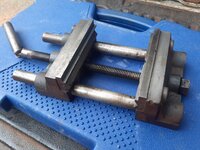
The Parker jaws are definitely the most intricate and cool jaws on any vise I've seen.Back to making Parker jaws and having a ball in my small island shop. I have several more to make and tried out making a set without a CNC and doing all the cuts by hand. Note how I stepped off the top radius on my Bridgeport mill I’ll post a final pic after the vise is done. Restoring 4 different vises at a time. I’ll get them back to work.
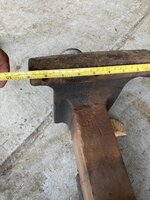
I took possession of my largest vise in my collection today. It is a no name 'Mystery vise'.
There is a similar, but not exactly the same vise in the spreadsheet under the name: Mystery Vise. Owned by Demoman.
Obviously made from the same casting molds. But the nut position and length, the screw/dynamic retraction method are different.
Unfortunately the jaws broke and the vise stayed 'in service'. and under abuse. I will repair, and make new jaws for it.
Specs: 175# [only!].
Jaws: 8-7/8" wide: so a 9" vise.
Opens to 9".
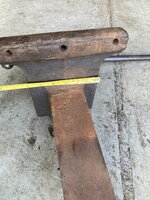
The longest mainscrew nut EVER: 6" of threaded nut! And full length dovetail in the static. Hefty nut retainer pin
The longest continuous machined dynamic slide support surface ever: 14".
32" overall length. Sadly the jaw supports are well-abused. But I will repair, and machine for a set of new Jaws i will make.
Note how the nut fills almost the entire length of the static.
this is the longest fully threaded nut I've seen. 6" of threads
The widest set of jaws in my collection.
The Dynamic jaw tower is a full 6" wide.
Over 3" diameter hub, and interesting 'sculpted' dynamic.
The mainscrew is retained by a 2" long collar, held in place with setscrews. The handle is new.
The dynamic/slide is supported by 14" of machined support surface.
Note the dovetail for the nut running the full length of the static's floor.
Almost 5" of front jaw/dynamic support.
If anyone has any ideas about who made and sold this vise, I'd sure like to know more about this beast.
The large pointed mounting ears on the base hint 'Parker' to me.
Demoman's version of this vise has a Parker-like collar retaining the mainscrew hub. But this vise has a simple sleeve with setscrew.
The jaws were apparently like a Desmond Simplex: an inverted 'L' shape. Demoman's vise has a different design jaw insert.
The mainscrew hub is different, but similar to a few other vise makers'.
Anyone have any ideas of the maker?
PierceA


Looks like you‘re set as far as locking pins go. On user vises, I bet those pins go missing from time to time. I have seen some fellows attach them to the vise body with a lightweight chain.These Reed 406, Reed 405 & Reed 404 rear swivel jaw pins all have the correct opposite taper on the top so they can be placed upside down in the rear jaw hole hole when the jaw is swiveled. Was able to check each one in my 406R , 405 & 404 to make sure they fit correctly.
I hope most of us do or I'm going to feel older than I should.Looks like you‘re set as far as locking pins go. On user vises, I bet those pins go missing from time to time. I have seen some fellows attach them to the vise body with a lightweight chain.
Does anybody remember back when banks had desks where you could walk up and fill out a deposit or withdrawal slip using one of their long pointy end pens that were attached with a shiny chrome ball chain?
Nice find Outlaw! I'm not a fan of those anvil vises, not a good vise or a good anvil for the most part, but I like that one and would have picked it up if I came across it,
Pens with ball chains attached are still fairly standard at banks.Looks like you‘re set as far as locking pins go. On user vises, I bet those pins go missing from time to time. I have seen some fellows attach them to the vise body with a lightweight chain.
Does anybody remember back when banks had desks where you could walk up and fill out a deposit or withdrawal slip using one of their long pointy end pens that were attached with a shiny chrome ball chain?
I remember those pen chains & how a bank use to give you a gift when you opened an account.Looks like you‘re set as far as locking pins go. On user vises, I bet those pins go missing from time to time. I have seen some fellows attach them to the vise body with a lightweight chain.
Does anybody remember back when banks had desks where you could walk up and fill out a deposit or withdrawal slip using one of their long pointy end pens that were attached with a shiny chrome ball chain?
No more gifts… now all you get is a letter in the mail saying that they’ve been hacked and your personal information has been compromised.I remember those pen chains & how a bank use to give you a gift when you opened an account.


Sculpt Nouveaux is an Extremely good product. I heard about it from you a few years ago and watched their videos but I have never tried it. I went with the Watco because I already had most of a quart already on the shelf. I understand it is basically just tinted boiled linseed oil perhaps with some extra Japan drier added.I was using Watco Danish Oil in the 70’s refinishing antique furniture. Try Sculpt Nouveau, this stuff is made for metal. I can see the Natural and Black Walnut might look ok. Can’t beat the Black oil from Sculpt Noveau In my opinion.
Sure enough enjoy seeing your work KevinBack to making Parker jaws and having a ball in my small island shop. I have several more to make and tried out making a set without a CNC and doing all the cuts by hand. Note how I stepped off the top radius on my Bridgeport mill I’ll post a final pic after the vise is done. Restoring 4 different vises at a time. I’ll get them back to work.
I took possession of my largest vise in my collection today. It is a no name 'Mystery vise'.
There is a similar, but not exactly the same vise in the spreadsheet under the name: Mystery Vise. Owned by Demoman.
Obviously made from the same casting molds. But the nut position and length, the screw/dynamic retraction method are different.
Unfortunately the jaws broke and the vise stayed 'in service'. and under abuse. I will repair, and make new jaws for it.
Specs: 175# [only!].
Jaws: 8-7/8" wide: so a 9" vise.
Opens to 9".
The longest mainscrew nut EVER: 6" of threaded nut! And full length dovetail in the static. Hefty nut retainer pin
The longest continuous machined dynamic slide support surface ever: 14".
32" overall length. Sadly the jaw supports are well-abused. But I will repair, and machine for a set of new Jaws i will make.
Note how the nut fills almost the entire length of the static.
this is the longest fully threaded nut I've seen. 6" of threads
The widest set of jaws in my collection.
The Dynamic jaw tower is a full 6" wide.
Over 3" diameter hub, and interesting 'sculpted' dynamic.
The mainscrew is retained by a 2" long collar, held in place with setscrews. The handle is new.
The dynamic/slide is supported by 14" of machined support surface.
Note the dovetail for the nut running the full length of the static's floor.
Almost 5" of front jaw/dynamic support.
If anyone has any ideas about who made and sold this vise, I'd sure like to know more about this beast.
The large pointed mounting ears on the base hint 'Parker' to me.
Demoman's version of this vise has a Parker-like collar retaining the mainscrew hub. But this vise has a simple sleeve with setscrew.
The jaws were apparently like a Desmond Simplex: an inverted 'L' shape. Demoman's vise has a different design jaw insert.
The mainscrew hub is different, but similar to a few other vise makers'.
Anyone have any ideas of the maker?
PierceA
Hi Andy F. I've had the same thoughts about it's weight. But when I compare this almost 9" vise to my other very beefy 8" vises, I can see several obvious reasons for the lower weight. One is the length of the slide. The Parker 978, Reed 208 and Morgan 80 all have a much longer slide, and therefor a much wider maximum opening. I think an at least 4"-5" longer slide would be work quite a few pounds of iron, and this would also require a longer mainscrew.
My Parker and Reed are swivel base models and that is another ~30 pounds?
And the interesting 'sculpting' of the sides of the dynamic and static definitely reduce the weight some.
But there is no low-weight characteristics in the mainscrew, hub, or the 50% longer nut on the mainscrew.
I've been wondering if the iron used in the 9" Mystery Vise is nodular iron like used in Columbian and some other later model vises. It can result in a lighter weight vise with strength equal to regular iron.
I do not know if there is a way to test the iron in a vise to determine what type of iron it is. I know the test method to determine steel from iron, but not between different types of iron.
Yes, the vise is in fairly good condition for as ugly as the jaw towers and jaw insert surfaces are.
I'm amazed that the mainscrew and nut are so overbuilt and the result is very little wear and free-play. Even my Parker 978, Morgan 80 and Reed 208 only have about 4" of threaded nut. And the dovetail for the nut is also much shorter, so the nut is not retained in the static's floor as well.
.
PierceA.


Here is what I know about Nodular Iron, the rear end housings and Yokes on a Ford 9” were Nodular Iron and when I was racing I had to drill and tap this stuff. Boy was hard to do, did not have carbide taps back in the seventies. I. Was adding jaws to a 2” Miller Falls vise a while back and had the same issue trying to tap the new jaw threads. Maybe try tapping a 10:32 hole underneath the Dynamic, maybe that might let you know. I believe the Nodular Iron work hardens as you run the tap into it. Just my 2cents.

A chill can be as simple as a steel plate/block of sufficient size to **** the heat right out of an area quickly. One would just spray some graphite or whatnot carbon on it, and it'll keep it from sticking to the casting. Chill practice is a bit of an art. Later on they would use Chromite or Zirconite sand, which conducts heat away quickly.Thanks diesel for the describing the quickly solidified cast iron. That must be what I drilled and tapped on my drive shaft yoke and the Miller Falls vise, I was told back in the 70’s that was Nodular Iron they used on reared pumpkins and yokes. I am curious what a chill plate is, maybe water/cooling lines thru the mold?
Maybe you can also shed a light on why many Prentiss and other vises’s have a crack on the center of the tail end of the square slide. My guess is a knit line where the material flows thru the mold and meets up. This is an issue determining where the gate location is in plastic injection molds. Kevin
Could polish up the side of the jaws or the anvil plate and see on the vise itself without cutting off a piece. Or polish up a little part of the underside and see the grain structure with one of those microscope-cameras (I think even ~30x zoom might be enough to distinguish).To determine if it's nodular for sure, you'd need a sample which can be polished / etched and micrographs taken to look for graphite flakes vs graphite spheres. I don't think you can do it nondestructively and get anything more than "we think," LOL.
As other said, castings are nasty business and there's a ton of factors involved in it. Drills and taps specifically designed for cast iron definitely exist to make the job easier. The drill is a very unique double-angle design when compared to average drills for steel and other metals.Here is what I know about Nodular Iron, the rear end housings and Yokes on a Ford 9” were Nodular Iron and when I was racing I had to drill and tap this stuff. Boy was hard to do, did not have carbide taps back in the seventies. I. Was adding jaws to a 2” Miller Falls vise a while back and had the same issue trying to tap the new jaw threads. Maybe try tapping a 10:32 hole underneath the Dynamic, maybe that might let you know. I believe the Nodular Iron work hardens as you run the tap into it. Just my 2cents.

Very nice. Looks to be in great shape.Hi everyone, just picked up my first vintage American vise today.
It's a 4" American Scale Co, No 76 with a swivel top jaw and base.
I'm going to proceed with a complete disassembly to clean everything, strip the remains of old gray paint (not sure if it's original paint or not, but there is just one layer I can see) and then repaint.
Was this in NJ by chance?Hi everyone, just picked up my first vintage American vise today.
It's a 4" American Scale Co, No 76 with a swivel top jaw and base.
I'm going to proceed with a complete disassembly to clean everything, strip the remains of old gray paint (not sure if it's original paint or not, but there is just one layer I can see) and then repaint.
Yes, Central Jersey.Was this in NJ by chance?