To avoid these ads, REGISTER NOW!

DC only "multimeter"

InsanePyro

Well-known member
Joined
Aug 27, 2012
Messages
2,197
Location
Oconomowoc, WI
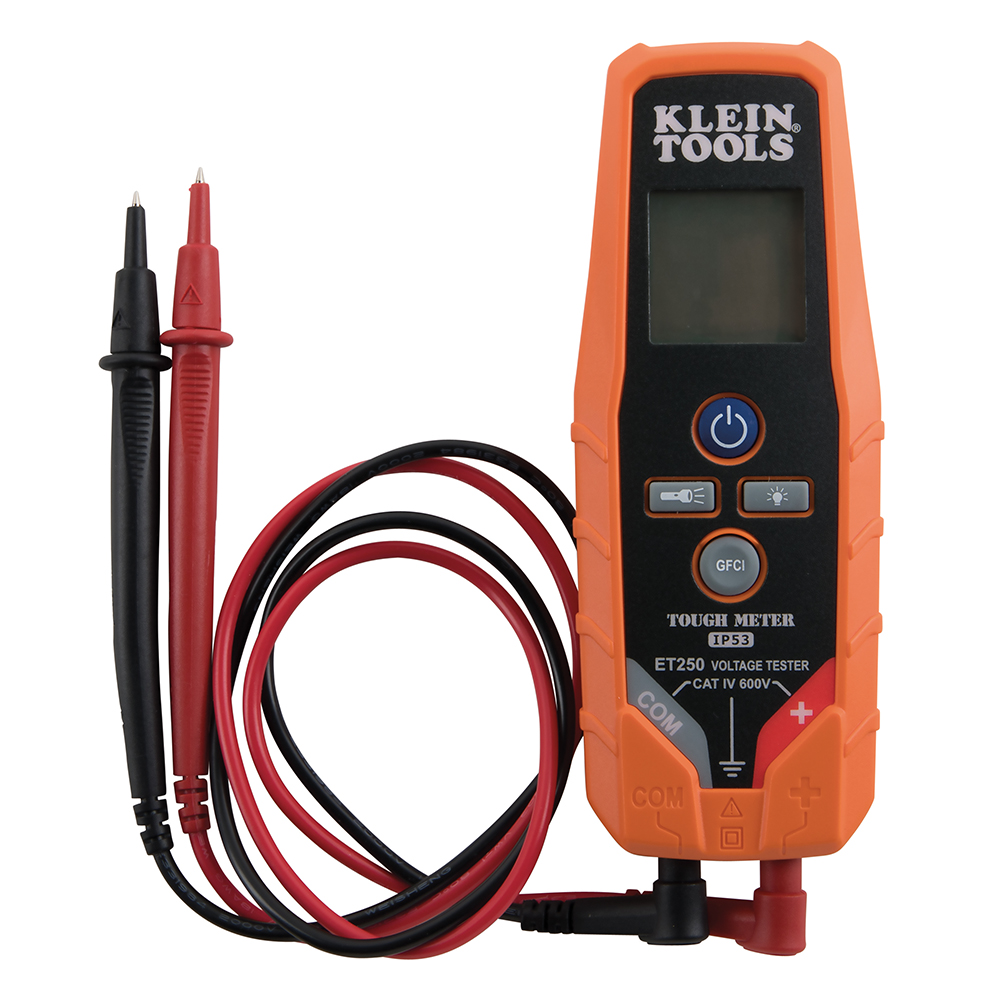
Is there such a thing? I'm not big on electrical stuff, and honestly alot of it confuses me, and if I do pick up a multimeter 99.9999% all I'm doing is checking for voltage somewhere or make sure a wire isn't shorting or dead on my boat or trucks, all of which are of course DC. Is there a GOOD but basic multimeter out there? When I redid the wiring on my boat my buddy helped me pick out a nice Klein multimeter but it honestly has too much **** on it and you have to put it in DC mode every time you turn it on.
 
To avoid these ads, REGISTER NOW!

428PI

Well-known member
Joined
Jul 14, 2018
Messages
1,976
Location
Peabody, KS
I've had my hf auto meter for over 35 years and still works except the rpm pickup is wonky. Not sure they make anything similar now or not. Just very basic.
 

RPH

Well-known member
Joined
Dec 17, 2006
Messages
4,190
Location
Michigan Thumb
Cheap analog meter will do what you want. Simpson makes the upper end of analog meters. Very well built and respected across industries.
 

wssix99

Well-known member
Joined
Mar 2, 2011
Messages
5,162
Location
Chicago, IL
Here you go. If all you want is a voltmeter and continuity tester, you can search for that:

(By definition, a "multi"meter does everything, so that's not a term you would want to look for.)
 

iron block

Well-known member
Joined
Jun 22, 2015
Messages
264
Location
Bay Area, CA
Another Fluke that might be of interest for basic functions is the Fluke 101. Less than $45 on Amazon. Fluke 101
One "advantage' is that this model does **not** do AC or DC current measurements -- which means makes it impossible to damage by connecting to a voltage with the meter and probes set up for current.

If you really need to measure current, then there is a nifty clamp meter from Uni-T, model UT-210E, that goes up to 100 Amps for either AC or DC. It also includes the usual volt/ohm functions. No current probes to misconnect -- the clamp is used for current measurement. Quite cheap for what it provides -- less than $60 on Amazon UT-210E, and slightly cheaper on eBay.
 

Wrench97

Well-known member
Joined
Jun 23, 2018
Messages
12,158
Location
Southeastern Pa
Is there such a thing? I'm not big on electrical stuff, and honestly alot of it confuses me, and if I do pick up a multimeter 99.9999% all I'm doing is checking for voltage somewhere or make sure a wire isn't shorting or dead on my boat or trucks, all of which are of course DC. Is there a GOOD but basic multimeter out there? When I redid the wiring on my boat my buddy helped me pick out a nice Klein multimeter but it honestly has too much **** on it and you have to put it in DC mode every time you turn it on.
Wrong tool for the job, a corroded connection will read 12v with no load on it, use a test light bright light tells you it's ok dim light tells you it's not ok.
If you want to see if your alternator is charging a volt meter is used at the battery 13.x tells you it's charging.
If want to do a voltage drop test on a loaded circuit use a volt meter.
For the majority of trouble shooting a test light is the right tool.
 

whateg01

Well-known member
Joined
Mar 13, 2006
Messages
11,504
Location
doo dah, kansas, usa
Here you go. If all you want is a voltmeter and continuity tester, you can search for that:

(By definition, a "multi"meter does everything, so that's not a term you would want to look for.)
That doesn't meet the op request of only wanting to measure DC.
 

dogdog

Well-known member
Joined
Nov 15, 2011
Messages
12,711
Power probe or the likes are dc only at least the pp3 is . If you need something g mounted to monitoring dc plenty of options
 
To avoid these ads, REGISTER NOW!

bwringer

Well-known member
Joined
Jan 1, 2013
Messages
10,322
Location
Indianapolis
Get a decent test light, and calibrate your eyeballs by trying it on known good vehicles. It's quite easy to tell the difference between 14V (car running), 12V (car off), and 10V (car sad) just by looking at the brightness of the bulb.

As mentioned above, a test light also places a load on a circuit, which is very handy.

Of course, you can also make your own test light with a bulb and socket from various random junkyard cars. I have a small assortment of these, from one with a small 3 watt bulb, a 21 watt turn signal bulb, and a 55 watt headlight when I need to place a larger load to make sure a circuit is good. For some doofy reason, I've never found a commercial version of the same idea. Seems like a missed opportunity.


If a multimeter bothers you, then you probably have absolutely no business with a PowerProbe. Yes, they're basically of the next level of test light (with a beeper and a switch and some LEDs, etc.), but you really need to know exactly what you're doing or you'll let the magic smoke out quicklike.
 

whateg01

Well-known member
Joined
Mar 13, 2006
Messages
11,504
Location
doo dah, kansas, usa
The fact that a test light loads a circuit is a good reason to not use it on certain things. Diagnosing ECU issues for example can be difficult if you load a circuit down and the voltage drops. But a test light can be good for other things though.
 

BrandonV

Well-known member
Joined
Jun 9, 2023
Messages
4,030
Location
Arizona
Not DC only but meters don't get much simpler (or cheaper) than this...


bwringer

Well-known member
Joined
Jan 1, 2013
Messages
10,322
Location
Indianapolis
The fact that a test light loads a circuit is a good reason to not use it on certain things. Diagnosing ECU issues for example can be difficult if you load a circuit down and the voltage drops. But a test light can be good for other things though.
Agreed.

But OP was looking for extreme simplicity, which does not imply doing things that involve the ECU. (For example, checking for voltage at sensor connectors, etc.)

Still, lots more things run via the ECU or a BCM in modern vehicles than some might realize. For example, you can't just poke for 12VDC with LED turn signals or headlights.
 

cgrutt

Well-known member
Joined
Mar 4, 2016
Messages
8,364
Wrong tool for the job, a corroded connection will read 12v with no load on it, use a test light bright light tells you it's ok dim light tells you it's not ok.
If you want to see if your alternator is charging a volt meter is used at the battery 13.x tells you it's charging.
If want to do a voltage drop test on a loaded circuit use a volt meter.
For the majority of trouble shooting a test light is the right tool.
I love my old Snap-on test light but should be noted it's possible to damage some computer controlled circuits on modern vehicles if you inadvertently probe a circuit and create a ground that's not supposed to be there. Not sure if modern test lights (LED) have same issue but definitely could cause problems with a incandescent test light.
 

Wrench97

Well-known member
Joined
Jun 23, 2018
Messages
12,158
Location
Southeastern Pa
I love my old Snap-on test light but should be noted it's possible to damage some computer controlled circuits on modern vehicles if you inadvertently probe a circuit and create a ground that's not supposed to be there. Not sure if modern test lights (LED) have same issue but definitely could cause problems with a incandescent test light.
Not with a test light, if hooked negative and you hit a positive out of a module you'll get a light but it will not short out the circuit and the load will be minimal.
 

cgrutt

Well-known member
Joined
Mar 4, 2016
Messages
8,364
Not with a test light, if hooked negative and you hit a positive out of a module you'll get a light but it will not short out the circuit and the load will be minimal.
IDK way back in the day I fried a circuit on mid 1980s vehicle probing for a hot lead for a stereo (could have been an alarm I don't really remember). Want to say it was a Range Rover or possibly Jaguar. It wasn't the ECU but some other module that controlled the windows IIRC. Its been a while LOL. The shop I was working for started using multimeters after that. The replacement module wasn't cheap but my boss paid for it.
 

Wrench97

Well-known member
Joined
Jun 23, 2018
Messages
12,158
Location
Southeastern Pa
IDK way back in the day I fried a circuit on mid 1980s vehicle probing for a hot lead for a stereo (could have been an alarm I don't really remember). Want to say it was a Range Rover or possibly Jaguar. It wasn't the ECU but some other module that controlled the windows IIRC. Its been a while LOL. The shop I was working for started using multimeters after that. The replacement module wasn't cheap but my boss paid for it.
At the Volvo tech class(heavy truck) that was their #1 recommendation to use when probing modules for power output circuits, you just have to be careful not to short it inadvertently with the metal shaft touching ground.
FCM/Stelantas or whatever their name is this week like to power o2 heaters through the PCM unfused(what a great idea) I had a Promaster City with a varmint chewed o2 harness then rode around for 3 months with the CEL on and the heater wires gnawed enough to short on each other and fry that circuit in the PCM but the normal test would be to hook a test light across those two wires to see if the circuits are good to the sensor.
 

richfinn

Well-known member
Joined
Jan 29, 2011
Messages
4,817
Location
Leeds, Yorkshire, England
Is there such a thing? I'm not big on electrical stuff, and honestly alot of it confuses me, and if I do pick up a multimeter 99.9999% all I'm doing is checking for voltage somewhere or make sure a wire isn't shorting or dead on my boat or trucks, all of which are of course DC. Is there a GOOD but basic multimeter out there? When I redid the wiring on my boat my buddy helped me pick out a nice Klein multimeter but it honestly has too much **** on it and you have to put it in DC mode every time you turn it on.

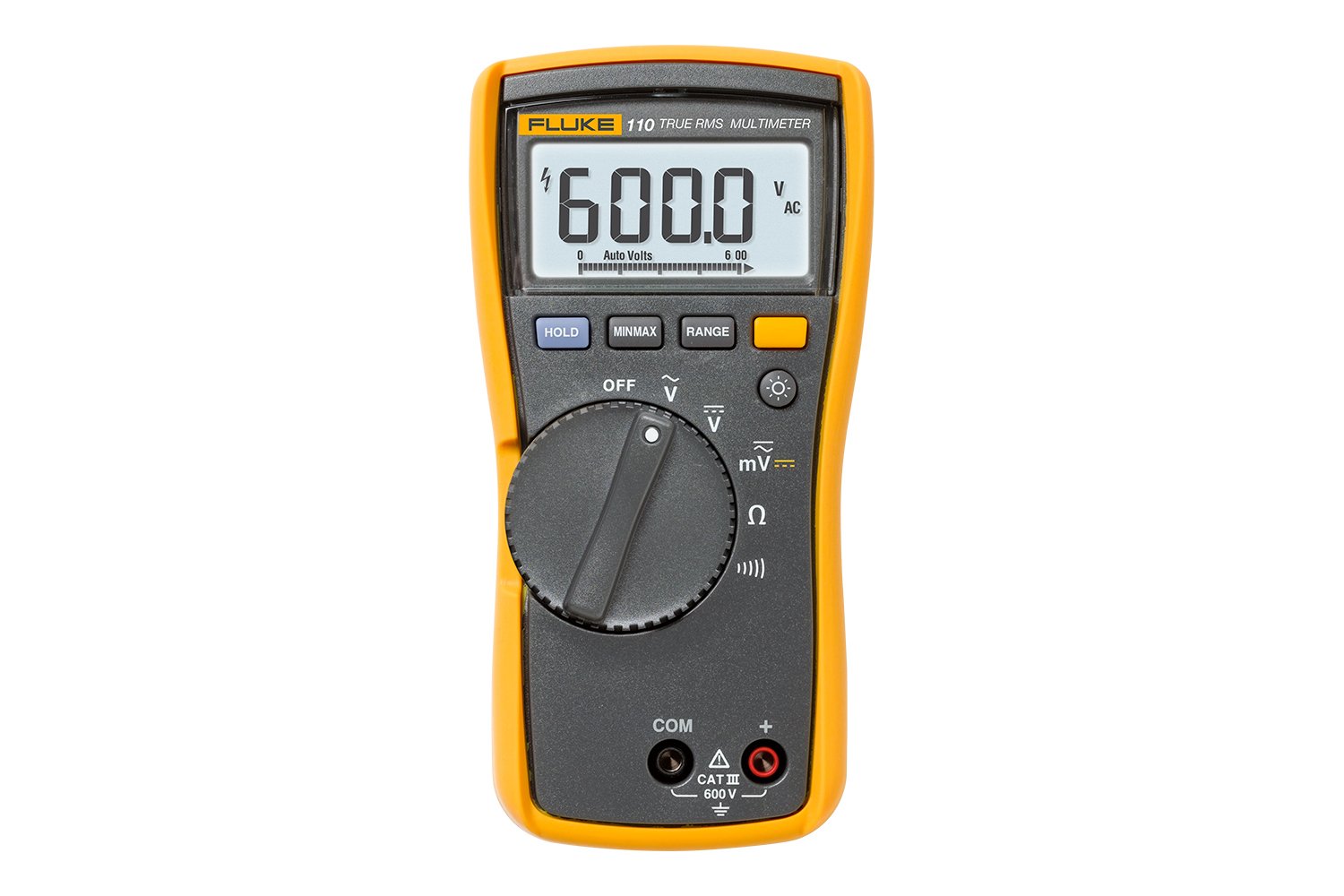
There is a reason Flukes are so popular, if you look at something like a 110/111/112 (older models made in USA) 113/114/115 (made in China mostly) you will notice the user interfaces are still very simple and intuitive to operate even as they add more features and complexity (they use pictograms instead of confusing jargon and lots of digits and each function tends to have it's own position on the rotary switch without lots of fiddling with function buttons and menus, the displays tend to be very well laid out and obvious too).

A/C voltage is a feature on all modern multimeters and useful for domestic electrics as well as automotive (inductive sensors/alternator ripple etc.)

Some models do dispense with the Amps function/Min-Max/backlight (but these are some of the best features with a little education)

Honestly just watch a Fluke multimeter tutorial on YouTube and take your pick, even the most basic models are great and very robust easy to learn and use tools.

If you pick one of these you will rapidly improve your testing knowledge and confidence 👍

A modern version of the 110 (note how simple the switch is)

 
Last edited:
To avoid these ads, REGISTER NOW!
Top Bottom