To avoid these ads, REGISTER NOW!

Knipex finish: chrome plated versus black atramentized?

Samuel D

Well-known member
Joined
Apr 9, 2019
Messages
638
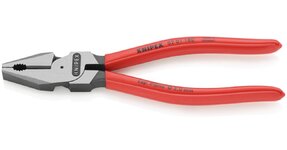
A vast array of Knipex pliers are available with either chrome plating or their “black atramentized” surface treatment.

What is this black finish, and why would you choose it over chrome plating? Just the slightly lower purchase price?

I looked in the Knipex PDF catalogue and didn’t see anything useful about this, which surprised me. Maybe I missed it.
 
To avoid these ads, REGISTER NOW!

PBCampbell

Well-known member
Joined
Feb 2, 2009
Messages
871
Location
WV
It's some type of phosphate coating. The chrome should be more rust resistant, but I can't imagine any other benefit.
 

Dave455

Well-known member
Joined
Mar 19, 2013
Messages
5,821
Location
Sussex, England
Although Knipex list this finish as “black atramentised” it’s only the edges of the tool that are finished this way - the faces are polished. Probably the way 90 % of pliers have been made for the last 100 years!

2CD69A91-D55E-426B-9368-0A2217DC7BB0.jpeg

For most purposes, this is the most practical finish for pliers. You can’t damage it, there’s nothing to flake off, if you do dink the jaws you can just stone out the damage, and you can even polish it if you wish.

The chrome wins for tools used primarily outside, but in all other cases the black / polished is to be preferred!
 

T45

Well-known member
Joined
Nov 20, 2014
Messages
3,253
Chrome can flake or peel which is a big no-no in some strict environments. That said, I prefer the look of black atramentized.
+1. Its also relatively soft. If you follow alot of the tool-test threads they file or grind off the chrom plating to test the jaw hardness when using HRC measuring.

I like plated finished from KNIPEX for DIY toolkits that I don't want to worry about corrosion in ad-hc storage. These kinds of utility tools that don't see hardeded hardwares, like 7in pliers wrench and cobras, even utility nose/chain nose etc. Those are only going to cut copper, so the hardness isn't a problem.

The piano wire cutters or bolt cutters are going to chip if you are doing alot of hard wire, stainless, high reptition jobs (fencing) or whatever.
 

mike93lx

ALLIANCE MEMBER
Joined
Dec 9, 2013
Messages
37,719
Location
Richmond, VA
+1. Its also relatively soft. If you follow alot of the tool-test threads they file or grind off the chrom plating to test the jaw hardness when using HRC measuring.

I like plated finished from KNIPEX for DIY toolkits that I don't want to worry about corrosion in ad-hc storage. These kinds of utility tools that don't see hardeded hardwares, like 7in pliers wrench and cobras, even utility nose/chain nose etc. Those are only going to cut copper, so the hardness isn't a problem.

The piano wire cutters or bolt cutters are going to chip if you are doing alot of hard wire, stainless, high reptition jobs (fencing) or whatever.
Pretty sure hard chrome is around 70 HRC. That's not soft
 

grumpychevy

Well-known member
Joined
Mar 6, 2010
Messages
67
Location
Indiana
I prefer chrome for corrosion protection in my non-climate controlled garage but there are several variations of their tools that are not offered in chrome. I will say that every pair of chrome KNIPEX pliers I own have been purchased online, around here there are very few places that sell KNIPEX, and nobody stocks the chrome versions in the stores that I’ve noticed. I do have several pairs of black versions as well, I just keep a light coat of oil on them for protection. Either way both finishes are pretty durable until you neglect them.
 

T45

Well-known member
Joined
Nov 20, 2014
Messages
3,253
Pretty sure hard chrome is around 70 HRC. That's not soft
IIRC hand tools are typically plated in 'decorative' grades of chrome. See, e.g.


In any event, Knipex tools are not all even using chrome plating, so one needs to do more homework. EG, the pliers wrench is nickel plated (softer), while the cobra is a chrome for sure (harder). These are distinct finishes, and obviously 'look' different side by side in person.

If anyone has more info on other specific Knipex finishes, of course feel free to chime in.
 
Last edited:

F-22

Well-known member
Joined
Jan 23, 2022
Messages
1,830
+1. Its also relatively soft. If you follow alot of the tool-test threads they file or grind off the chrom plating to test the jaw hardness when using HRC measuring.
Chrome is harder than steel. It will better resist scratches and wear.

Does not matter if it is "hard chrome" or "decorative chrome". I do not believe there is a clear definition of those two terms. The only real distinction is how thick the chrome layer is, because hard chrome is used for e.g. piston rods where wear would eventually scratch it off and a thicker coating lasts longer (or fork tubes).

For industrial uses, the "hard chrome" is usually "holding" onto the base material better because they prepare the surface better. That's not part of the chrome, as sometimes hard chrome also peels off (infamous Ducati 916 flaking valve rockers)

On tools, you're not going to "wear off" the chrome, it's thick enough for that and holds on well enough on reputable brands (there can be manufacturing defects, it does not take much to compromise the adhesion process). They get the chrome off for measurement cause it is much harder than the jaws. you will eventually wear off the chrome on the jaws, at which point they're the same as the non-chrome tool jaws.

Despite being harder, the chrome coating probably dulls the edge, so it may not be preferred on proper snips.


Unless you use your pliers as a hammer, you won't damage the chrome on Knipex pliers. People choose the non-coated version due to what they're used to. Knipex is happy to sell both... I think most regular European tool companies don't even sell non-coated pliers. At least for the regular combination pliers, I don't think I've ever seen non-chromed pliers form hazet, stahlwille, facom, usag... I have seen the Unior ones but from my experience they are very rare and for the most part are sold in the cheaper tool sets from Unior. Like, in a usual hardware store here, you always see Unior tools, but only the chromed variants are sold individually (they do probably sell the blued pliers in online shops...).
 
Last edited:

Dave455

Well-known member
Joined
Mar 19, 2013
Messages
5,821
Location
Sussex, England
I don't think I've ever seen non-chromed pliers form hazet, stahlwille, facom, usag... I have seen the Unior ones but from my experience they are very rare and for the most part are sold in the cheaper tool sets from Unior. Like, in a usual hardware store here, you always see Unior tools, but only the chromed variants are sold individually (they do probably sell the blued pliers in online shops...).
Hazet, Stahlwille and Facom all offer non chromed pliers.

The Hazet’s look like this4D5844F5-232A-4039-8721-A070ADF8808E.jpeg

And the Facom like this
B7420FEF-6BCD-4539-A814-7C35DB1ED03B.jpeg

Maybe stores prefer the chromed ones as they don’t have to wipe them down after people handle then?

Here’s a selection of primarily long nose pliers that I photographed for another post. Makers are Knipex, Record, Snap On and Channellock. None are chromed.
7A622819-F7AD-4C9C-ACE6-A13CF9527917.jpeg
 
Last edited:

F-22

Well-known member
Joined
Jan 23, 2022
Messages
1,830
That's interesting to me. I did not know. From what I've seen here, most people seem to use chromed tools. I actually thought blued raw tools were only old tools, until I started frequenting tool forums like this one online. All US tools seem a bit retro to me too (shiny chrome vs the satin/matte finish on nearly all European tools, blued pliers with no comfort grips...).
 

mike93lx

ALLIANCE MEMBER
Joined
Dec 9, 2013
Messages
37,719
Location
Richmond, VA
IIRC hand tools are typically plated in 'decorative' grades of chrome. See, e.g.


In any event, Knipex tools are not all even using chrome plating, so one needs to do more homework. EG, the pliers wrench is nickel plated (softer), while the cobra is a chrome for sure (harder). These are distinct finishes, and obviously 'look' different side by side in person.

If anyone has more info on other specific Knipex finishes, of course feel free to chime in.
I don't think knipex is decorative like on a socket. The finish is dull, like other hard chrome items I've seen
 

neophyte

Well-known member
Joined
Apr 23, 2012
Messages
9,725
Location
Pennsylvannia
The issue with the Knopex tools that are “Chromed”, is that the chrome sometimes flakes off on external corners like the cutting edges on diagonal cutters.
The tolerances Knipex uses also don’t seem to account for the extra thickness the chrome plating adds, which can make cutting edges on some tools not line up as precisely.
I wouldn’t call these issues major, but they do occasionally turn up, and are a bit annoying, since the Chromes versions of the tools usually cost more.

Chromed tools also usually seem to have more of an issue with orange “rust” seeping out of the pivot joints.
I’ve seen this with Knipex, and Swiss made Wiha pliers, and maybe a couple other brands as well.
I’m not sure whether the chemicals used for plating don’t get gully cleaned from the joints, or whether there is some other issue.

As for the Knipex plier wrench, the plating is nickel, not chrome.
I suspect the nickel plating may be used to lower the sliding friction on the dynamic jaw, while still providing a rust resistant finish for a tool likely used around water by plumbers.

Personally, I prefer the chrome plated versions for the extra corrosion resistance, but I don’t expect the chrome to be perfect, and am fully willing to purchase the basic black finish if that’s all that’s available.
 
To avoid these ads, REGISTER NOW!

seber

Well-known member
Joined
May 31, 2016
Messages
4,201
Location
Deep East Tx.
Having been involved with plating my entire professional life, I think I can comment on the chrome we are talking about. Tools are not hard chrome plated. If they were, the cost would be far more for the finish than the tool itself. Tools that are chrome plated are first given a nickel plate. Usually over copper flash. Then they are either chrome plated one or two millionths thick or chrome conversion. (even thinner). This is also referred ot as nickel chrome. It is easy to recognize hard chrome as the color is bluish instead of silver.
 

Dave455

Well-known member
Joined
Mar 19, 2013
Messages
5,821
Location
Sussex, England
That's interesting to me. I did not know. From what I've seen here, most people seem to use chromed tools. I actually thought blued raw tools were only old tools, until I started frequenting tool forums like this one online. All US tools seem a bit retro to me too (shiny chrome vs the satin/matte finish on nearly all European tools, blued pliers with no comfort grips...).
There will always be differences in preference from country to country.

From my experiences, there are sometimes sound reasons to use chrome pliers, sometimes not.

I’m also reluctant to use chrome cutters. I do have a couple of pairs, but they are generally used outdoors where weather resistance is most important, and are only used on soft stuff.

I’ve encountered some mid grade pliers in the past, where chrome plating was used as a bit of a substitute for decent quality steel. If you use non chromed, you soon find out what you have.

The pliers in my road box get covered in brake fluid, grease, grit and whatever, so have no plating and no grips. (Not the cutters, but I love these old Snap on’s).
93058FD9-8A35-4225-90FD-0FD9F4E291E2.jpeg

Here are my very best, and favourite, pliers - the last of the “Vacuum Grip” models produced by Snap On. No plating or soft grips, and I paid a premium for this! No tendency to rust either - due to the quality of the steel.
29CF8F4E-C312-4F5C-B4AD-EC6109694075.jpeg

An interesting alternative are these Tsunoda stainless pliers. I’m surprised these are not more popular, but the distribution of these isn’t great.
AA9599AE-CF1F-4C9F-8CAF-B78D4E2A4306.jpeg

As always, you have to choose the most suitable tool for the intended use, but hopefully base that decision on a good knowledge of what’s out there. This forum is helpful for the latter, if not for my spending…!
 
Last edited:

T45

Well-known member
Joined
Nov 20, 2014
Messages
3,253
Having been involved with plating my entire professional life, I think I can comment on the chrome we are talking about. Tools are not hard chrome plated. If they were, the cost would be far more for the finish than the tool itself. Tools that are chrome plated are first given a nickel plate. Usually over copper flash. Then they are either chrome plated one or two millionths thick or chrome conversion. (even thinner). This is also referred ot as nickel chrome. It is easy to recognize hard chrome as the color is bluish instead of silver.
+1 IIRC Nickel plating is typically mid-40s HRC, when applied in standard configurations.
 

Outahere

Well-known member
Joined
Mar 13, 2021
Messages
874
Location
Idaho
I looked in the Knipex PDF catalogue and didn’t see anything useful about this, which surprised me. Maybe I missed it.


Atramentizing is another term for phosphating and part of the rust protection concept.
Atramentizing alone, however, usually does not provide sufficient corrosion protection to keep the pliers rust-free for a long time. It is perfectly normal for this layer to wear away permanently in the area of the cutting edge. The phosphate layer is an excellent primer for a lacquer layer applied over it
 
OP
S

Samuel D

Well-known member
Joined
Apr 9, 2019
Messages
638
Thanks for your replies.

Chromed tools also usually seem to have more of an issue with orange “rust” seeping out of the pivot joints.
I’ve seen this with Knipex, and Swiss made Wiha pliers, and maybe a couple other brands as well.
I’m not sure whether the chemicals used for plating don’t get gully cleaned from the joints, or whether there is some other issue.
I wonder: is there more rust coming out of the pivot or does the chrome just make it easier to see?

Plenty of Japanese pliers are chrome plated. I don’t know much about industrial plating but wondered if they were plated after they were assembled, because if you open the handles as far as they go, you often see bare steel near the joint. Like this on a pair of Fujiya pliers I recently got:

MIYoYH.jpg

As for the Knipex plier wrench, the plating is nickel, not chrome.
Knipex specifically calls it “chrome plated” in the catalogue (PDF), e.g. on page 129. It doesn’t look much different from the rough chrome finish on many other unpolished German tools to my eye, but I’m no expert.
 

Dave455

Well-known member
Joined
Mar 19, 2013
Messages
5,821
Location
Sussex, England
Knipex specifically calls it “chrome plated” in the catalogue (PDF), e.g. on page 129. It doesn’t look much different from the rough chrome finish on many other unpolished German tools to my eye, but I’m no expert.
The earlier Pliers Wrenches were nickel plated (mine are mostly nickel), but they switched to chrome. You can see the difference in the colours if you have both.

Some websites still refer to them as ”nickel plated”, but unless they have old stock, that’s now incorrect.
 

Orangina

Well-known member
Joined
Apr 17, 2021
Messages
313
Location
Germany, Berlin
Hello everyone,

the classic black phosphatised, oiled finish is cheaper and also rust protected and
sometimes used more at heavy duty applications, where flaking chrome becomes a danger.
Partly today also a question of environmental protection creating the different finishing.

Phosphatised tools are enough for my daily work -
the tools will be used up at some point anyway and do not end up because of rust or small scratches.
For hobbies where tools last for many decades, I prefer to use chrome-plated ones more rust protected over these decades.
But I don't prefer the slippery, polished, reflective ones. But that's a matter of personal taste.

An interesting alternative are these ... stainless pliers.
I’m surprised these are not more popular, but the distribution of these isn’t great.
Because stainless steel not only has advantages, stainless steel can also rust (infected by rusty parts or dust), stainless steel is not the same as stainless steel (it's more a group of steel) and have different properties, sometimes low tensile strength and often lack of hardenability, some with nickel can cause health problems by contact, ... I use stainless steel - but not for hand tools.

regards,
 
Last edited:

Lasu

Well-known member
Joined
Oct 20, 2010
Messages
171
Location
Finland
And the locking pliers "knipex" were nickel plated, zinc plated now, years? I bought the missing pliers from another brand, nickel-plated.
 

Dave455

Well-known member
Joined
Mar 19, 2013
Messages
5,821
Location
Sussex, England
Because stainless steel not only has advantages, stainless steel can also rust (infected by rusty parts or dust), stainless steel is not the same as stainless steel (it's more a group of steel) and have different properties, sometimes low tensile strength and often lack of hardenability, some with nickel can cause health problems by contact, ... I use stainless steel - but not for hand tools.
Yes, definitely!

But stainless steel does have advantages in some environments - I’m thinking outdoor work, or around salt water.

Advantageous for some types of work too, such as situations where plating could get damaged.

I have some Wera stainless screwdrivers and have found them to be quite good. The tips show some wear, but not huge amounts, and badly fitting screws tend to damage plated tips anyway.
173D1648-5E67-40F5-BFF8-59EAA5B114F2.jpeg

I think I would like to try out the Tsunoda stainless pliers.

I see Hazet have discontinued their “Hinox” stainless sockets though.
 
Last edited:

F-22

Well-known member
Joined
Jan 23, 2022
Messages
1,830
An interesting alternative are these Tsunoda stainless pliers. I’m surprised these are not more popular, but the distribution of these isn’t great.
AA9599AE-CF1F-4C9F-8CAF-B78D4E2A4306.jpeg
Those are really cool. That's the forged stainless plier head I'd want to see Leatherman to use in their multitools instead of their cast one.
 

neophyte

Well-known member
Joined
Apr 23, 2012
Messages
9,725
Location
Pennsylvannia
Thanks for your replies.


I wonder: is there more rust coming out of the pivot or does the chrome just make it easier to see?

Plenty of Japanese pliers are chrome plated. I don’t know much about industrial plating but wondered if they were plated after they were assembled, because if you open the handles as far as they go, you often see bare steel near the joint. Like this on a pair of Fujiya pliers I recently got:

MIYoYH.jpg


Knipex specifically calls it “chrome plated” in the catalogue (PDF), e.g. on page 129. It doesn’t look much different from the rough chrome finish on many other unpolished German tools to my eye, but I’m no expert.
Knipex may have changed the specs over the years.
Originally, the Plier Wrench was just nickel plated.
 
To avoid these ads, REGISTER NOW!
Top Bottom