To avoid these ads, REGISTER NOW!

Tankless water heaters

JackOfDiamonds

Well-known member
Joined
Jul 31, 2020
Messages
706
Location
Idaho (USA)
Anyone know how to choose one?

Nothing wrong with my current gas tankful heater, except it runs out of hot water pretty often with everyone showering in the evenings. And eventually I'm planning to add an addition with a garden tub, and I will definitely need to upgrade then. My theory is if I have a tankless, then I shouldn't have to upgrade anything when I put in the addition.

How do you pick one and are they easy to DIY? It will be going in my garage and venting through the wall or roof.

I have moderately hard water, and I'm a little worried about a tankless scaling up.
 
To avoid these ads, REGISTER NOW!

paulsomlo

Well-known member
Joined
Jul 16, 2013
Messages
3,892
Location
Northern Colorado
I'm on my 2nd one now, 1st one lasted 14 years, never did any maintenance on it, failure was electronic.

Get a condensing one that vents with PVC pipe, just make sure it'll provide enough flow rate to satisfy your demand. I've got a Takagi, which is a lower end one.
 

kyrbz

Well-known member
Joined
Jan 30, 2012
Messages
1,316
Location
midwest US
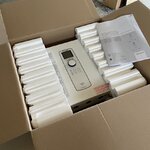
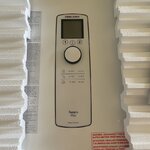
I just bought one for a property I'm renovating and eventually moving to. I wanted an electric so I don't have to vent it. I did quite a bit of research on the topic and purchased a German made Stiebel Eltron. The main bathroom in the property I'm renovating is going to have a Japanese style soaking tub that holds 130 gallons, so given the size of the utility room a traditional water heater was out of the question. I haven't installed it yet, so I can't give a review, but I've read nothing but good about the Stiebel Eltron's. A previous post mentioned Takagi as being a lower end one, but I think any Japanese made one would a pretty good unit as tankless water heaters are the norm in Japan and Takagi is a very popular brand there. Be sure to use a scale inhibitor filter such as the "Waterdrop AP431". Scale and lime build up are the biggest enemies of tankless water heaters

IMG_1570.jpeg

IMG_1576.jpeg

IMG_1577.jpeg

Screen Shot 2023-10-26 at 10.58.47 PM.png
 
Last edited:

nadogail

Well-known member
Joined
Jan 23, 2009
Messages
31,961
Location
Coronado, CA
I had Tankless Water Heaters in a house I owned in Spain, they worked fine. the furthest faucet was only a few yards from the heater.

My American houses are not plumed for tankless heaters, my 50 Gallon water heater has never made me take a Cold Shower.
 

larry4406

Well-known member
Joined
Jan 27, 2006
Messages
19,282
Location
Northern Virginia
At the day job, we use Rinnai RUR199i models for our large 4 bedroom homes. The "i" model includes an internal recirc pump so you can install a recirculation loop. They make a "dumb" non-recirc model, just leave off the "i" from the model number.

Our largest homes with 6 bedrooms (each with private bath) we actually use two of these with the house split into two hot water systems. Its my understanding that with the total fixture count of 6 bathrooms, a single unit will not keep up.
 

jmiller_2308

Well-known member
Joined
Nov 16, 2013
Messages
553
Location
Shakopee, MN
If you happen to have a boiler running your HVAC I'd suggest looking into an indirect water heater that can run off the boiler. They aren't infinite like a tankless but they will have a lot of capacity and depending upon the capacity of your boiler may even run with a recovery rate that would match the flow rate of many tankless water heaters.

My experience:
I had issues trying to fill a 100 gallon spa using a conventional water heater. I talked to a lot of plumber about tankless and at the time the flow rate on them wasn't acceptable (thinking it was about 2 gallons max/minute). I also would have needed to plumb a larger gas supply from the point of entry to the tankless. Cost wise at that time was outrages. Mind you cost and capacities likely changed since I looked at this.

Ultimately I stumbled on indirect water heaters and since I had a Weil McLain boiler already running my HVAC I was able to add a Weil McLain indirect water heater as another zone to that system. With about 100,000 btu input to the boiler I'm able to run the indirect water heater to the point that I never run out of water. My indirect has 30 gallons of storage with a recirculation line so I have hot water at the tap always - no lag as is common with tankless. When calling for hot water the recovery rate, even with cold MN winter water, is such that it can heat incoming water at better than 2 gallons/minute so when added to the stored water I can easily fill my tub as well as run showers all day.
 

PCustoms

Well-known member
Joined
Jul 23, 2011
Messages
22,937
Location
VT
Anyone know how to choose one?
First check your water PH and mineral content. Outside the normal and it will either plug a heat exchanger or rot out. Warranty won't help here

Then read the tech guides. Water inlet temp, required flow (i.e. 1 bath or 5) and gas requirements to make previous items work are the big ones.

By a reputable brand with as much stainless innards and warranty as possible.
How do you pick one and are they easy to DIY? It will be going in my garage and venting through the wall or roof.

If you can do basic plumbing easy. Vent and inlet will be PVC, water inlet and outlet will be your choice. Gas may be difficult depending on current pipe size/rating and your skills

I have moderately hard water, and I'm a little worried about a tankless scaling up.

You'll probably have to add a softener if it's bad, at least you will need to flush the unit annually.
 

danski0224

Well-known member
Joined
Jan 29, 2005
Messages
13,431
Location
Near Naperville, IL
Anyone know how to choose one?

Nothing wrong with my current gas tankful heater, except it runs out of hot water pretty often with everyone showering in the evenings. And eventually I'm planning to add an addition with a garden tub, and I will definitely need to upgrade then. My theory is if I have a tankless, then I shouldn't have to upgrade anything when I put in the addition.

How do you pick one and are they easy to DIY? It will be going in my garage and venting through the wall or roof.

I have moderately hard water, and I'm a little worried about a tankless scaling up.
You need to know the flow rate of your fixtures and what you expect to be used at the same time. This includes washing machine and dishwasher. Commonly expressed as gallons per minute (gpm).

Then you need to know winter water temperature.

You probably need to deliver a minimum of 120 degree hot water, so 120-winter temp = temperature rise.

Your tankless water heater(s) need to be sized to deliver that gpm.

The newest Bosch tankless heaters have heat exchanger scaling diagnostics.
 

mrbill55

Well-known member
Joined
Jun 23, 2016
Messages
1,263
Location
Greenville, SC
Anyone know how to choose one?

Nothing wrong with my current gas tankful heater, except it runs out of hot water pretty often with everyone showering in the evenings. And eventually I'm planning to add an addition with a garden tub, and I will definitely need to upgrade then. My theory is if I have a tankless, then I shouldn't have to upgrade anything when I put in the addition.

How do you pick one and are they easy to DIY? It will be going in my garage and venting through the wall or roof.

I have moderately hard water, and I'm a little worried about a tankless scaling up.
Best money you will ever spend, plus the cost difference between a tank unit and a tankless unit will have an ROI of less than two years. Easy to install, venting can go either way....As for scaling, it means you'll have to do maintenance/flush twice a year, nothing horrible or messy. If you are planning to expand your household, buy a unit one size larger than you currently need.

Bill S.
 

Jackfre

Well-known member
Joined
Dec 26, 2010
Messages
4,411
Location
N CA
Rinnai and Navien are the top two brands. Both are excellent. I do the Rinnai’s and have for the past 25 yrs. If you have good wireless in yoour home the Rinnai recirc system is excellent. If you have weak internet, it will drive you nuts. If you do not have a re-circ return line, try to run one.
 
OP
J

JackOfDiamonds

Well-known member
Joined
Jul 31, 2020
Messages
706
Location
Idaho (USA)
I'm having a hard time understanding how the recirc lines can possibly work. Do they constantly kick on every few minutes, even when you aren't running any hot water, just to do the recirculation? That sounds annoying. Or do they have a separate circuit in them with some kind of small pilot light, that just heats enough for recirculation?

The Rinnai I used to have wouldn't even kick on if the water flow was too low. I had a photographic darkroom at the time, and sometimes I wanted a stable water temperature, but it was terrible at that. When I adjusted the water flow, the temperature would change by a lot, and if I turned the flow too low, it would just turn completely cold when the heater kicked off completely. I heard all tankless units have similar problems at low flows. Some energy-efficient appliances apparently don't flow enough to even kick them on. My problem now is different and consists of women complaining when the hot water runs out, which overrides all other technical considerations.

As a side note, the Rinnai I had sprung a leak in the heat exchanger, even though it wasn't very old, and it cost $1600 to fix it. I'll try to put that bad experience aside and not write them off.
 

Sumboodie

Well-known member
Joined
Mar 20, 2021
Messages
10,697
Location
AK
I'm having a hard time understanding how the recirc lines can possibly work. Do they constantly kick on every few minutes, even when you aren't running any hot water, just to do the recirculation? That sounds annoying. Or do they have a separate circuit in them with some kind of small pilot light, that just heats enough for recirculation?

The Rinnai I used to have wouldn't even kick on if the water flow was too low. I had a photographic darkroom at the time, and sometimes I wanted a stable water temperature, but it was terrible at that. When I adjusted the water flow, the temperature would change by a lot, and if I turned the flow too low, it would just turn completely cold when the heater kicked off completely. I heard all tankless units have similar problems at low flows. Some energy-efficient appliances apparently don't flow enough to even kick them on. My problem now is different and consists of women complaining when the hot water runs out, which overrides all other technical considerations.

As a side note, the Rinnai I had sprung a leak in the heat exchanger, even though it wasn't very old, and it cost $1600 to fix it. I'll try to put that bad experience aside and not write them off.
Mine is the same. I installed a 2 or 3 gallon 120v water heater in line as a buffer tank.
 
OP
J

JackOfDiamonds

Well-known member
Joined
Jul 31, 2020
Messages
706
Location
Idaho (USA)
Mine is the same. I installed a 2 or 3 gallon 120v water heater in line as a buffer tank.

Did you put the buffer tank downstream of the tankless (meaning the tankless feeds the buffer with hot water), or upstream (the buffer feeds the tankless with hot water)?
 

Mike65

Well-known member
Joined
Mar 7, 2007
Messages
3,077
Location
Horse Pasture, Va.
When we purchased our "retirement home" 3 1/2 years ago we had all the mechanicals replaced because they were so old or not working. At that time we decided on a tankless water heater that our heating/A/C contractor picked out after asking us some questions so he knew what size one to get. We have a Navien NPE-210A model. We love having hot water quickly.
1698435025394.png
 
Last edited:

2Fast

Well-known member
Joined
Mar 20, 2020
Messages
248
Location
Southwest
We also have a Navien - the NPE-210A2. We got a deal through our natural gas company - $1,400 installed including haul away, permits, etc. One of the reasons why they were pushing the Navien is they are extremely efficient. This model has a Uniform Energy Factor rating of .95 which also qualified us for a $300 federal tax credit. (which was an unexpected bonus)

Venting - was right out the sidewall of our garage, with 2" PVC. The A2 models have a built in recirc pump (we have a dedicated recirc line) and the pump can be controlled a couple of different ways. We use the 'hot button' method and once activated, within a couple of minutes, we know the water coming out of a faucet will be up to temp. Also Navien has a small, built in 'buffer tank' and the heat exchanger is warranted for 15 years. Lastly, the size of your gas line can be a problem and with these newer Navien units, a lot of times, depending on the length, these will work with a 1/2" gas line if that is all you have to work with.

It's been a little over a year, no problems and I would certainly do it again if something were to happen. Maintenance is simple. On an annual basis, clean out a couple of filters and run a 'descaling solution' (about $20) or 2 gallons of white vinegar (less than $10) through the heat exchanger for about 45 minutes. (I bought a pump and a couple of hoses for around $90)

Navien.jpg
 

dcg9381

Well-known member
Joined
Jun 20, 2018
Messages
11,766
Location
Austin, TX
We have 2 Naviens that I didn't install. I did get involved in the programming when the plumber called "done" and basically just dropped it in as is. I also setup their manual recirculation triggers (IE, garage door buttons).

I have a 3 GPM from EccoTemp in the shop that I did install. Vented though the wall. It's been flawless for me and was $200-$300 all in.

My only caution with these:
  • Cold climates, you probably don't want one on an exterior wall
  • Water systems with high dissolved solids (IE, hard water) - they'll require more maintenance
 

2Fast

Well-known member
Joined
Mar 20, 2020
Messages
248
Location
Southwest
We have 2 Naviens that I didn't install. I did get involved in the programming when the plumber called "done" and basically just dropped it in as is. I also setup their manual recirculation triggers (IE, garage door buttons).

I have a 3 GPM from EccoTemp in the shop that I did install. Vented though the wall. It's been flawless for me and was $200-$300 all in.

My only caution with these:
  • Cold climates, you probably don't want one on an exterior wall
  • Water systems with high dissolved solids (IE, hard water) - they'll require more maintenance
It's funny you mentioned the programming – I had to do the same thing, but fortunately there are a lot of YouTube video's out there. I ended up having to play around with the setting - 'length of furthest fixture' (in feet) to get the temp up where I wanted it to be, before the recirc pump turned off.
 

dcg9381

Well-known member
Joined
Jun 20, 2018
Messages
11,766
Location
Austin, TX
'length of furthest fixture' (in feet) to get the temp up where I wanted it to be, before the recirc pump turned off.
Same here, but our recirc is triggered by buttons in the bath.
I assume the plumbers get a good mark up on these because mine kinda through them in and called "done".
 

Jackfre

Well-known member
Joined
Dec 26, 2010
Messages
4,411
Location
N CA
Step one in acquiring a tankless of any manuf is to get a complete water test done. Your Rinnai experience is a result, I think and experience having sold about 250,000 of them, of poor water. I had one I used in my MA home that was in for 13-14 yrs and I replaced it on the sale of the house as I had access to free goods at the time. I cut the HX in half and it was clean as a whistle. We had good clean water in that town. Rinnai water heaters will provide +/-2*F water from their set point. Minimum fire on them is 15kbtu and .6gpm to establish fire. They will hold operation down to .4gpm. GPMXDeltaTX500=BTU is useful in looking at specific flow needs. They use a gas valve that modulates in 1k btu increments, so very precise temp regulation.
Recirc lines are best as an on-demand type control. Controlling them on time or temp controls ends up running the system inefficiently, especially with tankless. The hot set-up for the Rinnai’s is to use the wireless control at the unit and use the wireless motion sensor in the bathrooms. It sits up at the ceiling and triggers the pump. The kitchen is where you really need recirc and for that you get a wireless push button which you locate under the top cabinets next to the sink. Pushing the button starts the pump/fire and it runs until the return water is sensed as warm.
 
To avoid these ads, REGISTER NOW!

Notgrownup

Well-known member
Joined
May 5, 2014
Messages
5,912
Location
Snow Hill NC
I have a gas Rinnai mounted outside. I like it. Only reason I went with it is because I wanted to save space inside. I actually need to do a descaling service on it soon.
 

Sumboodie

Well-known member
Joined
Mar 20, 2021
Messages
10,697
Location
AK
We have 2 Naviens that I didn't install. I did get involved in the programming when the plumber called "done" and basically just dropped it in as is. I also setup their manual recirculation triggers (IE, garage door buttons).

I have a 3 GPM from EccoTemp in the shop that I did install. Vented though the wall. It's been flawless for me and was $200-$300 all in.

My only caution with these:
  • Cold climates, you probably don't want one on an exterior wall
  • Water systems with high dissolved solids (IE, hard water) - they'll require more maintenance
Mine is on an exterior wall, though it's also a boiler (kombi).

I'm told hard water isn't good, granted isn't good on normal stuff either.
I need to install one, it's on the list.
 

Wiz02

Well-known member
Joined
Jul 13, 2007
Messages
2,399
Location
Southeastern PA
I'm somewhat kidding and somewhat serious, on the following rant, but my existing old school electric water heater has required minimal maintenance in the past 12 years; an anode and a couple of flushes. It is simple to fix but expensive to operate. But do I really want another expensive computerized appliance that requires a lot more maintenance and has questionable longevity? No I don't, I guess that I am turning into a Luddite.

I hate all the electronics on today's appliances. My dryer's control board is giving notice and a new control board will likely cost a significant percentage of a new dryer. Maybe I will get lucky and find a bad capacitor, but I doubt it. So I likely need to buy a new appliance because the electronics died.

I doubt that many people use the silly features made possible by electronics on a dryer and I don't want to mess with programming my water heater, or flushing it twice a year or having yet another filter to change. Not to mention the drama at home if the hot water wasn't plentiful and reliable.

Thank goodness my water heater doesn't need wifi. On the other hand, a wifi enabled leak detector isn't such a crazy idea. So maybe I'm not such a Luddite after all.
 

shade

Well-known member
Joined
May 5, 2010
Messages
344
Location
Phoenix, AZ
Tankless are very simple units.
The electronics are not very advanced which makes them reliable.
I love my Rinnai and anyone who doesn't consider tankless first really should.
 
OP
J

JackOfDiamonds

Well-known member
Joined
Jul 31, 2020
Messages
706
Location
Idaho (USA)
...my existing old school electric water heater has required minimal maintenance in the past 12 years; an anode and a couple of flushes. It is simple to fix but expensive to operate.

Are they really expensive to operate? What, a few dollars per year? How many years would it take to pay for any upgrade?

I feel like the search for perfect efficiency has gone too far, and people (and the government) aren't really doing the math. It's turning into a version of fuel efficiency regulations where we will all have 99% efficient appliances but everything will cost 10x as much and last half as long and our houses look like something from the movie Brazil.
 

Wiz02

Well-known member
Joined
Jul 13, 2007
Messages
2,399
Location
Southeastern PA
Are they really expensive to operate? What, a few dollars per year? How many years would it take to pay for any upgrade?

I feel like the search for perfect efficiency has gone too far, and people (and the government) aren't really doing the math. It's turning into a version of fuel efficiency regulations where we will all have 99% efficient appliances but everything will cost 10x as much and last half as long and our houses look like something from the movie Brazil.
I agree, especially about the false economy of reducing energy consumption by a modest amount while tripling the cost and cutting longevity in half.

While I have no proof, I assume that buying new appliances every 7 years has to have more environmental impact than running old appliances that last virtually forever.

What we do save by going with appliances that use less energy is the need to build more electricity generation facilities even as we use electricity for a wider variety of functions.
 

loganb

ALLIANCE MEMBER
Joined
Dec 29, 2011
Messages
5,534
Location
Omaha, NE
Are they really expensive to operate? What, a few dollars per year? How many years would it take to pay for any upgrade?

My tank type gas water heater is about 70 cents a day to operate. In order to justify the switch to tankless on an existing house the install is gonna need to be damn simple. Even if I had no additional install fees it's about a 6 or 7 year payback on a quality tankless if it saves me 50% of the gas cost
 

American Locomotive

Well-known member
Joined
Jan 8, 2017
Messages
10,960
Location
Rhode Island
Are they really expensive to operate? What, a few dollars per year? How many years would it take to pay for any upgrade?

I feel like the search for perfect efficiency has gone too far, and people (and the government) aren't really doing the math. It's turning into a version of fuel efficiency regulations where we will all have 99% efficient appliances but everything will cost 10x as much and last half as long and our houses look like something from the movie Brazil.
Tanked, electric, water heaters are efficient. They're generally relatively well insulated, and hold their heat well. The problem is, is that electricity is generally expensive (relatively speaking). In New England, an electric water heater can cost you anywhere from $50-100/month to operate. Heat pump water heaters are a huge improvement in that regard.

Tank-type gas-fired water heaters on the other hand are not efficient, but can be cheap to operate if your fuel is very cheap. Tank-type gas-fired water heaters have two main issues:
1. The heat exchanger is generally very bad. 60-65% is basically all you will get out of them. The rest of the heat goes right up the stack.
2. The central heat exchanger tube up the middle acts as a chimney, constantly funneling heat out of the hot water and into the sky.

High efficiency (80%) and even condensing tank-type water heaters exist, but they are expensive and quite rare (at least in the U.S.)

A high efficiency tankless WH can definitely save energy costs (especially if its propane) over a tank-type, but high install costs will probably nullify the savings.
 

danski0224

Well-known member
Joined
Jan 29, 2005
Messages
13,431
Location
Near Naperville, IL
Tank-type gas-fired water heaters on the other hand are not efficient, but can be cheap to operate if your fuel is very cheap. Tank-type gas-fired water heaters have two main issues:
1. The heat exchanger is generally very bad. 60-65% is basically all you will get out of them. The rest of the heat goes right up the stack.
2. The central heat exchanger tube up the middle acts as a chimney, constantly funneling heat out of the hot water and into the sky.
Yes. Labeling on a standard vent water heater is ~62% IIRC.

A PVC vent water heater (not condensing) is ~65%.

I am assuming that these numbers on the labeling include standby losses.

A barometric damper can regulate draft and minimize standby losses up the chimney compared to a plain atmospheric vent model.

There are non-PVC models with an electric vent damper, this will virtually eliminate standby losses up the chimney.

The PVC vent models in this category also significantly reduce standby losses up the chimney, but they also introduce a lot of air infiltration from the flue dilution air taken from the house and being exhausted out the vent. There are "direct vent" non-condensing water heaters. I have had people that have had both atmospheric vent and PVC vent tell me that their water stays hotter for longer with the PVC vent model.
High efficiency (80%) and even condensing tank-type water heaters exist, but they are expensive and quite rare (at least in the U.S.)
That would be the AO Smith Vertex and similar models.
A high efficiency tankless WH can definitely save energy costs (especially if its propane) over a tank-type, but high install costs will probably nullify the savings.
I call BS on this.

It still takes "X" btu's to raise the water temperature.

Far as I can figure out, the bulk of the "savings" is primarily from the elimination of difficult to quantify standby losses. A "98% efficient" tankless is not burning fuel with 98% efficiency. Someone going from a regular water heater to a tankless water heater is NOT going to see a ~20% reduction in the part of the gas bill tied to water heating.

Anyone looking at a tankless water heater for "limitless hot water" is NOT likely to see ANY energy savings, and if anything, their bill will go up.
 

2Fast

Well-known member
Joined
Mar 20, 2020
Messages
248
Location
Southwest
2023 Natural Gas usage with Tankless versus similar months in 2022 with conventional 80 gallon tank.

Both systems used a dedicated recirculation line and pump. Only change I would say is that 2023 was a little colder due to the inclement weather (we had more rain than usual) and we ran the natural gas furnace more than what we would normally do.

With that being said, Natural Gas usage was about a wash - but I will gladly pay $1,200 to replace a 19-year old, 80 gallon conventional water heater with something that has a 15-year warranty on the major components.

AND since this is Garage Journal - I freed up a bunch of space in my garage FOR MORE TOOLS! (being able to set the water temp with a digital readout is pretty nice touch also)

Comparison.jpg
 

Jackfre

Well-known member
Joined
Dec 26, 2010
Messages
4,411
Location
N CA
I have always looked at tankless as a capacity issue. When we had a tank water heater yyou had to kinda schedule usage and limit times so everyone got a hot shower. With the tankless everyone had their shower without difficulty. Pay attention to how many actual minutes/day you are actually using hot water. On demand makes more sense. Savings may not be realized as when you can get a good long shower people tend to take longer showers. I ask folks to look at water consumption numbers for comparison also. If you have a nice tub and like to soak in it with tankless you can. A tank water heater will give you a fill but may not be able to recover fast enough to provide the peaking water temp you need due to recovery times. This especially so if it is a cast iron tub. Tankless will fill the tub to whatever capacity you want with the exact temp you want and be ready to keep the tub warm so you get a good soak. Now, if you have one of those cascading tub faucets with a 3/4 Orr larger feed a single tankless will deliver about 5-6.5 gpm of tub water. That is not impressive in the “cascade” mode. I got a call from a plumber whose customer was incensed that the flow into her tub was less than her previous water heater. I went out to the job and did a flow/temp test and the Rinnai was operating perfectly. She was hot and could not tolerate the appearance of the tub flow. We solved that problem for her by adding two more units which she happily paid for. That is the kind of thing you run into in the hot water business
 

American Locomotive

Well-known member
Joined
Jan 8, 2017
Messages
10,960
Location
Rhode Island
It still takes "X" btu's to raise the water temperature.
You are correct. However, imagine you have two 5 gallon buckets that someone asks you to fill with water.

On one bucket you just shove the hose right in, fill it up, and then turn the water off. Maybe a tiny bit spills over the side. That's a 98% condensing tankless.

On the other bucket, you try filling it up with the sprayer. It's a mess. About a third of the water you spray misses the bucket entirely. Then once the bucket is full, you realize there's a pinhole leaking water out. That's a tank type.
Far as I can figure out, the bulk of the "savings" is primarily from the elimination of difficult to quantify standby losses.
Standby losses are actually very easy to quantify. You can directly calculate them based on jacket temperature and surface area.
A "98% efficient" tankless is not burning fuel with 98% efficiency. Someone going from a regular water heater to a tankless water heater is NOT going to see a ~20% reduction in the part of the gas bill tied to water heating.
It literally means that 98% of the thermal energy being released by cumbustion is being used to heat the water. Hence the flue gasses being cold enough to condense. That's opposed to a traditional gas fired tank style where maybe 60-65% on a good day is used, and the flue gasses are scorching hot.

All things being equal, if you set up a 0.65 EF tank type and a 98% condensing tankless, and had them heat up 50 gallons of hot water, the tankless WILL consume about 25-30% less fuel to do it. It doesn't have a choice, the laws of physics state this will occur.

But as you said, real world changes (as in users now consuming more hot water) may negate some savings.
 

paulsomlo

Well-known member
Joined
Jul 16, 2013
Messages
3,892
Location
Northern Colorado
I don't have numbers to compare with my old tank heater, but the summer that I turned off the pilot light on my furnace, I was using about a dollar's worth of natural gas each month.
 
OP
J

JackOfDiamonds

Well-known member
Joined
Jul 31, 2020
Messages
706
Location
Idaho (USA)
Currently thinking about getting a Rinnai non-HE unit and mounting it outdoors.

The reason for putting it outside is no need to punch a vent hole, no depleting intake air from inside the house or plumbing up some kind of intake, less CO risk inside the house, don't have to listen to it kicking on and off all the time (it's really close to my office).

Reason for choosing a HE (non-condensing) model is that on top of costing a few hundred more up front, the HE units require a condensate drain plus an acid neutralizer for it. If I were going to mount it inside, I would go for HE so I could use a PVC vent, but that doesn't matter if it's going outside. And gas is cheap where I am...my gas bill during the summer, with my 40gal tankful heater, was literally $10.50/mo. There's just not much to save through higher efficiency.

I refuse to install a tankless without a buffer tank on the output. So I'm looking for a small 120V water heater (like 2-5 gallons) to use as a buffer tank. Small 120V heaters are a dime a dozen, but they all have 1/2" NPT connections. If I use it as a buffer tank, it will be in series with my whole hot water system, which is 3/4 pipe. Will those two 1/2" fittings add too much restriction? I have to step up to a 6+ gallon heater to get 3/4 fittings.
 

paulsomlo

Well-known member
Joined
Jul 16, 2013
Messages
3,892
Location
Northern Colorado
Currently thinking about getting a Rinnai non-HE unit and mounting it outdoors.

The reason for putting it outside is no need to punch a vent hole, no depleting intake air from inside the house or plumbing up some kind of intake, less CO risk inside the house, don't have to listen to it kicking on and off all the time (it's really close to my office).

Reason for choosing a HE (non-condensing) model is that on top of costing a few hundred more up front, the HE units require a condensate drain plus an acid neutralizer for it. If I were going to mount it inside, I would go for HE so I could use a PVC vent, but that doesn't matter if it's going outside. And gas is cheap where I am...my gas bill during the summer, with my 40gal tankful heater, was literally $10.50/mo. There's just not much to save through higher efficiency.

I refuse to install a tankless without a buffer tank on the output. So I'm looking for a small 120V water heater (like 2-5 gallons) to use as a buffer tank. Small 120V heaters are a dime a dozen, but they all have 1/2" NPT connections. If I use it as a buffer tank, it will be in series with my whole hot water system, which is 3/4 pipe. Will those two 1/2" fittings add too much restriction? I have to step up to a 6+ gallon heater to get 3/4 fittings.
I didn't think Rinnai made a tankless that wasn't condensing. This is in Idaho? Doesn't it freeze there?
 

Jackfre

Well-known member
Joined
Dec 26, 2010
Messages
4,411
Location
N CA
Honestly, I am a fan of the non-condensing models due entirely to the need for a condensate drain, well, and cost. The condensate on a condensing gas product is at about 3.2 pH, neutral being 7. You have to be carful where you drain that. It will over time absolutely eat concrete, it being a lime based product and corrode about most metal. The first one I put in my own home in MA which I alluded to earlier was an outdoor unit, so I could try it. It saw -30*f and did not freeze. I remain stunned. Now, the supply piping TO the unit was another matter. I can get into it in detail for you, but again with 250000 units to care for in New England, (too) many outside, living in Idaho, don’t do it. Rinnai’s now have a 2x4” direct vent kit. They are also making a non-condensing unit with a circ pump. Oh, another thing about the outside unit. Once it hits 38* it begins pulling in the electric heaters build onto the HX. There goes whatever savings you were hoping for;) I’d skip the buffer tank. If that is what you want to do, I’d go with a bigger tank, no electric back-up and I can tell you how to pipe it. I’ve done it for a lot of commercial systems and for that you don’t need the internal circ.
 

justsam

Well-known member
Joined
Aug 20, 2010
Messages
1,267
Location
Penngrove, California
I have 15 year old Rinnai's on both my main house and guest house. I have had no issues with either one. The homes were originally built with them so I can not compare to a tank type. They are both outdoor, gas fired. The main house has a recirc line that was put in at time of construction. Grundfos pump is controlled by Alexa routine, turns on pump on voice command when waking up and giving news and weather for the day. Voice on demand at any other time. Granny unit at 850 sq ft does not use recirc.

I am on city water and flush units about every two years. Make sure units have, or plumber provides, isolation valves to make flushing easier. My Granny unit did not have them and Jackfire sent me some which I installed. Thanks again Jack!
 
To avoid these ads, REGISTER NOW!
Top Bottom