To avoid these ads, REGISTER NOW!

Where does bonding screw go??

kreeves11674

Member
Joined
Nov 15, 2023
Messages
7
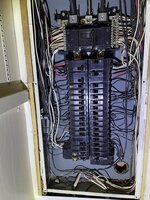
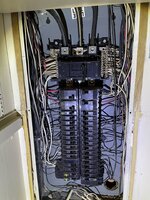
This is a pic of my main (only) breaker box. I am thinking of adding a subpanel in my shed, and want to run wiring from the main to the subpanel. I took pics of the main panel, asking about ground bars. Someone answered my question, but said he did not see a bond screw in my breaker box. This house was built in the 80's, and I can't find any info on this particular breaker box. My question is, where does the bonding screw go in this particular panel? Also, since I obviously don't still have the bonding screw, I am not sure what size to get. I saw some pics of the same box on a post on this forum from several years ago, and I did not see a bonding screw on that one either. Is the bonding screw there and just not green? If not, how has this panel been in service for close to 40 years without a bonding screw? Any help on this would be greatly appreciated!

Kevin
 

Attachments

  • 1.jpg
    1.jpg
    733.9 KB · Views: 161
  • 2.jpg
    2.jpg
    716.7 KB · Views: 160
  • 3.jpg
    3.jpg
    686.7 KB · Views: 161
To avoid these ads, REGISTER NOW!

sparky 1971

Well-known member
Joined
Oct 9, 2018
Messages
7,973
Location
Central Iowa
There might be a bonding strap behind that mess of neutral and ground wires. It might be a bonding screw in the top of the left hand neutral bar. They haven't always been green. As to how it's been in service if it doesn't have one, lack of bonding won't keep anything from working and in this case the only thing that wouldn't be grounded would be the metal of the panel since the neutrals and grounds are on the same bar.
 

wyliesdiesels

Well-known member
Joined
Aug 14, 2012
Messages
20,022
Location
Modesto, CA
This is a pic of my main (only) breaker box. I am thinking of adding a subpanel in my shed, and want to run wiring from the main to the subpanel. I took pics of the main panel, asking about ground bars. Someone answered my question, but said he did not see a bond screw in my breaker box. This house was built in the 80's, and I can't find any info on this particular breaker box. My question is, where does the bonding screw go in this particular panel? Also, since I obviously don't still have the bonding screw, I am not sure what size to get. I saw some pics of the same box on a post on this forum from several years ago, and I did not see a bonding screw on that one either. Is the bonding screw there and just not green? If not, how has this panel been in service for close to 40 years without a bonding screw? Any help on this would be greatly appreciated!

Kevin
wow what a mess

i see doubled up neutral lugs. that needs to be fixed

the bonding screw was probably supposed to go on the upper right bar where the threaded hole is.
 

BreeStephany

ALLIANCE MEMBER
Joined
May 19, 2012
Messages
851
Location
Oregon
This is a pic of my main (only) breaker box. I am thinking of adding a subpanel in my shed, and want to run wiring from the main to the subpanel. I took pics of the main panel, asking about ground bars. Someone answered my question, but said he did not see a bond screw in my breaker box. This house was built in the 80's, and I can't find any info on this particular breaker box. My question is, where does the bonding screw go in this particular panel? Also, since I obviously don't still have the bonding screw, I am not sure what size to get. I saw some pics of the same box on a post on this forum from several years ago, and I did not see a bonding screw on that one either. Is the bonding screw there and just not green? If not, how has this panel been in service for close to 40 years without a bonding screw? Any help on this would be greatly appreciated!

Kevin
Just want to confirm for clarity, that there is no breaker / disconnecting means between this panel and the meter base? Per code, bonding is to take place at the first point of disconnect of source, and not to be bonded past.

Provided that the meter feeds directly into the panel and that the main breaker for that panel is the first point of disconnect for the meter, yes, the neutral shall be bonded to ground in the panel and the grounds and neutrals can be bonded within that panel as they are.

It appears, based on your pictures that the grounds are bonded with the neutral at the panel by landing the grounded electrode conductor and equipment grounding conductors to the neutral bus, but that the can / enclosure itself and the small grounding bar to the left is NOT bonded and does not have a solid path to ground. Based on your picture, if you look on the top right corner of the neutral bus, you will see a roughly 1/4" hole, which is where a bonding screw is installed to bond the neutral bus to the enclosure.

I would suggest taking a multimeter and testing for continuity between the neutral bus and the grounding bar in the lower left corner to see if there is in fact a solid bond.

I have seen a fair amount of people land grounds to the neutral bus at the first point of disconnect / main panel, like has been done in the pictures in your post, but if the bonding screw is not installed, future people may assume that the enclosure itself is bonded and make ground connections via added grounding bars to the enclosure, assuming that the enclosure is grounded. In general, I hate this way of panel makeup, because most often it opens doors for future problems to be created by less experienced individuals, and creates a LOT of unnecessary work if that panel were to ever become something other than the main disconnect, in which case all the grounds would need to be separated from the neutral and landed to a grounding bar.

As I have explained it to early apprentices in the past... just because it works and provides the correct path DOESN'T make it right! Plan for future changes by doing it RIGHT the first time and always land your grounds to a properly sized ground bar and your neutrals to the neutral bar... EVEN IF the two are bonded internally... it just makes it easier for the next person who has to work on it... and I always remind others "just remember... that next person that has to work on this just might be YOU!"

Just my two cents.
 

sparky 1971

Well-known member
Joined
Oct 9, 2018
Messages
7,973
Location
Central Iowa
You can also make a bond by running a piece of #6 from the empty neutral lug at the top to the ground bar and be done with it. I've had to do it a few times for various reasons.
 

u2slow

Well-known member
Joined
Nov 20, 2011
Messages
3,593
Location
BC
Based on my QO panel experience, the bonding screw should be in the hole to the immediate left of the large/center neutral lug. See if a #10-32 screw threads in easily. The left and right neutral bars are connected by a flat bar that runs under that neutral lug.

A jumper - as mentioned - will accomplish the same.
 
OP
K

kreeves11674

Member
Joined
Nov 15, 2023
Messages
7
Based on my QO panel experience, the bonding screw should be in the hole to the immediate left of the large/center neutral lug. See if a #10-32 screw threads in easily. The left and right neutral bars are connected by a flat bar that runs under that neutral lug.

A jumper - as mentioned - will accomplish the same.
Thank you for that information. Since it looks like I will be relocating the doubled up neutral wires, would it be ok to install another neutral bar on the left side so that the left side of the panel looks like the right side?
 
OP
K

kreeves11674

Member
Joined
Nov 15, 2023
Messages
7
Just want to confirm for clarity, that there is no breaker / disconnecting means between this panel and the meter base? Per code, bonding is to take place at the first point of disconnect of source, and not to be bonded past.

Provided that the meter feeds directly into the panel and that the main breaker for that panel is the first point of disconnect for the meter, yes, the neutral shall be bonded to ground in the panel and the grounds and neutrals can be bonded within that panel as they are.

It appears, based on your pictures that the grounds are bonded with the neutral at the panel by landing the grounded electrode conductor and equipment grounding conductors to the neutral bus, but that the can / enclosure itself and the small grounding bar to the left is NOT bonded and does not have a solid path to ground. Based on your picture, if you look on the top right corner of the neutral bus, you will see a roughly 1/4" hole, which is where a bonding screw is installed to bond the neutral bus to the enclosure.

I would suggest taking a multimeter and testing for continuity between the neutral bus and the grounding bar in the lower left corner to see if there is in fact a solid bond.

I have seen a fair amount of people land grounds to the neutral bus at the first point of disconnect / main panel, like has been done in the pictures in your post, but if the bonding screw is not installed, future people may assume that the enclosure itself is bonded and make ground connections via added grounding bars to the enclosure, assuming that the enclosure is grounded. In general, I hate this way of panel makeup, because most often it opens doors for future problems to be created by less experienced individuals, and creates a LOT of unnecessary work if that panel were to ever become something other than the main disconnect, in which case all the grounds would need to be separated from the neutral and landed to a grounding bar.

As I have explained it to early apprentices in the past... just because it works and provides the correct path DOESN'T make it right! Plan for future changes by doing it RIGHT the first time and always land your grounds to a properly sized ground bar and your neutrals to the neutral bar... EVEN IF the two are bonded internally... it just makes it easier for the next person who has to work on it... and I always remind others "just remember... that next person that has to work on this just might be YOU!"

Just my two cents.
Thank you for the information! It looks like I will be cleaning up this panel and making it more manageable and getting rid of double neutral wires under the same screw. Since I don't have any available slots, can I install a new neutral bar on the left side of the panel next to the existing neutral bar so that it looks like the right side that already has 2 neutral bars?
 

wyliesdiesels

Well-known member
Joined
Aug 14, 2012
Messages
20,022
Location
Modesto, CA
yes you can install another neutral bar however you will need to connect it to the existing neutral bar with a jumper as code doesnt allow neutral current to pass thru the enclosure
 

sparky 1971

Well-known member
Joined
Oct 9, 2018
Messages
7,973
Location
Central Iowa
Thank you for the information! It looks like I will be cleaning up this panel and making it more manageable and getting rid of double neutral wires under the same screw. Since I don't have any available slots, can I install a new neutral bar on the left side of the panel next to the existing neutral bar so that it looks like the right side that already has 2 neutral bars?
Make sure it's a neutral bar and not a ground bar. Ground bars are available at any box store, but the only place I've ever been able to get a neutral was at a supply house. It might be easier to install a ground bar or two and move the ground wires, freeing up space for the neutrals.
 
To avoid these ads, REGISTER NOW!

u2slow

Well-known member
Joined
Nov 20, 2011
Messages
3,593
Location
BC
Thank you for that information. Since it looks like I will be relocating the doubled up neutral wires, would it be ok to install another neutral bar on the left side so that the left side of the panel looks like the right side?
Possibly. The neutral bar kits for these panels have two prongs and piggyback on the one thats there.

What you want to watch is some of those existing screw terminals are oversize for landing larger wires. So dont go losing those large spots (if you need them) to have more smaller spots.
 

sparky 1971

Well-known member
Joined
Oct 9, 2018
Messages
7,973
Location
Central Iowa
Possibly. The neutral bar kits for these panels have two prongs and piggyback on the one thats there.

What you want to watch is some of those existing screw terminals are oversize for landing larger wires. So dont go losing those large spots (if you need them) to have more smaller spots.
He's wanting to add a neutral bar to eliminate the double lugged wires, not the adapter to land a larger wire. I think he'd be better off putting in another ground bar or two and moving the grounds to it in order to free up neutral bar space.
 

u2slow

Well-known member
Joined
Nov 20, 2011
Messages
3,593
Location
BC
@sparky 1971 i was talking about another 12 hole bar to piggyback on the left side. Looking again, it appears all his neutral bar terminals are 'small' anyway.

Agreed, get the bond wires onto a another ground bar.
 
OP
K

kreeves11674

Member
Joined
Nov 15, 2023
Messages
7
He's wanting to add a neutral bar to eliminate the double lugged wires, not the adapter to land a larger wire. I think he'd be better off putting in another ground bar or two and moving the grounds to it in order to free up neutral bar space.
Thank you for the information. This sounds like the best option as it will clean up everything in the box and make it neater. So once that is all fixed, the neutral and ground wires that I need to run from the main panel to the sub panel, do those need to land on the ground bar and neutral bar respectively in the main panel? I know that is where they go in the sub panel, and to keep grounds and neutrals separate in the sub panel. But I have had people say that the big lug immediately to the right of the main neutral wire in the top of the main panel should be used for the ground wire to the sub panel.
 

Aaron2

Active member
Joined
Sep 10, 2023
Messages
34
The ground wire to the sub panel should be landed on the bond bus in the main. (Lower left of your panel) Neutral to neutral main to sub. In the sub there will likely be a green screw through the neutral bus that bonds it to the can. This needs to be removed in the sub panel.

If you own a meter you can remove all the bonds from the neutral bus and check for continuity from neutral bus to bond bus (maybe shut it off before you play in there though). The flathead in the top left of the neutral bar looks suspiciously like a bonding screw to me. If no continuity, then you need to run a #6 from the neutral to bond bus as has been suggested by others.

That would be CEC compliance but I can't speak to NEC. Typically similar in my experience though.
 

sparky 1971

Well-known member
Joined
Oct 9, 2018
Messages
7,973
Location
Central Iowa
In the main, the neutral and ground can both go to the neutral bar or ground to ground and neutral to neutral.

You already know thto keep them separate in the sub.
 
OP
K

kreeves11674

Member
Joined
Nov 15, 2023
Messages
7
Thank you to everyone for the knowledge and advice. My plan is to clean up this panel, move my grounds to the grounding bar to make room to eliminate the double neutrals. Unfortunately, the box is located in a built in cabinet, and my family will put our Christmas tree in front of that cabinet tomorrow night. Since I want to take my time and do everything right, I will wait til the season is over, and we take the Christmas tree down to allow me plenty of access to the panel. Thanks again for all the advice, and I hope everyone has a Happy Thanksgiving!

Kevin
 

sparky 1971

Well-known member
Joined
Oct 9, 2018
Messages
7,973
Location
Central Iowa
Thank you to everyone for the knowledge and advice. My plan is to clean up this panel, move my grounds to the grounding bar to make room to eliminate the double neutrals. Unfortunately, the box is located in a built in cabinet, and my family will put our Christmas tree in front of that cabinet tomorrow night. Since I want to take my time and do everything right, I will wait til the season is over, and we take the Christmas tree down to allow me plenty of access to the panel. Thanks again for all the advice, and I hope everyone has a Happy Thanksgiving!

Kevin
Tell them that The National Electric Code requires a 30" wide by 36" deep clear space in front of the panel for access reasons Then get ready to sleep on the couch for trying to ruin Christmas.
 
To avoid these ads, REGISTER NOW!
Top Bottom