

You are using an out of date browser. It may not display this or other websites correctly.
You should upgrade or use an alternative browser.
You should upgrade or use an alternative browser.
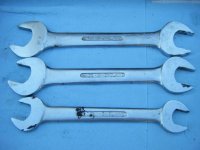
Bedford whitworth england wrenches
- Thread starter sumner52000
- Start date

dj spanners
Well-known member
i live in uk, i don't know much about bedford tools, i've got a couple of items though a 1/2-3/8 adapter and a 3/8dr u/j they look very "britool" to me but i'm only guessing, maybe britool made your wrenches
383 240z
Well-known member
They really do look like my Britool B/S wrenches. Maybe a sub-line of Britool?? Kinda like the blue point/ snap-on, or silver eagle/matco stuff. Keith
RCStocker
Well-known member
The Whitworth are a different sise than the metric.
They wer use before WWll before they really started a one size fits all to make the war effort easier to build and repair.
The old british motercycles and some cares use the sizes. Triumph used them. Many old British made machinery use the bolt sizes and there are companies still making them.
There are collectors for the tools believe it or not.
They wer use before WWll before they really started a one size fits all to make the war effort easier to build and repair.
The old british motercycles and some cares use the sizes. Triumph used them. Many old British made machinery use the bolt sizes and there are companies still making them.
There are collectors for the tools believe it or not.
I have a few Bedford spanners (wrenches) which belonged to my father, they probably date back to the 1950s. Whitworth was the standard bolt size up until the late 1950s before we went onto AF bolts and only in the last 20 years we are now metric. Every single nut and bolt on my 1947 Rover is Whitworth
vssjim
ALLIANCE MEMBER
maybe they had something to do with the Bedford Trucks that GM ended up owning and made in England after WW2 until early 2000's
Last edited:
OP
sumner52000
Well-known member
Anyone know anymore? If the truck thing is true that may make them more collectible.
jeff g
Well-known member
Hi
Bedford was the UKs Snap-on in the 1950 & 60.
I was a Millwright in the 60 & most of my tools
spanners, sockets, ratchets, are all Bedford,
Whitworth & AF.
No combination spanners in the UK in 1960
only ring & openend.
Was a top tool maker in there day.
Bedford was the UKs Snap-on in the 1950 & 60.
I was a Millwright in the 60 & most of my tools
spanners, sockets, ratchets, are all Bedford,
Whitworth & AF.
No combination spanners in the UK in 1960
only ring & openend.
Was a top tool maker in there day.
I find Bedford tools are pretty common on ebay and don't fetch as good of prices as other name brands. I have a few and a set similar to yours. I think Bedford wrenches are well made tools and one of the better bargains out there if you don't want to pay for SO, King ****, Gedore etc.
I don't know of any affiliation to Bedford Trucks but I've always felt they may be associated.
I don't know of any affiliation to Bedford Trucks but I've always felt they may be associated.
Hi
Bedford was the UKs Snap-on in the 1950 & 60.
I was a Millwright in the 60 & most of my tools
spanners, sockets, ratchets, are all Bedford,
Whitworth & AF.
No combination spanners in the UK in 1960
only ring & openend.
Was a top tool maker in there day.
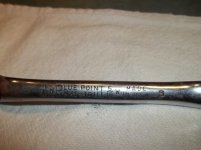
-Instead of making combination wrenches their range of ring and openend were made in two lengths.
An early maker of mirror finished chrome tools.
Nothing to do with Bedford trucks, a GM owned Company.
Tools were made in Sheffield which isn't even in Bedfordshire.
Britool tools differ in profiles.
Good tools.
Attachments

ZRX61
Well-known member
I have a few Bedford wrenches, never really rated them very highly.
Last edited:
ZRX61
Well-known member
The Whitworth are a different sise than the metric.
They wer use before WWll before they really started a one size fits all to make the war effort easier to build and repair.
The old british motercycles and some cares use the sizes. Triumph used them. Many old British made machinery use the bolt sizes and there are companies still making them.
There are collectors for the tools believe it or not.
BSW (& BSF) use a different superior design for the threads, far stronger than UNC/UNF/BA etc.
lbgradwell
Well-known member
The hand tool division of Bedford was folded into the Spear & Jackson Company in 1972.
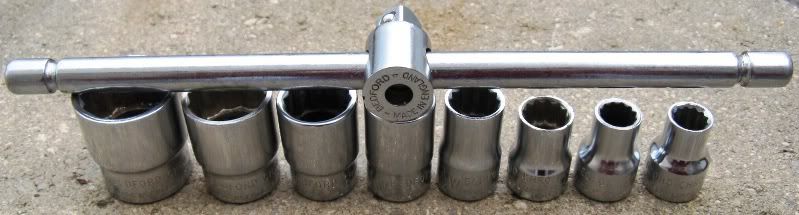
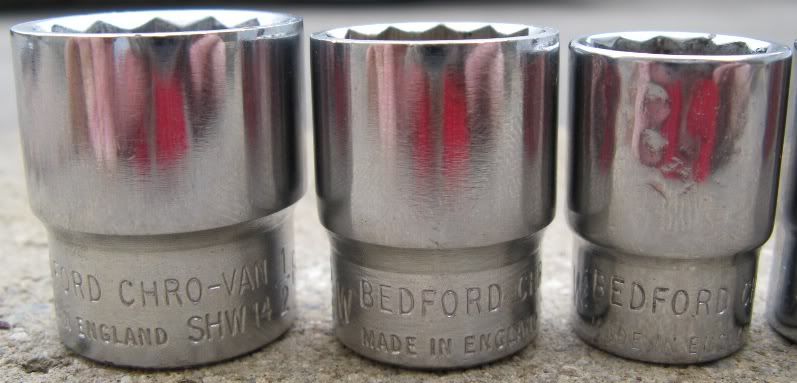
I have a set of Bedford sockets and a sliding t-handle:
Here are a couple of vintage ads...
1951:
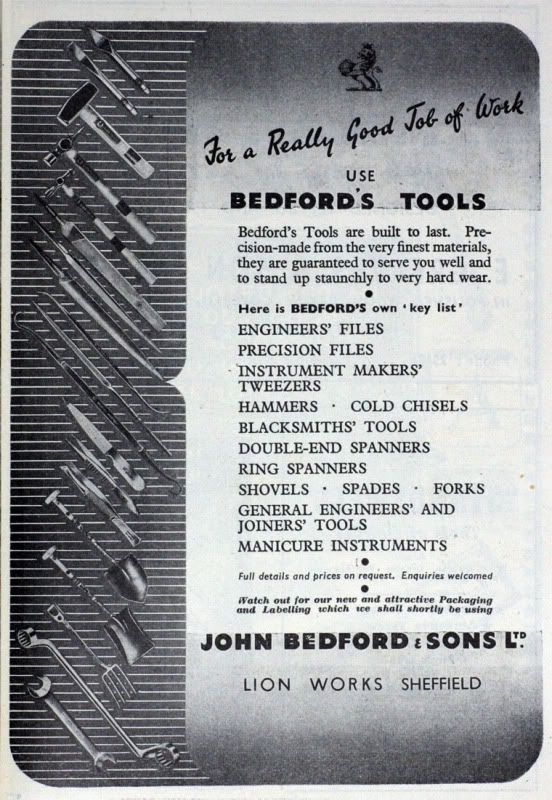
1961:
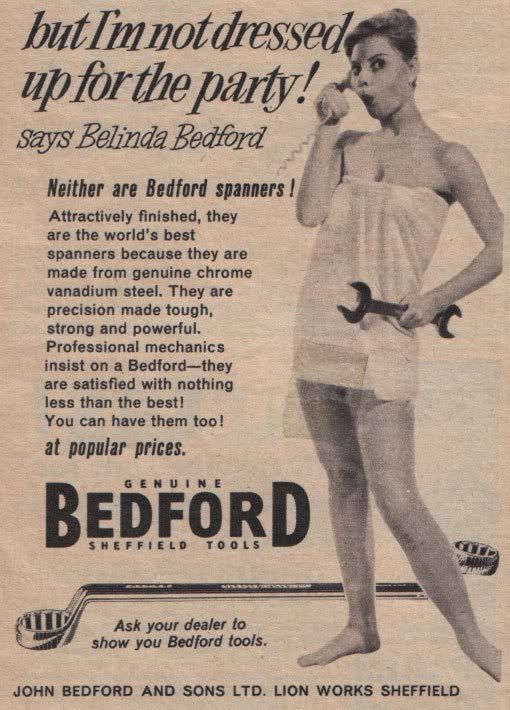
I have a set of Bedford sockets and a sliding t-handle:
Here are a couple of vintage ads...
1951:
1961:
Motor-Mechanic
Well-known member
Don't know alot about the history of Bedford tools, but i remember my Dad used a bunch of Bedford spanners when he worked for Rolls-Royce, and he never bought rubbish.
Back in 50's, 60's and 70's, Britool, King **** and Bedford were quality tools.
Back in 50's, 60's and 70's, Britool, King **** and Bedford were quality tools.
lbgradwell
Well-known member
Back in 50's, 60's and 70's, Britool, King **** and Bedford were quality tools.
Yes sir. Gordon too...
Motor-Mechanic
Well-known member
Yes sir. Gordon too...
Ah yes, forgot about Gordon tools. I seem to recall my old man has some of those too.
woody 73
Well-known member
It must be a few years old by now but my wife bought me a Spear & Jackson garden shovel, I had no idea about the old connection to the automotive hand tools from years past.
bad luck
Well-known member

minimowog
Well-known member
i have a few Bedford spanners as well, they are well made tools, most things made out of steel in the UK is usually made in Sheffield, i'd rate britool, gordon/bedford, then king **** in that order, britool and king **** were made in the Birmingham area, i have a few other British made spanners/tools in BS/whitworth, i also have a blue point supreme spanner in whitworth, made in the USA
bad luck
Well-known member
I have never heard of king **** tools till I started coming on this forum. And I've never seen any in the U.S. Also I'm not familiar with gordon. I have no need for any whitworth tools as I don't ride old british motorcycles, I would like to though. The new Triumphs are really sweet motorcycles. A friend has a speed triple, and I'm really envious.
Dave455
Well-known member
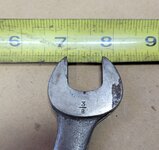
Don’t be confused!Sorry to bring this thread back from the dead, but I just found a Bedford wrench. It is marked 3/8 at one end and the other end is unmarked. The end marked 3/8 is 3/4" and the unmarked end is a 7/8".
I am confused.
That’s a Whitworth wrench, so 3/8 is the size of the bolt, not the bolt head.
The wrench opening should actually be .710 (the wrench size for 3/8 Whitworth) rather than .750, but that’s difficult to see from a tape measure.
timgunn1962
Well-known member
Back in 1841, there was a need to standardise threaded fasteners and a chap called Joseph Whitworth devised the Whitworth system. It used a 55-degree thread form with rounded crests and roots. The across-the-points dimension of the hex head was twice the nominal thread diameter, making the across-the-flats dimension 1.732 times the nominal thread diameter. This didn't matter because everything was standard and a 1/2" Whitworth spanner (wrench) was one that would fit a 1/2" fastener. The Whitworth system was adopted as a British Standard and is often referred to as BSW.
Other standards were developed elsewhere, notably the USA, and these tended to use a 60-degree threadform and to measure the hex heads across the flats. Both systems are perfectly sensible, but it can be confusing when somebody used to one system has to deal with the other.
To confuse the Whitworth spanner/wrench issue further, there is a finer-threaded version of the threadform, BSF, which uses a head one size down from the coarser-threaded BSW. Whitworth threads are coarse, broadly equivalent to UNC and were initially developed with Wrought Iron as the main material from which fasteners were made. A decade or so after Whitworth's standard, the Bessemer process was patented and steel became widely used instead. The USA pretty much stopped using Whitworth and adopted the 60-degree threadform that was later to become UNC/UNF.
The Whitworth thread actually had a number of advantages over the UNF/UNC thread. The rounded root made Whitworth more fatigue-resistant (a rounded-root version of the UN thread was developed for highly-stressed applications and this became UNJ, adopted in 1965, 124 years after Whitworth). Anecdotally, Whitworth threads are much preferred by quarrymen, and folk in similar industries, because they are less prone to seizing (freezing?) and can usually be dismantled somewhat easier than other threads. The most likely reason seems to be that both the crests and roots are rounded, giving a closer fit and less of a path for water and contaminants to get in than the UN threads, which truncate the thread peaks.
Other standards were developed elsewhere, notably the USA, and these tended to use a 60-degree threadform and to measure the hex heads across the flats. Both systems are perfectly sensible, but it can be confusing when somebody used to one system has to deal with the other.
To confuse the Whitworth spanner/wrench issue further, there is a finer-threaded version of the threadform, BSF, which uses a head one size down from the coarser-threaded BSW. Whitworth threads are coarse, broadly equivalent to UNC and were initially developed with Wrought Iron as the main material from which fasteners were made. A decade or so after Whitworth's standard, the Bessemer process was patented and steel became widely used instead. The USA pretty much stopped using Whitworth and adopted the 60-degree threadform that was later to become UNC/UNF.
The Whitworth thread actually had a number of advantages over the UNF/UNC thread. The rounded root made Whitworth more fatigue-resistant (a rounded-root version of the UN thread was developed for highly-stressed applications and this became UNJ, adopted in 1965, 124 years after Whitworth). Anecdotally, Whitworth threads are much preferred by quarrymen, and folk in similar industries, because they are less prone to seizing (freezing?) and can usually be dismantled somewhat easier than other threads. The most likely reason seems to be that both the crests and roots are rounded, giving a closer fit and less of a path for water and contaminants to get in than the UN threads, which truncate the thread peaks.

A nice sequenced set from the smallest upwards wherein the next size up restarts with a repeat of the previous jaw size.
It is usual for British nuts and bolts to have the same head sizing.
The set shown continues for quite a few more sizes but if you don’t have them you are getting into territory where a crescent wrench usually can be used.
YMMV
It is usual for British nuts and bolts to have the same head sizing.
The set shown continues for quite a few more sizes but if you don’t have them you are getting into territory where a crescent wrench usually can be used.
YMMV
found my ring spanners and the repeating sequence is the same, from 1/8w to 9/16wA nice sequenced set from the smallest upwards wherein the next size up restarts with a repeat of the previous jaw size.
It is usual for British nuts and bolts to have the same head sizing.
The set shown continues for quite a few more sizes but if you don’t have them you are getting into territory where a crescent wrench usually can be used.
YMMV
these have been used quite a lot over the last 20 years yet still look basically new, cant fault them

dutchgray
Well-known member
It's known as a full set when you get each size twice (excepting the smallest and largest) and a half set when you only get each size once, which was obviously cheaper to buy as it's much less spanners.A nice sequenced set from the smallest upwards wherein the next size up restarts with a repeat of the previous jaw size.
It is usual for British nuts and bolts to have the same head sizing.
The set shown continues for quite a few more sizes but if you don’t have them you are getting into territory where a crescent wrench usually can be used.
YMMV