To avoid these ads, REGISTER NOW!

Floor coatings and moisture

Hnines

Active member
Joined
May 13, 2017
Messages
26
Hi guys, I had my pole barn built last Summer, concrete was poured last August. I had a 15mm vapor barrier put down under the concrete to mitigate moisture issues. The floor has been completely dry throughout the Winter except for where the expansion cuts were made in the concrete. We have a had a ton of rain over the last 2 months, to the point that the ground is so saturated that it can't really absorb any more water and there's been a lot of water laying around. There wasn't any signs of moisture along the expansion cuts until we had all this rain recently. Only reason I can figure why the expansion cut lines are showing a little moisture is maybe the vapor barrier got cut where they made the expansion lines and it's allowing moisture along that area now with all the excessive rain and ground moisture, does that sound likely?

My plan is to try to get my floor coating completed in the early Summer timeframe. I really want to do do a full flake polyuria, but I've read there can be issues if the moisture in the concrete is too high. What's everyones thoughts/suggestions on this? I'm including a pic of the concrete expansion lines that show where the concrete looks a little damp along a few spots of the expansion line area.
Is there a filler of some kind that could be used in the expansion cuts to keep moisture from coming up through the cut lines?
 

Attachments

  • IMG_6610.jpeg
    IMG_6610.jpeg
    834.3 KB · Views: 32
To avoid these ads, REGISTER NOW!

Shea

Well-known member
Joined
Sep 19, 2012
Messages
2,867
Location
California
Hi guys, I had my pole barn built last Summer, concrete was poured last August. I had a 15mm vapor barrier put down under the concrete to mitigate moisture issues. The floor has been completely dry throughout the Winter except for where the expansion cuts were made in the concrete. We have a had a ton of rain over the last 2 months, to the point that the ground is so saturated that it can't really absorb any more water and there's been a lot of water laying around. There wasn't any signs of moisture along the expansion cuts until we had all this rain recently. Only reason I can figure why the expansion cut lines are showing a little moisture is maybe the vapor barrier got cut where they made the expansion lines and it's allowing moisture along that area now with all the excessive rain and ground moisture, does that sound likely?

My plan is to try to get my floor coating completed in the early Summer timeframe. I really want to do do a full flake polyuria, but I've read there can be issues if the moisture in the concrete is too high. What's everyones thoughts/suggestions on this? I'm including a pic of the concrete expansion lines that show where the concrete looks a little damp along a few spots of the expansion line area.
Is there a filler of some kind that could be used in the expansion cuts to keep moisture from coming up through the cut lines?
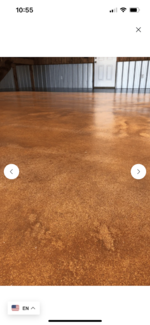
The concrete can absorb water from the air at the surface with all the rain and subsequent relative high humidity you had recently. That is most likely why you are seeing those wet spots in the contraction joints. As the humidity drops, that moisture will begin to evaporate out. To verify, you can tape a 16" square sheet of plastic to the concrete in a few areas. Seal all the edges with tape. Wait 24 hours and pull them up. If the underside is dry, then you are good to go.

I would recommend doing this about a week after the humidity drops back to normal levels and the ground is still damp around you. This should allow enough time for the slab to dry out. If the test shows no moisture present with the ground still damp around the slab, then that is a good indication that your moisture vapor barrier has not been compromised.
 

Armorpoxy

Well-known member
Joined
Aug 18, 2013
Messages
3,735
Location
NJ
We agree, the plastic sheet test works well, but we also carry Moisture Test Kits to test the floor to be extra careful. Remember though, a moisture test only tests for that particular time frame and conditions at the time of the test.
 
OP
H

Hnines

Active member
Joined
May 13, 2017
Messages
26
Is there something that can be poured in the expansion joints to prevent moisture from coming up through the expansion cuts? I believe I read that some recommend filling in the expansion lines prior to coating the floor anyway.
 

Armorpoxy

Well-known member
Joined
Aug 18, 2013
Messages
3,735
Location
NJ
A polyurea type joint filler works great at holding back moisture. RS-88 from Metzger and Mcguire is an excellent product.
 

Garage Flooring

ALLIANCE MEMBER
Joined
May 21, 2011
Messages
5,288
Location
Grand Junction, CO
Armorpoxy and Shea have given some great advice. The cold, hard truth is knowing what you know: if the floor fails later and there is any indication of moisture, you are going to have a hard time getting any help. In a really bad situation, you will have wasted thousands of dollars on something that needs to be removed.

1. I would consult a foundation specialist to see if there are options to keep the moisture from getting between your slab and the vapor barrier. You may have a grade issue that needs to be corrected or you may need a french drain. Consultations are usually free, but at least you know where you stand.

2. A sheet test is a good starting point. Given that we know there is some sort of issue, I would at least do a Calcium Chloride test, and I would probably see if there was someone who could test it professionally. They use high-end equipment that is most accurate.

3. If you are set on a coating, do some research on liquid-vapor barriers.

4. You may want to consider other alternatives like tile. or a stain and a breathable sealer (we do not get into those breathable sealers)
 

Armorpoxy

Well-known member
Joined
Aug 18, 2013
Messages
3,735
Location
NJ
Agree with above from GF. Another solution for a floor with moisture is to use Ghostshield System of densifier and Sealer as this breathes since it is a penetrating system and not a topical system. We carry this if you go that route or want more info.
 

FJ4FUN

Well-known member
Joined
Jul 28, 2014
Messages
623
Location
NorCal
Because you've already witnessed evidence of moisture I'd suggest going straight to Calcium Chloride test/s. They are relatively inexpensive and are readily available online. Read and follow the directions carefully, it's a very easy test to perform. Once you've determined the amount of MVT you are dealing with you can then map out an appropriate course of action. Shea makes an excellent point about the timing of testing.
 

BombShelter

Well-known member
Joined
Nov 16, 2015
Messages
544
Location
State of Hockey
If I had to guess I'd say it was coming from the edges and flowing like a river through the expansion joints. Did they saw-cut to the edge? Do you have gutters and downspouts? A roof collects a ton of water, with no gutters it's dropping next to your slab, with saturated ground it will find it's way in without being able to perculate through the ground. You may be able to dig around the outside joints and seal them up for a quick fix.

If you have time you could dam portions of the crack to see where the flow is coming from, use something like a hot glue gun to dam and then it would be easy to remove for final finishing once the issue has been fixed.

I don't think most cutters cut all the way through, they do as little as possible but the concrete might have cracked on it's own all the way through.
 

LegacyIndustrial

ALLIANCE MEMBER
Joined
Jun 7, 2010
Messages
7,994
Location
deerfield, IL
Typically the saw cuts are only 25% of the slab thickness. So approx 1” for 4” slab.

Filling those will only send the moisture somewhere else. Better it comes up on the cuts and not on the slab.
 
OP
H

Hnines

Active member
Joined
May 13, 2017
Messages
26
So, let’s say theoretically that you do a full fleck polyurea coating to a floor during a dry period where the concrete is completely dry. Then at a later time there is a moisture issue from excessive rain, dampness or some other reason. What happens to the coating?
Does it start peeling up?
 

FJ4FUN

Well-known member
Joined
Jul 28, 2014
Messages
623
Location
NorCal
So, let’s say theoretically that you do a full fleck polyurea coating to a floor during a dry period where the concrete is completely dry. Then at a later time there is a moisture issue from excessive rain, dampness or some other reason. What happens to the coating?
Does it start peeling up?
Basically speaking, yes. It may blister/peel. Moisture that comes into direct contact with the bottom of the slab will migrate up through the slab, if an impermeable coating has been applied to the top of the slab hydrostatic pressure will build up.
 
OP
H

Hnines

Active member
Joined
May 13, 2017
Messages
26
Basically speaking, yes. It may blister/peel. Moisture that comes into direct contact with the bottom of the slab will migrate up through the slab, if an impermeable coating has been applied to the top of the slab hydrostatic pressure will build up.
Thanks for the response. I’m pretty certain there isn’t an issue with moisture in the slab, other than where the expansion lines are cut. Pretty sure they cut all the way through the concrete pad and got the poly liner, as the only moisture seen so far has been along the expansion joint lines.
Honestly, I don’t even think the expansion joint lines will be a problem 90% of the time. We have had so much rain the last few months that the ground just can’t absorb any more. During times of normal rainfall there shouldn’t be an issue, just the rare occasions where we get inundated with excessive rainfall.

So with this in mind, how should I proceed with rhe expansion line areas? Is there something I can use along the expansion line areas only before doing the floor coating?
 

FJ4FUN

Well-known member
Joined
Jul 28, 2014
Messages
623
Location
NorCal
Thanks for the response. I’m pretty certain there isn’t an issue with moisture in the slab, other than where the expansion lines are cut. Pretty sure they cut all the way through the concrete pad and got the poly liner, as the only moisture seen so far has been along the expansion joint lines.
Honestly, I don’t even think the expansion joint lines will be a problem 90% of the time. We have had so much rain the last few months that the ground just can’t absorb any more. During times of normal rainfall there shouldn’t be an issue, just the rare occasions where we get inundated with excessive rainfall.

So with this in mind, how should I proceed with rhe expansion line areas? Is there something I can use along the expansion line areas only before doing the floor coating?
As Scotty@legacy noted, your moisture issue will not be resolved by coating,filling,sealing the expansion joints. Water/water vapor will always seek the path of least resistance. By treating the expansion joints you are just creating a localized barrier/resistance which will just redirect the flow to the next available exit whatever that may be. If you have a compromised vapor barrier (very common) you have moisture in the slab. The cuts just create the most convenient exit point.

"I don’t even think the expansion joint lines will be a problem 90% of the time." Please don't take this the wrong way, I'm not trying to sound like a jerk but if you state this the other way like "I expect my expansion joint lines to be a problem 10% of the time" I would be a thief if I encouraged you to move forward with one of our coatings systems....

If you want to reliably coat your floor, you need to do some more investigation starting with a properly executed anhydrous calcium chloride testing regimen. The good news is that this is cheap, easy, and this is the best time to do it. Once you've established the rate of MVT then you can figure out which direction to go.
 
To avoid these ads, REGISTER NOW!
OP
H

Hnines

Active member
Joined
May 13, 2017
Messages
26
Thanks… I’ll work on getting it tested to determine the MVT.
Let me ask though, acid staining with some kind of clear top coat is another option I have considered. Is that something I could do, or would I run into the same problems that polyurea would have if there is some moisture occasionally present?
Something like this pic…..
 

Attachments

  • IMG_6629.png
    IMG_6629.png
    2.7 MB · Views: 20
Last edited:

FJ4FUN

Well-known member
Joined
Jul 28, 2014
Messages
623
Location
NorCal
Thanks… I’ll work on getting it tested to determine the MVT.
Let me ask though, acid staining with some kind of clear top coat is another option I have considered. Is that something I could do, or would I run into the same problems that polyurea would have if there is some moisture occasionally present?
Something like this pic…..
Short answer is any coating that encapsulates (seals) the slab will have the potential for negative response to MVT. This depends on the level of MVT and the specific coatings product. Some combination of coatings/preparation can handle more MVT than others. Some coatings are permeable and allow MVT to pass through them but, it's a two way street and the counter effect is also true in that they allow liquids to pass the other way resulting in less chemical/stain resistance.

Again, there are a LOT of factors that come into play in selecting a coating system when dealing with "higher" MVT levels i.e. anything above 3 - 3.5lbs per 1000sf. Rather than enumerating all of these factors the best way forward is to measure what specific range of MVT levels you are dealing with and then researching options that will address your situation.
 
OP
H

Hnines

Active member
Joined
May 13, 2017
Messages
26
Short answer is any coating that encapsulates (seals) the slab will have the potential for negative response to MVT. This depends on the level of MVT and the specific coatings product. Some combination of coatings/preparation can handle more MVT than others. Some coatings are permeable and allow MVT to pass through them but, it's a two way street and the counter effect is also true in that they allow liquids to pass the other way resulting in less chemical/stain resistance.

Again, there are a LOT of factors that come into play in selecting a coating system when dealing with "higher" MVT levels i.e. anything above 3 - 3.5lbs per 1000sf. Rather than enumerating all of these factors the best way forward is to measure what specific range of MVT levels you are dealing with and then researching options that will address your situation.
I had a local company that does polyuria coatings come out and look at my slab. They used a moisture meter to check the floor in various locations, and their readings varied from 4.5% to 6%. They recommended using a liquid vapor barrier primer as the first coat, and said there shouldn't be a problem as long as I use the primer underneath everything. This company is arguably th best and most knowledgable in my area, has a lifetime warranty from both their company and the polyuria manufacturer, and has been in the business for a long time, so I tend to trust their advice. The downside is they are far out of what I willing to spend on a floor coating, coming in at almost 20k. So I will have to do the job myself, or get quotes from other company's.
What are your thoughts on using a liquid vapor barrier as a primer, and would I likely be ok with doing the polyuria as long as that is used as a primer first?
 

Sumboodie

Well-known member
Joined
Mar 20, 2021
Messages
10,693
Location
AK
Could just pour a new slab at that price!

20k to paint a floor. No way!
 

FJ4FUN

Well-known member
Joined
Jul 28, 2014
Messages
623
Location
NorCal
I had a local company that does polyuria coatings come out and look at my slab. They used a moisture meter to check the floor in various locations, and their readings varied from 4.5% to 6%. They recommended using a liquid vapor barrier primer as the first coat, and said there shouldn't be a problem as long as I use the primer underneath everything. This company is arguably th best and most knowledgable in my area, has a lifetime warranty from both their company and the polyuria manufacturer, and has been in the business for a long time, so I tend to trust their advice. The downside is they are far out of what I willing to spend on a floor coating, coming in at almost 20k. So I will have to do the job myself, or get quotes from other company's.
What are your thoughts on using a liquid vapor barrier as a primer, and would I likely be ok with doing the polyuria as long as that is used as a primer first?
1. There is no way I (or anybody else) could begin to comment on the price quoted without knowing the size of your floor.

2. The test results you noted have very little meaning to me, instant read Concrete Moisture Meters measure the amount of moisture on the surface of the concrete at any given time and do not correlate to the rate of moisture movement. Now, this isn't to say that the company's conclusions are incorrect because they have local knowledge and experience that is likely informing them that I do not have. While it is not perfect, we still suggest Calcium Chloride testing.

3. I come from a world where we ALWAYS recommend a primer. Generally speaking, for projects that exceed 3.5lbs per 1,000sf MVT we will specify our BondTite 1102 MVT primer with qtys and preparation instructions that are specific to the actual conditions observed. Did they indicate what preparation steps they would be using? Sweeping, etching, grinding, shot blast... Hope & Prayer??

4. We do not offer polyureas (at this time...) because Wolverine Coatings does not encounter any demand for it amongst their industrial clientele. If it's a flake floor that you want I'd be recommending our LiquaTile 1184 epoxy body coat and EnduraShield 2254 hybrid-urethane clear over the BondTite 1102 primer (again, depending on MVT rate).
 

Armorpoxy

Well-known member
Joined
Aug 18, 2013
Messages
3,735
Location
NJ
We carry MVB (moisture vapopr barrier) epoxy that will hold back 20lbs plus of pressure. That being said you must test with calcium chloride tests so we can make sure you are within specs. To be honest 'floor moisture meters' are almost worthless instruments on a concrete floor and we would not ever recommend anyhing based on a simple meter test. The fact that this company used that alone is a reason to not recommend them. The only way to test for moisture is the plastic sheet method, RH electronic probes which get inserted into drilled holes, wait 24-48 hours then read (not generally a diy item), or calcium chloride tests.

Like going to a doctor and the first thing they say is get tests, xrays, etc, floors are the same, test and contact us, we most definitley can get you a workable solution at far less than 20k!
 

imt

New member
Joined
Jul 26, 2024
Messages
1
Concrete in garage all grinded. Did 3ea Calcium Chloride tests on garage floor over 72hrs. Max reading was 9.5 of the 3 tests. What would be recommended?
 

Armorpoxy

Well-known member
Joined
Aug 18, 2013
Messages
3,735
Location
NJ
You need a moisture barrier epoxy as first coat applied at 100 sq ft per gal. We carry this.
 

kevincalori

New member
Joined
Jul 21, 2024
Messages
3
Location
Phoenix
Hi guys, I had my pole barn built last Summer, concrete was poured last August. I had a 15mm vapor barrier put down under the concrete to mitigate moisture issues. The floor has been completely dry throughout the Winter except for where the expansion cuts were made in the concrete. We have a had a ton of rain over the last 2 months, to the point that the ground is so saturated that it can't really absorb any more water and there's been a lot of water laying around. There wasn't any signs of moisture along the expansion cuts until we had all this rain recently. Only reason I can figure why the expansion cut lines are showing a little moisture is maybe the vapor barrier got cut where they made the expansion lines and it's allowing moisture along that area now with all the excessive rain and ground moisture, does that sound likely?

My plan is to try to get my floor coating completed in the early Summer timeframe. I really want to do do a full flake polyuria, but I've read there can be issues if the moisture in the concrete is too high. What's everyones thoughts/suggestions on this? I'm including a pic of the concrete expansion lines that show where the concrete looks a little damp along a few spots of the expansion line area.
Is there a filler of some kind that could be used in the expansion cuts to keep moisture from coming up through the cut lines?
A good quality epoxy will fix it easily
 

UFCRaleigh

New member
Joined
Jul 29, 2024
Messages
2
Location
Raleigh, NC
I had a local company that does polyuria coatings come out and look at my slab. They used a moisture meter to check the floor in various locations, and their readings varied from 4.5% to 6%. They recommended using a liquid vapor barrier primer as the first coat, and said there shouldn't be a problem as long as I use the primer underneath everything. This company is arguably th best and most knowledgable in my area, has a lifetime warranty from both their company and the polyuria manufacturer, and has been in the business for a long time, so I tend to trust their advice. The downside is they are far out of what I willing to spend on a floor coating, coming in at almost 20k. So I will have to do the job myself, or get quotes from other company's.
What are your thoughts on using a liquid vapor barrier as a primer, and would I likely be ok with doing the polyuria as long as that is used as a primer first?
Which undoubtedly excludes moisture failure.

Moisture is always a risk, but a good MVB (which will be an epoxy, not a polyurea) can make a big difference. I've had a few moisture failures over the years, and after I went back with an MVB, moisture was not a concern again on most. That said, an MVB isn't a silver bullet either. I did a laundry facility once with an MVB primer after a previous contractor's epoxy system failed from moisture. The system held up fine for several years, then they got hit with 6" of rain in an hour and two days later the floor was coming up in sheets. The concrete was stuck to the bottom of my coating, but the moisture pressure was so strong it broke the concrete apart underneath.
 

RXGarage

New member
Joined
Feb 21, 2023
Messages
1
Hi guys, I had my pole barn built last Summer, concrete was poured last August. I had a 15mm vapor barrier put down under the concrete to mitigate moisture issues. The floor has been completely dry throughout the Winter except for where the expansion cuts were made in the concrete. We have a had a ton of rain over the last 2 months, to the point that the ground is so saturated that it can't really absorb any more water and there's been a lot of water laying around. There wasn't any signs of moisture along the expansion cuts until we had all this rain recently. Only reason I can figure why the expansion cut lines are showing a little moisture is maybe the vapor barrier got cut where they made the expansion lines and it's allowing moisture along that area now with all the excessive rain and ground moisture, does that sound likely?

My plan is to try to get my floor coating completed in the early Summer timeframe. I really want to do do a full flake polyuria, but I've read there can be issues if the moisture in the concrete is too high. What's everyones thoughts/suggestions on this? I'm including a pic of the concrete expansion lines that show where the concrete looks a little damp along a few spots of the expansion line area.
Is there a filler of some kind that could be used in the expansion cuts to keep moisture from coming up through the cut lines?
old post but should you ever have and coating / moisture related questions we are alas happy to answer any questions regarding professional installations. web address is www.rx-garage.com
 

LegacyIndustrial

ALLIANCE MEMBER
Joined
Jun 7, 2010
Messages
7,994
Location
deerfield, IL
For future readers...

A. leave those joints open, consider this an escape hatch for future moisture
B. If using a high-performance coating (epoxy, polyurea, etc....) grind that floor and apply a good $$$ MVB first.
C. Yes, you can use a low-performance coating that breathes to let the moisture move through (acrylic or penetrating)

As all of us have mentioned...water is the most powerful force on earth. I have surveyed floors coated with the absolute best system available and the surface of the concrete came off like a pop-top. Yes, the concrete actually let loose with the coating-system still attached.

Good luck, y'all!!
 
To avoid these ads, REGISTER NOW!
Top Bottom