To avoid these ads, REGISTER NOW!

Mini split sizing Central Florida

freedom561

Active member
Joined
Jul 20, 2022
Messages
39
Location
Clermont, FL
I am in the process of building a 30x50x14 tubular steel building here in Central Florida and I am trying to figure out what size Mini Split would suffice. I plan on doing closed cell insulation (R10 walls, R14 Ceiling) and Bluetex on the roll up doors (two 12x12 facing north, one 8x8 and man door facing west).
After researching threads on GJ, it sounds like a 36k BTU unit would get the job done. When I plugged the numbers into https://www.loadcalc.net/ to confirm, it's coming back with Total Btu's Cooling 15670, how ever I am not very confidant I filled this form out correctly as its not the most intuitive:

1707845654463.png

At any rate, do you think I would be fine with a 36k unit? or is it too much? I don't plan on running the AC when the building is unoccupied, unless its to solely take the humidity down a bit.

Thanks in advance!

 
To avoid these ads, REGISTER NOW!

bonneyman

Well-known member
Joined
Apr 22, 2010
Messages
8,857
Location
Desert SW
Never used the loadcalc sheet before, but reading yours I saw the sensible load was really high and the latent heat load (i.e. moisture) was really low. For Arizona loads we are quite dry (so latent loads aren't much on our minds). But Florida is quite moist. Do you guys figure that in on your installs?
 

pcmeiners

Well-known member
Joined
Aug 13, 2009
Messages
7,952
Location
In the only town in Pennsylvania, Bloomsburg.
If your well insulated 36k sounds high. With efficient units 24k should do it. Personally I would get (2) mini splits, 12k-15k each, install along the 50 length You should consider running a mini split 24/7 at a lower than an occupied level. It would remove moisture, and allow a faster temperature change to the occupied level. Cooling BTU seem low, possibly it would be OK if the cooling remained at user level 24/7.; not counting garage door opening/closing, and hot cars
 
Last edited:

chinboys

Well-known member
Joined
Jun 20, 2011
Messages
434
I read this post last night and something about its heat load calculations didn't jive with my experience in HVAC and its use in Florida.
The BTUs to get from 95 F to 70 F for sensible heat and that for latent heat got me thinking about the heat load calculations steering you to a cooling tonnage. The figures normally are reversed where the latent heat load is higher (at least twice) than that of the sensible heat load.

The heat calculator assumes a perfect building environment and doesn't take into account of "ventilation" of hot humid air coming into your insulated structure via leaks, deliberate openings of windows, doors, and garage doors for a short time or for a long time.

Willis Carrier, founder of the Carrier Corp., researched moisture in air, absolute and relative humidity, relative to dry and wet bulb temperatures.
Psychrometrics informs us today that one needs to deal with the latent heat (970 BTUs of heat removal per pound of water) of the humid air first before one uses sensible cooling to drop the temperature.
Thus the cooling tonnage of the system will first remove relative humidity to a point before lowering the temperature.
This action will take time, especially if you don't plan on using the AC all the time during your days of high temperature and humidity.
This action will also get you to your 70 F. yet you will feel clammy if you overdesign your cooling tonnage.
Of course, any shortage of tonnage of cooling will get you 70 F and will have the right relative humidity but it might take a lot longer... are you willing to wait or keep your system running all the time during the cooling season?

In conclusion, perform a blower door test to deal with the design air leakage (cubic feet or air exchanges per hour) and use in addition to your heat load calculations, a psychrometric calculation to dial in the right cooling tonnage for building with nothing open at 95 F and 99.99% relative humidity.
 

dscheidt

Well-known member
Joined
Apr 26, 2017
Messages
2,909
I read this post last night and something about its heat load calculations didn't jive with my experience in HVAC and its use in Florida.
The BTUs to get from 95 F to 70 F for sensible heat and that for latent heat got me thinking about the heat load calculations steering you to a cooling tonnage. The figures normally are reversed where the latent heat load is higher (at least twice) than that of the sensible heat load.

The heat calculator assumes a perfect building environment and doesn't take into account of "ventilation" of hot humid air coming into your insulated structure via leaks, deliberate openings of windows, doors, and garage doors for a short time or for a long time.

Willis Carrier, founder of the Carrier Corp., researched moisture in air, absolute and relative humidity, relative to dry and wet bulb temperatures.
Psychrometrics informs us today that one needs to deal with the latent heat (970 BTUs of heat removal per pound of water) of the humid air first before one uses sensible cooling to drop the temperature.
Thus the cooling tonnage of the system will first remove relative humidity to a point before lowering the temperature.
This action will take time, especially if you don't plan on using the AC all the time during your days of high temperature and humidity.
This action will also get you to your 70 F. yet you will feel clammy if you overdesign your cooling tonnage.
Of course, any shortage of tonnage of cooling will get you 70 F and will have the right relative humidity but it might take a lot longer... are you willing to wait or keep your system running all the time during the cooling season?

In conclusion, perform a blower door test to deal with the design air leakage (cubic feet or air exchanges per hour) and use in addition to your heat load calculations, a psychrometric calculation to dial in the right cooling tonnage for building with nothing open at 95 F and 99.99% relative humidity.
Modern minisplits turn down to really low levels, so unless your vastly oversized, they'll continue to run and pull the humidity out of the air. They also usually pay attention to how fast the temperature is dropping, and lower output to match a programmed curve.
 

toyotadriver

Well-known member
Joined
Dec 30, 2010
Messages
1,586
R14 for the ceiling isn't much. FL is hot and sunny so you really need more up there.

Get the insulation levels up and you could easily drop to 24k BTU. Humidity removal is going to be a big thing for you and you do not want to oversize.

I would do two mini splits. What sounds ideal to me is one 12k and one 18k.


Nothing in this post should be misunderstood, interpreted, misinterpreted, or construed to be of a political nature.
 
OP
F

freedom561

Active member
Joined
Jul 20, 2022
Messages
39
Location
Clermont, FL
Thanks everyone for the information! It sounds like running dual mini splits is the way to go and its only marginally more expensive as opposed to a single 36k.
R14 for the ceiling isn't much. FL is hot and sunny so you really need more up there.

Get the insulation levels up and you could easily drop to 24k BTU. Humidity removal is going to be a big thing for you and you do not want to oversize.

I would do two mini splits. What sounds ideal to me is one 12k and one 18k.


Nothing in this post should be misunderstood, interpreted, misinterpreted, or construed to be of a political nature.

What R value would you recommend for the roof? Do you think the load calc data posted above isn't accurate, or just trying to reduce the amount of BTUs needed? Just trying to understand your logic it is all!
 

toyotadriver

Well-known member
Joined
Dec 30, 2010
Messages
1,586
Thanks everyone for the information! It sounds like running dual mini splits is the way to go and its only marginally more expensive as opposed to a single 36k.


What R value would you recommend for the roof? Do you think the load calc data posted above isn't accurate, or just trying to reduce the amount of BTUs needed? Just trying to understand your logic it is all!


Roof R values should probably be R30+. The more the better especially in a sunny area like where you live. If you are going to try to get by with lower roof R values, you would need more cooling capacity. It's always cheaper to keep heat out than to remove it with AC units.


Nothing in this post should be misunderstood, interpreted, misinterpreted, or construed to be of a political nature.
 

pcmeiners

Well-known member
Joined
Aug 13, 2009
Messages
7,952
Location
In the only town in Pennsylvania, Bloomsburg.
"Do you think the load calc data posted above isn't accurate, or just trying to reduce the amount of BTUs needed? Just trying to understand your logic it is all!"

My advice is get multiple calculators, run the number, than take an average. My "guess" is primarily based on my installed units. Have a 12k extra low temp Fujitsu in my garage, as I
linked above, 1080 sqft, 2 garage doors , 2 windows, 3" insulation in walls, 10" above ceiling, floor is insulated but no idea of the r value.
Not only does it easily take care of the garage (-7 to 100 degrees) but before I installed 4 more minisplits it took care of the garage and my 1280 sqft attached home all summer and up until December for heat with the help of a fan in the garage door to the home.
Used multiple calcs on multiple boiler installs, hit the mark on all. Ps, In previous wars, US artillery would ask the squad member there guess as to the target distance, averaged out they would hit the mark with less shells, so averaging calculator results would be more accurate.
.
As to a single unit doing your garage with one head, it will not produce even cooling/heating, even with 2 heads if anything goes south it becomes an emergency. With 2 single units along the long wall, the heating/cooling will be better distributed, with redundancy if one unit goes on the blink. Also if one unit does go out it not an emergency,

As to insulation, I would up the R value of the ceiling, =>R30, agree with Toyotadriver. Also be very conscious of air sealing, a great deal of thermal gain or loss is via air exchange , air leaks.

Having 2 single zones will be more expensive initially. As you need 2 load lines runs, 2 linesets, 2 pads for the compressor, and 2 minisplits will be more expensive than a multi zone unit. In the long run you will get it back because smaller BTU output single zone minisplits are the most efficient.

I would highly recommend you DIY, I did all mine with the linesets within the wall cavity, which is not necessary in a garage (too much work), purchase the N2 tank and regulator, flare tools, vacuum pump, micron gauge etc. Not difficult and you will save thousands.

For this advice payment.... ship some of you weather up north. :thumbup:
 
Last edited:

dscheidt

Well-known member
Joined
Apr 26, 2017
Messages
2,909
Thanks everyone for the information! It sounds like running dual mini splits is the way to go and its only marginally more expensive as opposed to a single 36k.


What R value would you recommend for the roof? Do you think the load calc data posted above isn't accurate, or just trying to reduce the amount of BTUs needed? Just trying to understand your logic it is all!
r38 is code in most of Florida (It's 30 in the far south part of the state), at least for houses. Don't know if your structure is covered by that or not, but it's a reasonable guide, the IECC is cost/benefit driven. Air sealing is also very important, convection in the insulation and air leaks can greatly reduce the performance of insulation.
 

theoldwizard1

Well-known member
Joined
Feb 22, 2011
Messages
43,248
Location
SE MI
#1, you need more insulation in the ceiling ! At least double what you are planning. It does not have to be spray foam, but you need more !

With a building that big you will need at least 2 air handlers. 4 would give you an even better distribution. You will probably be better off with 2 smaller units. Bigger systems are less efficient. On cooler days you can always run just one.
 
Last edited:
OP
F

freedom561

Active member
Joined
Jul 20, 2022
Messages
39
Location
Clermont, FL
There's a wealth of information in this thread, it is much appericated! If money were no factor, I'd love to splurge on getting R38 insulation on the roof. But realistically, I don't think that's feasible within my budget. Moreover, I couldn't justify such a cost for a building that will be unoccupied 80% of the time.

At the end of the day, this is just a hobby shop/storage unit for vehicles, not a structure for full-time living or use. The goal isn't to turn it into a meat locker when it's 110* in August; my aim is simply to take the edge off during the hottest months for a few hours at a time while working inside. Most of the year, the doors will be open while I'm working inside the shop anyway.

With that in mind, if I install 2" closed-cell insulation on the walls and ceiling, insulate the roll-up doors, and seal them up as best as possible, don't you think running a single 36k or dual 12k-15k units would be enough to just take the edge off while occupied? Setting aside R-value considerations, making the building as airtight as possible while eliminating radiant heat seems like it would be a significant improvement in itself.
 

theoldwizard1

Well-known member
Joined
Feb 22, 2011
Messages
43,248
Location
SE MI
OP said R14 in the ceiling. That’s nothing when the sun is beating down for more than 12 hours and the ambient temp is near 100F. Unless you are over R30 in the ceiling you won’t be “taking the edge off” anything at 6PM in August.
 
Last edited:
To avoid these ads, REGISTER NOW!

dcg9381

Well-known member
Joined
Jun 20, 2018
Messages
11,896
Location
Austin, TX
I found that I could buy 2 x 24K units for what a single 36K unit cost. Just did a buddys shop, about the same size in TX and recommended the same thing. If 24k gets it done, you just run one. When you start cooling it down from ambient at 2pm in the afternoon, you'll want both.

Part of this is about "use". For many of us shops are not residential and are not heated and cooled 100% of the time. So you need a little more to "cool down" and a little less to maintain it. Hopefully being in FL you'll get units with dehumidify....

You can always design for 2x 24K units and start with one.

I dunno how cold it gets in FL, but here in TX I cannot heat the shop with 48k if it's below 25 degrees using these units (they are not hyper-heat). But that's only a few days a year at worst.
 
OP
F

freedom561

Active member
Joined
Jul 20, 2022
Messages
39
Location
Clermont, FL
OP said R14 in the ceiling. That’s nothing when the sun is beating down for mire than 12 hours and the ambient temp is near 100F. Unless you are over R30 in the ceiling you won’t be “taking the edge off” anything at 6PM in August.

Agree with olddwizard1, R14 is not enough, for the wall it is one thing, for a `roof or attic it is a totally different story.

So essentially, what you're saying is that there's no middle ground—it's either at least R30 insulation on the ceiling or nothing. If that's the case, then I'd be better off saving the $20k on insulation and investing in a couple of $10 box fans instead.

It makes me wonder how this gentlemen with a similar building pulled it off running 2" closed cell all around.
 

toyotadriver

Well-known member
Joined
Dec 30, 2010
Messages
1,586
R14 spray foam is ok. Not great but ok. If you are unwilling or unable to go higher, then you will need more cooling capacity. I would go no less than a 12k and an 18k but two 18k's should do what you need it to do. R14 isn't enough but it's far better than R0.


Nothing in this post should be misunderstood, interpreted, misinterpreted, or construed to be of a political nature.
 

u3b3rg33k

Well-known member
Joined
Dec 18, 2017
Messages
4,049
Post the model of the mini split you’re looking at. Most of the single headed units have EXCELLENT turndowns, so oversized isn’t an issue. Multi splits generally have higher minimums so I would not steer you in that direction.

Also lots of mini splits now have a “dehumidifier mode” that runs a cold coil with low airflow. So long as ambient temp is high enough for a traditional dehumidifier to work properly that would let you control humidity without having to keep it “cool” in the garage.
 

dscheidt

Well-known member
Joined
Apr 26, 2017
Messages
2,909
$20k to go from R14 to R30, just not sound kosher !
he's bought into the spray foam hype, and thinks it's the only way to insulate.

OP: use cellulose / fiberglass blow in for the ceiling. spray foam is great stuff, but it's very expensive, and not the magic some of the people selling say it is.
 

theoldwizard1

Well-known member
Joined
Feb 22, 2011
Messages
43,248
Location
SE MI
he's bought into the spray foam hype, and thinks it's the only way to insulate

OP: use cellulose / fiberglass blow in for the ceiling. spray foam is great stuff, but it's very expensive, and not the magic some of the people selling say it is.
2" of spray foam is a good start
 
OP
F

freedom561

Active member
Joined
Jul 20, 2022
Messages
39
Location
Clermont, FL
he's bought into the spray foam hype, and thinks it's the only way to insulate.

OP: use cellulose / fiberglass blow in for the ceiling. spray foam is great stuff, but it's very expensive, and not the magic some of the people selling say it is.
Will do, thanks!
 

dcg9381

Well-known member
Joined
Jun 20, 2018
Messages
11,896
Location
Austin, TX
So essentially, what you're saying is that there's no middle ground—it's either at least R30 insulation on the ceiling or nothing. If that's the case, then I'd be better off saving the $20k on insulation and investing in a couple of $10 box fans instead.
I didn't read it that way. The recommended R values for insulation are based on the assumption that it's full time residential. It's a math problem that's beyond my ability to solve, but I went for R12-R15 in the shop, including the ceiling and added a little more HVAC capacity than I needed.

I could have spent $10k more on an additional R12-R15 in foam, but my non-math estimated that I'd never get that $10k back in electrical savings in a shop that I heat and cool one day out of 7 or 10.....

he's bought into the spray foam hype, and thinks it's the only way to insulate.
OP: use cellulose / fiberglass blow in for the ceiling. spray foam is great stuff, but it's very expensive, and not the magic some of the people selling say it is.
I'm one of these people too. I think it's the "best" way to insulate (barring SIP or other alternative construction). By it's very nature it does things that traditional insulation cannot do and your basic fiberglass insulator person (around here) doesn't do in the details.. There is more to it that R value. I've done 3 structures with it.

It's not cheap, it's not environmentally friendly. It gets done quick and works great for some hard to do places (like the roof deck of shops).

Would I use it in ALL circumstances where I needed R30+? Absolutely not... I'd likely do hybrid insulation - foam to seal the place up and then cellulose/fiberglass.
 

PirateTurner

Well-known member
Joined
Dec 28, 2020
Messages
184
Location
Trenton SC
Interesting thread. Fiberglass for my 40'X40' red iron building was 30% more than foam and didn't include anything on the wall, IIRC.
 

FL Guy

Well-known member
Joined
Dec 21, 2022
Messages
302
@freedom561 , what did you end doing? I’m in Central Fl also and have been going back and forth with what I need.
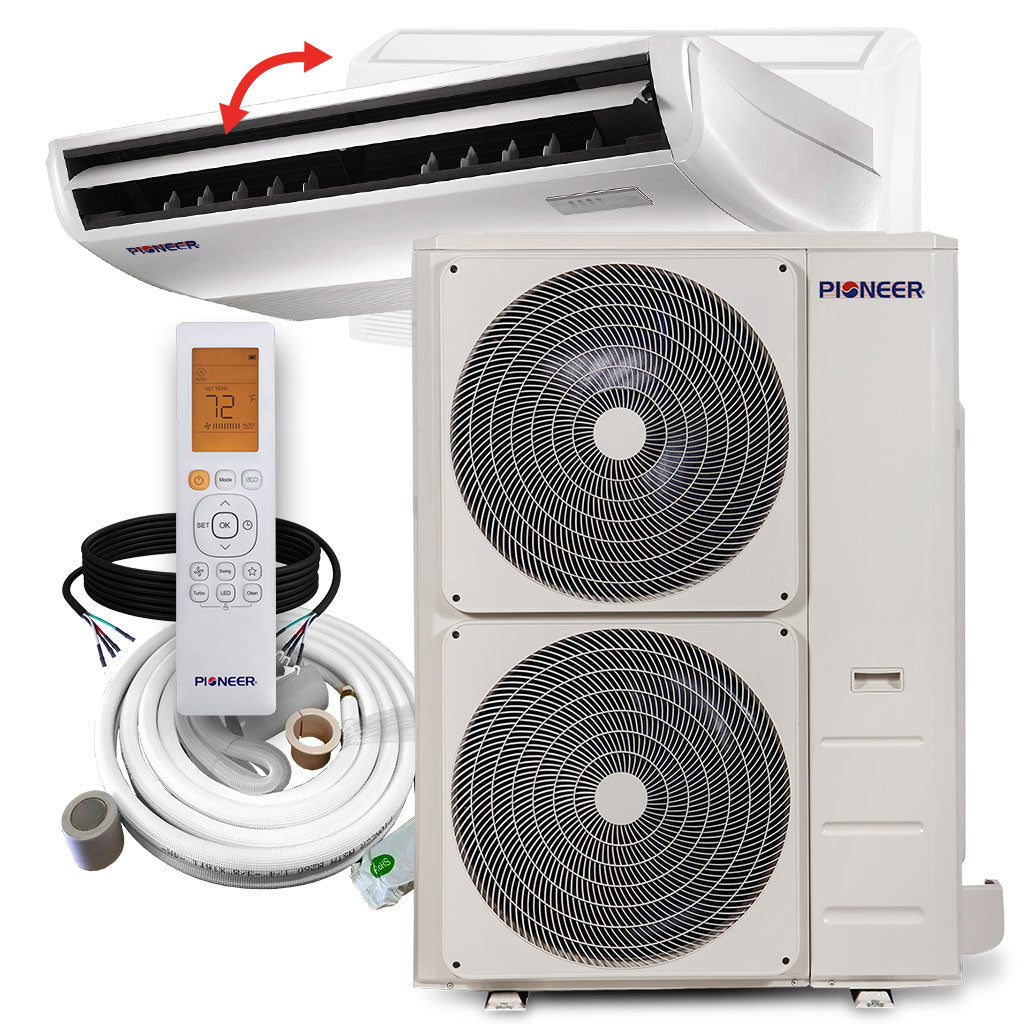
Alpine told me 36k btu, Pioneer said 24k btu.
Shop is 900 sf, but gets sun all day, and both garage doors face west 🙄
 
OP
F

freedom561

Active member
Joined
Jul 20, 2022
Messages
39
Location
Clermont, FL
@FL Guy I haven't made a final decision yet. I ran into some delays and just finished getting the concrete pad ready. Now, I'm waiting for the building to be installed.

I've spoken to a few locals and neighbors with similar size shops. In short, those who didn't buy into the spray foam hype wish they sprayed, those who did buy into the spray foam hype couldn't be happier. Since I am putting up a metal building and it has no ceiling, cellulose / fiberglass blow in isn't an option for me.

Based on real-life feedback and considering there is more to insulation than just R-values, I will most likely use closed-cell spray foam: 2 inches on the walls and 3 inches on the ceiling. I'll pair this with a 12k and an 18k mini-split setup.
 

u3b3rg33k

Well-known member
Joined
Dec 18, 2017
Messages
4,049
if you're doing minisplits, you could consider larger units if the price is right. just check the data plate for the turndown ratio and you'll know how "small" it can get.

for example this 4 ton can turn-down to 1.3 tons:
Screen Shot 2024-05-20 at 16.44.24.png
 
To avoid these ads, REGISTER NOW!
Top Bottom