

You are using an out of date browser. It may not display this or other websites correctly.
You should upgrade or use an alternative browser.
You should upgrade or use an alternative browser.
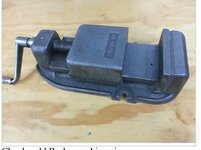
Where can ifind 6 inch replacement vice jaws?
- Thread starter KevinShaw
- Start date


this guy has you tube videos as well as a website. maybe he can help you https://www.youtube.com/@KendrickMachineShop
brucea.schweigert@gma
Member
- Joined
- Feb 17, 2024
- Messages
- 9
Most any local machine shop could make you a pair, might be a little pricey though.
isb cornbinder
Well-known member

nadogail
Well-known member
Depends on what you are clamping in the vise, I once found a broken Chinese import with missing jaws that i fixed with a nut and bolt and because we were installing multi pin plugs on 18 conductor cable i made new jaws from wood so the plugs would not be scratched.
whateg01
Well-known member
You can use anything for Jaws. Depends on what you want to put in the vise. Generally commercial jaws are hardened unless they are softjaws. Yeah that sounds stupid to say it that way. Anyway, I've made jaws from aluminum. I've made jaws from plastic. I've made jaws from mild steel. And I've made jaws and had them hardened by a friend with an oven. I doubt you'll find a commercial replacement for those so it'll have be custom made. A machine shop will charge a fortune for them, especial if you want them hardened and with any special features or waffle faces. I think it would be tough to make a set of jaws to fit without having the vise to test fit to.
Maui
Well-known member
Just the A2 tool steel alone to make the jaws from would run you close to $100 before you perform any machining on them.
dr_clyde
Well-known member
And? OP didn’t give a budget.Just the A2 tool steel alone to make the jaws from would run you close to $100 before you perform any machining on them.
And why A2? Lots of less expensive materials make perfectly fine vise jaws.
Jswain
Well-known member
If you don't have any machine tools but have woodworking tools/router I would consider making them out of aluminum. You can buy the blanks off Amazon, or your local metal supplier.
Maui
Well-known member
Because A2 is the predominant choice of vise jaw suppliers who make quality hardened steel replacement jaws. There certainly are other materials available. What do YOU suggest?And? OP didn’t give a budget.
And why A2? Lots of less expensive materials make perfectly fine vise jaws.
dr_clyde
Well-known member
Personally I use copper for all my vise jaws, but I don’t think the OP is going that way.Because A2 is the predominant choice of vise jaw suppliers who make quality hardened steel replacement jaws. There certainly are other materials available. What do YOU suggest?
I think hard jaws are a pain and remove them as soon as I get a vise.
I’m sure A2 would be just fine, as would most wear resistant, tough tool steels. Heck I’m sure case hardened cold rolled would last for a long time.
My point was that the OP didn’t specify a price, so, why is it a problem that A2 is $100?
Maui
Well-known member
Because that is the cost that anybody producing these jaws would have to shell out in order to even make them. And the cost goes up from there. I have personally machined replacement jaws myself from A2 and had it heat treated /hardened on a number of different machinist vises.
dr_clyde
Well-known member
And I say again, so what?Because that is the cost that anybody producing these jaws would have to shell out in order to even make them. And the cost goes up from there. I have personally machined replacement jaws myself from A2 and had it heat treated /hardened on a number of different machinist vises.
OP just asked where to get them, not what they cost.
American Locomotive
Well-known member
Just because the "quality" antique bench vise restoring companies sell A2 tool steel jaws, doesn't mean that's the only, or best option.Because A2 is the predominant choice of vise jaw suppliers who make quality hardened steel replacement jaws. There certainly are other materials available. What do YOU suggest?
Very few production vises (including antique ones) ever came with jaws hard enough to warrant A2 steel. Most vises came with considerably softer jaws (hence why they're worn out, dented and deformed). Yes, a few vises did have jaws that were near "file hard", but that was not the norm.
Most commercially-made replacement vise jaws (even for currently in-production vises) are NOT made out of A2. It will either be something like 4140, or some lesser case-hardened steel. Shoot, these days, tons of people are running aluminum or copper soft-jaws because steel jaws just mess things up. The vast majority of users on the various metalworking sites (practical machinist, others ) say making jaws out of pre-hardened 4140 (or similar grade steel) is the way to go.
For the average home shop guy, A2 jaws in their vise will be a huge waste of money and just result in the vise marring and damaging just about anything they put in it. As far as I can tell from some research, the only people putting A2 jaws on vises are vise collectors ....who never intend to actually use the vise.
Walkers
Well-known member
Because suggesting something that will exceed the cost of a new Wilton bullet vise is a bit excessive. This I is the general problem with our government, you don’t happen to be in purchasing ing the public sector do you?And I say again, so what?
OP just asked where to get them, not what they cost.

dr_clyde
Well-known member
You clearly haven’t priced a new Wilton lately.Because suggesting something that will exceed the cost of a new Wilton bullet vise is a bit excessive. This I is the general problem with our government, you don’t happen to be in purchasing ing the public sector do you?
Maui
Well-known member
Files are typically hardened above 60 HRC hardness. A2 tool steel is typically hardened in the mid to upper 50s HRC when they are used as vise jaws. They are not normally "file hard". I did not state nor did I imply that A2 is the "best" material to use for making vise jaws. It IS an excellent choice however because it is readily available, machines relatively easily, has good wear resistance, and when heat treated correctly to the proper hardness range has excellent toughness. Copper overlays are frequently used on vises with hardened steel jaws to protect the work piece from being damaged by the jaws. This technique has been in use for well over a century. If you want to use a lesser alloyed material to make your jaws from you will be replacing them more frequently over time because they don't hold up as well. And you are actually doing yourself a disservice because you will be spending more money and more time for a lower quality solution.Just because the "quality" antique bench vise restoring companies sell A2 tool steel jaws, doesn't mean that's the only, or best option.
Very few production vises (including antique ones) ever came with jaws hard enough to warrant A2 steel. Most vises came with considerably softer jaws (hence why they're worn out, dented and deformed). Yes, a few vises did have jaws that were near "file hard", but that was not the norm.
Most commercially-made replacement vise jaws (even for currently in-production vises) are NOT made out of A2. It will either be something like 4140, or some lesser case-hardened steel. Shoot, these days, tons of people are running aluminum or copper soft-jaws because steel jaws just mess things up. The vast majority of users on the various metalworking sites (practical machinist, others ) say making jaws out of pre-hardened 4140 (or similar grade steel) is the way to go.
For the average home shop guy, A2 jaws in their vise will be a huge waste of money and just result in the vise marring and damaging just about anything they put in it. As far as I can tell from some research, the only people putting A2 jaws on vises are vise collectors ....who never intend to actually use the vise.
It would be very interesting if Kevin Scott could share his perspective in this discussion. For those of you who are unaware, Kevin repaired a countless number of damaged bench vises and machined after market replacement vise jaws for a living, and sold them to a huge number of the members here. I am one of them. He predominantly used A2.
American Locomotive
Well-known member
I didn't say "file hard", I said "near file hard". I would call 55 HRC "near" file hard. Yes "A2" would have have superior wear characteristics, but no home-gamer is ever going to use their vise enough for that to matter. Most of the vises at my old shop had aluminum soft jaws installed, and they had the same jaws for years and years - and that's with heavy shop use. My vise at home usually has hard rubber or wooden jaws on it.
A $30 stick of pre-hardened 4140 from McMaster would make a set of jaws that would do everything the average person needs them to do for as long as they have the vise.
So just to repeat: Yes, A2 would make super hard, long-wearing jaws worthy of bragging rights. But for most users, it's completely unnecessary, costs a lot more, and might even be detrimental.
A $30 stick of pre-hardened 4140 from McMaster would make a set of jaws that would do everything the average person needs them to do for as long as they have the vise.
So just to repeat: Yes, A2 would make super hard, long-wearing jaws worthy of bragging rights. But for most users, it's completely unnecessary, costs a lot more, and might even be detrimental.
chevy.stroker
Well-known member
If it was me, and I only had basic tools:
Measure the width of the face. An example is two inches tall.
Measure the thicknes in the center. An example is 1/2 inch.
Measure the length of the jaws. An example is 6 Inches.
Get a square cold rolled tube that is two inches square by one inch inside opening by my imaginary numbers. I've been lucky metal yards sometimes have scraps.
Cut a side section off the thickness of the overhang, bevel/debur the edges, mount to vice, and grind top surface flat to vice.
Hope that is clear as mud.
As for what jaws are made of I purchase aluminum and plastic inserts to use if the material to be clamped warrants the need.
Measure the width of the face. An example is two inches tall.
Measure the thicknes in the center. An example is 1/2 inch.
Measure the length of the jaws. An example is 6 Inches.
Get a square cold rolled tube that is two inches square by one inch inside opening by my imaginary numbers. I've been lucky metal yards sometimes have scraps.
Cut a side section off the thickness of the overhang, bevel/debur the edges, mount to vice, and grind top surface flat to vice.
Hope that is clear as mud.
As for what jaws are made of I purchase aluminum and plastic inserts to use if the material to be clamped warrants the need.
these posts have me thinking, with that design it'd be easier than some others:
grab a file large enough to be the "face" of the jaw
grab some steel stock to complete the "C" shape to wrap around the jaw shelf
cut the file down to jaw-face size
cut down and weld on the steel stock to the file
curse a lot when you try to make a hole in the file for a screw
throw out a couple drill bits
curse some more
bolt on your new jaw
finish grind to flush it up to the vise
grab a file large enough to be the "face" of the jaw
grab some steel stock to complete the "C" shape to wrap around the jaw shelf
cut the file down to jaw-face size
cut down and weld on the steel stock to the file
curse a lot when you try to make a hole in the file for a screw
throw out a couple drill bits
curse some more
bolt on your new jaw
finish grind to flush it up to the vise
Try Grainger. I bought new six inch jaws for my Record vise....$26 Cdn, a while ago. You might be able to adapt something close, rather than making them.
pelletman
Well-known member
Go find Logan in Bench Vises Forever on FB