I am thinking about building some simple flood barrier panels to go over exterior door openings. These would probably get used once a year at the most and the floods we have had lasted less than 24 hours before all the water has receded. I am considering using 3/4" plywood for the panels and thinking about what to coat it with to keep them from absorbing water. My first thought was fiberglass resin. Thin it out and apply multiple coats to seal it. Along the same idea is epoxy resin. The other idea is one of the liquid membranes like used on a roof or deck. Any other ideas?


You are using an out of date browser. It may not display this or other websites correctly.
You should upgrade or use an alternative browser.
You should upgrade or use an alternative browser.
Flood Barriers
- Thread starter gregs
- Start date
BlindViper
Well-known member
My thought would be to use a roll on waterproofing product like RedGuard or Hydroban.
wssix99
Well-known member
Billy has purpose-formulated stuff for this:

mike93lx
ALLIANCE MEMBER
For once a year and 24hr flood, I probably wouldn't do anything. Just use PT
BillK
Well-known member
If they are only going to be used once a year for 24 hours I wouldnt even worry about it. New houses sit out in the rain for days sometimes with the sheathing just sitting there. If anything use Pressure treated.
BillK
Well-known member
Mike beat me to it 
jack stand
Well-known member
What depth of water are you thinking about keeping out for X hours without other extreme sealing methods between the different "barriers" ?
I'm not familiar with flooding and my question is sincere but my idea of a flood with 2' or more of water surrounding a door or window (you're home) is not going to be a simple drop in panel solution.
OK, after thinking about this, (because I'm really trying not to be an *** about your possible flooding) maybe you're just trying to protect a door or window from the propane tanks and sticks or logs floating by.
Like I mentioned, I'm not familiar with flooding and good luck with your efforts.
I'm not familiar with flooding and my question is sincere but my idea of a flood with 2' or more of water surrounding a door or window (you're home) is not going to be a simple drop in panel solution.
OK, after thinking about this, (because I'm really trying not to be an *** about your possible flooding) maybe you're just trying to protect a door or window from the propane tanks and sticks or logs floating by.
Like I mentioned, I'm not familiar with flooding and good luck with your efforts.
The issue with the Flexseal product is 1) Having it on hand and its potential shelf life. 2) The time it takes to paint it on all the openings prior to a "potential" flood.
I was thinking about PT plywood. I believe it usually sold "wet" like regular PT? And if the water level stays longer than 24 hours I wonder if it would start to swell and that could effect the way its attached and sealed. Thats one of the thoughts on using resin as it would make the panel stiffer.
The panel would be bolted over the opening and use neoprene gasket material. Thinking 3/4" in case something big comes floating by and hits it. And from past flood history the water could be 2' or more, so I am thinking of make them either 3' or 4' high.
At the end of the day there is no 100% way to seal the house from a flood, just try to minimize the amount that comes in.
I was thinking about PT plywood. I believe it usually sold "wet" like regular PT? And if the water level stays longer than 24 hours I wonder if it would start to swell and that could effect the way its attached and sealed. Thats one of the thoughts on using resin as it would make the panel stiffer.
The panel would be bolted over the opening and use neoprene gasket material. Thinking 3/4" in case something big comes floating by and hits it. And from past flood history the water could be 2' or more, so I am thinking of make them either 3' or 4' high.
At the end of the day there is no 100% way to seal the house from a flood, just try to minimize the amount that comes in.
dcg9381
Well-known member
I've used both to seal plywood.. Both work great. Polyester (fiberglass) probably requires two coats and you really need to be sure you get all the nooks and crannies to keep the water out.My first thought was fiberglass resin. Thin it out and apply multiple coats to seal it. Along the same idea is epoxy resin. The other idea is one of the liquid membranes like used on a roof or deck. Any other ideas?
Neither is UV stable, so you have to paint it if it's exposed.
I dunno how costs would compare to redguard. You'd only need to seal up to "flood level".
You'll also have to seal any fasteners used to attach the boards.
Like others, I don't deal with flooding so unknown how "effective" this is going to be, especially if you have to drop these panels and deal with whatever got flooded on the inside (like insulation).
This another part of the flood mitigation plan I am implementing. There are many parts to it. Having just finished remodeling the inside after Idalia with many things that are either flood resistant or easy to open up and dry out after the flood. Now I am working on slowing down the amount of water that makes it inside.
yhprum
Well-known member
Maybe keep sandbags handy to put in front of your doors. The council give them out free here when flooding is predicted.
Been there, done that, got the T-shirt. They dont do much if the water is over 6" deep.Maybe keep sandbags handy to put in front of your doors. The council give them out free here when flooding is predicted.
Renegade1LI
Well-known member
Try some durabak bedliner, use the smooth type. This stuff is easy to apply and has great shear strength. It bonds to almost anything, going to be doing the roof on my snowmobile trailer with it, direct to plywood.
Renegade1LI
Well-known member
Here’s the link
 www.durabakcompany.com
Truck Bed Liner Paint - DIY Roll On Bedliner
Our truck bed liner paint comes in 16+ Colors. DIY with ease. Suitable for cars, boats & many surfaces. Protects steel, fiberglass, aluminum, wood & more!
www.durabakcompany.com
Not to be an ***, but if I was concerned about flooding every year I would move!I am thinking about building some simple flood barrier panels to go over exterior door openings. These would probably get used once a year at the most and the floods we have had lasted less than 24 hours before all the water has receded. I
A few years back we had a major flood and homeowners along the river were complaining that the government needed to do something. They did, FEMA bought the homes and made them move. Tore down or moved the homes and turned the lots back to nature.
No way to build a permanent dike?
dcg9381
Well-known member
You mean living on FL or really any coastal area? One of the keys, one of the beautiful places off Belize?Not to be an ***, but if I was concerned about flooding every year I would move!
I lived in a place on lake Austin that was designed for flood. The entire lower floor was cinder-block. No drywall. Electrical would get screwed, but it was a pretty easy repair. It's flooded once in my 20+ years here. Not a big deal. With the lake at 37%, we'll take a hurricane.
Central America has mastered "hurricane design" - concrete structures that are designed to "blow through" - take out everything on the inside, but the structure remains and you basically start from the (concrete) framing to rebuild after a Cat 5+.
I dunno. Can't live in paradise without taking a risk.
Last edited:
Well, with your one home you have "cured" the flood issue to some degree. Raise the house a couple feet, build a dike, do something a bit more permanent to help avoid flooding. I realize if you are in Florida it can be difficult. I have seen places where the lower level is pretty much garage, and the upper is living area. I don't call paradise a place where mother nature wants to relocate my house down every few years! I have been to Florida. IMO, it isn't paradise, but I understand many think so. I would rather deal with snow!You mean living on FL or really any coastal area? One of the keys, one of the beautiful places off Belize?
I lived in a place on lake Austin that was designed for flood. The entire lower floor was cinder-block. No drywall. Electrical would get screwed, but it was a pretty easy repair. It's flooded once in my 20+ years here. Not a big deal. With the late at 37%, we'll take a hurricane.
Central America has mastered "hurricane design" - concrete structures that are designed to "blow through" - take out everything on the inside, but the structure remains and you basically start from the (concrete) framing to rebuild after a Cat 5+.
I dunno. Can't live in paradise without taking a risk.
Myself, I would not have the patience for it. Here, people built along the river for years, then complained about getting flooded while I sat in my 50's rambler, high and dry a half mile away. Gee, I wonder, build in a flood plane, then ***** about getting flooded? FEMA took care of it around here a few years back. They declared certain areas river flood planes and no buildings allowed. Funny how Uncle Sam had to explain it to some people!
Mike65
Well-known member
In southern NJ at the shore after hurricane Sandy homes that were on waterways, the towns would only allow the homes to rebuilt if they were raised to prevent future flood problems.
driftpin
Well-known member
Been in S.E. FL > 50 years, and am almost exactly 1 mile from the ocean high tide line. The ocean flooding has never been in any dwelling I was in for a hurricane, which is usually the reason for flooding here. One of our fire stations was directly on the ocean, and it never flooded while I was working there.
Who's seen the bags you fill with water and you can surround your building with them? Here's another way:

 www.garrisonflood.com
Who's seen the bags you fill with water and you can surround your building with them? Here's another way:
Water Diversion Barriers | Garrison Flood Control — Garrison Flood Control
Water Diversion Barriers allow you to easily deploy efficient flood protection. Easily assemble panels to create a defensive floodwall against a variety of flood types.
www.garrisonflood.com
nadogail
Well-known member
A flood barrier is also a drain barrier. Once water gets inside your barrier will keep it from draining out, the inside water could be from rain that fell on the roof.
The house is inland off of a river that is connected to the gulf. The times it has flooded has been a result of a large storm surge that travels down the river when certain conditions are met. Yep it's paradise and its a family weekend / vacation house. The work I have been doing to repair, remodel the house and mitigate flood damage is mostly for the next generation of the family.
Again this is another part of the plan to help in the future. I am also looking into adding a sump pump for any water that does enter the house to try an keep the level low.
As for the insurance companies, FEMA and any other government entity they can take a hike. I'm not looking for a handout or a shoulder to cry on. I am handling this myself with practical solutions to minimize the damage and make it easier to repair after a potential flood. I'll pass on FEMA or any body else taking my property or my neighbors property because they know better. Like the Army Corps never screwed anything up.
Again this is another part of the plan to help in the future. I am also looking into adding a sump pump for any water that does enter the house to try an keep the level low.
As for the insurance companies, FEMA and any other government entity they can take a hike. I'm not looking for a handout or a shoulder to cry on. I am handling this myself with practical solutions to minimize the damage and make it easier to repair after a potential flood. I'll pass on FEMA or any body else taking my property or my neighbors property because they know better. Like the Army Corps never screwed anything up.
yhprum
Well-known member
Thinking about the sandbag idea, I wonder if you did a mix of bentonite clay and sand if it would make a better wate barrier. My father put it down to keep his goldfish pond from losing water.
CraigStu
Well-known member
I know you said 3/4 in case something big comes along but how about 3/8"x4'x8' pvc.
https://www.lowes.com/pd/Royal-Building-Products-Actual-0-375-in-x-48-in-x-8-ft-Common-Board-PVC-Board/50393486
You could reinforce it w/ pvc trim boards. No need to coat it w/ anything.
https://www.lowes.com/pd/Royal-Building-Products-Actual-0-375-in-x-48-in-x-8-ft-Common-Board-PVC-Board/50393486
You could reinforce it w/ pvc trim boards. No need to coat it w/ anything.
Last edited:
Your link brings up 3/4" PVC pipe.I know you said 3/4 in case something big comes along but how about 3/8"x4'x8' pvc.
https://www.lowes.com/search?searchTerm=pvc board 4x8&refinement=3957333487,59392442,4294574251
You could reinforce it w/ pvc trim boards. No need to coat it w/ anything.
I have considered PVC board as I just trimmed out the bottom 3' of the interior of the house with it in place of 1/2" drywall. I have a bit of drops left over as well. The main problem with it is that its fairly soft and not rigid at all. I considered using either wood or aluminum angle to stiffen it up and then adding something along the area that it would be bolted to the wall to spread out the bolt load to keep the gasket material tight. That just seems like a lot more work and money just because its waterproof.I know you said 3/4 in case something big comes along but how about 3/8"x4'x8' pvc.
https://www.lowes.com/search?searchTerm=pvc board 4x8&refinement=3957333487,59392442,4294574251
You could reinforce it w/ pvc trim boards. No need to coat it w/ anything.
I dont think it would be strong enough for the weight of the water its potentially holding back. Or strong enough if something hits it. The storm surge from Idalia or a piece of debris from the storm surge actually kicked in the corner of the garage door.I wonder how fiberglass interior wall panels would hold up. They would be waterproof, light and thin, easily stored, and probably stand up to sun exposure well enough.
I used this and surprisingly, it worked exactly as advertised. I found that it peeled off easier if I didn't wait too long.Billy has purpose-formulated stuff for this:
CraigStu
Well-known member
Thanks. I have now tried 3 times to get a link and gave up. I replaced the link w/ a copy/paste of the description in the Lowes website.Your link brings up 3/4" PVC pipe.
rlitman
Well-known member
Why? For short durations, water won't weaken plywood, and may even make it swell. I'd figure out how to use that swelling to your advantage, to improve the seal around leak points....I am considering using 3/4" plywood for the panels and thinking about what to coat it with to keep them from absorbing water...
I have tried sandbags. This last time I used heavy poly sheet taped to the walls and door and stacked the sand bags on top of that. It was more effective but still a pain to deploy them for what they did. And if I cant get there then I have to rely on less experienced people to get it ready. And for them to effectively manage sandbags is really not a choice.Thinking about the sandbag idea, I wonder if you did a mix of bentonite clay and sand if it would make a better wate barrier. My father put it down to keep his goldfish pond from losing water.
I am literally putting together a flood management manual that will provide step by step instructions for anybody to get the house ready for a possible flood and what to do after.
That makes sense. I was thinking of applying it directly against an outside surface, but that would only work if the surface was flat.I dont think it would be strong enough for the weight of the water its potentially holding back. Or strong enough if something hits it. The storm surge from Idalia or a piece of debris from the storm surge actually kicked in the corner of the garage door.
I bought some to try it out. I can see using it as well for certain areas. But I am also trying to make this as easy as possible for someone to prepare for.I used this and surprisingly, it worked exactly as advertised. I found that it peeled off easier if I didn't wait too long.
I somewhat agree with that. But what happens to the swelled up plywood after that? Will it shrink back to original size. I dont want to have to make new ones again. So if I can spend a little time to seal them I think its time and money well spent.Why? For short durations, water won't weaken plywood, and may even make it swell. I'd figure out how to use that swelling to your advantage, to improve the seal around leak points.
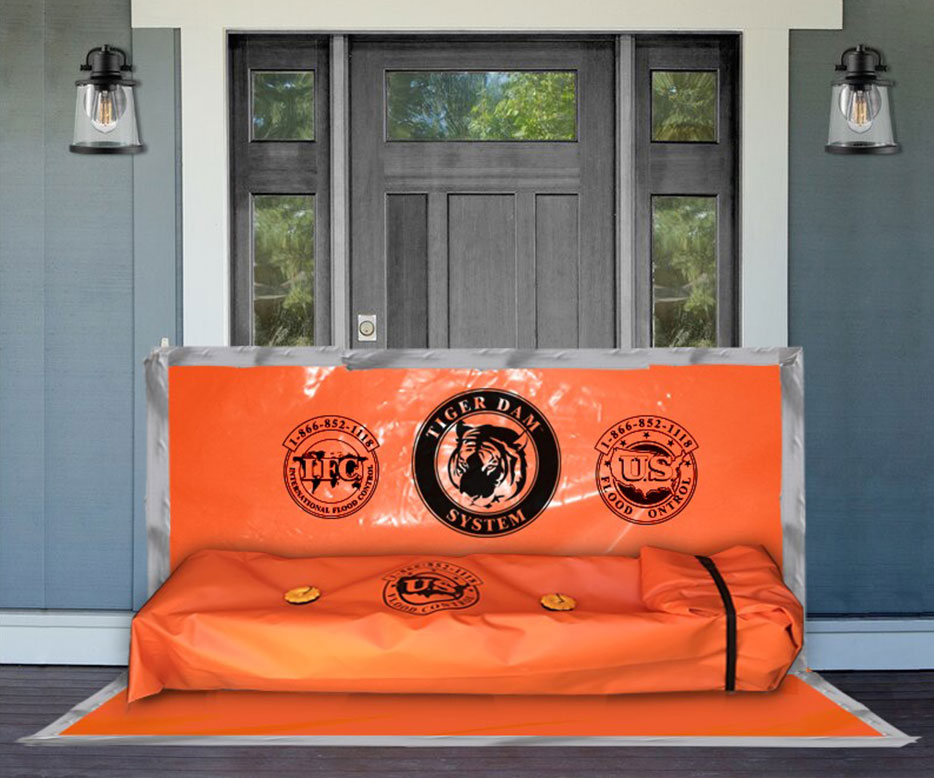
Couple other similar concepts but done differently:
 usfloodcontrol.com
Different take on it:
https://www.reddit.com/r/Damnthatsinteresting/comments/15le8d7
Flood Barriers for Homes | Tiger Dam™ | US Flood Control
Tiger Dam™ flood barriers for homes quickly protect your property without the use of sandbags! Order your residential flood barrier kits now!
usfloodcontrol.com
Different take on it:
https://www.reddit.com/r/Damnthatsinteresting/comments/15le8d7
Water-Filled Cofferdam and Flood Barriers | AquaDam
The AquaDam Is A Temporary Water-Filled Barrier Which Can Control & Divert Water For Residential, Commercial, & Government Projects. Contact Us Today!
www.aquadam.net
rlitman
Well-known member
In my experience, it usually shrinks back after a few months, assuming you keep it well aired out and it doesn't start rotting.I somewhat agree with that. But what happens to the swelled up plywood after that? Will it shrink back to original size. I dont want to have to make new ones again. So if I can spend a little time to seal them I think its time and money well spent.
I have looked at those and considered it for the garage door opening.Couple other similar concepts but done differently:
Flood Barriers for Homes | Tiger Dam™ | US Flood Control
Tiger Dam™ flood barriers for homes quickly protect your property without the use of sandbags! Order your residential flood barrier kits now!
Different take on it:
https://www.reddit.com/r/Damnthatsinteresting/comments/15le8d7
Water-Filled Cofferdam and Flood Barriers | AquaDam
The AquaDam Is A Temporary Water-Filled Barrier Which Can Control & Divert Water For Residential, Commercial, & Government Projects. Contact Us Today!www.aquadam.net
wssix99
Well-known member
Its a descent idea. Aside from building an impermeable ****, sealing up the cracks is the only way to keep the water out. (Plywood and neoprene isn't going to work...)I used this and surprisingly, it worked exactly as advertised. I found that it peeled off easier if I didn't wait too long.
FWIW, I used it to seal basement windows. Until I cleared out the footer tiles, when we got rain heavier than 1"/hour, the window wells on the southside filled up and leaked into the basement.Its a descent idea. Aside from building an impermeable ****, sealing up the cracks is the only way to keep the water out. (Plywood and neoprene isn't going to work...)