To avoid these ads, REGISTER NOW!

Doall Bandsaw 208V Question

rust buster

Well-known member
Joined
Feb 27, 2011
Messages
279
Location
VA
I bought a 1959 Doall 16-3 Bandsaw, a couple of years ago. I just recently installed a rotary phase converter (7.5HP) to power this saw and a Scotchman Cold Saw.
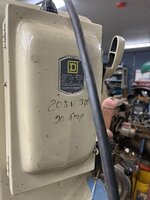
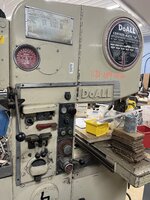
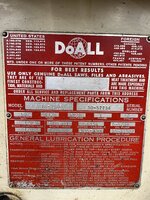
I finished installing everything today and tested the cold saw out and it works great. I went to plug in the bandsaw, which is a 220V 3PH (see data plate) and noticed the existing plug wasn't going in to the receptacle I bought (20A 3PH). I took a better look at it and it's a 20A 125/250V 3PH plug. Three prongs are gold and one is silver. One is fatter than the corresponding slot in the receptacle. The main fuse lockout/disconnect on the back of the saw (see pics), has handwriting on it saying 208V 3PH. Before I go any further, I wanted to check with the experts here. I have no experience with 208V 3PH. Can I just throw the correct 20A 3PH plug to match the receptacle and send it, or do I need to do anything else? I do have the original electrical blueprints for the saw, but of course I cannot find them at the moment... Attached are some pics including one of the transformer. IMG_4225.jpegIMG_4220.jpegIMG_4221.jpegIMG_4223.jpegIMG_4222.jpeg
 
To avoid these ads, REGISTER NOW!

Norcal

Well-known member
Joined
Mar 16, 2008
Messages
13,775
The plug is a single phase plug & should never be used for 3Ø, whoever did that should be tied to a post & change whippers every 2 mins, lest they get tired "educating" the idiot*. Check the motor data plate it should say 208-220/440V (Modern motors are 200-230/460V), it will be fine with 240V off the RPC, if it says 208V then either buck/boost transformers, a new motor, or a VFD would need to be used.

*Lucky for the idiot, they won't get a "education".
 
OP
R

rust buster

Well-known member
Joined
Feb 27, 2011
Messages
279
Location
VA
The plug is a single phase plug & should never be used for 3Ø, whoever did that should be tied to a post & change whippers every 2 mins, lest they get tired "educating" the idiot*..Check the motor data plate it should say 208-220/440V (Modern motors are 200-230/460V), it will be fine with 240V off the RPC, if it says 208V then either buck/boost transformers, a new motor, or a VFD would need to be used.

*Lucky for the idiot, they won't get a "education".
The motor is a 3HP 208-220/440V. So you think they were using that plug and the neutral prong was the third leg of the three phase? That makes sense. If I simply change the plug I should be good, right?
 

micromind

Well-known member
Joined
Sep 24, 2023
Messages
3,125
Location
Fernley, Nevada, about 30 miles east of Reno.
Almost certainly the 1 25/250 plug was used on a 3Ø system. They are easy to get while an actual 3Ø models aren't.

The motor will run fine on 240 but be absolutely certain that the control transformer is connected to the 2 utility legs and not the manufactured phase.
 

Bert_

Well-known member
Joined
Dec 24, 2016
Messages
9,829
Location
NW Iowa
Good chance it's an old non grounding plug. 3 hots and a neutral. I still use a couple now and then for existing stuff.
 

wyliesdiesels

Well-known member
Joined
Aug 14, 2012
Messages
20,145
Location
Modesto, CA
I bought a 1959 Doall 16-3 Bandsaw, a couple of years ago. I just recently installed a rotary phase converter (7.5HP) to power this saw and a Scotchman Cold Saw.
I finished installing everything today and tested the cold saw out and it works great. I went to plug in the bandsaw, which is a 220V 3PH (see data plate) and noticed the existing plug wasn't going in to the receptacle I bought (20A 3PH). I took a better look at it and it's a 20A 125/250V 3PH plug. Three prongs are gold and one is silver. One is fatter than the corresponding slot in the receptacle. The main fuse lockout/disconnect on the back of the saw (see pics), has handwriting on it saying 208V 3PH. Before I go any further, I wanted to check with the experts here. I have no experience with 208V 3PH. Can I just throw the correct 20A 3PH plug to match the receptacle and send it, or do I need to do anything else? I do have the original electrical blueprints for the saw, but of course I cannot find them at the moment... Attached are some pics including one of the transformer.
Need to check which voltage the motor is wired for.

The motor is a 3HP 208-220/440V.
can you check how the motor is wired? since the disconnect is labeled 208V, motor may be wired for 220.

also need to make sure the 120v leg for the control transformer is not on the manufactured phase from the RPC otherwise you can let the magic smoke out as it wont be 120v but instead 208v line to neutral
So you think they were using that plug and the neutral prong was the third leg of the three phase? That makes sense. If I simply change the plug I should be good, right?
no that plug has 3 brass prongs for the phases. the neutral/silver prong was being used for the ground.
 
Last edited:

walta

Well-known member
Joined
Jan 13, 2017
Messages
2,316
Location
Dutzow Missouri
Post a photo of the name plate on the motor. The motor will very likely run happily on 240 Volts.

Given the fact the previous owner cut some corners with the plug I would have to assume you will find more error and double check every wire and that every part on the machine is ground before applying power.

Be sure to find the heaters in the motor starter/ overload and check that they are the correct ones for the voltage you will be running.

Walta
 

BillK

Well-known member
Joined
Aug 24, 2006
Messages
9,409
Location
Beautiful Southern Maryland
I do have the original electrical blueprints for the saw, but of course I cannot find them at the moment... Attached are some pics including one of the transformer.

I think I would try to find them. In the one picture with the wiring connections it does not look like anything is hooked to the L3 terminal ??? I think I would want to be sure of how it is supposed to be. Is there a data plate on the actual motor ?
 
To avoid these ads, REGISTER NOW!
OP
R

rust buster

Well-known member
Joined
Feb 27, 2011
Messages
279
Location
VA
I changed the plug and fired it up. Motor purrs like a kitten. I have a belt or pulley issue that is causing a very harsh vibration. Remove the belt and the motor is smooth as silk.
 
OP
R

rust buster

Well-known member
Joined
Feb 27, 2011
Messages
279
Location
VA
Need to check which voltage the motor is wired for.

If 208v and you apply 240v could screw it up.


can you check how the motor is wired? since the disconnect is labeled 208V, motor may be wired for that.

if it is, you need to rewire it. also need to make sure the 120v leg for the control transformer is not on the manufactured phase from the RPC otherwise you can let the magic smoke out as it wont be 120v but instead 208v line to neutral

no that plug has 3 brass prongs for the phases. the neutral/silver prong was being used for the ground.
There was a separe prong used for the ground (green). The yellow that was the silver prog was the third leg ot the three phase. I guess they did some creative wiring wherever the saw was used last.
 

walta

Well-known member
Joined
Jan 13, 2017
Messages
2,316
Location
Dutzow Missouri
Also, the motor only has writing diagrams for low and high voltage, nothing 208v specific
I have never seen a motor with different wiring for 208 and 240 Volt operation.

The question is what Voltage is the motor rated for?

The motor is most likely rated for 220 Volts and likely happy at both 208 and 240.

If the motor is rated for 208 only and you feed it 240, I am sure it will run for some amount of time but it will draw more that the rated current run hot and be more likely to fail. Maybe it is not a big deal if it is a common form factor but if this motor is irreplaceable, the smart move would be add a buck transformer to get the voltage down to 208.


Walta
 
OP
R

rust buster

Well-known member
Joined
Feb 27, 2011
Messages
279
Location
VA
I have never seen a motor with different wiring for 208 and 240 Volt operation.

The question is what Voltage is the motor rated for?

The motor is most likely rated for 220 Volts and likely happy at both 208 and 240.

If the motor is rated for 208 only and you feed it 240, I am sure it will run for some amount of time but it will draw more that the rated current run hot and be more likely to fail. Maybe it is not a big deal if it is a common form factor but if this motor is irreplaceable, the smart move would be add a buck transformer to get the voltage down to 208.


Walta
I'm running it on 240, so we are all good. The previous owner was apparently running it on 208 (with a single phase plug...). I changed the plug, checked the motor wiring, and it's running great.
 

wyliesdiesels

Well-known member
Joined
Aug 14, 2012
Messages
20,145
Location
Modesto, CA
The motor is most likely rated for 220 Volts and likely happy at both 208 and 240.

If the motor is rated for 208 only and you feed it 240, I am sure it will run for some amount of time but it will draw more that the rated current run hot and be more likely to fail. Maybe it is not a big deal if it is a common form factor but if this motor is irreplaceable, the smart move would be add a buck transformer to get the voltage down to 208.

Walta
huh? a motor running on higher voltage will draw less current not more.
 

Steve from Socal

Well-known member
Joined
Jan 27, 2009
Messages
3,528
Location
Hutchinson Ks.
I have a slightly newer version of that saw, the machines are 220 nominally. On my saw, the welder is 220/240 single phase ONLY I run my saw at 240 in my shop where most machines are runnning off 480 due to the welder. With that said, make sure the two legs to the weld transformer are from the panel, no manufactured leg to the welder.

As to the vibration, make sure the vari-drive pulleys are clean and try moving the speed range from fast to slow several times, shift the gear box and repete. If the vibration is still there in all gears te belt is bad, if only in one gear range you need to open up the gear box, they are kind of fragile!
 
To avoid these ads, REGISTER NOW!
Top Bottom