wyliesdiesels
Well-known member
deleted
Last edited:

this makes no sense at all. if its a 240v receptacle, there is no need or use for a neutralCan't believe we got this far into this thread without someone flatly stating, "three wire is not to code1"
Answer, it depends. Some local electrical codes require four-wire for any 240-volt outlets in a garage. OTOH, my local utility wired the ESVE for my EV with a three-wire outlet and the city inspector passed it. When I questioned it, referring to all the GJ experts, I was told four-wire is only required when there is an appliance with a 120-volt leg inside it.
jack vines
if its 240v then it isnt 4-wire. 4-wire would be 120v/240v.There are 3-wire and 4-wire 240V EVSEs. Can't find a code cite on that changing the requirements for a garage though.
looks smaller than that...It's there. But it looks like only #10. Should be #8.
if you look where the feeder comes into the bottom of the panel, you can see a very small black wire. Im assuming this is the EGC. looks too smallBetter back up and figure out if there's an equipment ground ran with the feeder.
If you remove the jumper on a 3 wire feeder you are creating a major issue because you will have NO ground.
Would you mind expanding on what “overloading the neutral “ means?you wont overload the neutral in this case because its a 240v receptacle so the neutral isnt needed and further, no current flows on the ground terminal or EGC under normal operation.
It should have a #8 equipment ground back to the house panel and since it's a detached garage, it needs two ground rods. If it were pre 2008 a three wire feed with a bonded neutral would have been compliant.What gauge should the ground be? Trying to pull a single wire in a conduit won’t be fun if even possible. Can the shop have its own ground rod or two?
detached buildings need both an EGC (which goes between house and shop panels) AND a GEC going to the rods. you cannot substitute the GEC for an EGC. they are different animals and serve different purposesWhat gauge should the ground be? Trying to pull a single wire in a conduit won’t be fun if even possible. Can the shop have its own ground rod or two?
 www.garagejournal.com
It's there. But it looks like only #10. Should be #8.
Better back up and figure out if there's an equipment ground ran with the feeder.
If you remove the jumper on a 3 wire feeder you are creating a major issue because you will have NO ground.
 Agreed, but it appears to be there when viewing with a big screen.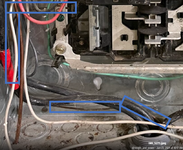
It also has a bare GEC run out out the lower left bottom of panel. What it's connected to is another q for the OP.It should have a #8 equipment ground back to the house panel and since it's a detached garage, it needs two ground rods. If it were pre 2008 a three wire feed with a bonded neutral would have been compliant.
Looks bare to me.if you look where the feeder comes into the bottom of the panel, you can see a very small black wire. Im assuming this is the EGC. looks too small
If this is indeed the EGC, then the bars should be unbonded
I saw that and my guess is there is one rod. Whoever gets to do the panel change can figure it out.It also has a bare GEC run out out the lower left bottom of panel. What it's connected to is another q for the OP.
It probably won't be fun and could require pulling everything back out to run a #8 copper ground wire.What gauge should the ground be? Trying to pull a single wire in a conduit won’t be fun if even possible. Can the shop have its own ground rod or two?
You, as usual, have the correct semantics.if its 240v then it isnt 4-wire. 4-wire would be 120v/240v.
and i dont see the point in having a 4-wire circuit for an EVSE. what does it need 120v for?
I think it's more about modern residential using this as the "dryer" receptacle in many garages.Best reason I've heard is RV parks use 14-50R's.
Around here, dryer recepts are in the house and would be 14-30s.I think it's more about modern residential using this as the "dryer" receptacle in many garages.
Yea, the RV parks haven't figured out that they are "free" fueling stations for PHEVs or EVs towing RVs.
You have it right... I've installed so many 14-50s, I forgot that the dryer is different.Around here, dryer recepts are in the house and would be 14-30s.
What are all of the garage 14-50's you mention used for prior to EVSE needs? Not too prevelent around here.You have it right... I've installed so many 14-50s, I forgot that the dryer is different.
Someone corrected me. 14-30s are more common. I just use 14-50s as they are my 240V standard across the board and I forgot there was a difference on the plug.What are all of the garage 14-50's you mention used for prior to EVSE needs? Not too prevelent around here.
You have it right. That's the 14-50 is the receptacle being added to more modern homes that are "EV equipped" not 14-30 that's used for electric dryers.EVSE owners are really the first to require them and that's b/c of them needing to adopt to the common practice of EVSE industry.
Anything else in a garage requiring higher power levels were comps and welders only using 6-30 or 6-50's.
for what? only equipment in a house that uses a 14-50 is a rangeYou have it right... I've installed so many 14-50s, I forgot that the dryer is different.
but if you only need 240v, its the wrong receptacle. (FYI plug goes on the end of a cord, not in the wall). for 50a 240v you would use a 6-50RSomeone corrected me. 14-30s are more common. I just use 14-50s as they are my 240V standard across the board and I forgot there was a difference on the plug.
You have it right. That's the 14-50 is the receptacle being added to more modern homes that are "EV equipped" not 14-30 that's used for electric dryers.
Right, but if you want a multi-function receptacle, it's the right one to get (speaking pragmatically). RVs need the neutral and many EVSE's have this plug. I totally get that a 6-50R is the right deal for "240 only".but if you only need 240v, its the wrong receptacle. (FYI plug goes on the end of a cord, not in the wall). for 50a 240v you would use a 6-50R
RVs, EVSEs (most come with this plug as default). I run my welder on that circuit. I use it as our charge plug for charging Lithium Iron Phosphate batteries via 13kW inverters.for what? only equipment in a house that uses a 14-50 is a range
Thanks for the link, I read it and will be reading it again for suredetached buildings need both an EGC (which goes between house and shop panels) AND a GEC going to the rods. you cannot substitute the GEC for an EGC. they are different animals and serve different purposes
see diagram in post #3 and explanation of GEC and EGC in post #4
Electrical FAQs
Welcome All I have started this sticky as an FAQ thread for info on the basics that are encountered countless times every week on here. Hopefully this will help some. If u have a topic request, go ahead and post it. And if you have an FAQ you would like covered let me know.... Or if you...
I will be doing a more through examination and tracing of the wiresIt also has a bare GEC run out out the lower left bottom of panel. What it's connected to is another q for the OP.
I believe there is a conduit from the shop to the house, from where the house panel is and where the electrical enters the shop is a pretty straight shot, I have no problem digging if need be.It probably won't be fun and could require pulling everything back out to run a #8 copper ground wire.
Is there a complete conduit run from panel to panel?
If yes, how complicated is it?
If no, then a shovel is in your future to correct it.
You are required to have 2 ground rods in a detached structure from the building that has the main panel. Sparing various details/exceptions, leave it as 2 rods.
Ground rods do not provide the same function as an equipment grounding conductor run with the feeder.
If it's conduit all the way, the best bet is going to be to pull everything out and pull it back in with a green #8. But, before I did that, I would try attaching the same green #8 to the little ground wire that is already there and try pulling it out with the new wire in. It probably won't work, but I'm lazy enough that I would have to try.I believe there is a conduit from the shop to the house, from where the house panel is and where the electrical enters the shop is a pretty straight shot, I have no problem digging if need be.
Follow that bare conductor leaving the panel on the bottom left. It should lead you to a ground rod, I doubt there are two, but if it happens to be the case, there should be a conductor connecting them and should be at least 6' apart.I will look outside the shop for a ground rod or two, would they typically be at the edge where the slab meets the ground or a distance away?