To avoid these ads, REGISTER NOW!

cutting steel flush with concrete

stickshift

Well-known member
Joined
Nov 16, 2011
Messages
1,236
Location
northeastern US
I have to remove garage door tracks that are set in concrete. I'll cut them as close to the ground as possible without risking shattering the cut-off disc (concrete is not very flat around the tracks). Before I install new tracks, I'd like to clean it up a bit. What's the best way to get the steel flush with the concrete. Regular grinding disc? I'm guessing that if I use a diamond cup grinding wheel, the steel track will ruin the wheel.
 
To avoid these ads, REGISTER NOW!

BigBrian

Well-known member
Joined
Oct 9, 2024
Messages
55
I just had to cut down 8, 3/4" studs flush on a concrete pad. I ended up using a 4.5" grinder with one of the 1/4" thick grinding discs, worked great!
 

PCustoms

Well-known member
Joined
Jul 23, 2011
Messages
23,231
Location
VT
Forget the grinder and cutoff wheel.

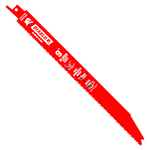
Use a 12" flush cut metal blade on a recip saw. The result you want is in the name of the blade!
 

rlitman

Well-known member
Joined
Oct 18, 2010
Messages
24,633
Location
Long Island
I have to remove garage door tracks that are set in concrete. I'll cut them as close to the ground as possible without risking shattering the cut-off disc (concrete is not very flat around the tracks). Before I install new tracks, I'd like to clean it up a bit. What's the best way to get the steel flush with the concrete. Regular grinding disc? I'm guessing that if I use a diamond cup grinding wheel, the steel track will ruin the wheel.
What size grinders do you have. What I recommend depends on the disc size you need.

On a 4-1/2" grinder, I do lots of metal cutting with steel rated diamond discs such as the Lenox MetalMax. Anything diamond rated for steel will be fine on masonry, though the opposite is not true.

All of my steel cutoff discs are type 1 (flat), but it seems that there's a type 27 (depressed center) diamond disc now on the market made specifically to cut AND grind metal (so it will work fine on concrete as well), and would be PERFECT for this application. This product was complete news to me until I just searched it out now, so, um thanks for making me spend more money...

 
OP
S

stickshift

Well-known member
Joined
Nov 16, 2011
Messages
1,236
Location
northeastern US
If were talking a residential home, how deep can they be. Before you cut them short, cut them long. Tap them with a hammer to loosen, you may get lucky and be able to pull them out. If this fails, then cut them flush.
Good idea, thanks.

I just had to cut down 8, 3/4" studs flush on a concrete pad. I ended up using a 4.5" grinder with one of the 1/4" thick grinding discs, worked great!
Yeah, I'm gonna with grinding wheels. They're cheap, and I have plenty of them and it sounds like they'll get the job done w/o having to resort to more expensive wheels. Learned about some fancy new blades and wheels from this thread though.
 
To avoid these ads, REGISTER NOW!

rlitman

Well-known member
Joined
Oct 18, 2010
Messages
24,633
Location
Long Island
...Yeah, I'm gonna with grinding wheels. They're cheap, and I have plenty of them and it sounds like they'll get the job done w/o having to resort to more expensive wheels. Learned about some fancy new blades and wheels from this thread though.
It'll work. Aside from diamond, there are three kinds of abrasives you'll find in grinding wheels and flap discs.

Aluminum oxide is frangible, so it breaks into sharp shards that keep it cutting quickly in metal, but stone eats it up. This is what's in typical metal cutting discs.

Silicon carbide is much harder but not so frangible, so it cuts into stone without quickly disappearing, but dulls when cutting metal. This is what's found in masonry cutting discs. It DOES still cut metal though, just slower.

Zirconia and ceramics (cubitron comes to mind) are much harder abrasives that do great on metal and hold up a little against concrete. This is what's used in the better flap discs (cheap ones use aluminum oxide).

While a type 27 depressed center slicer is designed for flush cutting, if you try to cut the rail flush, there's a good chance of binding it in the cut due to the floor not being truly flat, and binding a bonded abrasive slicer disc can be a real pucker moment. They also have a nasty habit of exploding when abused by grinding on the side (which would be in contact with the concrete). But you can cut it close to flush and then use a silicon carbide masonry grinding disc to grind it down, or a zirconia flap wheel.

I'm more a fan of the diamond option because there's no chance of the wheel exploding. Nowadays, I only fall back to my abrasive slicers when I need a thinner cut or am bogged down in tool steel.
 
OP
S

stickshift

Well-known member
Joined
Nov 16, 2011
Messages
1,236
Location
northeastern US
It'll work. Aside from diamond, there are three kinds of abrasives you'll find in grinding wheels and flap discs.

Aluminum oxide is frangible, so it breaks into sharp shards that keep it cutting quickly in metal, but stone eats it up. This is what's in typical metal cutting discs.

Silicon carbide is much harder but not so frangible, so it cuts into stone without quickly disappearing, but dulls when cutting metal. This is what's found in masonry cutting discs. It DOES still cut metal though, just slower.

Zirconia and ceramics (cubitron comes to mind) are much harder abrasives that do great on metal and hold up a little against concrete. This is what's used in the better flap discs (cheap ones use aluminum oxide).

While a type 27 depressed center slicer is designed for flush cutting, if you try to cut the rail flush, there's a good chance of binding it in the cut due to the floor not being truly flat, and binding a bonded abrasive slicer disc can be a real pucker moment. They also have a nasty habit of exploding when abused by grinding on the side (which would be in contact with the concrete). But you can cut it close to flush and then use a silicon carbide masonry grinding disc to grind it down, or a zirconia flap wheel.

I'm more a fan of the diamond option because there's no chance of the wheel exploding. Nowadays, I only fall back to my abrasive slicers when I need a thinner cut or am bogged down in tool steel.
Thanks for the info. Yeah, I don't try to grind with cutoff discs. Having multiple grinders with different discs/wheels helps avoid the temptation to grind immediately after cutting and avoid the hassle of changing disc/wheel.
 

metalmagpie

Well-known member
Joined
Nov 1, 2011
Messages
799
Location
Seattle
Personally I'd start with a torch and cut the steel to about 1/2" from the concrete, then I'd switch to a flushing tip and gently flush the rest of the metal off. The concrete won't like molten steel any more than it likes grinding wheels, but you can get a nice smooth result.

The very worst thing is a flap disc. If you're going to grind, use a grinding wheel for 99% of the material removal and then switch to a sanding disc - *not* a flap wheel. With nearly all the material gone, the sandpaper will remove the rest quickly and will leave a smooth flat surface. Flap disks round over *everything*.
 

whateg01

Well-known member
Joined
Mar 13, 2006
Messages
11,392
Location
doo dah, kansas, usa
The very worst thing is a flap disc. If you're going to grind, use a grinding wheel for 99% of the material removal and then switch to a sanding disc - *not* a flap wheel. With nearly all the material gone, the sandpaper will remove the rest quickly and will leave a smooth flat surface. Flap disks round over *everything*.
What is there to round over when cutting something flush? I guess I need to go back and put the posts back and recut them with a torch and then grind them with a sanding disc instead because what I did that worked must not have.
 

finn

Well-known member
Joined
Mar 27, 2005
Messages
16,309
Location
The UP, God's country
Get a diamond wheel for your angle grinder. They’re inexpensive and thin. You can cut through the steel flush with the floor and the concrete won’t hurt it.

Much better than a traditional abrasive wheel.
 

ZX3ST

Well-known member
Joined
Jun 6, 2015
Messages
163
Location
STL
Carbide tipped blade in an oscillating tool. I haven't done it with garage door tracks, but I have with bolts. No grinder required.
 

Viper98912

Well-known member
Joined
Oct 20, 2012
Messages
1,131
Location
GA
I'm pretty impressed with the answers on here, as there's some thought put into many of them. If it were me, I'd just grab one of those basic grinding discs, one metal and one masonry, and see which one grinds it down the best to my satisfaction and be done 45 seconds later :D (per side, of course)
 
OP
S

stickshift

Well-known member
Joined
Nov 16, 2011
Messages
1,236
Location
northeastern US
Cut two of the tracks today, then got in there with regular grinding wheel. It was slow going through the concrete (it was mounded up in some spots, especially inside the track, so there was a fair amount of concrete that needed to be ground down to get the area flattish. If I had a lot of these to do, I'd use my diamond cup grinding wheel. In fact, I may use it for the next two tracks, and see how it goes, hopefully the steel doesn't ruin it too quickly.

Some of these suggestions are wild. A sawzall blade is just going to dull on the concrete. If the concrete around the post was flat, then I wouldn't bother with angle grinder at all, and just go straight to a long sawzall blade, cut the track flush and be done. Carbide tipped blade on an OMT? What? I don't see that surviving concrete at all - am I wrong? If it was just the track, then sure, that would work, but angle grinder and cutoff disc or sawzall and metal cutting blade would both be much faster.
 
Last edited:

ZX3ST

Well-known member
Joined
Jun 6, 2015
Messages
163
Location
STL
Cut two of the tracks today, then got in there with regular grinding wheel. It was slow going through the concrete (it was mounded up in some spots, especially inside the track, so there was a fair amount of concrete that needed to be ground down to get the area flattish. If I had a lot of these to do, I'd use my diamond cup grinding wheel. In fact, I may use it for the next two tracks, and see how it goes, hopefully the steel doesn't ruin it too quickly.

Some of these suggestions are wild. A sawzall blade is just going to dull on the concrete. If the concrete around the post was flat, then I wouldn't bother with angle grinder at all, and just go straight to a long sawzall blade, cut the track flush and be done. Carbide tipped blade on an OMT? What? I don't see that surviving concrete at all - am I wrong? If it was just the track, then sure, that would work, but angle grinder and cutoff wheel or sawzall and metal cutting blade would both be much faster.

You didn't mention mounded concrete in your original post, or any of the replies.

Having said that, yes, a carbide OMT blade will handle that just fine as long as you don't allow the blade to get too hot. Will it take some useful life off the blade? Sure. But they aren't super expensive, and it make far less of a mess.

I had to cut 8 1/2" inset bolts out of a slab recently, with a minor but nonzero amount of incidental concrete around them. No problem. I was done in less than 10min including some time to allow the blade to cool.
 
OP
S

stickshift

Well-known member
Joined
Nov 16, 2011
Messages
1,236
Location
northeastern US
You didn't mention mounded concrete in your original post, or any of the replies.

I'll cut them as close to the ground as possible without risking shattering the cut-off disc (concrete is not very flat around the tracks).

Fair enough, I could have been more clear. I knew it was lumpy around the tracks when I first posted, but didn't see how lumpy until I got down there to cut and grind today. Decent amount of concrete was above 'level' and inside the track. When they poured it, they probably couldn't be bothered to try and work it flat around the tracks given very little working room.

The cutting of course was very quick, grinding was maybe 4-5 min per track. Not terrible, but grinding wheel is definitely suboptimal for concrete. I'll try with diamond cup grinding wheel for next set of tracks. If the steel doesn't ruin the wheel, that wheel will flatten the concrete very quickly.
 

PCustoms

Well-known member
Joined
Jul 23, 2011
Messages
23,231
Location
VT
You didn't mention mounded concrete in your original post, or any of the replies.

Yeah, I guess a pic in the OP would have been helpful.

Since my suggestion to a poorly described problem was so out there I'll just see myself out.
 
To avoid these ads, REGISTER NOW!
Top Bottom