To avoid these ads, REGISTER NOW!

Question about concrete joints in parking pad

Ran58

Well-known member
Joined
Jul 19, 2019
Messages
162
Location
Georgia
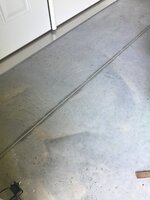
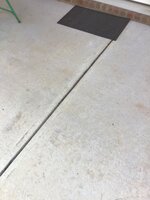
I’m ready to have the concrete parking pad poured in front of my shop and am trying to decide whether to have a troweled joint or cut joint with Silkaflex. The troweled joint looks OK but tend to fill with dirt, acorns, etc. The cut joint looks nice but I’m not sure how durable the silkaflex is when exposed to the elements . I live in Georgia and we have our share of 95 to 100 degree days.

I have attached pics of the troweled joint on the porch of the shop as well as the cut joint filled with silkaflex on the side floor. Please share your opinion on which way you would go.

thanks
 

Attachments

  • IMG_0676.jpeg
    IMG_0676.jpeg
    659.3 KB · Views: 44
  • IMG_0677.jpeg
    IMG_0677.jpeg
    454.3 KB · Views: 44
To avoid these ads, REGISTER NOW!

ConCretin

Well-known member
Joined
Jan 20, 2011
Messages
3,379
Location
Central Maine
The purpose of both joints is to create a weak spot to induce shrinkage cracks where you can't see them as opposed to letting them occur randomly where you can. Tension starts building in a slab as it sets and if you don't relieve that tension with control joints the concrete will decide where it wants to crack.

Either a tooled joint or a cut joint will perform equally well as long as the joint is deep enough, which is 1/4 the slab depth. I'll just add that I've seen an awful lot of grooved joints that are more for appearance and aren't deep enough to control cracks. Joints must also be cut soon enough, which shouldn't be an issue with grooved joint but saw cuts should ideally be done immediately after finishing with an early entry saw.

It's easier to create a proper caulk joint in a grooved joint although you can open up a sawn joint with a crack chaser to get a similar result. A grooved joint is a little more resistant to chipping because the shoulders are rounded over but the joint is much wider because a groover deep enough to cut a proper depth joint is going to be fairly wide too. This can create toe trips and issues for women's heels.

It really comes down to which one you prefer aesthetically. Personally, I wouldn't go with grooved joints for an interior slab. I think either is fine for exterior concrete
 
Last edited:
OP
R

Ran58

Well-known member
Joined
Jul 19, 2019
Messages
162
Location
Georgia
If you want a perfectly flat, dirt free surface, I would go with cut joints but use a different filler. The Silkaflex will discolor and look "dirty" over time, which is not what it sounds like you are after.

To fill the cracks, you can use something like this, which is specifically formulated for filling control joints: https://www.ardexamericas.com/product/ardex-ardiseal-rapid-plus/
Wssix99
it looks like this product if for interior. I’m doing an exterior slab
 
OP
R

Ran58

Well-known member
Joined
Jul 19, 2019
Messages
162
Location
Georgia
The purpose of both joints is to create a weak spot to induce shrinkage cracks where you can't see them as opposed to letting them occur randomly where you can. Tension starts building in a slab as it sets and if you don't relieve that tension with control joints the concrete will decide where it wants to crack.

Either a tooled joint or a cut joint will perform equally well as long as the joint is deep enough, which is 1/4 the slab depth. I'll just add that I've seen an awful lot of grooved joints that are more for appearance and aren't deep enough to control cracks. Joints must also be cut soon enough, which shouldn't be an issue with grooved joint but saw cuts should ideally be done immediately after finishing with an early entry saw.

It's easier to create a proper caulk joint in a grooved joint although you can open up a sawn joint with a crack chaser to get a similar result. A grooved joint is a little more resistant to chipping because the shoulders are rounded over but the joint is much wider because a groover deep enough to cut a proper depth joint is going to be fairly wide too. This can create toe trips and issues for women's heels.

It really comes down to which one you prefer aesthetically. Personally, I wouldn't go with grooved joints for an interior slab. I think either is fine for exterior concrete
Thanks concretin
i might reconsider and just go with a grooved joint even though it seems to get filled With dirt. That way it will be the same as the grooved joints on the porch and I won’t have to be concerned with whether the joint filling compound will hold up over time if I were to go with a cut joint.
 

bugnut

ALLIANCE MEMBER
Joined
Jul 14, 2012
Messages
3,961
Location
Central Ohio
@ConCretin Thanks for your answer to this. I was disappointed with the contractor who saw cut my outbldg floor as they marked it with red chalk line and then sprayed sealer over it. I do not appreciate that I still have the red embedded in the floor. I also had a patio poured and it is saw cut, I much prefer the tooled joint and your explanation of interior versus exterior will lead me in future discussions with the contractors. Thanks
 

PopcornSutton

Well-known member
Joined
Jun 10, 2024
Messages
800
Location
Northern Tip of VA
Take heed of what concretin said, control joints need to be 1/4" depth of the slab. If they are shallower, their effectiveness is useless. I would wager the majority on troweled joints are more on the lines of 1/2", and you can see shrinkage cracks where they shouldn't be. It's hard to trowel a 1" deep joint and keep it straight. It's easy to set a saw at 1" and just walk along.
 
To avoid these ads, REGISTER NOW!

Beemer

Well-known member
Joined
Jun 21, 2020
Messages
1,422
Location
Northeast
We never spec'd or saw a troweled joint in commercial slabs in anything but sidewalks.
Remember though that saw cut timing is important.
 

ConCretin

Well-known member
Joined
Jan 20, 2011
Messages
3,379
Location
Central Maine
What is the best timing for a saw cut? Within 24 hours or so?
If you wait 24 hours, it's likely that shrinkage cracks will have already formed. For best results you should cut immediately after finishing with an early entry of 'soffcut' saw. If this equipment isn't available, cut no later than the following morning.
 
OP
R

Ran58

Well-known member
Joined
Jul 19, 2019
Messages
162
Location
Georgia
Another question for concreting. The saw joints on the interior of the building are probably further apart than they should have been. I think it is 15 ft squares. But it worked out OK because the only cracks in the floor are contained in the joints.

On the pad in front of the building I would think I should have the grids not as large since the exterior will be getting a lot of exposure to the sun in Middle Georgia. Do you know if it matters if the joints on the pad line up with the front to back joints in the building? I know that it would look better if it did but if I make the grid pattern smaller on the pad the cut lines will not line up. If they don’t line up will this affect the potential Cracking of the pad?
thanks
 

ConCretin

Well-known member
Joined
Jan 20, 2011
Messages
3,379
Location
Central Maine
The joints are there to control cracking caused by shrinkage, most of which occurs in the early in the setting process. Unless you pour on a hot, sunny day shrinkage isn't too much different whether the slab is inside or outside. All that to say the rules aren't too much different.

What's most important is the timing, depth and layout of the joints. You want the panels to be relatively square with the ratio of length to width under 1.5. This is why relatively narrow sidewalks are scored more often than larger slabs. 15' squares is a little on the large size but with good construction practices, it should be fine. The joints within a particular placement should line up but they don't have to between two separate placements although as you mention it would probably look better.
 
OP
R

Ran58

Well-known member
Joined
Jul 19, 2019
Messages
162
Location
Georgia
The joints are there to control cracking caused by shrinkage, most of which occurs in the early in the setting process. Unless you pour on a hot, sunny day shrinkage isn't too much different whether the slab is inside or outside. All that to say the rules aren't too much different.

What's most important is the timing, depth and layout of the joints. You want the panels to be relatively square with the ratio of length to width under 1.5. This is why relatively narrow sidewalks are scored more often than larger slabs. 15' squares is a little on the large size but with good construction practices, it should be fine. The joints within a particular placement should line up but they don't have to between two separate placements although as you mention it would probably look better.
Thanks for your help
 
To avoid these ads, REGISTER NOW!
Top Bottom