
You are using an out of date browser. It may not display this or other websites correctly.
You should upgrade or use an alternative browser.
You should upgrade or use an alternative browser.
Finally finished my Walker Turner Dp 900 VFD build
- Thread starter JACKUARS
- Start date


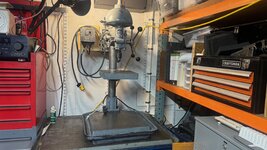
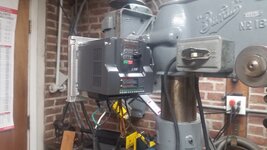
Nice setup. I would highly recommend strain relief where the cables are attached to the VFD. Just use these and anchor them to the plate your VFD is mounted on. I also don't see a ground wire attached to the VFD from the power cable.

paulsomlo
Well-known member
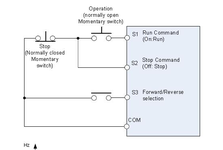
I just finished mine up last week, an 18" Buffalo with the same VFD, mounted on an aluminum heatsink I had laying around - not pretty, but I needed the drill press up and running ASAP. I too, have to do some strain relief. For now, I'm using the buttons on the VFD, but at some point, I'll get around to adding some momentary pushbuttons. Attached is a diagram I got from Teco tech support, regarding the use of momentary switches - it's not in the little manual that comes with the VFD.
Attachments
mattthemuppet
Well-known member
Looks lovely, well done!
^^Great idea. If you add remote control start/stop, I'd also incorporate a remote variable speed potentiometer and locate them within easy reach by the operator. Remote control will also require a few programming parameters in addition to the wiring. You might as well also program the VFD's display to show spindle speed. (at a given belt setting)I just finished mine up last week, an 18" Buffalo with the same VFD, mounted on an aluminum heatsink I had laying around - not pretty, but I needed the drill press up and running ASAP. I too, have to do some strain relief. For now, I'm using the buttons on the VFD, but at some point, I'll get around to adding some momentary pushbuttons. Attached is a diagram I got from Teco tech support, regarding the use of momentary switches - it's not in the little manual that comes with the VFD.

paulsomlo
Well-known member
I don't anticipate changing speed very often - easy enough to just reach back to the speed pot on the VFD. I'm not sure that I really care about reading rpm's - it's either too fast, too slow, or close enough. The plan is to get rid of the original five step pulley that's not very well balanced, and replace it with a two step pulley turned from aluminum, to accommodate a serpentine belt.^^Great idea. If you add remote control start/stop, I'd also incorporate a remote variable speed potentiometer and locate them within easy reach by the operator. Remote control will also require a few programming parameters in addition to the wiring. You might as well also program the VFD's display to show spindle speed. (at a given belt setting)
manwithtools
ALLIANCE MEMBER
Nice work guys, but please be aware that those drives are not rated for installation in an open shop environment. They are rated IP20, which means a product is resistant to dust and objects larger than 12 millimeters, but has no protection against liquids. So basically you can't stick you finger in it, but it's not protected from dust or shavings (like a drill press might create) or any type of liquids.
Technically they should be mounted in a properly sized enclosure with a correct environmental rating for a shop. Something along the lines of IP52.
The standard format for an IP rating is “IP’ followed by two numbers which designate the level of protection. The first digit, which ranges from 1-6, specifies the level of protection from solids, and the second digit, which ranges from 1-8, specifies the level of protection from moisture.
While you won't get the longest possible life from the VFD's the way you have them installed, they in all likely hood will last a fair amount of time, a lot depends on what you do in your shop. Just wanted to let you know this for further knowledge.
Technically they should be mounted in a properly sized enclosure with a correct environmental rating for a shop. Something along the lines of IP52.
The standard format for an IP rating is “IP’ followed by two numbers which designate the level of protection. The first digit, which ranges from 1-6, specifies the level of protection from solids, and the second digit, which ranges from 1-8, specifies the level of protection from moisture.
While you won't get the longest possible life from the VFD's the way you have them installed, they in all likely hood will last a fair amount of time, a lot depends on what you do in your shop. Just wanted to let you know this for further knowledge.
paulsomlo
Well-known member
The VFD is mounted fairly high and away from the table, as far as chips go. And I usually rest my beer on top of the drill press table, rather than on top of the VFD - but thanks for the info.Nice work guys, but please be aware that those drives are not rated for installation in an open shop environment. They are rated IP20, which means a product is resistant to dust and objects larger than 12 millimeters, but has no protection against liquids. So basically you can't stick you finger in it, but it's not protected from dust or shavings (like a drill press might create) or any type of liquids.
Technically they should be mounted in a properly sized enclosure with a correct environmental rating for a shop. Something along the lines of IP52.
The standard format for an IP rating is “IP’ followed by two numbers which designate the level of protection. The first digit, which ranges from 1-6, specifies the level of protection from solids, and the second digit, which ranges from 1-8, specifies the level of protection from moisture.
While you won't get the longest possible life from the VFD's the way you have them installed, they in all likely hood will last a fair amount of time, a lot depends on what you do in your shop. Just wanted to let you know this for further knowledge.

manwithtools
ALLIANCE MEMBER
No, no no, never a beer on the cast iron tableThe VFD is mounted fairly high and away from the table, as far as chips go. And I usually rest my beer on top of the drill press table, rather than on top of the VFD - but thanks for the info.
paulsomlo
Well-known member
I'll use a coaster!No, no no, never a beer on the cast iron table
manwithtools
ALLIANCE MEMBER
I'll use a coaster!

whateg01
Well-known member
Don't tell my vfd that's been lying on the floor next to the Bridgeport since I hooked it up! Yeah it's not right, but it's safer there than upright with no shrouding at eye level.Nice work guys, but please be aware that those drives are not rated for installation in an open shop environment. They are rated IP20, which means a product is resistant to dust and objects larger than 12 millimeters, but has no protection against liquids. So basically you can't stick you finger in it, but it's not protected from dust or shavings (like a drill press might create) or any type of liquids.
Technically they should be mounted in a properly sized enclosure with a correct environmental rating for a shop. Something along the lines of IP52.
The standard format for an IP rating is “IP’ followed by two numbers which designate the level of protection. The first digit, which ranges from 1-6, specifies the level of protection from solids, and the second digit, which ranges from 1-8, specifies the level of protection from moisture.
While you won't get the longest possible life from the VFD's the way you have them installed, they in all likely hood will last a fair amount of time, a lot depends on what you do in your shop. Just wanted to let you know this for further knowledge.
manwithtools
ALLIANCE MEMBER
Huh? Please explain that thought process.Yeah it's not right, but it's safer there than upright with no shrouding at eye level.
whateg01
Well-known member
It's lying flat on its back so the ventilation holes are all on the sides. Chips falling down have to bounce sideways to get in.Huh? Please explain that thought process.
manwithtools
ALLIANCE MEMBER
I guess it depends on how high the chips get...It's lying flat on its back so the ventilation holes are all on the sides. Chips falling down have to bounce sideways to get in.
whateg01
Well-known member
The lathe is across from it so chips do rain down from above at times
You make an excellent point and I agree the enclosure needs to match the application. However my VFD is 15-16" higher than the chuck and 15-16" further back. I've never seen any airborne liquid or swarf launched to where it travels even close to the VFD.Nice work guys, but please be aware that those drives are not rated for installation in an open shop environment. They are rated IP20, which means a product is resistant to dust and objects larger than 12 millimeters, but has no protection against liquids. So basically you can't stick you finger in it, but it's not protected from dust or shavings (like a drill press might create) or any type of liquids.
Technically they should be mounted in a properly sized enclosure with a correct environmental rating for a shop. Something along the lines of IP52.
The standard format for an IP rating is “IP’ followed by two numbers which designate the level of protection. The first digit, which ranges from 1-6, specifies the level of protection from solids, and the second digit, which ranges from 1-8, specifies the level of protection from moisture.
While you won't get the longest possible life from the VFD's the way you have them installed, they in all likely hood will last a fair amount of time, a lot depends on what you do in your shop. Just wanted to let you know this for further knowledge.