My compressor has the valve on the pressure switch. That type of valve is closed on compressor startup.Sorry, I guess I misunderstood you on what your compressor had installed. I still don't know what kind of unloader you have? Is it one that is part of the pressure switch (pumptrol or similar)


You are using an out of date browser. It may not display this or other websites correctly.
You should upgrade or use an alternative browser.
You should upgrade or use an alternative browser.
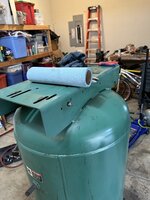
Champion 80 gallon Restomod has begun
- Thread starter Hohn
- Start date
csp
Well-known member
And then you stated the same thing I said.You can buy a VFD that is rated 5 HP, 1PH in, and 3PH out.
Going VFD works great on Quincy compressors. They don't begin to build air pressure until the crankcase oil pressure is at around 20 psi.Watch the ratings on a VFD. Usually they need to be two times over rated to run a 3PH motor on 1PH, but there might be one or two manufactures with a different way of rating, so buyer beware.
My point is, buyer beware and be certain of what you are buying. Some manufacturers will rate on way, the next will rate the other way. It isn't just one way.And then you stated the same thing I said.
Many will give ratings for 1PH in and 3PH out, some do not, but the VFD will work if oversized.
Your one post said the VFD needs to be rated 2x to run on 1PH. That isn't true all the time. It depends the manufacturer rates it.
I have a NEMA 6-50R on a 50a breaker with 6 AWG behind it. Because the motor starts essentially unloaded due the centrifugal unloaders in this pump (R15b) I'm guessing I could get away with 7.5hp single phase here, although I think it would be pushing it. The inrush would be only the initial magnetic field establishment. Turning over the pump by hand, there is very little resistance at low speed.Do you have power to run a 7.5 HP motor? If you are on residential power the utility might frown running that large of motor. it is a bunch of inrush amps.
Also, I've come into possession of the original application guide and Champion recommended 6 AWG wire (which I have) for the 7.5hp single phase.
That said, I don't really need 7.5hp. It's just that if I'm going to eat the cost of a new motor, I might as well upgrade the motor to maximize the pump's output.
Heck, I could drop down to 3hp on a tiny pulley and spin the pump even slower (min speed is only 400rpm). Even with a 3hp motor, this is a MASSIVE upgrade in my air system.
Thinking as I type this, the 3hp option might make a lot of sense. It would slow the pump down even more and be even quieter and cooler-running. (min speed for splash lube is only 400rpm).
Also, the duty cycle of my usage would allow a 3hp to come on and run for awhile before stopping. With 80 gallons (plus piping) to fill and 175psi peak pressure, that's a LOT of air storage to draw upon.
And this pump at 3hp is still nearly double the real world airflow of my 120V compressor. Hmm.
you're going to get " that's not HP rated " for a 7.5 HP motorI have a NEMA 6-50R on a 50a breaker
I have a 5 HP Curtis 80 gallon in my garage. It is way more compressor than I need for a retired weekend warrior. I can't imagine 7.5 HP. I ran a Porter Cable that was in reality about 3 HP for years. The only time it was a bit short was running a random orbit saner for an extended time. Even then it would run down to about 60 PSI and that seemed to be a balance point. the sander would still run continuously at that pressure, as would the compressor. if it were me I wouldn't go over 5 HP for a hobby shop. 5 HP will do pretty much everything you will need. If you have a sand blaster that would be the only tool I can thing of that could use the air, but even then I used to do some sand blasting with my 3 HP.Heck, I could drop down to 3hp on a tiny pulley and spin the pump even slower (min speed is only 400rpm). Even with a 3hp motor, this is a MASSIVE upgrade in my air system.
finn
Well-known member
Likely not true for the splash lubed Quincy compressors!And then you stated the same thing I said.
Going VFD works great on Quincy compressors. They don't begin to build air pressure until the crankcase oil pressure is at around 20 psi.
finn
Well-known member
I picked up a mid seventies of the same (I think) champion compressor about ten or so years ago. I was a little reluctant, as it only has the 3hp (original, I think) motor, but for $265 I figured why not take a chance.I have a NEMA 6-50R on a 50a breaker with 6 AWG behind it. Because the motor starts essentially unloaded due the centrifugal unloaders in this pump (R15b) I'm guessing I could get away with 7.5hp single phase here, although I think it would be pushing it. The inrush would be only the initial magnetic field establishment. Turning over the pump by hand, there is very little resistance at low speed.
Also, I've come into possession of the original application guide and Champion recommended 6 AWG wire (which I have) for the 7.5hp single phase.
That said, I don't really need 7.5hp. It's just that if I'm going to eat the cost of a new motor, I might as well upgrade the motor to maximize the pump's output.
Heck, I could drop down to 3hp on a tiny pulley and spin the pump even slower (min speed is only 400rpm). Even with a 3hp motor, this is a MASSIVE upgrade in my air system.
Thinking as I type this, the 3hp option might make a lot of sense. It would slow the pump down even more and be even quieter and cooler-running. (min speed for splash lube is only 400rpm).
Also, the duty cycle of my usage would allow a 3hp to come on and run for awhile before stopping. With 80 gallons (plus piping) to fill and 175psi peak pressure, that's a LOT of air storage to draw upon.
And this pump at 3hp is still nearly double the real world airflow of my 120V compressor. Hmm.
I planned on upgrading to a five hp motor and appropriate pulley, but find the compressor as is works fine. I have to plan ahead when running the sand blast cabinet, and it runs more or less constantly with some air hog tools, but being a hobby shop, I just really never felt the need to upgrade the motor and then be stuck with a noisier machine running higher rpm.
Still on my list, but not near the top.
Jswain
Well-known member
My 3hp left me wanting a 5hp pretty quick when a die grinder / sander came out. Definitely with a sandblaster.
It was 60gallon & single stage but still once you run the reserve down you're at the mercy of the output of the pump.
It was 60gallon & single stage but still once you run the reserve down you're at the mercy of the output of the pump.
finn
Well-known member
Was it a real 3 hp motor, like the mid sixties beast in my old two stage 175 psi Champion with a VR 15 pump, or one of those “3hp” consumer grade motors that actually put out something like 1.6 hp?My 3hp left me wanting a 5hp pretty quick when a die grinder / sander came out. Definitely with a sandblaster.
It was 60gallon & single stage but still once you run the reserve down you're at the mercy of the output of the pump.
Wish I haven’t opened this thread. Now I’m looking up 5 hp motor prices and suppliers and trying to figure what pulley I will need.
Damn you, GJ.
this app works well in my opinion for determining pulleys ,rpm, spacing etc etctrying to figure what pulley I will need
Jswain
Well-known member
Was it a real 3 hp motor, like the mid sixties beast in my old two stage 175 psi Champion with a VR 15 pump, or one of those “3hp” consumer grade motors that actually put out something like 1.6 hp?
Wish I haven’t opened this thread. Now I’m looking up 5 hp motor prices and suppliers and trying to figure what pulley I will need.
Damn you, GJ.
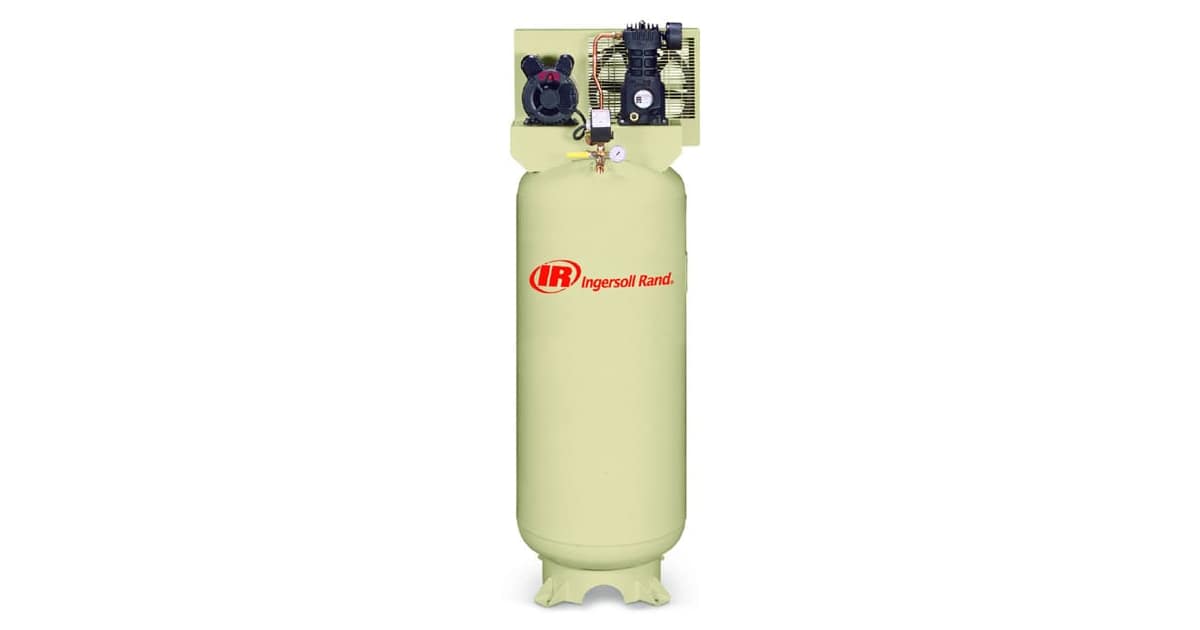
Ingersoll Rand 32334005 3 HP 60 Gal 135 Max PSI Single-Stage Stationary Electric (230 Volt 1 Phase) Reciprocating Air Compressor with Vertical Tank | Ferguson Home
Save on the Ingersoll Rand 32334005 from Ferguson Home. Low Prices + Fast & Free Shipping on Most Orders. Find reviews, expert advice, manuals, specs & more.
This was the exact unit I had. And it put out exactly the CFM that it claims(based off math)
I would trust the math more then the "HP". How much CFM is your unit producing now?
CFM's your Air Compressor can Produce
Calculate the actual cfm's of your Air Compressor
www.spikevm.com
My 5hp baldor with a Saylor beall 705 clone pump puts out around 18cfm(I set my cutoff to 160psi) It's just enough for sandblasting. I can run it for basically as long as I want to stand there in one session, but if I could upgrade to 7.5hp I would.
I would say 5hp(quality 5hp, not SPL) is great for a 1 man shop for basically any hand air tool, who maybe occasionally runs a blast cabinet.
If you want to blast multiple rims, fenders, cars, frames etc aaand you can power the breaker, I would go 7.5hp.
finn
Well-known member
Mine is an R15 pump, per the tag on the compressor head. The tag on the tank says VR-3-8.CFM . Both tags have the same s/n. The current version, isn’t listed with a 3 hp motor, and the pump is listed as an R15B, so there have undoubtedly been upgrades over the years.Ingersoll Rand 32334005 3 HP 60 Gal 135 Max PSI Single-Stage Stationary Electric (230 Volt 1 Phase) Reciprocating Air Compressor with Vertical Tank | Ferguson Home
Save on the Ingersoll Rand 32334005 from Ferguson Home. Low Prices + Fast & Free Shipping on Most Orders. Find reviews, expert advice, manuals, specs & more.www.aircompressorsdirect.com
This was the exact unit I had. And it put out exactly the CFM that it claims(based off math)
I would trust the math more then the "HP". How much CFM is your unit producing now?
CFM's your Air Compressor can Produce
Calculate the actual cfm's of your Air Compressorwww.spikevm.com
My 5hp baldor with a Saylor beall 705 clone pump puts out around 18cfm(I set my cutoff to 160psi) It's just enough for sandblasting. I can run it for basically as long as I want to stand there in one session, but if I could upgrade to 7.5hp I would.
I would say 5hp(quality 5hp, not SPL) is great for a 1 man shop for basically any hand air tool, who maybe occasionally runs a blast cabinet.
If you want to blast multiple rims, fenders, cars, frames etc aaand you can power the breaker, I would go 7.5hp.
Looks like they only match that pump to a 5 or 7.5 hp motor now, and spec it at 21 cfm @ 125 psi and 17.0 @ 175 psI with the five hp pump. I know from a search a few years ago that all three motors, 3, 5, and 7.5 hp and corresponding pulleys were originally sold using this same pump.
Interestingly, flow only increases to 23 cfm @ 125 psi and 22.3 cfm @ 175 when coupled to a 7.5 hp motor.
Since I typically blast at 100-+/- psi, I doubt there’s much real world value going to 7.5 hp. The shop is wired for 200 amp service, so I think that would handle 7.5 hp. The compressor is five feet from the panel.
I’m not getting any younger, so I might just pull the trigger on a whole new five hp compressor and sell this one. It doesn’t pass any oil, so I should be able to get $500-600 for it, which doubles my $265 investment over ten years.
Not sure if I want to wrestle a new compressor into the shop utility room, though. It was touch and go when I was ten years younger.
Sorry to hijack this thread. Probably should have started a new one.
After going blind on researching different options, here's what I think the state of play is.
Full load VFD margin is ~173%, not quite 2x. So if you have a 3ph motor with 10a FLA, you'd need/want a FFD rated at 17.3 output amps. Which means who knows how many inlet amps on the breaker-- probably 30 I'd guess. And NEC apparently now requires the breaker and wiring be rated to 125% of that. Margin on top of margin.
So if you start at the panel and go forward instead of starting at the motor and going backwards, you'd get something like this logic flow:
50a breaker--> 40a VFD input--> 30A VFD output---> 17.3 FLA motor rating on 3ph. I think 75% efficiency is pretty reasonable assumption for most VFD in vs output at full load. Full load is sort of a worst cast for efficiency.
Putting aside all the rules the sparkys will cite, in theory it is possible IMO to run a 7.5hp motor on a VFD (if it's a reasonably good one) on a 50a breaker. And a 7.5hp motor on a VFD running at reduced speed creates less heat and uses less electricity than a 5hp motor running wide open. It's more efficient. Also, because you can program VFDs to give the softest of starts, inrush is slashed to a value that is often less than FLA. That's very significant when breaker-limited.
So I think the ultimate home gamer air setup is probably a big VFD and a 7.5hp 3-phase motor. Especially if you incorporated some controls logic that slowly spun up the motor as pressure dropped and then ran it at a motor speed that was equivalent to min pump speed (effectively 3hp or so). When you start thinking about the controls possibilities of a VFD with some basic PID/PLC type controls, there's some neat possibilities (all of which are entirely unnecessary in a home shop).
But of course, big motors and the VFDs to drive them are not cheap. So let's talk through the costs of a couple options.
Here's what I've priced estimated based on a couple courses of action.
Assuming existing 5hp 3ph motor is good:
-- Digital Phase Shifter (DPS). This is nearly as expensive as a really cheap VFD. And it's not good at low load. But it IS a simple and effective way to run the 3-phase motor, it is UL listed, and made in South Korea. SO it's not Chinesium and it's had some lab-coat types with clipboards and skepticism test it out. DPS option: $230.
-- Rotary Phase Converter-- not practical for a shop with only one motor to benefit from it. Too expensive and inefficient.
-- VFD: sky is the limit on price, or you can get some sketchy ones (Maiyun) that seem to work. But a reasonably good Intertek is $750 for 5hp, with a 7.5hp version costing DOUBLE that. I think it's safe to say that if you get a cheap VFD, don't use the actual VFD part and just use it as a phase shifter. If you keep a 60hz motor at 60hz, you can probably get away with a cheap one and get the benefit of some soft start function. There are VFDs in the sub- $400 range that might be worth risking, with the understanding that if it blows up your are basically completely out the money and zero support will be offered. Heck, many of these "brands" only exist as long as a production run isn't sold out.
Assuming existing 5hp 3PH motor is bad:
1) Replace with single phase motor. 5hp at most with 3hp downgrade on the table. However, 3hp seems like a dumb choice since you are basically stuck with 1750rpm motors and 3hp and 5hp motors are essentially the same cost
-- Teco Westinghouse 5hp is $645 from Wolf Automation. $700 is about the price of admission for a reasonably good single phase 5hp ODP motor, with the better Nidec/USM pushing $1000.
-- Dropping down to 3hp saves only $90 or so vs 5hp. Stepping up to 7.5 costs a LOT (800+) more than 5hp and then you still have all the inrush problems of that much power on only 240V/50a breaker. 5hp feels like the largest practical max for single phase.
2) Replace with another 3ph motor and one of the options above for making 3ph work.
-- 3ph motors cost quite a bit less
-- 3ph motors do better in stop/start applications and are generally just more reliable
I think at this point I'm strongly inclined toward the DPS option. The DPS plus a replacement 3-phase motor combined cost about what a single phase motor will cost (largely due to the need for a slower speed which is not common single phase).
I'm willing to pay for UL listing and Korean manufacture and willing to take a bit of risk in that regard that I'm just not comfortable taking with a VFD even if the latter is "better."
Full load VFD margin is ~173%, not quite 2x. So if you have a 3ph motor with 10a FLA, you'd need/want a FFD rated at 17.3 output amps. Which means who knows how many inlet amps on the breaker-- probably 30 I'd guess. And NEC apparently now requires the breaker and wiring be rated to 125% of that. Margin on top of margin.
So if you start at the panel and go forward instead of starting at the motor and going backwards, you'd get something like this logic flow:
50a breaker--> 40a VFD input--> 30A VFD output---> 17.3 FLA motor rating on 3ph. I think 75% efficiency is pretty reasonable assumption for most VFD in vs output at full load. Full load is sort of a worst cast for efficiency.
Putting aside all the rules the sparkys will cite, in theory it is possible IMO to run a 7.5hp motor on a VFD (if it's a reasonably good one) on a 50a breaker. And a 7.5hp motor on a VFD running at reduced speed creates less heat and uses less electricity than a 5hp motor running wide open. It's more efficient. Also, because you can program VFDs to give the softest of starts, inrush is slashed to a value that is often less than FLA. That's very significant when breaker-limited.
So I think the ultimate home gamer air setup is probably a big VFD and a 7.5hp 3-phase motor. Especially if you incorporated some controls logic that slowly spun up the motor as pressure dropped and then ran it at a motor speed that was equivalent to min pump speed (effectively 3hp or so). When you start thinking about the controls possibilities of a VFD with some basic PID/PLC type controls, there's some neat possibilities (all of which are entirely unnecessary in a home shop).
But of course, big motors and the VFDs to drive them are not cheap. So let's talk through the costs of a couple options.
Here's what I've priced estimated based on a couple courses of action.
Assuming existing 5hp 3ph motor is good:
-- Digital Phase Shifter (DPS). This is nearly as expensive as a really cheap VFD. And it's not good at low load. But it IS a simple and effective way to run the 3-phase motor, it is UL listed, and made in South Korea. SO it's not Chinesium and it's had some lab-coat types with clipboards and skepticism test it out. DPS option: $230.
-- Rotary Phase Converter-- not practical for a shop with only one motor to benefit from it. Too expensive and inefficient.
-- VFD: sky is the limit on price, or you can get some sketchy ones (Maiyun) that seem to work. But a reasonably good Intertek is $750 for 5hp, with a 7.5hp version costing DOUBLE that. I think it's safe to say that if you get a cheap VFD, don't use the actual VFD part and just use it as a phase shifter. If you keep a 60hz motor at 60hz, you can probably get away with a cheap one and get the benefit of some soft start function. There are VFDs in the sub- $400 range that might be worth risking, with the understanding that if it blows up your are basically completely out the money and zero support will be offered. Heck, many of these "brands" only exist as long as a production run isn't sold out.
Assuming existing 5hp 3PH motor is bad:
1) Replace with single phase motor. 5hp at most with 3hp downgrade on the table. However, 3hp seems like a dumb choice since you are basically stuck with 1750rpm motors and 3hp and 5hp motors are essentially the same cost
-- Teco Westinghouse 5hp is $645 from Wolf Automation. $700 is about the price of admission for a reasonably good single phase 5hp ODP motor, with the better Nidec/USM pushing $1000.
-- Dropping down to 3hp saves only $90 or so vs 5hp. Stepping up to 7.5 costs a LOT (800+) more than 5hp and then you still have all the inrush problems of that much power on only 240V/50a breaker. 5hp feels like the largest practical max for single phase.
2) Replace with another 3ph motor and one of the options above for making 3ph work.
-- 3ph motors cost quite a bit less
-- 3ph motors do better in stop/start applications and are generally just more reliable
I think at this point I'm strongly inclined toward the DPS option. The DPS plus a replacement 3-phase motor combined cost about what a single phase motor will cost (largely due to the need for a slower speed which is not common single phase).
I'm willing to pay for UL listing and Korean manufacture and willing to take a bit of risk in that regard that I'm just not comfortable taking with a VFD even if the latter is "better."
Jswain
Well-known member
I'd keep my eye out for a used 5hp single phase baldor(or equivalent) motor. Dunno about your area but they come up pretty often around here.
Also lots of compressors with bad tanks/pumps come up.
No need to make a compressor complicated it's a very simple piece of equipment. If you want to eliminate starts/stops when blasting etc. put a continuous run valve on it.
Also lots of compressors with bad tanks/pumps come up.
No need to make a compressor complicated it's a very simple piece of equipment. If you want to eliminate starts/stops when blasting etc. put a continuous run valve on it.
finn
Well-known member
since you got me thinking of upgrading to either a 5hp motor or a new 5 hp compressor, I spent some time looking. Several compressor retailers say to plan on 200% FLA inrush current on starting.After going blind on researching different options, here's what I think the state of play is.
Full load VFD margin is ~173%, not quite 2x. So if you have a 3ph motor with 10a FLA, you'd need/want a FFD rated at 17.3 output amps. Which means who knows how many inlet amps on the breaker-- probably 30 I'd guess. And NEC apparently now requires the breaker and wiring be rated to 125% of that. Margin on top of margin.
So if you start at the panel and go forward instead of starting at the motor and going backwards, you'd get something like this logic flow:
50a breaker--> 40a VFD input--> 30A VFD output---> 17.3 FLA motor rating on 3ph. I think 75% efficiency is pretty reasonable assumption for most VFD in vs output at full load. Full load is sort of a worst cast for efficiency.
Putting aside all the rules the sparkys will cite, in theory it is possible IMO to run a 7.5hp motor on a VFD (if it's a reasonably good one) on a 50a breaker. And a 7.5hp motor on a VFD running at reduced speed creates less heat and uses less electricity than a 5hp motor running wide open. It's more efficient. Also, because you can program VFDs to give the softest of starts, inrush is slashed to a value that is often less than FLA. That's very significant when breaker-limited.
So I think the ultimate home gamer air setup is probably a big VFD and a 7.5hp 3-phase motor. Especially if you incorporated some controls logic that slowly spun up the motor as pressure dropped and then ran it at a motor speed that was equivalent to min pump speed (effectively 3hp or so). When you start thinking about the controls possibilities of a VFD with some basic PID/PLC type controls, there's some neat possibilities (all of which are entirely unnecessary in a home shop).
But of course, big motors and the VFDs to drive them are not cheap. So let's talk through the costs of a couple options.
Here's what I've priced estimated based on a couple courses of action.
Assuming existing 5hp 3ph motor is good:
-- Digital Phase Shifter (DPS). This is nearly as expensive as a really cheap VFD. And it's not good at low load. But it IS a simple and effective way to run the 3-phase motor, it is UL listed, and made in South Korea. SO it's not Chinesium and it's had some lab-coat types with clipboards and skepticism test it out. DPS option: $230.
-- Rotary Phase Converter-- not practical for a shop with only one motor to benefit from it. Too expensive and inefficient.
-- VFD: sky is the limit on price, or you can get some sketchy ones (Maiyun) that seem to work. But a reasonably good Intertek is $750 for 5hp, with a 7.5hp version costing DOUBLE that. I think it's safe to say that if you get a cheap VFD, don't use the actual VFD part and just use it as a phase shifter. If you keep a 60hz motor at 60hz, you can probably get away with a cheap one and get the benefit of some soft start function. There are VFDs in the sub- $400 range that might be worth risking, with the understanding that if it blows up your are basically completely out the money and zero support will be offered. Heck, many of these "brands" only exist as long as a production run isn't sold out.
Assuming existing 5hp 3PH motor is bad:
1) Replace with single phase motor. 5hp at most with 3hp downgrade on the table. However, 3hp seems like a dumb choice since you are basically stuck with 1750rpm motors and 3hp and 5hp motors are essentially the same cost
-- Teco Westinghouse 5hp is $645 from Wolf Automation. $700 is about the price of admission for a reasonably good single phase 5hp ODP motor, with the better Nidec/USM pushing $1000.
-- Dropping down to 3hp saves only $90 or so vs 5hp. Stepping up to 7.5 costs a LOT (800+) more than 5hp and then you still have all the inrush problems of that much power on only 240V/50a breaker. 5hp feels like the largest practical max for single phase.
2) Replace with another 3ph motor and one of the options above for making 3ph work.
-- 3ph motors cost quite a bit less
-- 3ph motors do better in stop/start applications and are generally just more reliable
I think at this point I'm strongly inclined toward the DPS option. The DPS plus a replacement 3-phase motor combined cost about what a single phase motor will cost (largely due to the need for a slower speed which is not common single phase).
I'm willing to pay for UL listing and Korean manufacture and willing to take a bit of risk in that regard that I'm just not comfortable taking with a VFD even if the latter is "better."
That’s in conflict with the 173% number.
I’m no electrician, though.
Jswain
Well-known member
Wrestling a 5hp motor wouldn't be so hard tho....Mine is an R15 pump, per the tag on the compressor head. The tag on the tank says VR-3-8.CFM . Both tags have the same s/n. The current version, isn’t listed with a 3 hp motor, and the pump is listed as an R15B, so there have undoubtedly been upgrades over the years.
Looks like they only match that pump to a 5 or 7.5 hp motor now, and spec it at 21 cfm @ 125 psi and 17.0 @ 175 psI with the five hp pump. I know from a search a few years ago that all three motors, 3, 5, and 7.5 hp and corresponding pulleys were originally sold using this same pump.
Interestingly, flow only increases to 23 cfm @ 125 psi and 22.3 cfm @ 175 when coupled to a 7.5 hp motor.
Since I typically blast at 100-+/- psi, I doubt there’s much real world value going to 7.5 hp. The shop is wired for 200 amp service, so I think that would handle 7.5 hp. The compressor is five feet from the panel.
I’m not getting any younger, so I might just pull the trigger on a whole new five hp compressor and sell this one. It doesn’t pass any oil, so I should be able to get $500-600 for it, which doubles my $265 investment over ten years.
Not sure if I want to wrestle a new compressor into the shop utility room, though. It was touch and go when I was ten years younger.
Sorry to hijack this thread. Probably should have started a new one.

If it ain't passing oil & it's making what it should for CFM no need to wrestle it anywhere.
finn
Well-known member
I’m a little concerned about the age of the tank.Wrestling a 5hp motor wouldn't be so hard tho....
If it ain't passing oil & it's making what it should for CFM no need to wrestle it anywhere.
These things don’t last forever, although it’s not a thin gauge box store tank for sure.
I think they weigh in the vicinity of 600 lbs, assembled.
Jswain
Well-known member
Yeah good quality 5hp 80g plan on 6-800lbs depending on age.I’m a little concerned about the age of the tank.
These things don’t last forever, although it’s not a thin gauge box store tank for sure.
I think they weigh in the vicinity of 600 lbs, assembled.
If it's a vertical unit they don't fail like a horizontal, they simply leak and then you replace. Unless someone does some backyard fab on the tank.
Bart, I'm not sure how I missed this cogent post, but I could have saved myself hours of research if I hadn't missed it.Envious - that was a great deal.
A VFD will let your program a soft start; this can help reduce the inrush current a lot which is nice. Remember that one never disconnects the VFD from the motor; the pressure switch should be connected to the on-off terminals on the VFD. A name brand 5 hp VFD that will take single phase input isn't inexpensive, but it's cheaper than a 5 hp single phase 17xx rpm motor of similar quality to the 3 phase one that's on there now.
I think you are exactly correct-- the VFD option is likely cheaper if you go like vs like motor quality.
The rub here seems to be the 17xx speed requirement-- single phase motors in that speed are far less common and more $$ than their higher speed brothers.
Heck, I might even go the VFD route and 3ph motor even if this existing 3ph is no good. The speed control and soft starts are really nice to have, not to mention the built-in motor protection most of the VFDs have now.
The 173% figure was for VFD sizing, and since VFDs mostly eliminate inrush severity the reason for oversizing is to account for the inefficiency of making 3ph from single phase, not to account for inrush per se.since you got me thinking of upgrading to either a 5hp motor or a new 5 hp compressor, I spent some time looking. Several compressor retailers say to plan on 200% FLA inrush current on starting.
That’s in conflict with the 173% number.
I’m no electrician, though.
If I go VFD I'll be around 200% or slightly more just because it's like $40 more to upgrade. There are definitely steps in the price and value as you go up and down, and once you get above 7.5hp or 10hp worth of VFD, things get expensive fast.
I have no doubt that non-VFD setups are 200% or more at inrush. That's probably why they want to see a 60a breaker on a 7.5hp motor with a FLA rating of <30a.
Last edited:
The Champ rep for our area did a serial number trace and this unit was made in 2002, so it's relatively young as compressors go.Yeah good quality 5hp 80g plan on 6-800lbs depending on age.
If it's a vertical unit they don't fail like a horizontal, they simply leak and then you replace. Unless someone does some backyard fab on the tank.
As such, the tank seems in pretty good shape. I have a borescope I can use to inspect the inside before trying and pressure testing.
The welds on the tank by appearance are almost certainly a "sub-arc" weld and the gauge of material is rather heavy.
This unit weighs well over 600# compared to a homeowner grade 80 gallon 5hp unit which is under 500#. Tractor supply has a 5hp 80 gallon IR that weighs only 435lb. Surely some of that is tank difference as well as heavy flywheels, heavier pumps, heavier motor, etc.
finn
Well-known member
Out of curiosity, how complex is the startup procedure of a compressor using a VFD.The 173% figure was for VFD sizing, and since VFDs mostly eliminate inrush severity the reason for oversizing is to account for the inefficiency of making 3ph from single phase, not to account for inrush per se.
If I go VFD I'll be around 200% or slightly more just because it's like $40 more to upgrade. There are definitely steps in the price and value as you go up and down, and once you get above 7l5hp or 10hp worth of VFD, things get expensive fast.
I have no doubt that non-VFD setups are 200% or more at inrush. That's probably why they want to see a 60a breaker on a 7.5hp motor with a FLA rating of <30a.
With my single phase Champion, my wife can drive up to the shop, flip on the light in the boiler/compressor room, flip the lever on the ball valve, push the start button, and she ha an unlimited supply of air to blow off the sanding dust from the tongue and groove paneling she’s prepping for the new sauna.
That, or I can verbally tell my grandson to do the same when I’m 75’ away at the other end of the shop in the middle of something else.
I’m reluctant to leave anything but the boiler, refrigerator, lights, TV, Internet and well powered up when we’re away, and even the well switch gets flipped if we’re gone for more than a day.
Just curious, as that’s one reason I have stayed away from “deals” on three phase compressors.
LopezBart
Well-known member
Out of curiosity, how complex is the startup procedure of a compressor using a VFD.
Since the VFD can be "programmed" (mode selection, usually) in a variety of different ways, the desired interface is up the user.
When I replaced the multiple contactors, rotary switches, etc. on my lathe - which I got for a bargain price since the magic smoke had been released from the complex wiring - with a VFD, I was able to completely replicate the old interface (stop treadle, forward reverse lever, jog button) by wiring up the existing microswitches and selecting the appropriate modes on the VFD.
The easy way to wire a VFD for a compressor is to use a SPST on/off switch, and wire the pressure switch in series to the VFD's ON terminal. The same terminals can react in different ways depending on the mode settings. When the switch is off, the VFD won't start the motor; when it is on, it will start the motor if the pressure switch is on. When leaving, you can disable everything by switching off the disconnect, which removes power from the VFD.
NC Fabricator25
Well-known member
- Joined
- May 28, 2010
- Messages
- 193
—- edited —-
Last edited:
Since the VFD can be "programmed" (mode selection, usually) in a variety of different ways, the desired interface is up the user.
When I replaced the multiple contactors, rotary switches, etc. on my lathe - which I got for a bargain price since the magic smoke had been released from the complex wiring - with a VFD, I was able to completely replicate the old interface (stop treadle, forward reverse lever, jog button) by wiring up the existing microswitches and selecting the appropriate modes on the VFD.
The easy way to wire a VFD for a compressor is to use a SPST on/off switch, and wire the pressure switch in series to the VFD's ON terminal. The same terminals can react in different ways depending on the mode settings. When the switch is off, the VFD won't start the motor; when it is on, it will start the motor if the pressure switch is on. When leaving, you can disable everything by switching off the disconnect, which removes power from the VFD.
Assuming I go VFD, I will wire it up as Bart describes above.
Eventually however I'd like to add the ability to shift the compressor to the min pump speed. I'm sure this could be done with staged pressure switches on some VFDs but I suspect you really need a pressure *sensor* and some rudimentary PLC type function to create the high and low modes. The pressure sensors I've seen are the typical 0-5V and I don't know if these VFDs have a 5VDC sensor loop to use in their programming? I think you'd need a separate PLC, even a simple little cobbled-together Arduino setup.
The size of the motor just determines how "high" the high mode can safely go. A 7.5hp motor could run from 1050rpm down to 400rpm, while the 5hp is limited to 700rpm max and the same 400rpm min. That's still a wide enough range to make it worth creating the separate operating mode. Even at 400rpm it's still delivering a quite-useful 10-12CFM or so up to 175psig. That's more than double my current 120V compressor, only it's loafing along super quiet and running very cool.
On the other end, the full 1050 pump rpm is nearly 30CFM at low pressures and wouldn't THAT be useful!
manwithtools
ALLIANCE MEMBER
Most pressure sensors will provide a 0-10 volt signal which most VFD will gladly accept. Depending on the model of VFD, many have PLC like control available internally. In many cases, no external PLC will be required for a simple application.
No harder than any other compressor. Walk into the the shop and flip a switch.Out of curiosity, how complex is the startup procedure of a compressor using a VFD.
The "fun" part of a VFD is getting it set up to operate the way you want. Depending on the VFD there can be hundreds of parameters you can change, but you might have to set only a few of them. Some brands are very user friendly, some are crazy and it is like programing the space shuttle!
I have a VFD on my drill press. To get it into program mode it the instruction said to push this one button. I could not get it into program mode. I finally figured out I needed to press and hold the button for a second, not just a quick jab. Of course the instructions didn't mention that!
On my drill press I leave it plugged into the wall outlet all the time. I have a switch on the drill press to kill power to the VFD as I might not use it for weeks. So I walk up, flip on the switch, the VFD powers up, and then I can turn on the switch to control forward or reverse rotation, and a speed dial.
With a compressor you might have a disconnect to kill power, or shut it off at the breaker panel, or just leave it on. The VFD will need a start command from the pressure switch and you can interrupt this wire from the pressure switch with a simple toggle switch to stop the VFD from running while not in use. The VFD control voltage is low volts so you can use 18/2 wire, thermostat wire and run it pretty much how ever you like as it doesn't need to be in conduit.
fitter30
Well-known member
Vfd to run 3 ph motor on single ph has to be a minimum twice the rated hp need to compare max amps of vfd to motor 1 ph amps.Envious - that was a great deal.
A VFD will let your program a soft start; this can help reduce the inrush current a lot which is nice. Remember that one never disconnects the VFD from the motor; the pressure switch should be connected to the on-off terminals on the VFD. A name brand 5 hp VFD that will take single phase input isn't inexpensive, but it's cheaper than a 5 hp single phase 17xx rpm motor of similar quality to the 3 phase one that's on there now.
Firebrick43
Well-known member
You could take 2 square D pumptrol switches and set each at different pressures and easily do what your talking about. On the schematic below you could have wire run from the 24v terminal to each pumptrol switch and then from one to preset speed 1 and the other to preset speed 2. Its that simple. No high voltage wiring outside of the mains coming in and the lines to the motor itself.Assuming I go VFD, I will wire it up as Bart describes above.
Eventually however I'd like to add the ability to shift the compressor to the min pump speed. I'm sure this could be done with staged pressure switches on some VFDs but I suspect you really need a pressure *sensor* and some rudimentary PLC type function to create the high and low modes. The pressure sensors I've seen are the typical 0-5V and I don't know if these VFDs have a 5VDC sensor loop to use in their programming? I think you'd need a separate PLC, even a simple little cobbled-together Arduino setup.
The size of the motor just determines how "high" the high mode can safely go. A 7.5hp motor could run from 1050rpm down to 400rpm, while the 5hp is limited to 700rpm max and the same 400rpm min. That's still a wide enough range to make it worth creating the separate operating mode. Even at 400rpm it's still delivering a quite-useful 10-12CFM or so up to 175psig. That's more than double my current 120V compressor, only it's loafing along super quiet and running very cool.
On the other end, the full 1050 pump rpm is nearly 30CFM at low pressures and wouldn't THAT be useful!
The VFD have multiple ways of wiring and programming, most have somewhere near 4000 parameters that can be set. Don't worry however, as even in them most complicated of installs on machine tools it was rare to have to set more than 2 dozen at most.
You could use a 0-10v signal in the analog inputs section as Manwithtools said as well. There are multiple curves you can attach to the signal, linear, exponential, scaling. You can even couple PID controller with the pressure sensor.
Teco E 510 diagram

Last edited:
Firebrick43
Well-known member
Traditionally yes, it was rule of thumb that a 3 phase input vfd could be used with single phase mains if derated by half.Vfd to run 3 ph motor on single ph has to be a minimum twice the rated hp need to compare max amps of vfd to motor 1 ph amps.
This is not necessarily true anymore. There are many single phase only input VFDs now that that the HP rating is the actual HP rating.
Preliminary motor inspection since I dismounted it from the baseplate:
It turns freely and very smoothly and will spin down very slowly like an induction motor should. The DC resistance across each phase is consistent and right around one ohm.
Continuity to chassis ground is excellent.
The capacitance on each phase is consistent and right around nine Farads. Yes, whole Farads. Dang. I suppose low DC resistance and very high capacitance is exactly what you'd expect and want from an induction motor.
I'll need to wait for a Megger test to assess the insulation, but at least based on rudimentary home gamer diagnostics, it's so far so good. I'll get a better test in a few days.
It turns freely and very smoothly and will spin down very slowly like an induction motor should. The DC resistance across each phase is consistent and right around one ohm.
Continuity to chassis ground is excellent.
The capacitance on each phase is consistent and right around nine Farads. Yes, whole Farads. Dang. I suppose low DC resistance and very high capacitance is exactly what you'd expect and want from an induction motor.
I'll need to wait for a Megger test to assess the insulation, but at least based on rudimentary home gamer diagnostics, it's so far so good. I'll get a better test in a few days.
LopezBart
Well-known member
The capacitance on each phase is consistent and right around nine Farads. Yes, whole Farads. Dang. I suppose low DC resistance and very high capacitance is exactly what you'd expect and want from an induction motor.
1 Farad is almost certainly to be a test error; that's a very large amount of capacitance.
I want to think a bit about VFD implementation on this.
Taking into mind this characteristic curve for a VFD-driven induction motor:

Let's assume for now that I want the maximum possible air delivery consistent with the 5hp motor that is 1725rpm and 60hz native. It seems to me that you could spin the motor a bit faster at lower pressures, to the extent lower pressures allowed for lower drive torque.
I'm seeing conflicting guidance that says compressors are constant torque loads while others are saying variable torque (like a pump would be). By my lights, the correct answer is somewhere in between. A recip compressor must have *some* sensitivity to outlet pressure in terms of drive torque.
My reasoning: the outlet check valves on the pump are sensitive to pressure drop across them. Thus, the pressure in the pump head is correlated to the outlet pressure restriction. Obviously this has several variables at work here-- pump speed and outlet pressure among them. At very low pump speed and outlet restriction, it would seem that drive torque varies with both.
But I can see how as ramp up pump speed it would become less sensitive to speed changes (and outlet restriction changes) and would approach constant torque.
I think it's reasonable to assume that at lower outlet pressures you'd have at least some decrease in drive torque. Which means I should be able to speed up the motor via VFD and operate partially on the "droop curve" portion of constant power (vs constant torque).
What I'm thinking: I can program the VFD to spin the motor a bit faster at lower pressures-- say 75hz or 80hz and get more air when the pump would normally be lightly loaded. The stock drive pulley setup allows 50% more speed on the motor to be within the pump's speed range. Conversely, I can reduce the motor speed by roughly 1/3rd and be above the minimum pump speed (Splash lube).
What this looks like in practice is a VFD that operates the motor between 40hz-90hz against the nominal 60hz rating. The higher speeds are for low pressure operation with the 60hz being the nominal rated point at full 175psi.
If it is the case that the pump's drive torque does not drop in proportion to speed, then it's possible that the faster operation at low pressure may not be possible-- the VFD's motor protection provisions should attempt to drive it as fast as it can, though-- right?
Taking into mind this characteristic curve for a VFD-driven induction motor:
Let's assume for now that I want the maximum possible air delivery consistent with the 5hp motor that is 1725rpm and 60hz native. It seems to me that you could spin the motor a bit faster at lower pressures, to the extent lower pressures allowed for lower drive torque.
I'm seeing conflicting guidance that says compressors are constant torque loads while others are saying variable torque (like a pump would be). By my lights, the correct answer is somewhere in between. A recip compressor must have *some* sensitivity to outlet pressure in terms of drive torque.
My reasoning: the outlet check valves on the pump are sensitive to pressure drop across them. Thus, the pressure in the pump head is correlated to the outlet pressure restriction. Obviously this has several variables at work here-- pump speed and outlet pressure among them. At very low pump speed and outlet restriction, it would seem that drive torque varies with both.
But I can see how as ramp up pump speed it would become less sensitive to speed changes (and outlet restriction changes) and would approach constant torque.
I think it's reasonable to assume that at lower outlet pressures you'd have at least some decrease in drive torque. Which means I should be able to speed up the motor via VFD and operate partially on the "droop curve" portion of constant power (vs constant torque).
What I'm thinking: I can program the VFD to spin the motor a bit faster at lower pressures-- say 75hz or 80hz and get more air when the pump would normally be lightly loaded. The stock drive pulley setup allows 50% more speed on the motor to be within the pump's speed range. Conversely, I can reduce the motor speed by roughly 1/3rd and be above the minimum pump speed (Splash lube).
What this looks like in practice is a VFD that operates the motor between 40hz-90hz against the nominal 60hz rating. The higher speeds are for low pressure operation with the 60hz being the nominal rated point at full 175psi.
If it is the case that the pump's drive torque does not drop in proportion to speed, then it's possible that the faster operation at low pressure may not be possible-- the VFD's motor protection provisions should attempt to drive it as fast as it can, though-- right?
Firebrick43
Well-known member
I would agree that higher pressure is going to result in higher torque, and therefore as cutoff pressure nears the motors should revert back to 60 hertz as to not be derated in torque when the torque is needed the most.I want to think a bit about VFD implementation on this.
Taking into mind this characteristic curve for a VFD-driven induction motor:
Let's assume for now that I want the maximum possible air delivery consistent with the 5hp motor that is 1725rpm and 60hz native. It seems to me that you could spin the motor a bit faster at lower pressures, to the extent lower pressures allowed for lower drive torque.
I'm seeing conflicting guidance that says compressors are constant torque loads while others are saying variable torque (like a pump would be). By my lights, the correct answer is somewhere in between. A recip compressor must have *some* sensitivity to outlet pressure in terms of drive torque.
My reasoning: the outlet check valves on the pump are sensitive to pressure drop across them. Thus, the pressure in the pump head is correlated to the outlet pressure restriction. Obviously this has several variables at work here-- pump speed and outlet pressure among them. At very low pump speed and outlet restriction, it would seem that drive torque varies with both.
But I can see how as ramp up pump speed it would become less sensitive to speed changes (and outlet restriction changes) and would approach constant torque.
I think it's reasonable to assume that at lower outlet pressures you'd have at least some decrease in drive torque. Which means I should be able to speed up the motor via VFD and operate partially on the "droop curve" portion of constant power (vs constant torque).
What I'm thinking: I can program the VFD to spin the motor a bit faster at lower pressures-- say 75hz or 80hz and get more air when the pump would normally be lightly loaded. The stock drive pulley setup allows 50% more speed on the motor to be within the pump's speed range. Conversely, I can reduce the motor speed by roughly 1/3rd and be above the minimum pump speed (Splash lube).
What this looks like in practice is a VFD that operates the motor between 40hz-90hz against the nominal 60hz rating. The higher speeds are for low pressure operation with the 60hz being the nominal rated point at full 175psi.
If it is the case that the pump's drive torque does not drop in proportion to speed, then it's possible that the faster operation at low pressure may not be possible-- the VFD's motor protection provisions should attempt to drive it as fast as it can, though-- right?
There is some flywheel effect however with speed but what is the pumps flywheel mass and how that interacts is probably much harder to calculate, but your and engineer!
Easiest would just put an amp clamp meter on one leg of the motor when commissioning. You can use the drive control to set 65, 70, and 75 hertz and see if bearing cutoff pressure the FLA exceedes the name plate rating. Most industrial motors do have a (S)ervice (F)actor of around 1.15 so they can take some overloading but why push it.
We did this a lot with large centrifugal pumps as the abrasive coolant wore the impellers. Start raising the hertz a few percent to make design pressure of the system and check against amp measurements taken and recorded upon commissioning.
I like the amp clamp idea. This is indeed a 1.15SF motor. I think I'd like to have a nominal draw at 175psi cutoff of around 12a against a 14a FLA rating for this motor. It's a 230/460 motor but voltage at my house is more like 245V so I'd expect perhaps a bit less current than the nameplate FLA.I would agree that higher pressure is going to result in higher torque, and therefore as cutoff pressure nears the motors should revert back to 60 hertz as to not be derated in torque when the torque is needed the most.
There is some flywheel effect however with speed but what is the pumps flywheel mass and how that interacts is probably much harder to calculate, but your and engineer!
Easiest would just put an amp clamp meter on one leg of the motor when commissioning. You can use the drive control to set 65, 70, and 75 hertz and see if bearing cutoff pressure the FLA exceedes the name plate rating. Most industrial motors do have a (S)ervice (F)actor of around 1.15 so they can take some overloading but why push it.
We did this a lot with large centrifugal pumps as the abrasive coolant wore the impellers. Start raising the hertz a few percent to make design pressure of the system and check against amp measurements taken and recorded upon commissioning.
I assume the amp clamp reads PWM VFD output about as accurately as "real AC" so no additional de-rate would be needed.
The variable I need to sort out is adjusting pump speed with pulleys and drive ratio vs motor speed and VFD. What I really need is a drive torque curve from Champion showing R15b drive torque as a function of pump speed for different reference outlet pressures. With that in hand, the rest is easy.
Last edited: