Stick-man
Well-known member
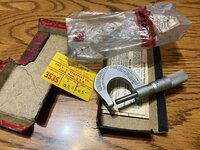
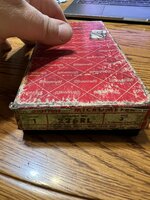
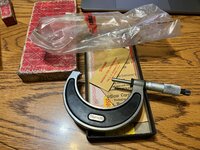
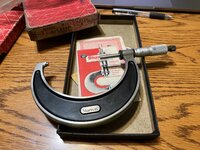
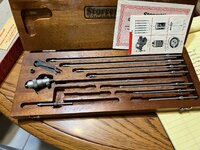
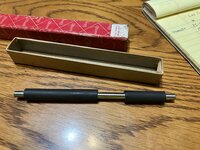
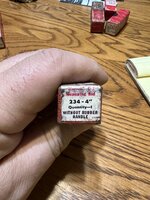
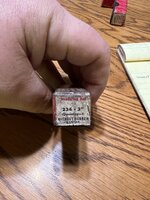
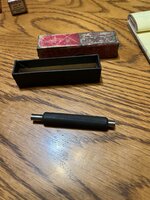
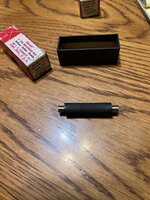
I just found this in a cabinet I inherited. I never heard of the brand. It seems like high quality, as it is pretty heavy.
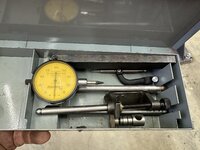
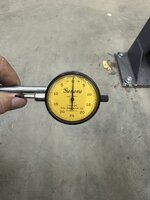

Very cool. Never heard of that CDI before.
But yes, it does look like it's an OHV pushrod measuring / lifter preload type setup.

-Might have belonged to a man she was fond of as that indicator might have been special to him. Speculation and hope that's not offensive in light of her passing. My condolences for the loss to you and your family.The odd thing is, this was my aunt that passed. I have no clue who this would have belonged to. She never married, and spent her life living with her mom. I will have to ask my siblings if they have any idea who could have owned it.
-That's the thing about items like that, it's difficult to expect those items to be important to someone that doesn't used them a lot. They're special to those in the trades but next to useless for most office workers. I'd enjoy seeing the photos if you have the time.I was also given an entire set of old Starrett calipers, and other items, up to and including 6 inch i think. This was from my dads cousin's husband who was a Cummins truck mechanic. His son, my cousin, said his dad would have wanted them to stay in the family. He took meticulous care of all of his tools. I will pass them down to my son, and he has already been told they MUST stay in the family, and NEVER sold. I can post pics of them all if anyone is interested.
She wasn't from Pasadena, by any chance?The odd thing is, this was my aunt that passed. I have no clue who this would have belonged to. She never married, and spent her life living with her mom. I will have to ask my siblings if they have any idea who could have owned it. And in the cabinet, is a lot of different things. This was the only item that had to do with precise measurement. All kinds of just misc stuff.
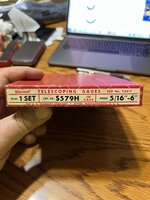
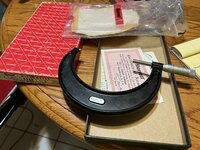
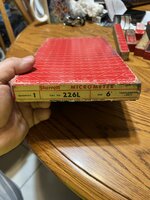
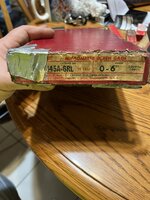
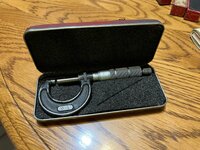
I was also given an entire set of old Starrett calipers, and other items, up to and including 6 inch i think. This was from my dads cousin's husband who was a Cummins truck mechanic. His son, my cousin, said his dad would have wanted them to stay in the family. He took meticulous care of all of his tools. I will pass them down to my son, and he has already been told they MUST stay in the family, and NEVER sold. I can post pics of them all if anyone is interested.
Still in business, now in Des Plaines. No indication of Snap-on ownership.
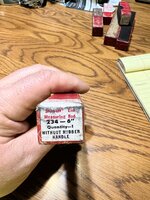
I've got a few shop things that were made or owned by someone that engraved their name on the item to prevent theft or proudly display that they made the item (angle plate, parallels, etc.) as it was common practice for all of us. Whenever I drag out one of these items I always pause a moment to consider the life and/or career of that long gone toolmaker. Might sound silly but I always greet them "morning George, feel like helping me today?" as a small homage to those that have gone before. I've got a Prentis carriage maker vise that's over 100 years old (estimated here) that prods my imagination at times. Same goes with any of the antique furniture, weapons, and artwork that's arrived here in my house. We don't really own any of this, we're just caretakers for the next generation of things if we want to be. Uncle Leo would probably be pleased with you being reminded of him that way.The last micrometer, before the measuring rods, was probably his go to, everyday use tool. It was the really dirty case. So I am thinking he kept all of the others for the important stuff. I didn't realize all this was needed to work on Cummins' engines. I was an Oldsmobile mech when I was young, so I am familiar with gassers. Then I owned trucking, excavating, and construction companies, and did most of my own work, but not internal diesel work. Anyway, I really appreciate owning these, and every time I use one, I think of uncle Leo, which I guess is the whole point anyway. I don't use them much, but when I do, I call my cousin to thank him again and let him know I was thinking of his dad.
Never seen the set with the mag base stored in the box. That's very cool. Your ready to go to work with all that.
I was in the trade for many years. Some of that time was in the company's engine building shop. I have never heard of what you posted. I have used a dial gauge to set valve clearances. For what little difference it might make, a pushrod can be measured with a tape measure. The difference in length can often be compensated for with valve clearance adjustment clearance.
I grew up and lived in Evergreen Park for over 50 years, then I moved south. Where did you work/live? Are you still there?I enjoyed seeing them as I took a little trip down the amnesia lane of my career as a toolmaker in Chicago.
I grew up and lived in Evergreen Park for over 50 years, then I moved south. Where did you work/live? Are you still there?
I have to say, I REALLY miss the food back home!!! The food here is bad, at best. LOL
Howdy neighbor! Where in TN? Oh man, you said it. As an Italian, yeah............ Needless to say, every time we get back to old home, we bring multiple coolers full of food. I can get very good Italian beef from Restaurant Depot in Nashville, but as far as Italian sausage......... NOTHING. I couldn't even find hot giardiniera here, so I started making my own, and I like it even better than store bought. As far as Mexican, there are a dozen or more in my town, and I can't even find that decent here. My aunt was Mexican, and I learned from her, and I will put my taco's up against any around me. Yeah, I play chef quite often. LOL I will be building a commercial kitchen after I build my forever home.I'm an ex NYC'er in TN. Believe me, I feel your pain on food, especially Italian food, LOL. We have plenty of good to great Mexican food here though.
-I lived all over the Chicago area from the Northside (Rogers Park & Bucktown) to the West (Logan Squre, Elmhurst & Desplaines) to the Southwest (Burr Ridge & Lockport), Northwest (Schaumburg, Arlington Heights) and many more I'd have to dredge the memory for. Same for work. 95th and Stony Island (Verson Press) Lake & Halsted (Zimmerman Brush) A lot of the shops around Schiller Park (Wilton & Wisconsin Tool and Stamping) and Franklin Park (Atols Tool and Mold & A-1 Tool). Several factories around Chicago like Eklind Tool (hex keys) off Diversy and the river. Elkay Manufacturing in Broadview (SS sinks). My last job in the Chicago area was at US Tobacco (Skoal/Copenhagen)I grew up and lived in Evergreen Park for over 50 years, then I moved south. Where did you work/live? Are you still there?
I have to say, I REALLY miss the food back home!!! The food here is bad, at best. LOL
Shoot, try living in the Inland Northwest, where the only spices are salt, black pepper and mayonnaise! Acceptable food colors are brown, gray and white--green is OK if cooked until unrecognizable. I cook for myself out of self-defense.-I lived all over the Chicago area from the Northside (Rogers Park & Bucktown) to the West (Logan Squre, Elmhurst & Desplaines) to the Southwest (Burr Ridge & Lockport), Northwest (Schaumburg, Arlington Heights) and many more I'd have to dredge the memory for. Same for work. 95th and Stony Island (Verson Press) Lake & Halsted (Zimmerman Brush) A lot of the shops around Schiller Park (Wilton & Wisconsin Tool and Stamping) and Franklin Park (Atols Tool and Mold & A-1 Tool). Several factories around Chicago like Eklind Tool (hex keys) off Diversy and the river. Elkay Manufacturing in Broadview (SS sinks). My last job in the Chicago area was at US Tobacco (Skoal/Copenhagen)
I don't live in Chicago any more, I got offered a contract assignment in Product Design for Whirlpool at the old Maytag plant in Cleveland (Tennessee), When the contract was over I stayed and have been a proud resident of the great state of Tennessee for the last 17 years. I now get to live where I used to take motorcycle vacations to.
I love living here but know what you mean about the food here, I miss shopping at Caputo (off North Ave. near Winston Plaza) for real Parmesan cheese (instead of sawdust in a cardboard can from Kraft) the different ethnic grocery stores and restaurants. There have been times when I'd have bought airline tickets for someone that knew how to make a decent pizza or cooked with butter instead of lard, I lucked out when I started dating a country girl that cooks anything I can dream up.
I still have some contacts in Chicago and it's gone straight into the dumpster from what I'm told. Besides the food I'll miss Chicagofest at Navy Pier, the Chicago Northwestern Railroad train station, the way Fulton Market used to be, and even the local greasy spoon diners where you got 3 eggs and a ribeye steak with coffee for $4. But all that's been gone for several decades and I'm glad I got to participate while young enough to enjoy it. Besides, I always wanted to live in an area like where I am now, I've been very lucky riding the roller coaster. Hope things are well for you, and yours.
-Some people start off thinking "With .0005 I'll be more precise" only to realize later that .0005 is a really small distance that can be difficult to use in a motor/machine adjustment, There isn't commonly available shim stock or shims in .0005 increments. A Bridgeport mill won't cut that close either (you're fooling yourself if you think so). Working to .0005 is the domain of precision grinding. I've got .0001's indicators that I didn't use very often because the work tolerance was usually +/-.0005 and using a .0005 indicator was faster getting something dialed in.Thank you for all the photos. Interesting that the Geneva measures .0005 unlike the others.
Good post on accuracy.-Some people start off thinking "With .0005 I'll be more precise" only to realize later that .0005 is a really small distance that can be difficult to use in a motor/machine adjustment, There isn't commonly available shim stock or shims in .0005 increments. A Bridgeport mill won't cut that close either (you're fooling yourself if you think so). Working to .0005 is the domain of precision grinding. I've got .0001's indicators that I didn't use very often because the work tolerance was usually +/-.0005 and using a .0005 indicator was faster getting something dialed in.
A very good millwright I knew got a precision machine level for installing large metal working machinery thinking he'd get the machines spot on. The level was good for 10 seconds of arc, that's .0005 per foot. He found it a huge PITA to work with as it took a long time to settle down and any little vibration (truck rolling past, other machinery in building, etc.) would unsettle the reading. He sold it and got a different level that was good to 80-90 seconds of arc, that's .005 per foot. He found it much easier/faster to get a reading and it really didn't affect the quality of his work.
It's really about matching your tools to the expected work results and how you like to perform that work. Adding precision with no real benefit is like absurdly tight tolerances to a less critical component detail on a blueprint. It's wasted time/energy. He may have even bought it because, like me, thought it to be a cool instrument that was made locally. If I was still in the trade and lived in Chicago I'd want it.
For what kinds of tasks is such a sensitive level needed? Doesn’t seem very practical to say the least!-Some people start off thinking "With .0005 I'll be more precise" only to realize later that .0005 is a really small distance that can be difficult to use in a motor/machine adjustment, There isn't commonly available shim stock or shims in .0005 increments. A Bridgeport mill won't cut that close either (you're fooling yourself if you think so). Working to .0005 is the domain of precision grinding. I've got .0001's indicators that I didn't use very often because the work tolerance was usually +/-.0005 and using a .0005 indicator was faster getting something dialed in.
A very good millwright I knew got a precision machine level for installing large metal working machinery thinking he'd get the machines spot on. The level was good for 10 seconds of arc, that's .0005 per foot. He found it a huge PITA to work with as it took a long time to settle down and any little vibration (truck rolling past, other machinery in building, etc.) would unsettle the reading. He sold it and got a different level that was good to 80-90 seconds of arc, that's .005 per foot. He found it much easier/faster to get a reading and it really didn't affect the quality of his work.
It's really about matching your tools to the expected work results and how you like to perform that work. Adding precision with no real benefit is like absurdly tight tolerances to a less critical component detail on a blueprint. It's wasted time/energy. He may have even bought it because, like me, thought it to be a cool instrument that was made locally. If I was still in the trade and lived in Chicago I'd want it.
I know I didn’t mention it, but you can use a level to detect twist in a surface. Forget about actually leveling something and think instead of measuring flatness of a large or complex surface.For what kinds of tasks is such a sensitive level needed? Doesn’t seem very practical to say the least!
We used a set to locate a pair of machine, one in the 10 ton range with a series of 13 movable shelves inside, that need to line up with a sliding shelf on the other machine. Each shelf of the 13 was suspended from the top shelf, was 0.8 x 1.2 meters, and weighed 200# plus wet weight. The shelves had to collapse and stay planar during the unloading process, and meet within some fraction of a mm to function correctly. The hydraulic ram moving everything was 4ish meters long. The location device on the ram height could read to a fraction of a mm also. The two 0,8m edges between the sliding shelf and the lifted shelves had to meet to that same tolerance, or the expensive product would trip at the step and fall.For what kinds of tasks is such a sensitive level needed? Doesn’t seem very practical to say the least!
I wasn't there to see it (Dang!) but, at a former employer, they were setting the first column section of what was going to be a 300' tall amusement ride. That first section had to be dead nuts plumb. The construction guy described it for me but, for insurance reasons, I wouldn't have been able to be there.For what kinds of tasks is such a sensitive level needed? Doesn’t seem very practical to say the least!
-I was a tool and die maker in a former life, a mechanical designer for the last 16 years before retiring. I was not the best in either vocation but I tried to apply myself and learn all I could from those that knew more than I did.Sounds like you were a pro.
-Same for me, I rather enjoyed locating a piece in a 4 jaw. Sometimes a job called for square, parallel, and to size within +/- .0002 so I'd drag out the tenths indicator(s). Using them with large stamping presses in the factory meant taking readings in between press strokes and that always multiplied the time on the job. There's types of machining that work closer than +/- .0002 but that all seemed so exhausting that I tried not to pursue work like that. In my mini machine shop, nothing including me can be trusted.For the rest of us, we are often stuck with other uses for our tenths indicators. Lathe work, inspection of tools, sweeping surface plates, etc.

-The best machine in my basement shop is also second hand. It cost 300k when new and I couldn't afford something like that. It came from Japan and sat in a climate controlled room for almost it's entire life. I'm the second owner.All my tools are either Chinese or very second hand.
-That's why I'm not a big fan of machinery from China. I'm not a tooling snob that insists others buy the most expensive machines, I just don't trust the spotty quality of Chinese machinery to recommend that others spend hard earned cash on a "maybe".Chinese machine tooling is VERY hit and miss.
-Ok, now you've piqued my curiosity. Details please, photos get bonus points.Some of the tools I rely on are 50-100 years old.
-This summer, I swapped the spindle bearings on my bridgeport. It’s kind of a big job, or at least it was for me.

-That's a good application for them, testing run-out on a spindle bearing install. I would have done the same. You may not need a tenths indicator very often but when you do there is no substitute.I inspected the spindle runout before and after replacing the bearings to the tenths. Tenths indicators are sensitive, will find scratches, in my case wear or corrosion, inside my R8 taper etc. But they are helpful to have to let you know what’s going on.
-I suggested that in my first post. A jeweled movement maintains better reliability over the years than movements that aren't jeweled due to lower friction=less wear. Less wear means the resolution stands a better chance of being accurate over the span of a career. Lower cost indicators are almost considered disposable and some repair facilities won't even work on them. Always a good idea to check on this if you're considering a purchase that will be part of your daily job. If it's only for use once in a great while than a more "budget friendly" indicator might make more sense. I have expensive and not-so-expensive indicators.I was thinking the accuracy may be attributable to the jeweled movements if that is what it has. If their device has that kind of accuracy why not promote it, an indicator face can always still measure thousands.
-Large/expensive machinery (CNC or older manual ones) that have either travel distances or advertised capability of tight tolerances need that sort of precision at installation or there's wailing and gnashing of teeth. Bow, warp, and twist become more permanent in the machine over time if it's not set properly during installation. When that happens your tolerances won't live up to the advertised capability.For what kinds of tasks is such a sensitive level needed? Doesn’t seem very practical to say the least!