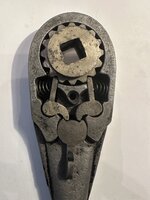
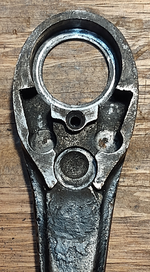
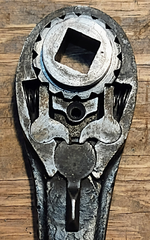
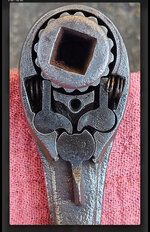
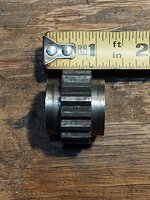
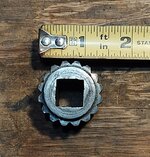
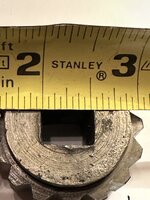
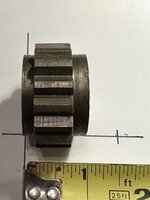
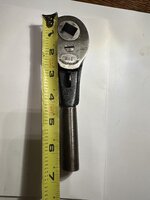
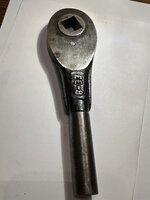
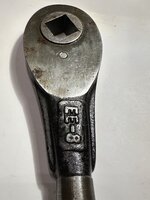
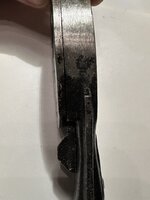
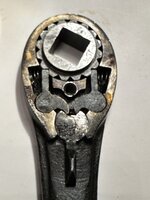
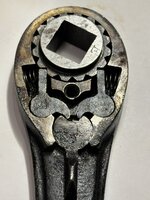
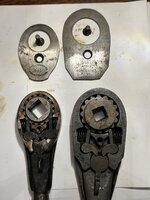
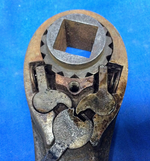
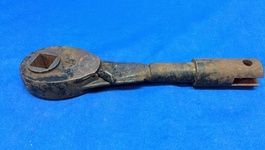
Guys, FWIW, I see at least three (3) differences in the machining of the cavities housing the springs for the pawls and the pawls.
/ The ratchet in post #621 (one of Ben's, if I am following correctly) has a very small, thin, but sharp protrusion separating the cavity where the pawl rotates from the cavity holding the springs.
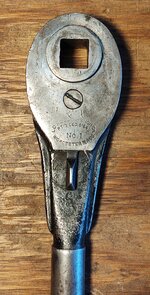
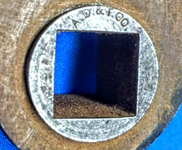
/ The ratchet in post #617 (Baldy's "E.E. JOHNSON" / "MAN'F'R" ratchet) has a more pronounced but rounded protrusion performing the same function
/ The ratchets in post #619 (pics 2 & 3) and in post #625 (
@MR.X 's) have no protrusions.
If there is a sequence to these differences, and if the sequence goes from no protrusion to
some kind of protrusion, which
@MR.X 's rat sourced from Lowell certainly helps suggest, I suspect it was to prevent the base of the spring from slipping down and putting pressure on the pawl in contact.
I'm not sure if any of these differences are big enough to necessitate a deliberate change in the blueprint in the drafting department and a change order for the milling of that piece on the line or just a milling variance. It's "negligible" (a common engineers' term, believe it or not, usually associated with tolerances!

) from the perspective of an overall manufacturing or marketing perspective. No wholly new dies, jigs, processes, or machines required. Also negligible in the context of patents and patent inspectors.
Having said that to emphasize sufficient caution for what I say next..., IF there is any credence to the protrusion, it actually helps suggest that
@four.cycle could be right, after all. Not in the way he intended (common practice), but certainly accurate. Several (or at least more than one) machinists may have made a few pre-production variants. Or maybe it was just one, the irrepressible E.E. Johnson, and his "good idea" pre-production variant was marked with him as the MAN'F'R to separate it from other variants. Unnecessarily wordy, and flighty, but functional.
His. And that plays into Baldy's theories about E.E. having an even larger pre-production role in deliberate v
ariance (internal R&D and experimentation). Also jibes with mine about these being side-projects or one-offs.
If you guys looked long and hard enough, I suspect you might find other small differences, not just in the presence and shape of the protrusion, but other features. Empirically, it's possible for you to reconstruct a precise sequence of all the 1864 ratchet production
variants, but very difficult. It would require a statistically relevant number of examples - many dozens, before you could be satisfied that you're not missing any.
None of this impinges on ALL the ratchets above, including Baldy's, being unquestionably made on a line in a Lowell plant on Lowell machinery set up to manufacture a ratchet of the 1864 Moore patent design.