To avoid these ads, REGISTER NOW!

Solar for intermittent high drain things

JackOfDiamonds

Well-known member
Joined
Jul 31, 2020
Messages
706
Location
Idaho (USA)
I have an electric lawn mower. The charger draws several amps, but only runs for an hour to charge the battery, and that only once per week.

If I put a solar panel on my shed, with a buffer battery like one of those LifePo batteries that have a built-in battery management system, the solar panel will gradually charge up the buffer battery. But once that happens, how can I have it automatically start charging the lawnmower?

Basically I think a solar panel would generate enough energy in 1 week to charge up my lawnmower before I need to use it again. But I don't know how to make it automatically kick on the inverter to charge the battery in bursts.
 
To avoid these ads, REGISTER NOW!

Max

ALLIANCE MEMBER
Joined
Jun 16, 2018
Messages
3,351
Location
Georgia
Two options that I can see:
- Use an inverter that has a low standby current draw. As long as solar power minus standby power is greater than what you need to charge the battery you’ll be fine. (n this case you’d need a small timer -lugged into the inverter output that would turn on your charger to charge the lawnmower.
- Use a low current timer that runs off the battery natively (12V, 24V, 48V DC - whatever the battery is). Use that timer to turn on the inverter that charges the lawnmower.

I suspect that the first option will be easiest and will work fine.
 
OP
J

JackOfDiamonds

Well-known member
Joined
Jul 31, 2020
Messages
706
Location
Idaho (USA)
It sounds like what you are suggesting is using one of those Christmas tree timers to kick on the lawnmower charger on a fixed schedule (like, 10 minutes every 2 hours during the day or something). The only question is whether to put the timer before the inverter (more efficient) or after (probably cheaper).

I was looking for something slightly more intelligent, like "kick the inverter on when the battery gets to 80%, and turn it off when it runs dead and keep it off until the battery recovers". What you don't want is the inverter kicking on as soon as the battery barely gets above the minimum and then instantly draining it again.

The battery management systems in the solar batteries or charge management systems might already have this sort of feature. The battery generators like ecoflow have a "magic" solar input that take just about any voltage and manage the battery charging. It would be cool if they had a "magic" output that would automatically turn on only when the battery was within a certain range of charge.
 

kbeefy

Well-known member
Joined
Sep 14, 2013
Messages
3,455
Location
Harington, Eastern Washington
I think it would be hard to monitor the state of charge with active solar, as you would just see the charge voltage.
You can monitor the state of charge via the BMS if it has bluetooth, but I'm not sure how you could use that as a trigger for the inverter.

I think some sort of mechanical timer would be the easiest, But I would set it to come on once a week, not daily.

What voltage is the mower? Maybe you can use solar directly to charge it instead of a battery/inverter/charger.
 

BrandonV

Well-known member
Joined
Jun 9, 2023
Messages
4,030
Location
Arizona
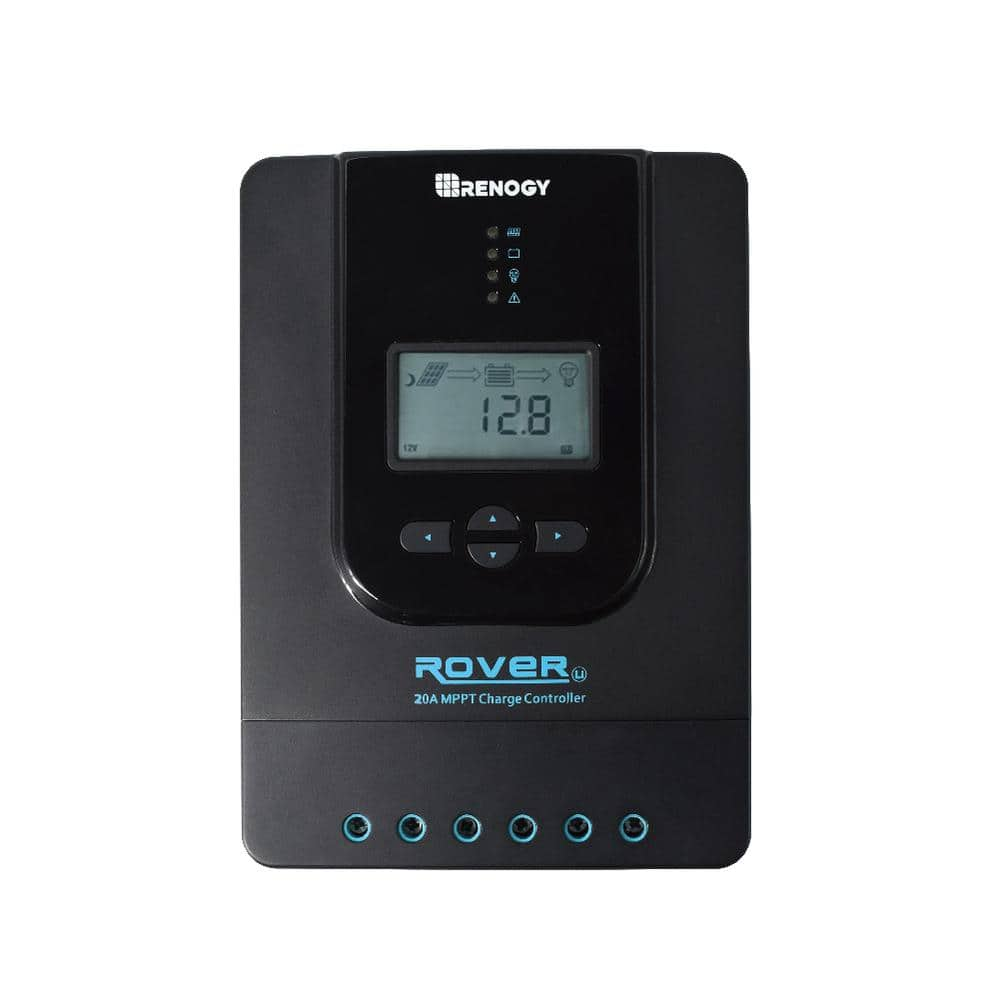
All depends on the solar charge controller.

The easiest way I see is to have a relay activated by the charge controller indicating the battery is full triggering the inverter to activate.
 

BillK

Well-known member
Joined
Aug 24, 2006
Messages
9,359
Location
Beautiful Southern Maryland
I am not sure I understand exactly what the solar is going to power ? Is it only going to be for charging the mower ? Or will the "buffer" battery be powering other things ?
 

pembol

Well-known member
Joined
Feb 13, 2014
Messages
274
What if you have a timer that you just set for the time it takes to charge you mower battery? You have an LiFePO4 battery that is always charged off your solar system that has ~2x the capacity of your mower battery. When you are done mowing, you put your battery on the charger, plugged into an inverter with a timer to the battery (or enable switch. You set the timer for 2x however long it takes to charge your battery, your battery charges then timer shuts off the inverter until the next time you need to charge?

Or even easier, oversize your solar panel (they are really cheap these days) and use a low idle consumption inverter and just leave the battery charge on all the time? I think there are some inverters with idle power usage on the order of 5W.
 
OP
J

JackOfDiamonds

Well-known member
Joined
Jul 31, 2020
Messages
706
Location
Idaho (USA)
Fair point it gets a lot easier if the buffer battery is at least as big as the mower battery. Then pretty much nothing special would be needed assuming the buffer battery generally stays full.

Now I'm wondering if Ryobi offers a solar generator based on their 40V batteries...then the mower battery just becomes the buffer battery.
 

walta

Well-known member
Joined
Jan 13, 2017
Messages
2,313
Location
Dutzow Missouri
Seems to me the buffer battery is expensive and over complicating the system.

There are a ton of very cheap solar charge control modules that will connect to the battery in the mower and the solar panel and keep the battery charged if there is enough sunlight.


Walta
 

WildBill

ALLIANCE MEMBER
Joined
Aug 20, 2021
Messages
2,028
Location
PNW
If you have an inverter connected to the buffer battery wouldn't you be the timer by plugging in the mower battery to charge? It should stop drawing much power once charged, then the buffer battery would have time to charge up because there wouldn't be a big draw until the next week when you use the mower again.

Just charging the mower battery directly from solar would obviously be better if you could.
 

ipgenie

Well-known member
Joined
Jan 29, 2020
Messages
562
Location
Idaho
I have a ryobi mower. Mine is a 48v system but yours might be a newer 80v system. You can get a handle like the one on the factory charger on Amazon, but you may have to break the little web in it for it to fit your charge plug, at least that's what people have done on the 48v mowers. You will need to wire your panel/panels so they can produce enough voltage to charge the mower battery directly. Wire the panels to a charge controller (that is compatible with your mower battery voltage) and the charge controller to the charge plug for the mower. Whenever the sun shines it'll charge the mower battery.

No need for the expense of the buffer battery and inverter. You'd need solar panels and a charge controller for that too so better to just set it up to charge the mower directly.
 

pembol

Well-known member
Joined
Feb 13, 2014
Messages
274
I would be cautious of trying to charge the mower batteries from solar directly. Power tool batteries are not the relatively safe LiFePO4 lithium chemistry that most solar systems are configured for - but are lithium cobalt cells which are the catch fire if poorly handled type.

The battery packs should have built in protections, but the specifics generally aren't documented, so unless you are very familiar with dealing with these batteries directly it maybe best to stick with the factory charger. Unless ryobi makes a DC charger for their batteries? We are increasingly seeing lawn care businesses around here switch to electric tools, which I assume means they have some way to recharge on their trucks - maybe there are DC chargers available?
 

dcg9381

Well-known member
Joined
Jun 20, 2018
Messages
11,883
Location
Austin, TX
If I put a solar panel on my shed, with a buffer battery like one of those LifePo batteries that have a built-in battery management system, the solar panel will gradually charge up the buffer battery. But once that happens, how can I have it automatically start charging the lawnmower?
I've worked with various inverters, even the EG-4s have settings where you can set the % of charge (or battery voltage) before it switches back to "inverter". And there is a setting to kick back to solar. Read the manual of your considered inverter carefully, but it's a pretty common use case.

Likely you'll be power a charger that is correctly spec'd for your battery type (perhaps you can use what you have). Or one where you can set the charge parameters for your battery type. Internal battery BMS is more for "balancing" the battery and may or may not have over-charge protections in the consumer device space.

But you're going to get 7+ days without sun (or very limited sun). And inverters have "idle draw" (24/7) so you'll likely need more panel and battery than you think.

This is a very expensive way to charge your law mower battery.. :)
 
To avoid these ads, REGISTER NOW!

APEowner

Well-known member
Joined
Oct 2, 2009
Messages
4,166
Location
Sunny, New Mexico
I think you're over complicating this.

If you use a typical solar setup with panels, a buffer battery and a charge controller you can connect an inverter to the load side of the controller and plug your mower's charger into the inverter. That'll just work. The controller will keep the buffer battery charged and if buffer battery level gets too low it'll shut off the load side until it recovers at which point it'll turn it back on.
 
OP
J

JackOfDiamonds

Well-known member
Joined
Jul 31, 2020
Messages
706
Location
Idaho (USA)
Seems to me the buffer battery is expensive and over complicating the system.

There are a ton of very cheap solar charge control modules that will connect to the battery in the mower and the solar panel and keep the battery charged if there is enough sunlight.


Walta

Like others have said, just use a DC charge controller set for the voltage of the mower battery. By far the easiest, best, and lowest cost way.

Directly charging the lawnmower battery with solar is not an option. I have no choice but to use the Ryobi AC-powered charger for that. So there will be an inverter in the system. You can't run an inverter directly off a solar panel (I don't think). So there has to be a buffer battery in the system to run the inverter. I don't mind having a buffer battery in the shed to run lights and other things so it's not a waste. It's just a question of how to run an inverter off of it "hands free".

Somebody mentioned that there are special inverters for solar that have these features. I'll have to look into that, but the cheap/dumb inverters I'm used to from harbor freight will just run the battery completely down.

I happen to have an EcoFlow Delta 2 camping power station. I never played around with the app before now, but I finally downloaded the app. It turns out you can set a minimum and maximum battery charge level, you can set the various output functions (AC, DC etc.) to time-out or stay on indefinitely, and you can even program it to come on automatically at various times of the day. So if I just buy one of these, I can program it to turn the AC outputs on at 9AM every day for 1 hour. I can set a minimum battery level of 30% or whatever, just so it doesn't ever drain itself completely dead, and that should take care of charging the lawnmower battery up, whether the EcoFlow is bigger than the mower battery or not.

Also you can set the AC outputs to auto turn off after X minutes of no load. I'm not sure exactly what "no load" means. If the the Ryobi battery charger pulls less than the "no load" threshold, I can simply program the EcoFlow to turn off the AC output after 30 minutes of "no load". According to my Kill-a-Watt, the Ryobi charger pulls 0.35W with a full battery on it. I'm doing a test now and we'll see if the EcoFlow turns off in 30min.

I don't want to actually use my EcoFlow for the shed, but I can buy another one as cheap as buying separate buffer battery and inverter.
 
OP
J

JackOfDiamonds

Well-known member
Joined
Jul 31, 2020
Messages
706
Location
Idaho (USA)
I think you're over complicating this.

If you use a typical solar setup with panels, a buffer battery and a charge controller you can connect an inverter to the load side of the controller and plug your mower's charger into the inverter. That'll just work. The controller will keep the buffer battery charged and if buffer battery level gets too low it'll shut off the load side until it recovers at which point it'll turn it back on.

I have yet to find a solar charge controller that can drive any load current itself. They usually have a "load" output, but it's only a signal output. You could use the "load" output to switch on an inverter. But the second problem is most inverters don't have any "enable" input to turn them on. So you would have to use a relay, and it would have to be a big gnarly like 100A relay, to cut on or off the inverter.

These show the inverter connected directly to the battery which wouldn't work. I assume you could use the "load" output to switch a relay though.


ipgenie

Well-known member
Joined
Jan 29, 2020
Messages
562
Location
Idaho
Which mower do you have?

Until about 3 years ago Ryobi riding mowers were all lead acid batteries and would be way easy to charge directly from solar panels and an inexpensive charge controller.

My Ryobi zero turn was lead acid, I converted it to lithium this spring when the lead batteries wore out. It would be very easy to charge it directly off solar panels with a 48v charge controller that's configured for lithium. I've done exactly this with a golf cart. Converted it to lithium and replaced the shade cover with two large panels. If it's parked outside in the summer, it never does need to be plugged in.

If you have the 80v system, it's trickier but could be done.

Solar to a buffer battery and inverter will work too, just more parts and expense.
 

ipgenie

Well-known member
Joined
Jan 29, 2020
Messages
562
Location
Idaho
In that case, you can get a cheaper "solar generator" (such a dumb term since they really don't generate any power), something like your EchoFlo, that has solar input to charge it and also has about double the capacity of your Ryobi battery.
Even small solar will keep the inverters battery topped up through the week and whenever you finish mowing or trimming, there will already be enough capacity to fully charge the Ryobi battery so just plug it in and switch on the inverter. Timing out when there is no load is a positive. It'll fully charge your Ryobi battery using its built in battery, then automatically switch off when the Ryobi is charged.

I just have a couple of spare Ego batteries in the shop and I swap them out when the ones on the push mower/trimmer/blower/chainsaw run down. Getting another charger and a couple of extra batteries to put in the garage/shop would be a cheaper option than charging with solar but it could be a fun little project if it's what you want to do.
 

mike93lx

ALLIANCE MEMBER
Joined
Dec 9, 2013
Messages
37,849
Location
Richmond, VA
I had these same thoughts when I was doing my yard with all ego gear. Felt like it would be nice to run the gear all off solar... But the complexity of implementation made it impractical when power was readily available. Do you have something else at the house/shop that is a more consistent draw that you could use solar for? You get the benefit of generating enough power to offset your OPE usage, but in a much simpler and cheaper setup. Maybe a fridge, lighting, a fan, etc?
 
Last edited:
OP
J

JackOfDiamonds

Well-known member
Joined
Jul 31, 2020
Messages
706
Location
Idaho (USA)
I don't care about saving my electric bill, or saving the environment. My location has very cheap electric that's mostly hydropower anyway. I just want power in my shed, which is far from the house. Tired of fishing around in the dark shed or walking back to the house to pit batteries on chargers. Got some real first world problems here.

Making a trench, running a new circuit and adding power to the shed would cost a couple thousand dollars.

I just bought a $70 solar panel. I think I can use that with the ecoflow unit I already have and be able to run lights and charge all my tool batteries out there. I was just using the ecoflow as a big battery bank. I didn't realize it was a full, programmable solar charge controller as well.
 

mike93lx

ALLIANCE MEMBER
Joined
Dec 9, 2013
Messages
37,849
Location
Richmond, VA
I don't care about saving my electric bill, or saving the environment. My location has very cheap electric that's mostly hydropower anyway. I just want power in my shed, which is far from the house. Tired of fishing around in the dark shed or walking back to the house to pit batteries on chargers. Got some real first world problems here.

Making a trench, running a new circuit and adding power to the shed would cost a couple thousand dollars.

I just bought a $70 solar panel. I think I can use that with the ecoflow unit I already have and be able to run lights and charge all my tool batteries out there. I was just using the ecoflow as a big battery bank. I didn't realize it was a full, programmable solar charge controller as well.
How far is the shed that a single circuit costs a couple grand? Or is the issue thag you would have to hire it out?
 
OP
J

JackOfDiamonds

Well-known member
Joined
Jul 31, 2020
Messages
706
Location
Idaho (USA)
Have to rent a trencher $150 minimum; code requires wire to be like 24 inches deep for direct burial wire. This also passes through several sprinkler lines which would have to be re-done.
Direct burial wire 12/2 would be about $200
Sub-panel, entrance fixtures, circuit breaker, etc. etc. would be another hundred or two
Permits $100

Ok maybe closer to a grand if I do it myself. Currently I'm in it for about hundred for the solar panel and some wiring.
 

mike93lx

ALLIANCE MEMBER
Joined
Dec 9, 2013
Messages
37,849
Location
Richmond, VA
Have to rent a trencher $150 minimum; code requires wire to be like 24 inches deep for direct burial wire. This also passes through several sprinkler lines which would have to be re-done.
Direct burial wire 12/2 would be about $200
Sub-panel, entrance fixtures, circuit breaker, etc. etc. would be another hundred or two
Permits $100

Ok maybe closer to a grand if I do it myself. Currently I'm in it for about hundred for the solar panel and some wiring.
Plus another ecoflow, it sounded like
 
OP
J

JackOfDiamonds

Well-known member
Joined
Jul 31, 2020
Messages
706
Location
Idaho (USA)
Ok I think I have a setup I'm happy with.

I bought a 100W Renogy solar panel for $70. It's mounted vertically on the side of the shed, roughly facing south.

Ecoflow delta 2 800Wh solar generator (already owned for camping, but was about $400). Placed on a shelf inside the shed, solar panel plugged directly in. I also have a River 3, which is like 220Wh. Either one works the same.

The Ecoflow is programmed to never turn off the 12V outputs. The shed 12V lighting circuit (made with RV lightbulbs inside, cheap 4x4 floodlights outside) is plugged into the Ecoflow cigarette lighter plug using the Ecoflow's own XT60 charging cord reversed. The lighting circuit used to run on drill batteries before this, and still has the drill battery input, so I can switch back to drill batteries if needed. Such as if I take the Ecoflow for something, I just plug in the drill battery so I still have lights.

Interestingly, the solar panel is a nominal 12V panel. So if I plug the solar panel directly into the lighting circuit, bypassing the battery and everything, it runs the shed lights fine just from the solar panel, assuming it's sunny out. Which is kind of fun but silly.

If I were starting from scratch, I could have wired the shed with 120V lights, because the EcoFlow has an inverter. But then for convenience, I would have to leave the EcoFlow inverter on all the time, which is less efficient, and would have to wire the shed lights to 120V standards. I actually wired the shed lights with standard 14ga romex and house light fixtures, even though it's 12V, but true 120V wiring standards would still require GFCI and a "real" breaker panel. The exterior lights are 12V LEDs which were dirt cheap compared to exterior 120V lighting, and this way I still have the drill battery option. If I ever run an electric circuit from the house to the shed, it will be an easy task to convert the shed to 120V.

In a normal winter day I get about 220 Wh of energy. One of the mower batteries are 240Wh each, so there's typically plenty of energy to run everything.

My Milwaukee 18V and Ryobi 40V battery chargers are mounted to the wall above the Ecoflow and plugged directly into the many 120V outlets on the Ecoflow. When full, the big Ecoflow has enough capacity to fully charge both 40V mower batteries, but this setup should would work with the smaller Ecoflow even if it can't charge the mower battery in 1 day, it should charge it before I need the mower again.

Whenever I put on a tool battery to charge, I just hit the inverter button on the Ecoflow to turn the inverter on. I have the Ecoflow programmed to cycle the inverter outputs one hour per day as a calendar task. So whether I remember to turn on the inverter outputs or not, the mower battery gets charged and then the inverter outputs turn off most of the time to save power. The tool chargers only pull about 300mW each when idling. Unfortunately that's too much to trigger any of the Ecoflow's "auto turn off" functions. It's still not very much drain though, so if I did leave the inverter on full-time, it would probably be OK. Also, I have programmed in a 30% "reserve" minimum charge level, just so that if solar is low or something, I'll keep 30% of reserve capacity in the Ecoflow so I can still override and have lights or whatever.

I have small 150W or 300W inverters for all of my drill batteries. So my whole tool battery collection is usable capacity in case of an outage. In theory, I could even steal back the energy from the tool batteries by using their inverters to re-charge the Ecoflow, but that would be a bit silly.

The best part of the setup is when I need the Ecoflow for something else, I just unplug it and take it. When I want to trim trees with my sawzall, setup my table saw or chop saw outside, power a work light, car battery charger, soldering iron in my neighbor's driveway, power the slow cooker for the potluck, radiant heater on the patio, or other things I used to run an extension cord from the house for, I just grab the Ecoflow instead.

The major flaw is the shed experiences extreme temperatures. The Ecoflow has a storage temperature of (14°F - 113°F), and I use it discharging down into the teens with no problem. But below 35C, it won't charge the batteries. This means on cold winter days it doesn't charge from solar. It's also not a problem because during the winter, I hardly use any power and the battery alone would last a week or two. But if I wanted to, I would put it in styrofoam cooler with a reptile heater and program it to keep itself warm.
 

Carchie

Active member
Joined
Apr 24, 2018
Messages
36
I have an electric lawn mower. The charger draws several amps, but only runs for an hour to charge the battery, and that only once per week.

If I put a solar panel on my shed, with a buffer battery like one of those LifePo batteries that have a built-in battery management system, the solar panel will gradually charge up the buffer battery. But once that happens, how can I have it automatically start charging the lawnmower?

Basically I think a solar panel would generate enough energy in 1 week to charge up my lawnmower before I need to use it again. But I don't know how to make it automatically kick on the inverter to charge the battery in bursts.
I stumbled on this while searching for a similar setup for my shed tools. Even though it's an older post, I was curious if you ever got that auto-trigger working or what solution you ended up with?

I have almost the exact same LiFePo buffer rig for my high-drain chargers. The trick is setting the inverter's voltage cutoff high enough so it only kicks in when the solar panels have topped off the buffer battery.

Since I worked with Wolf River Electric during the installation process for my main setup in WI, I got their help with the specific charge controller triggers to make it all automatic. It’s been running for a year now without me touching a switch.
 
Last edited:
OP
J

JackOfDiamonds

Well-known member
Joined
Jul 31, 2020
Messages
706
Location
Idaho (USA)
The setup is still basically working perfectly. Shed lights work, my mower and tools stay charged no problem.

The single flaw is the ecoflows won't solar charge during cold winter periods. I'm barely using power in the winter so it's actually a non-problem. But just to prove a solution, I put the small ecoflow in a Styrofoam cooler with a lightbulb and a $5 eBay temperature controller set to keep it at least 40F. It worked perfectly and the ecoflow was easily able to overcome the self heating energy with solar intake. It's really silly they don't already have internal heaters. But this year I doubt I'll bother because the battery lasts for weeks even when it's not charging on solar.
 
To avoid these ads, REGISTER NOW!
Top Bottom