

You are using an out of date browser. It may not display this or other websites correctly.
You should upgrade or use an alternative browser.
You should upgrade or use an alternative browser.
Paper Gaskets
- Thread starter chilly13
- Start date
four.cycle
Well-known member
four.cycle
Well-known member
head gasket bolts? 
you said you were replacing a PAPER gasket which I understood to be the lower CASE gasket on the engine CYLINDER.
The HEAD gasket on a Briggs engine is a metallic-faced sandwich-type gasket - different animal, different torque value.
you said you were replacing a PAPER gasket which I understood to be the lower CASE gasket on the engine CYLINDER.
The HEAD gasket on a Briggs engine is a metallic-faced sandwich-type gasket - different animal, different torque value.
firebirdparts
Well-known member
that does seem quite loose for a head bolt. I am thinking those are 5/16 or 3/8" head bolts, but I guess it depends on engine size, maybe.Well I think the head gasket bolts are not very tight. I set the torque wrench to 140 inch lbs just to see if I could get there. Felt it slighty budge at 120 so theres that. Must be around 115 or so
I think the case bolts will be 1/4".
Confused on the "get there" comment. You should be able to get to 140 inch pounds with one finger, but it's kind of the limit for one finger.
I have an engine gasket kit. Im replacing everything.head gasket bolts?
you said you were replacing a PAPER gasket which I understood to be the lower CASE gasket on the engine CYLINDER.
The HEAD gasket on a Briggs engine is a metallic-faced sandwich-type gasket - different animal, different torque value.
I was seeing where the torque wrench got too before I felt the bolt move. I just guessed 140 in lbs and set it to that thinking I could complete 140 in lbs before I had to reset it with a higher torque. I felt it move early though. Double checked, 115 inch lbs and they slighty tighten. I was careful. I agree, thats so very loose. I wonder if this has been worked on before.that does seem quite loose for a head bolt. I am thinking those are 5/16 or 3/8" head bolts, but I guess it depends on engine size, maybe.
I think the case bolts will be 1/4".
Confused on the "get there" comment. You should be able to get to 140 inch pounds with one finger, but it's kind of the limit for one finger.
Oh btw, head bolts are 1/2" lmao
BillK
Well-known member
Just so you know, bolt size is not the size of the socket or wrench that goes on it. It is the size of the actual threaded fastener. If you are using a 1/2" wrench it is probably a 5/16" bolt but could be anything.Oh btw, head bolts are 1/2" lmao
Wow, thats good to know. Thanks! Guess im not sure thenJust so you know, bolt size is not the size of the socket or wrench that goes on it. It is the size of the actual threaded fastener. If you are using a 1/2" wrench it is probably a 5/16" bolt but could be anything.
Another question. So as i was taking it apart, i notice these little pieces in the bottom of the generator side. Then I see more of these pieces with a spring connected to them. With some googling, I find theyre brushes. They are broken in half. Trying to google if they need replacing or if I can file them down to fit nicely. I guess I broke them when separating, not sure though.
This is exactly why I joined this forum. Your guys knowledge is valuable and i appreciate everyones help!
I filed them down, and got them back in place. We will see...
This is exactly why I joined this forum. Your guys knowledge is valuable and i appreciate everyones help!
I filed them down, and got them back in place. We will see...
Last edited:
four.cycle
Well-known member
@chilly13 - I only work on walk-behinds, and only on the smaller engines that are on walk-behinds, so I don't deal with starter motors or alternators. I cannot address your question on the brushes, other than to say you should be able to procure most any part for that motor, if not from a local lawnmower shop then through jackssmallengines.com or partstree.com
Your "head bolts" are most likely 5/16-18 USS coarse thread, or 3/8-16 USS coarse thread. I am guessing you're using a 1/2" wrench or socket to remove them.
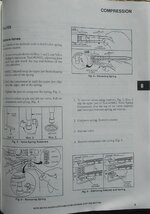
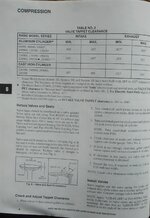
Torque values for head bolts on the pages below. I will be out of town tomorrow.
Your "head bolts" are most likely 5/16-18 USS coarse thread, or 3/8-16 USS coarse thread. I am guessing you're using a 1/2" wrench or socket to remove them.
Torque values for head bolts on the pages below. I will be out of town tomorrow.
Attachments

Thank you for your help!@chilly13 - I only work on walk-behinds, and only on the smaller engines that are on walk-behinds, so I don't deal with starter motors or alternators. I cannot address your question on the brushes, other than to say you should be able to procure most any part for that motor, if not from a local lawnmower shop then through jackssmallengines.com or partstree.com
Your "head bolts" are most likely 5/16-18 USS coarse thread, or 3/8-16 USS coarse thread. I am guessing you're using a 1/2" wrench or socket to remove them.
Torque values for head bolts on the pages below. I will be out of town tomorrow.
BurtEggley
Well-known member
- Joined
- Oct 8, 2024
- Messages
- 888
set the tools down and watch some of this fellow's work. Probably all your answers will be there. https://www.youtube.com/@jcondon1
Miss the Pontiacs
Well-known member
Side story. I remember my Dad working on an air cooled Tecumseh engine. On one of the first International Self Propelled swathers. He sends me to the house for a cereal box, he says just the box. I kind of thought what the hell now.
He takes a ball peen hammer and slowly cuts out the gasket using the actual head. Then he cranks it on farm tight. He never in his life owned a torque wrench.
Life was certainly simpler, you just got it done.
He takes a ball peen hammer and slowly cuts out the gasket using the actual head. Then he cranks it on farm tight. He never in his life owned a torque wrench.
Life was certainly simpler, you just got it done.
I second the idea of watching some videos of a James Condon on you tube. especially testing the generator head since you seem to have some issue with brushes .
Yes, I like his videos, good quality. I didnt get it done sadly and have to go do a 12hr shift. Been working 6 days a week for a few months now and my garage and spare room looks like a tornado has destroyed everything. Im having trouble taking the flywheel off, shes pretty stuck. Before I called it a night though, I felt to see how tight one of the case bolts was and let me say, it wasnt loose enough to back off with my fingers but I mean the wrench did BARELY anything and I got it to loosen. Possibly the reason behind the oil leaks to begin with? We will seeI second the idea of watching some videos of a James Condon on you tube. especially testing the generator head since you seem to have some issue with brushes .
Good recommendation, his videos are really good quality. Thanks!set the tools down and watch some of this fellow's work. Probably all your answers will be there. https://www.youtube.com/@jcondon1
The case gaskets are sometimes used to set crank end play, so just sealer could be problematic. It would be interesting to do a trial assembly with sealer and measure the play. I'd certainly trust a good sealant to be less leak prone than a paper gasket.I have to wonder about skipping the paper completely and using a modern sealer.
Mick56
Well-known member
I have made many, many gaskets out of cereal boxes. Even when I had some rolled up gasket material, it was hard to get it to lay flat to work with.
Mick56
Well-known member
To select the correct case gasket, you would want to first assemble it without any gasket, and measure the crank end play. A dial indicator is the easiest, but a feeler gauge can also be used with a little thinking. After you get the side play figure, you would want to use a gasket that will put the side play at around .010.
That's good info, thanks man!To select the correct case gasket, you would want to first assemble it without any gasket, and measure the crank end play. A dial indicator is the easiest, but a feeler gauge can also be used with a little thinking. After you get the side play figure, you would want to use a gasket that will put the side play at around .010.
Alright, update for anyone who's curious.
I didn't have to work this weekend, so I went full throttle into this thing and let me tell yall, I learned a lot.
Lapping Valves, how the magneto works, and the internals of the generator just to name a few. I fell short of changing the case gasket, I couldn't remove the stator on the generator side (at least I think that's what it's called, that or the rotor from what James Condone on YouTube calls it.) It's been real fun actually but now that it's all put back together, I still can't get it to start. I have spark, I believe I have fuel (I changed all the fuel lines, filters, and cleaned the carb. I changed the oil, admittedly, after looking through some of the holes like the oil guard, its caked with sludge in the bottom....wish I could have gotten it split. I called it a night but was coming here for some more advice. The on/off switch was broken and missing some of the connectors, so I replaced it (verified with the spark.)
I guess my thoughts are, could the fuel pump be bad? It's not electric or anything so I don't know how to verify if its good or bad. I'll prolly just squirt some starter into the carb and see if I can get it to run.
Should I get a cheap compression tester and test for compression?
And lastly, it has an Oil Guard on it. I removed it to change its gasket but not really sure how to test if its working or not. If the oil gets too low then its a safety measure so it wont run. I have enough oil in it, its filled up to the threads where you add the oil, like many small engines. Does anyone have any experience with these oil guards? I checked the wire with a multimeter and there is no break up to the connector. Thats about as far as I can go into electrical, not much experience.
Thoughts anyone?
I didn't have to work this weekend, so I went full throttle into this thing and let me tell yall, I learned a lot.
Lapping Valves, how the magneto works, and the internals of the generator just to name a few. I fell short of changing the case gasket, I couldn't remove the stator on the generator side (at least I think that's what it's called, that or the rotor from what James Condone on YouTube calls it.) It's been real fun actually but now that it's all put back together, I still can't get it to start. I have spark, I believe I have fuel (I changed all the fuel lines, filters, and cleaned the carb. I changed the oil, admittedly, after looking through some of the holes like the oil guard, its caked with sludge in the bottom....wish I could have gotten it split. I called it a night but was coming here for some more advice. The on/off switch was broken and missing some of the connectors, so I replaced it (verified with the spark.)
I guess my thoughts are, could the fuel pump be bad? It's not electric or anything so I don't know how to verify if its good or bad. I'll prolly just squirt some starter into the carb and see if I can get it to run.
Should I get a cheap compression tester and test for compression?
And lastly, it has an Oil Guard on it. I removed it to change its gasket but not really sure how to test if its working or not. If the oil gets too low then its a safety measure so it wont run. I have enough oil in it, its filled up to the threads where you add the oil, like many small engines. Does anyone have any experience with these oil guards? I checked the wire with a multimeter and there is no break up to the connector. Thats about as far as I can go into electrical, not much experience.
Thoughts anyone?
four.cycle
Well-known member
^ disconnect the "dead man switch" if it is so equipped, and anything else that turns off the ignition for any reason (your "oil guard" mentioned above) and try it again.
I got it to run! I think the fuel pump was having a hard time, so I sprayed some gas into the carb and eventually it went! I did disconnect and reconnect the the oil shut off but it seems to be working fine now hooked back up. Once it ran for a few moments no more spray into the carb and it took off on its own. I was surprised with how loud it was! Need to make some minor adjustments but I think I may have an old generator! I verified the outlets worked by running some grinders to give it some load. Thanks for the help everyone!
four.cycle
Well-known member
YAY! glad you got it running! 
OccupantRJ
Well-known member
You be done learnt some stuff! On through the fog to the next project!