To avoid these ads, REGISTER NOW!

How to prevent stainless bolts/screws from galling with galvanized hardware?

reader2580

Well-known member
Joined
Dec 31, 2014
Messages
14,571
Location
Minneapolis, MN
I have a solar ground mount rack made out of hot dip galvanized steel. The manufacturer supplies special C-profile nuts they custom make. They are galvanized, but not sure if they are hot dip galvanized.

The recommendation is to use stainless socket cap screws with these galvanized nuts. The problem is the stainless bolts gall/seize inside the galvanized nuts. I need to remove the solar panels to replace with upgraded panels, but I know most of the socket head bolts will be seized. The manufacturer is getting me new nuts, but this is the last time as they quit making solar racks. How do I prevent the galling/seizing so I can get the bolts out of the nuts next time. They did say that flash galvanized bolts/screws could be used, but no idea how to get those.
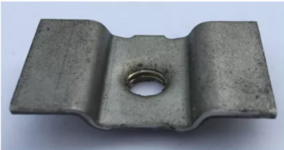
1742479852944.png
This is the nut.
 
To avoid these ads, REGISTER NOW!

rlitman

Well-known member
Joined
Oct 18, 2010
Messages
24,688
Location
Long Island
Use "Anti-seize".
Stainless is notorious for galling onto stainless, but galling onto galvanized doesn't sound right to me. All anti-seize is, is a secondary metal that gets in between the steel to steel contact. Often it's zinc or aluminum or a combination thereof. If the nut is already galvanized, adding more zinc wouldn't hurt I guess. Might buy you a little time.

Longer term, you could drill out those nuts and install stainless rivnuts to meet the stainless bolts. That should work, so long as you're not in a corrosive environment. Salts from sea air or fertilizer can rapidly rust stainless.
 

cannuck

Well-known member
Joined
Nov 30, 2021
Messages
4,663
Location
Rural SK
If you are stuck with their nuts, use anti seize compound on whatever grade of stainless they recommend. SS on SS is usually the problem but you are experiencing something the goop should be able to make tolerable. Replace a many of the nuts as you can since a little damage from last R&R might well gall on the next installation. The normal "fix" is to use SS bolts with silicon bronze nuts - but will only work if you had what are now "nuts" made as hot dipped washers.
 

rlitman

Well-known member
Joined
Oct 18, 2010
Messages
24,688
Location
Long Island
That's a teflon based anti seize. Probably easiest to apply as a gel like that, but for the record, teflon tape would to the same job, possibly with better wash-out resistance.

Another option would be an anaerobic thread locker. The "blue" non-permanent type does a good job of staying put in threads, and as such, it's also a good corrosion preventative that won't slow down an impact when disassembly time comes. The only problem is that anaerobic sealants don't work great with stainless, but with the galvanized nuts, I think it would set up without primer.
 

LopezBart

Well-known member
Joined
Oct 13, 2023
Messages
2,567
Location
Lopez Island, WA
I think what they mean by flash galvanized are the normal electroplated zinc fasteners one sees at the box stores. True hot dipped galvanized bolts won't fit, since they're designed for nuts w/ extra tolerance:


Assemble with anti-seize and you should be ok.
 
OP
R

reader2580

Well-known member
Joined
Dec 31, 2014
Messages
14,571
Location
Minneapolis, MN
I think what they mean by flash galvanized are the normal electroplated zinc fasteners one sees at the box stores. True hot dipped galvanized bolts won't fit, since they're designed for nuts w/ extra tolerance:
I can't imagine that regular electroplated bolts would last long outside exposed to sun, rain, and snow.
 
OP
R

reader2580

Well-known member
Joined
Dec 31, 2014
Messages
14,571
Location
Minneapolis, MN
When the solar racks were originally assembled the manufacturer provided all fasteners including the stainless bolts that go into these nuts. A manufacturer rep was on-site to assist with the installation.

The rep was present again when I trying to remove the bolts after three years. They would not move more than a few turns. I believe I was able to slide the bolt and nut out, but I couldn't reuse them as I could not tighten them.

It sounds like anti-seize might be the answer for doing this again.
 

hobie18

Well-known member
Joined
Apr 29, 2024
Messages
1,181
Sometimes wax can be used in stainless boat areas. But here... maybe a different bolt, if not a complete change
 
Last edited:

LopezBart

Well-known member
Joined
Oct 13, 2023
Messages
2,567
Location
Lopez Island, WA
I can't imagine that regular electroplated bolts would last long outside exposed to sun, rain, and snow.
Perhaps your area has more corrosive (acid) rain; here in the PNW such hardware is quite common for gate latches, bolts, etc, and unless one is close to the ocean the hardware can be expected to remain functional, if not perhaps beautiful, for decades.
 

VR6ix

Well-known member
Joined
Mar 24, 2013
Messages
356
Location
Onterrible, Canuckistan
I don't understand why they are pushing stainless bolts. Why won't a clear-zinc plated button-head or socket-head screw work? Lubricate the threads, install, then lube the exposed portion of the threads on the far side of the nut, and pick a screw length that only has a few threads protruding on the far side, because if those threads become corroded then yes that's going to be a pain when you try to pull that hot mess through the threads on the "nut". Don't use black oxide steel fasteners, that's basically useless against corrosion.
 
OP
R

reader2580

Well-known member
Joined
Dec 31, 2014
Messages
14,571
Location
Minneapolis, MN
I am guessing stainless because these are solar panel mounts that are intended to last for decades. The rest of the mount is made of hot dip galvanized. I can't imagine a standard electroplated screw lasting for decades here in Minnesota. I don't think we have acid rain here. Solar stuff is almost always done with hot dip galvanized, aluminum, or stainless steel.
 
To avoid these ads, REGISTER NOW!

Beerhippie

Well-known member
Joined
Oct 13, 2023
Messages
10,050
Location
Far NE Oregon
I am guessing stainless because these are solar panel mounts that are intended to last for decades. The rest of the mount is made of hot dip galvanized. I can't imagine a standard electroplated screw lasting for decades here in Minnesota. I don't think we have acid rain here. Solar stuff is almost always done with hot dip galvanized, aluminum, or stainless steel.
I can't imagine those electroplated clip-nut things lasting much more than a few years anywhere outside the desert SW. What good are SS bolts if the rest is ****?
 

Bigblue&Goldie

Well-known member
Joined
Mar 12, 2009
Messages
10,746
Location
AZ
I imagine some of the galling might've happened when the screws were originally put in. As a rule of thumb, I won't touch stainless nuts/bolts with a power tool; I've learned the hard way a couple of times.
 

Firebrick43

Well-known member
Joined
May 12, 2015
Messages
14,243
Location
West central Indiana
I can't imagine those electroplated clip-nut things lasting much more than a few years anywhere outside the desert SW. What good are SS bolts if the rest is ****?
Electroplated galvanized farm gates, fence hardware, and even high tensile wire last at least 10 years if not 15 before rust even starts showing up regularly here in Indiana? I haven't replaced any of my gates due to rust

The hi tensile wire around my pastures was installed in 2001 and is still pretty rust free. It doesn't look as good as the hot dipped the soft #9 wire on the corner braces but you can't hot dip the 200,000-210,000 tensile strength wire as it anneals it back to 170,000 or so

There is a big difference between class 1 electro galvanizing and class 3
 

Garage Junkie

Well-known member
Joined
Jan 2, 2010
Messages
173
Location
Cleveland, OH
If it was me, I would take those supplied nuts and drill right down through them removing the threads.
Then I would lay them out and give them a shot of paint on both sides, this is to help slow galvanic corrosion.
Then use 316 stainless bolts and conventional nuts (or nylocks if you really want to get carried away) and you will never worry about them again.
 
OP
R

reader2580

Well-known member
Joined
Dec 31, 2014
Messages
14,571
Location
Minneapolis, MN
I imagine some of the galling might've happened when the screws were originally put in. As a rule of thumb, I won't touch stainless nuts/bolts with a power tool; I've learned the hard way a couple of times.
The bolts were all tightened by hand as I didn’t have the right bits to use an impact driver.
 

flippin

Well-known member
Joined
May 24, 2010
Messages
740
Location
Montreal - Ottawa
The dissimilar metals would suggest something other than true "galling" as already mentioned, is at play. I work with stainless fasteners everyday, and from my experience galling occurs most frequently during the installation/removal process (heat/spin speed) and isn't something that just happens overtime. Unfortunately I have "galled" too many fasteners, and it is something that you know has happened immediately. I have never gone back to appropriately tensioned stainless to stainless fasteners which have become seized as a result of galling. Please accept my apology in advance as I am not trying to harp on terminology here. Rather, I am sharing my thought process in my pursuit for a solution.

I agree with all of the other suggestions of applying a barrier cream as this alone may be an elegantly simple solution. However, galvanized fasteners are prototypically kinda crude with rough edges and less than perfect mating surfaces. And though I am blowing ideas out of my *** in an effort to help, I am wondering if chasing the threads with a tap before and in addition to anti-seize or tef-gel (I love both) may help with seizing which is a result of thread contamination. I appreciate that using a tap on the galvanized piece may scrape off the anti-corrosion coating, but given the dilemma may be still worth while. Hopefully enough of the antiseize will serve to ward off rust.

Best of luck
 
OP
R

reader2580

Well-known member
Joined
Dec 31, 2014
Messages
14,571
Location
Minneapolis, MN
I have no idea if the bolts seized in the nuts immediately, or not. I didn't try to remove any of the the bolts until several years after initially installed. I certainly could run a thread chaser through the nuts before assembly.

If I could get more of the special nuts I wouldn't mind that they seize to the bolt. The issue is the manufacturer has stopped producing solar mounts. The manufacturer has some of the nuts left over from production, but that is the end of line for the nuts. If I need to remove the panels in the future, and the bolts are seized into the nuts I won't be able to get any more of the nuts. Maybe I could find something else that works, but spending hours or days searching for replacements for obsolete parts is not my idea of fun.

The bolts will turn a couple of turns. After that they are stuck. I've tried breaker bars, and other tools, to no avail. Once they are loose by a few turns I can slide them out of the assembly. They go in the scrap bin after that. I would say about 80% of them seized. The remaining 20% came apart.
 
OP
R

reader2580

Well-known member
Joined
Dec 31, 2014
Messages
14,571
Location
Minneapolis, MN
The rails are not Unistrut. They are a custom profile created by Malina Solar, a Division of Cargo Wall in Canada. I have my doubts that Unistrut stuff would work as the forces would be concentrated at the center rather than spread across the material.

I will be getting more of the nuts so the issue is what to do so the nuts don't seize to the bolt in case I have to remove them again?

I will take a picture of the rail if I think of it the next time I head outside.
 
To avoid these ads, REGISTER NOW!
Top Bottom