RTM
Well-known member
Cheap DIY hack I would use, if you can’t see it using the dynamic.squeeze the jaws together right (not overl
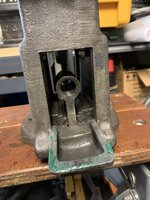
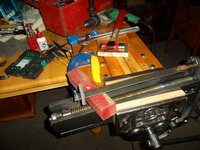
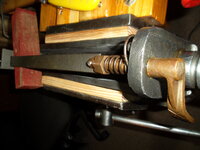
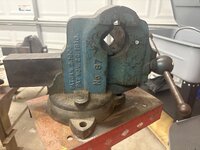
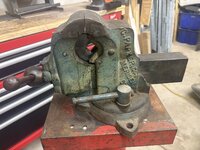
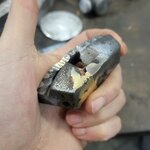
Looking at this pic, with the nut out, I would take a large flat file and a Sharpie, and start coloring. Paint every flat bearing surface with sharpie, then use the flat face of your file as a straight edge, and make sure the internal bearing surfaces are co planar with the external ledge. Wiggling the file back n forth will mark up the sharpie, telling where a high spot may be.
Next, a height gauge, (maybe made out of a piece of card stock) tall enough to hit the entry portion, or to match the riding height of the dynamic jaw, slide it along those same bearing surfaces, see if you are hitting something up top. Repeat with the width, traversing the whole inside volume where the dynamic slides, making the card the width of the opening. Stand it up to make sure your opening isn’t a parallelogram, trapezoid or rhombus ( those who scoffed at geometry being useful later in life, take note).
I’m wondering if your jaw shelf is lower than the internal riding surfaces, or the dynamic is cocking a bit going into the opening, and catching on the exit somehow. Sharpie marking the depth the slide is into the static can give you clues on where to look once you pull the slide out.
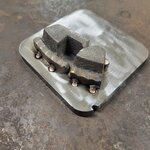
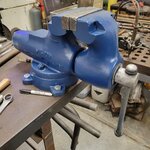


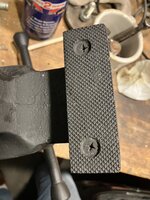




![image000000[1].jpg](/forum/data/attachments/2156/2156142-e2daadc401045180b3fde9c5ef435b35.jpg)
![image000001[1].jpg](/forum/data/attachments/2156/2156143-786a35a77dd820fd2a5b52a34e98b713.jpg)
![image000002[1].jpg](/forum/data/attachments/2156/2156144-b5531c987089a8ecf6a7e3074ff7cf0b.jpg)
![image000003[1].jpg](/forum/data/attachments/2156/2156145-ffac38f2ea527a2cd6e29d94a7102811.jpg)
![image000004[1].jpg](/forum/data/attachments/2156/2156147-ae7ed1c9155570f363e2def96097b5fd.jpg)