To avoid these ads, REGISTER NOW!

Second guessing in floor heat for 30x40 shop

Gopherboy6956

Well-known member
Joined
Dec 19, 2021
Messages
135
Hey Everyone - A few months ago I posed about doing in-floor heat and got some great replies, tons of information.
I'm currently in the process of building my forms for my 30x40 slab, and i'm starting to question if I should really do in-floor heat.

Budget is a concern for me - i'm trying to get this all done under $40k, and thinking more about it - I'm wondering if the long term cost savings over 100% gas forced air is going to be worth it for me.

If I do add in the pex, manifold and insulation now, i'm not sure when i'll even get to adding a boiler, but I will 100% have the GFA right off the bat.
I am in Fargo, ND, where winters are brutal, so the overall building will be well insulated - R49 in the ceiling, R21 in the 2x6 walls.

I am not so concerned about having a 'warm floor' like you would in the house, for socks or bare feet, so really the only two advantages I'm considering is less 'air' moving around (dust, etc) from having the GFA run less, and overall heating cost.

Maybe I'll be just as happy still insulating the slab, and running strictly GFA?

I'd love to hear from those of you who have done one or the other, and if you'd do it differently now.

Thank you!
 
To avoid these ads, REGISTER NOW!

cretedog

ALLIANCE MEMBER
Joined
Mar 27, 2012
Messages
232
Location
North Dakota USA
Hey Everyone - A few months ago I posed about doing in-floor heat and got some great replies, tons of information.
I'm currently in the process of building my forms for my 30x40 slab, and i'm starting to question if I should really do in-floor heat.

Budget is a concern for me - i'm trying to get this all done under $40k, and thinking more about it - I'm wondering if the long term cost savings over 100% gas forced air is going to be worth it for me.

If I do add in the pex, manifold and insulation now, i'm not sure when i'll even get to adding a boiler, but I will 100% have the GFA right off the bat.
I am in Fargo, ND, where winters are brutal, so the overall building will be well insulated - R49 in the ceiling, R21 in the 2x6 walls.

I am not so concerned about having a 'warm floor' like you would in the house, for socks or bare feet, so really the only two advantages I'm considering is less 'air' moving around (dust, etc) from having the GFA run less, and overall heating cost.

Maybe I'll be just as happy still insulating the slab, and running strictly GFA?

I'd love to hear from those of you who have done one or the other, and if you'd do it differently now.

Thank you!
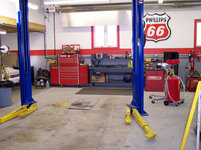
I’m just north of you. Added onto the shop 10 years ago, put in the foam and the pex. Bought the boiler- but to this day it’s still on the shelf. (Would have been hooked up right away, but have other heat sources).

I would recommend installing the foam and pex now. Manifold, boiler, pumps etc can come later if you choose to. Or a hanging unit heater, or a minisplit...

Perimeter slab insulation is your friend in our county…
 
Last edited:

jack stand

Well-known member
Joined
Feb 29, 2012
Messages
3,363
Location
Lakes Region Maine
You won't regret the insulation in the floor radiant or not, and having the pex in place is the cheap part.
Bight the bullet and don't look back and your almost there for radiant down the road. I heat mine with a wood boiler and set the floor at 50*, T shirt weather in the winter. (with a warm floor)👍
 

Chuckster in NJ

Well-known member
Joined
Jan 26, 2010
Messages
2,329
Location
Hunterdon County NJ
Put the PEX loops in the floor and you will thank me later after you get it going……… Radiant slab is great especially where you are located in Fargo.

TIP! Beg, borrow or steal to get the money for the PEX materials for the floor pour.
 

American Locomotive

Well-known member
Joined
Jan 8, 2017
Messages
11,016
Location
Rhode Island
There is essentially zero operational cost difference between radiant in floor and forced hot air. Especially if the boiler and furnace efficiency are the same.

The advantage of in floor heat is comfort. The whole space will feel warm. You can open a door, close it, and it will recover quickly because the entire slab is still warm.
 

jblnut

ALLIANCE MEMBER
Joined
Jan 17, 2015
Messages
7,144
Location
In the Middle of MN
Hey Everyone - A few months ago I posed about doing in-floor heat and got some great replies, tons of information.
I'm currently in the process of building my forms for my 30x40 slab, and i'm starting to question if I should really do in-floor heat.

Budget is a concern for me - i'm trying to get this all done under $40k, and thinking more about it - I'm wondering if the long term cost savings over 100% gas forced air is going to be worth it for me.

If I do add in the pex, manifold and insulation now, i'm not sure when i'll even get to adding a boiler, but I will 100% have the GFA right off the bat.
I am in Fargo, ND, where winters are brutal, so the overall building will be well insulated - R49 in the ceiling, R21 in the 2x6 walls.

I am not so concerned about having a 'warm floor' like you would in the house, for socks or bare feet, so really the only two advantages I'm considering is less 'air' moving around (dust, etc) from having the GFA run less, and overall heating cost.

Maybe I'll be just as happy still insulating the slab, and running strictly GFA?

I'd love to hear from those of you who have done one or the other, and if you'd do it differently now.

Thank you!
If you’re insulating the floor already put the pex down. The pex is the least expensive part of the equation there.

You won't regret the insulation in the floor radiant or not, and having the pex in place is the cheap part.
Bight the bullet and don't look back and your almost there for radiant down the road. I heat mine with a wood boiler and set the floor at 50*, T shirt weather in the winter. (with a warm floor)👍
Agree 100%. I heat with a wood boiler and keep the shop at a balmy 56f. Definitely T-Shirt weather inside. Sometimes almost too hot when actually working and not just making Busch Light disappear.
 

kabinenroller

Well-known member
Joined
Sep 14, 2013
Messages
908
Location
S.E. Wisconsin USA
Insulation is your friend with either heating system. With a slab it is tricky insulating the perimeter but it is critical that you prevent the outside temperature from infiltrating the conditioned space. As the others mentioned installing the pex now is a good move.
 

Yankeefarmer

Well-known member
Joined
Jul 25, 2011
Messages
1,203
Location
Connecticut
With in-floor heat, you are heating 24/7 during the heating season. If that is not how you intend to use the building, the operational economics may favor a system that can heat it up quickly.
 

Mr onetwo

Well-known member
Joined
Apr 6, 2011
Messages
2,010
Location
Coastal Maine
GFA would be a huge mistake in my opinion. And please DO NOT only insulate the perimeter. Put in plenty of tubing...I would try for 1500ft in your case.
 

HoosierBuddy

Well-known member
Joined
May 9, 2006
Messages
2,935
Location
Southern Indiana
I have in-floor heating. Have had since my build in 2006.

We have gas FA at work on warehouses in similar situations.

First I don't think you'll see any reduction in the cost to heat the space with in floor heating. If anything I think it will be more because the overall system efficiency may be lower and you will need to leave the heat on 24X7 in the winter. I often do set back my t-stat in the winter, but getting the space back up to temp takes longer with in-floor heating and it generally will overshoot a couple of degrees coming back.

The major advantage of in floor heat is comfort. The second advantage is noise. It's extremely comfortable and very quiet. If you can't hear the pumps running it's completely silent. So, I really like my set up.

That being said, I approached this build with a "I'm going to get what I want and damn the costs" mindset.

I definitely could have saved money by using a NG hanging unit heater or even a minisplit.

A wise man once asked, "For which of you, intending to build a tower, does not first sit down and count the cost, whether he has enough to finish it?"

Good advice 1993 years later. If you don't have the money to finish your garage, changing up your heating choice is a legitimate way to cut costs. Honestly, I might still insulate under the slab. It would make the slab a bit warmer when you lay on it under a car, and would decrease the amount of heat required some small amount.
 

jpaw

Well-known member
Joined
Dec 23, 2018
Messages
525
Location
Michigan
I would consider a radiant tube heater if you have the available celing height.
I have owned a home with in floor radiant heat and have worked my entire adult life in shops with overhead radiant tube heat. I have found that overhead radiant tube heat has a much quicker recovery than in floor heat making it better suited for a shop environment, obviously certain parameters would have to be met to use a overhead tube.
 

kj_mustang

Well-known member
Joined
Feb 9, 2011
Messages
1,213
Location
Harrisonburg, VA
3rd advantage for radiant floor heat - If you isolate the heating supply source well enough, you don't have as much risk if you work with a lot of flammable vapors. I chose to install radiant floor and spray foam insulation because I knew I would be in my shop for long term. I hopefully will recover some of those costs due to reduced heating costs.
 

jmdirk

Well-known member
Joined
May 4, 2015
Messages
711
I live in Ottawa, Canada so we have real winters as well. Not as cold on average as ND, but cold enough. Same size shop, but you're better insulated than I am. Steel building supplier only offered R21 for everything.

I have an electric boiler and keep the shop at ~60 all winter. We have Time of Use pricing for electricity with a very low over night rate. The beautiful thing with the in floor heat, is that you have the huge slab as a thermal buffer. I run the heat on full at night when the electricity is cheap. Most days, it doesn't need to run during the day at all to maintain 60 degrees. That overnight heating costs ~$200CAD/month during the coldest months.

The other thing I like about heating the shop full time during the winter vs only periodically heating when I'm in there is, everything is a comfortable temp. With periodic heating, everything you grab is going to be cold as it will take time to heat up. Plus, any liquids, chemicals, paints etc, you don't have to worry about losing them because they froze.
 

Highbeam

Well-known member
Joined
Feb 15, 2011
Messages
2,292
Location
Mt Rainier foothills, WA
I installed the pex and insulation under the slab 13 years ago. Never hooked it up to a boiler. Woodstove heat is fine and I use the shop daily. Well insulated is very important so I would install that underslab insulation regardless. The actual pex piping isn't very expensive, the boiler system is very expensive.
 

PoorUB

Well-known member
Joined
Mar 29, 2021
Messages
11,730
Location
Fargo, ND
Hey Everyone - A few months ago I posed about doing in-floor heat and got some great replies, tons of information.
I'm currently in the process of building my forms for my 30x40 slab, and i'm starting to question if I should really do in-floor heat.

Budget is a concern for me - i'm trying to get this all done under $40k, and thinking more about it - I'm wondering if the long term cost savings over 100% gas forced air is going to be worth it for me.

If I do add in the pex, manifold and insulation now, i'm not sure when i'll even get to adding a boiler, but I will 100% have the GFA right off the bat.
I am in Fargo, ND, where winters are brutal, so the overall building will be well insulated - R49 in the ceiling, R21 in the 2x6 walls.

I am not so concerned about having a 'warm floor' like you would in the house, for socks or bare feet, so really the only two advantages I'm considering is less 'air' moving around (dust, etc) from having the GFA run less, and overall heating cost.

Maybe I'll be just as happy still insulating the slab, and running strictly GFA?

I'd love to hear from those of you who have done one or the other, and if you'd do it differently now.

Thank you!
I am in Fargo too, and spend a fair amount of time in my shop.

If you plan on heating it occasionally, or changing the temp often, for example, a lower temp during the week, then bumping up the temp on weekends, go GFA.

If you are ok with heating it to a constant temp all the time, perhaps 60F, and are planning on using it for a working shop and plan on being out there often, go with floor heat, no question in my mind. I have worked in both, and if you are sitting on the floor, working on a car, in floor heat is awesome. GFA is chilly sitting on the floor.

Floor heat you need to set it too a temp and forget it. You probably are not going to turn the temp up and down depending on when you are in the shop as it might take a couple days to get to temp. Floor heat is slow to heat up from a lower thermostat set point.

Even if you go GFA, insulated the perimeter of the slab.
 
To avoid these ads, REGISTER NOW!

walrus

Well-known member
Joined
Nov 12, 2008
Messages
11,685
Location
Maine
I'm in Maine, radiant slab rules. I heat mine with a solar panel, built into south facing wall. Its easy to get warm water when you only have to be 10 degrees above floor temp for pump to turn on. Keeps building above 40 all winter long . Its generally closer to 50 in there and I have a wood stove to get it into the 60s if need be. Insulation under floor and radiant tubing is worth doing now as you never do it after the concrete is set.
 

finn

Well-known member
Joined
Mar 27, 2005
Messages
16,393
Location
The UP, God's country
Skip the in floor heat, but at the minimum, insulate the slab perimeter, and preferably under the entire slab.

I have in floor heat in my house, shop, and have the pex installed in my garage (originally planned to be a shop, but I found another building less than a mile away already set up with heat and plumbing).

I like the in floor for the house, but it’s too expensive to operate 24-7 in the shop. I use it to maintain a base temperature but installed a hanging propane heater to bring the shop temperature up for when I’m actively working there.

There’s also added maintenance with a high efficiency condensing boiler, too, and everyone forgets the high cost of the boiler, manifolding, condensate pump, condensate disposal issues in a cold climate, etc. Pex may be cheap, but labor (or time if diy) isn’t. Plus it complicates things like installing a lift or other things that require drilling into the slab. (For instance, I want to upgrade my well, which requires piercing the slab for code compliant piping. That’s complicated by the embedded pex tubing).

Not worth the hassle for a shop that’s not used full time. I’m heating about 2700 square feet, 2400 of which has 16’ ceilings. The rest is office / bathroom space.

In floor does keep the dust down.
 

jack stand

Well-known member
Joined
Feb 29, 2012
Messages
3,363
Location
Lakes Region Maine
I think the best answer is both. Floor heat to keep the slab warm and air temps well above freezing but then a GFA to pop it up to T-shirt weather in there while you are there.
Remember, t shirt temperature is way lower on a warm floor than a cold heated air temperature. It's un explainable and sounds like BS until you've experienced it.
This is multiplied if you have 10' or higher ceilings. Hot air quickly rises to the ceiling and in an attempt to "push" it down with ceiling fans..... even 70-75* air blowing across your skin is nothing more than a cold breeze. Not t shirt friendly.
 

Sumboodie

Well-known member
Joined
Mar 20, 2021
Messages
10,762
Location
AK
What's a GFA?

I have a heated floor. Old place did too.

Only complaint is it's not great during shoulder season, where it's warm during the day and cold at night.
Ends up running a while through the night/early morning and then sun is out and it's now 70* inside.

Best would be floor heat and another source that has a quick response for when you just need to bump the temp a bit.
 

Real_PhillBert

Well-known member
Joined
Aug 22, 2017
Messages
157
Location
Fargo, ND
I am in Fargo too, and spend a fair amount of time in my shop.

If you plan on heating it occasionally, or changing the temp often, for example, a lower temp during the week, then bumping up the temp on weekends, go GFA.

If you are ok with heating it to a constant temp all the time, perhaps 60F, and are planning on using it for a working shop and plan on being out there often, go with floor heat, no question in my mind. I have worked in both, and if you are sitting on the floor, working on a car, in floor heat is awesome. GFA is chilly sitting on the floor.

Floor heat you need to set it too a temp and forget it. You probably are not going to turn the temp up and down depending on when you are in the shop as it might take a couple days to get to temp. Floor heat is slow to heat up from a lower thermostat set point.

Even if you go GFA, insulated the perimeter of the slab.

100% agree. I'm in Fargo as well and breaking ground on a new house today in Colfax ND, I'm pinching pennies to have floor heat in the ~1250sqft garage and in the basement.
 

Hardworkinguy

Member
Joined
Sep 15, 2015
Messages
15
I have to agree with jpaw,there is nothing quite like radiant heat and the radiant tube heaters work! and the price is probably less than any other system. There are radiant tube heaters now that are UL listed for home garages with a 10' ceiling. I would still put in the pex and insulation,though,because someday you might just want to add a solar powered system like Walrus suggested.
I have a 36 x 50 shop in southern Maine that was built on an old,existing (free) slab that I am positive that it is uninsulated. I heat it on 600 +,- gallons of propane every year with a Solaronics Suntube. I can pull out my infrared thermometer in the middle of the winter and the concrete will be 70º.
 

Hardworkinguy

Member
Joined
Sep 15, 2015
Messages
15
That picture was taken 20 years ago. It looks much more "used" now. I'm still using the same Solaronics tube heater.
 

Mr onetwo

Well-known member
Joined
Apr 6, 2011
Messages
2,010
Location
Coastal Maine
I'm in Maine, radiant slab rules. I heat mine with a solar panel, built into south facing wall. Its easy to get warm water when you only have to be 10 degrees above floor temp for pump to turn on. Keeps building above 40 all winter long . Its generally closer to 50 in there and I have a wood stove to get it into the 60s if need be. Insulation under floor and radiant tubing is worth doing now as you never do it after the concrete is set.
Walrus...I found your thread about your solar install and shop.Very nice...are you still using the Stiebel Eltron controller.Other than collector size, is there anything you would do differently?
 
Last edited:

dscheidt

Well-known member
Joined
Apr 26, 2017
Messages
2,910
I think the best answer is both. Floor heat to keep the slab warm and air temps well above freezing but then a GFA to pop it up to T-shirt weather in there while you are there.

You can attach additional radiation to the boiler that's supplying the floor. Depending on the sizing, this can run at the same time, or in place of, the floor. Water heated unit heaters are commonly used for this in commercial installations, and they make sense in a home shop as well. If there's enclosed space, like an office, more traditional radiation can be used.
 

walrus

Well-known member
Joined
Nov 12, 2008
Messages
11,685
Location
Maine
Walrus...I found your thread about your solar install and shop.Very nice...are you still using the Stiebel Eltron controller.Other than collector size, is there anything you would do differently?
I am still using the controller, no issues. I think copper collectors with the piping built into the copper sheet would be better and would get the floor much warmer so maybe a better way to get heat transfer to the piping would be better. Might be cheaper to just build more collector though. All in all I'd say it does what I wanted the way it is. Its been running the way I built since I put in the Stielbel controller, I check the fluid acidity once a year but thats all I've done.
 

dscheidt

Well-known member
Joined
Apr 26, 2017
Messages
2,910
Walrus...I found your thread about your solar install and shop.Very nice...are you still using the Stiebel Eltron controller.Other than collector size, is there anything you would do differently?
Look closely at the economics of solar thermal. the trend has been that solar electric is so efficient, it is usually cheaper to install SE and a resistance water heater than solar hot water.
 

Bert_

Well-known member
Joined
Dec 24, 2016
Messages
9,787
Location
NW Iowa
I haven't spent a lot of time in a shop with in floor hear.

I do know that I've been very happy with a radiant tube. It keeps the floor warm in the front part of the building, which is where people are most of the time.
 
Joined
Feb 26, 2025
Messages
5
Hey Everyone - A few months ago I posed about doing in-floor heat and got some great replies, tons of information.
I'm currently in the process of building my forms for my 30x40 slab, and i'm starting to question if I should really do in-floor heat.

Budget is a concern for me - i'm trying to get this all done under $40k, and thinking more about it - I'm wondering if the long term cost savings over 100% gas forced air is going to be worth it for me.

If I do add in the pex, manifold and insulation now, i'm not sure when i'll even get to adding a boiler, but I will 100% have the GFA right off the bat.
I am in Fargo, ND, where winters are brutal, so the overall building will be well insulated - R49 in the ceiling, R21 in the 2x6 walls.

I am not so concerned about having a 'warm floor' like you would in the house, for socks or bare feet, so really the only two advantages I'm considering is less 'air' moving around (dust, etc) from having the GFA run less, and overall heating cost.

Maybe I'll be just as happy still insulating the slab, and running strictly GFA?

I'd love to hear from those of you who have done one or the other, and if you'd do it differently now.

Thank you!
It's a real commitment. It's one thing if yourself, you get to safe some coin on labor. However, there's still labor to be had. Even if you do it yourself, there's money involved with the insulation . So if you're on the fence, then don't do it. Especially if you're not in the garage a whole lot.
 
OP
G

Gopherboy6956

Well-known member
Joined
Dec 19, 2021
Messages
135
It's a real commitment. It's one thing if yourself, you get to safe some coin on labor. However, there's still labor to be had. Even if you do it yourself, there's money involved with the insulation . So if you're on the fence, then don't do it. Especially if you're not in the garage a whole lot.
I ended up not doing it.

Thanks for the input!
 
To avoid these ads, REGISTER NOW!
Top Bottom