
To avoid these ads, REGISTER NOW!

Downside using a large air hose on a tiny compressor?

Tom Graham

Well-known member
Joined
Apr 14, 2025
Messages
126
Location
Oklahoma
Is there any material downside in using an (on-hand) large diameter (3/4” @50’) air hose with a tiny air compressor?

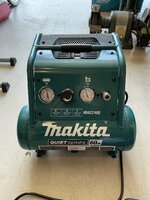
I’ve recently added the tiny Makita MAC210Q air compressor to my garage. Yes, it’s an oil-less and only 2 gallon and 125 psi, but it is SO quiet. Advertised at 60db it consistently delivers at less than 70db AND can reach 125 psi (from 0) in less than 1 minute.

So, here’s my question:

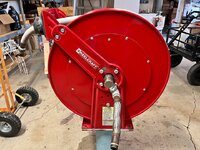
Why shouldn’t I also use it with my 50’ 3/4” air hose? I love the convenience of its accessibility via the mounted, retractable Reelcraft hose reel.

I’ve done the calculation and the volume of air to fill the hose is less than 2 gallons equivalent…

Other than taking an extra minute or less to reach operating pressure at the end, is there any other downside that I’m missing by using the big, heavy 3/4 hose - rather than the standard 1/4”-3/8” hose on this tiny compressor?
 

Attachments

  • IMG_6901.jpeg
    IMG_6901.jpeg
    859.8 KB · Views: 19
  • IMG_6900.jpeg
    IMG_6900.jpeg
    131.1 KB · Views: 19
To avoid these ads, REGISTER NOW!

RTM

Well-known member
Joined
May 13, 2019
Messages
13,210
Location
SF Bay Area
I use a large hose for extra volume storage, dunno if it works for or against me, but that’s what I tell myself.
 
OP
T

Tom Graham

Well-known member
Joined
Apr 14, 2025
Messages
126
Location
Oklahoma
The only downside is that the larger hose will be more difficult to handle. Otherwise, no problems at all.
I should have led (rather than concluded) with this point (weight and handling of the large hose) but that was apparent to me, so I wondered if there was any inherent harm (to compressor or tools.) The hose is obviously overkill and not fit for purpose, but it’s accessible and I love retractable hoses and cords. Thanks to all for your feedback!
 
Last edited:

KnurledNut

Well-known member
Joined
Jan 28, 2011
Messages
8,165
Location
n/a
Fittings matter more than hose diameter as they impede flow.
If you are using standard 1/4 fittings on both ends it won't change much.
If you were using fittings with a greater diameter on the tool end of the hose like 3/8 or 1/2 it would not maintain as consistent a working pressure given the tool has the same bigger fittings and can demand more. Not gonna matter much with that small a compressor.
Just keep in mind the 50% duty cycle during use with the extended fill times.
 

Shiftless

Well-known member
Joined
Mar 9, 2014
Messages
14,553
Location
East Bay SFO
I use a large hose for extra volume storage, dunno if it works for or against me, but that’s what I tell myself.
50 feet of 3/4 inch hose is about .15 cubic feet
50 feet of 1/2 inch hose is a bit less than .07 cubic feet

The difference is not very much at all. Less than a tenth of a cubic foot
 
Last edited:

RTM

Well-known member
Joined
May 13, 2019
Messages
13,210
Location
SF Bay Area
The only downside is that the larger hose will be more difficult to handle. Otherwise, no problems at all.
I always put a Flexzilla hose on the end, just so I don't have to fight with the stiff red hose.


50 feet of 3/4 inch hose is about .15 cubic feet
50 feet of 1/2 inch hose is a bit less than .07 cubic feet

The difference is not very much at all. Less than a tenth of a cubic foot
Geez, using math. No need for four letter words.

I have 3/8 and 1/4" hoses, so even less useful, but don't burst my bubble.
 
Last edited:

danielbuck

Well-known member
Joined
Apr 15, 2014
Messages
924
I doubt there will be any advantages, especially at just 50 feet. But there won't really be any down-sides either, except for having to move the heavier and probably less flexible hose around.
 

johnre

Well-known member
Joined
Dec 1, 2016
Messages
1,055
Location
Portland, OR
If you already have the hose, use it, by all means.

If you don't already have the hose, I'd go with 1/2" - both the hose and the fittings are a lot more lightweight to handle.

Life is too short to be constantly fighting the stiffness of a 3/4" hose that's pressurized to 90 psi. I don't even like the rubber collar that's supplied on the end of my 1/2" hose that stops it from rewinding into the auto-rewind reel.
 
To avoid these ads, REGISTER NOW!

GeoBruin

Well-known member
Joined
May 5, 2018
Messages
3,744
Fittings matter more than hose diameter as they impede flow.

It's quite the opposite really. Especially for a 50 foot hose, the difference in the hose diameter will impact the flow much more than the couple futtings in the system.

The situation the OP presents is a particularly extreme one, going from a 3/4" hose to a 3/8" hose. The pressure drop experienced at the tool using a 50 foot 3/4" hose assuming 90 psi and 30 cfm is only 0.63 psi. By contrast, the pressure drop experienced using a 50 foot 3/8" hose under the same pressure and flow conditions is 24.24 psi.

That's a substantially larger difference than would result from (for example) swapping from a 1/2" to a 1/4" fitting at the tool.

Now if you start adding several more fittings in the system, the issue will compound, but we assume we're just talking about a tool at the end of a hose reel as pictured by the OP.

This is all academic however, since the tools the OP is using can't take advantage of a larger fitting anyway and will likely end up being reduced to a 1/4" quick coupler and plug, not to mention the size of the compressor tank means they won't be able to realize the benefits of additional flow anyway as you stated.
 
Last edited:

KnurledNut

Well-known member
Joined
Jan 28, 2011
Messages
8,165
Location
n/a
It's quite the opposite really. Especially for a 50 foot hose, the difference in the hose diameter will impact the flow much more than the couple futtings in the system.

The situation the OP presents is a particularly extreme one, going from a 3/4" hose to a 3/8" hose. The pressure drop experienced at the tool using a 50 foot 3/4" hose assuming 90 psi and 30 cfm is only 0.63 psi. By contrast, the pressure drop experienced using a 50 foot 3/8" hose under the same pressure and flow conditions is 24.24 psi.

That's a substantially larger difference than would result from (for example) swapping from a 1/2" to a 1/4" fitting at the tool.

Now if you start adding several more fittings in the system, the issue will compound, but we assume we're just talking about a tool at the end of a hose reel as pictured by the OP.

This is all academic however, since the tools the OP is using can't take advantage of a larger fitting anyway and will likely end up being reduced to a 1/4" quick coupler and plug, not to mention the size of the compressor tank means they won't be able to realize the benefits of additional flow anyway as you stated.
Nope. Not for this application.
 

Bulldog13

Well-known member
Joined
Sep 20, 2007
Messages
1,787
Location
Cape Coral ,FL
I have the same compressor….i run it no problem with the bigger air hose….got tired of listening to my big compressor run .
 

Citation

Well-known member
Joined
Jan 20, 2016
Messages
3,221
Location
Indy
There is no problem with this what so ever.
First, the compressor really doesn't care how fast the air leaves the tank. The pump can only refill so fast but it's not like this will harm the tank.

Second, even if the hose is really large, you still have other restrictions such as the compressor's regulator and (assumed) 1/4 Milton connector. Those both are going to restrict the flow out of the compressor. At the other end of the hose your tools are going to create some resistance as well. So the actual flow out of the compressor might be almost the same as if you used a more typical 3/8" hose.

Depending on your use, you might consider adding a 10' or so 3/8" whip to the end of the hose simply because 3/4" is really thick/heavy stuff. I can imagine trying to air up a tire with a garden hose attached to the air chuck. A short section of smaller hose on the end might make it easier to work with.
 

dchawk81

Well-known member
Joined
Jul 31, 2014
Messages
14,406
Is there any material downside in using an (on-hand) large diameter (3/4” @50’) air hose with a tiny air compressor?

I’ve recently added the tiny Makita MAC210Q air compressor to my garage. Yes, it’s an oil-less and only 2 gallon and 125 psi, but it is SO quiet. Advertised at 60db it consistently delivers at less than 70db AND can reach 125 psi (from 0) in less than 1 minute.

So, here’s my question:

Why shouldn’t I also use it with my 50’ 3/4” air hose? I love the convenience of its accessibility via the mounted, retractable Reelcraft hose reel.

I’ve done the calculation and the volume of air to fill the hose is less than 2 gallons equivalent…

Other than taking an extra minute or less to reach operating pressure at the end, is there any other downside that I’m missing by using the big, heavy 3/4 hose - rather than the standard 1/4”-3/8” hose on this tiny compressor?
I used 1/2" hoses and fittings when I only had 21 gallons. That initial burst helped a lot with getting more out of the better impact guns than I truly deserved.
 

sparky 1971

Well-known member
Joined
Oct 9, 2018
Messages
7,975
Location
Central Iowa
50 feet of 3/4 inch hose is about .15 cubic feet
50 feet of 1/2 inch hose is a bit less than .07 cubic feet

The difference is not very much at all. Less than a tenth of a cubic foot

Geez, using math. No need for four letter words.

I have 3/8 and 1/4" hoses, so even less useful, but don't burst my bubble.
It's all about perspective. While the 3/4" might only hold less than 1/10 cu/ft more than the 1/2", it's still more than double the capacity of the 1/2. Hopefully, that makes you feel better.;)

.07 X 2 = .14 < .15

FWIW, I use 3/8 hose, but I took the regulators off and tossed them in a drawer to help make up for it.
 
  • Like
Reactions: RTM

mikedodge

Well-known member
Joined
Jun 27, 2017
Messages
2,816
If I'm doing work that needs a compressor at the far side of our house I'm running a lot of hose. Easily 150 ft or more of it. I can't tell what hose size I'm using the tools run the same way. Then again I'm using a compressor that's more then 2 cfm.
 

Shiftless

Well-known member
Joined
Mar 9, 2014
Messages
14,553
Location
East Bay SFO
If I'm doing work that needs a compressor at the far side of our house I'm running a lot of hose. Easily 150 ft or more of it. I can't tell what hose size I'm using the tools run the same way. Then again I'm using a compressor that's more than 2 cfm.

Based on what I know, the big difference in hose size will show up with long lengths of hose running ”hungry” air tools. With more cubic feet per minute flowing through a longer and smaller diameter hose, you will experience pressure drop. But like Sparky 1971 does, if you start with a higher pressure (without his old regulator), you can afford to lose a few psi and still have enough to operate the tool you’re using at the far end.
 
To avoid these ads, REGISTER NOW!
Top Bottom