I have a bicycle that I am customizing and I want to use a particular stem. The problem is the bike requires the shaft of the stem to be .833" but this particular stem is not available in that diameter. It is .874. Can the stem shaft be turned in a lathe? I have talked to one machinist who said his lathe does not have enough swing. I also talked to a car guy who has a lathe but is not that experienced in it and said hes not sure how or if it could be done. It would be great to hear from any machinists on here. Please advise. Thanks.

You are using an out of date browser. It may not display this or other websites correctly.
You should upgrade or use an alternative browser.
You should upgrade or use an alternative browser.
Can this be done with a metal lathe?
- Thread starter Enigma
- Start date
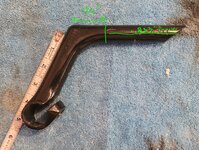

Yes, it can be done but you will probably have to make an mandrel for holding the stem from the inside.
Assuming it's a cast part, I'll guess the surface quality of the inside is not that precise, so you'll probably have to machine the inside first, then make a mandrel to fit.
Assuming it's a cast part, I'll guess the surface quality of the inside is not that precise, so you'll probably have to machine the inside first, then make a mandrel to fit.
Last edited:
cvairwerks
Well-known member
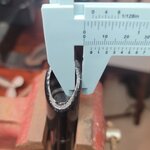
What's the current wall thickness. You're wanting to remove .0225" from it. Remove too much and there's no strength left in it.
Another, less precise way would be to grab the bottom of the stem in a 3-jaw chuck, and grab as little as possible. Then use a live center in the bolt hole and lathe turn down as much of the stem as you can reach without hitting the chuck. Then manually, sand down the part at the bottom that wasn't lathe turned.Yes, it can be done but you will probably have to make an mandrel for holding the stem from the inside.
Assuming it's a cast part, I'll guess the surface quality of the inside is not that precise, so you'll probably have to machine the inside first, then make a mandrel to fit.
What's the current wall thickness. You're wanting to remove .0225" from it. Remove too much and there's no strength left in it.
Attachments
slowtwitch73
Well-known member
For sure doable.. I'd do a mandrel as mentioned.. basically taking the place of the bolt that would go though the quill.
But I would 100% not do it. It will break.
But I would 100% not do it. It will break.
DAVE94LIGHTNING
Well-known member
- Joined
- May 24, 2024
- Messages
- 198
If the lathe doesn't have enough swing they can do it on a mill with a boring head and clamp the piece fixed and turn the OD of that tube as it points straight up.
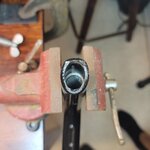
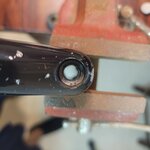
Its smooth on the inside. A long bolt goes through it. Its a tapered hole I believe.Yes, it can be done but you will probably have to make an mandrel for holding the stem from the inside.
Assuming it's a cast part, I'll guess the surface quality of the inside is not that precise, so you'll probably have to machine the inside first, then make a mandrel to fit.
how can you be sure it will break. Its only like half a mm off each side. Is that enought to substantially weaken it? The force is coming from the wedge being drawn up against the bottom of the shaft which is now 1mm narrower. Do you think that will fail against the wedge? Because beside that its the wedge that is pressing against the side of the fork tube that holds it in place. but no I dont want to find out at 25mph going downhill and hitting a bump.For sure doable.. I'd do a mandrel as mentioned.. basically taking the place of the bolt that would go though the quill.
But I would 100% not do it. It will break.
dr_clyde
Well-known member
This is probably the easiest way, to be honest.If the lathe doesn't have enough swing they can do it on a mill with a boring head and clamp the piece fixed and turn the OD of that tube as it points straight up.
That looks like real headache to hold in the lathe, but a modest pain in the mill.
Get your boring head set up and indicate in the tube, both rotationally and vertically and take light cuts.
Do you think taking that much off would weaken it too much like slowtwitch and Cvalrwerks warned?This is probably the easiest way, to be honest.
That looks like real headache to hold in the lathe, but a modest pain in the mill.
Get your boring head set up and indicate in the tube, both rotationally and vertically and take light cuts.
I don't like where your taking your measurement in the picture above. It seems that is showing the wall thickness of the counter bore for the wedge. What is the Id through the tube and is the smaller diameter seen deeper in the hole a pressed in sleeve or integral to the shaft? Either way you get a lot of your strength from that section of the tube so I don't see to much of a problem turning it down. Don't forget that you probably have to turn down the wedge also. If you were closer I'd say bring it over and we'd take a shot at it.
lg
no neat sig line
lg
no neat sig line
Old Man Roger
Well-known member
Is it possible to ream out the forks a little?
Not a pressed in sleeve. I have a wedge from a .833 stem and they are identical to the wedges from .874 stems. I wish I lived closer too.I don't like where your taking your measurement in the picture above. It seems that is showing the wall thickness of the counter bore for the wedge. What is the Id through the tube and is the smaller diameter seen deeper in the hole a pressed in sleeve or integral to the shaft? Either way you get a lot of your strength from that section of the tube so I don't see to much of a problem turning it down. Don't forget that you probably have to turn down the wedge also. If you were closer I'd say bring it over and we'd take a shot at it.
lg
no neat sig line
I dont think so. The cro mo tubing is very thin.Is it possible to ream out the forks a little?
Oh and i took the measurement there because its the thinnest point. The rest of the stem is much thicker.I don't like where your taking your measurement in the picture above. It seems that is showing the wall thickness of the counter bore for the wedge. What is the Id through the tube and is the smaller diameter seen deeper in the hole a pressed in sleeve or integral to the shaft? Either way you get a lot of your strength from that section of the tube so I don't see to much of a problem turning it down. Don't forget that you probably have to turn down the wedge also. If you were closer I'd say bring it over and we'd take a shot at it.
lg
no neat sig line
Beerhippie
Well-known member
Isn't the fact that it's an oval cross-section going to make turning on a standard lathe a bit of a fiddle?
I'm missing something here... never seen an oval stem or fork tube... but I've been out of the game for many years.
I'm missing something here... never seen an oval stem or fork tube... but I've been out of the game for many years.
Old Man Roger
Well-known member
It wouldn’t be super precise, but you could get it done with a bench sander. Rotate it by hand while it’s against the stop.
Beerhippie
Well-known member
To me, the problem would be where the turned-down part meets the original diameter. If it's a square shoulder, it's a stress-riser and likely to break. Stems take a lot of weight in hard riding.It wouldn’t be super precise, but you could get it done with a bench sander. Rotate it by hand while it’s against the stop.
Old Man Roger
Well-known member
Chamfer it?To me, the problem would be where the turned-down part meets the original diameter. If it's a square shoulder, it's an stress-riser and likely to break. Stems take a lot of weight in hard riding.
Fast forward to 419 to see the concept. No need for the jig this guy built for a single job.
slowtwitch73
Well-known member
I've futzed with bikes for decades.. it will be a linear stress riser at the thickness change, and that will sit right at the (steel?) lip of the steerer tube and be torqued this way and that in the course or riding and will fail. The wedge type quill also pulls down on the stem.. pulling it into the presumably steel steerer.how can you be sure it will break. Its only like half a mm off each side. Is that enought to substantially weaken it? The force is coming from the wedge being drawn up against the bottom of the shaft which is now 1mm narrower. Do you think that will fail against the wedge? Because beside that its the wedge that is pressing against the side of the fork tube that holds it in place. but no I dont want to find out at 25mph going downhill and hitting a bump.
DocsMachine
Well-known member
- Joined
- Sep 16, 2006
- Messages
- 1,873

I think it's an optical illusion . there's a wedge that mates with the bottom of the stem to force a tight fit when the bolt is tightenedIsn't the fact that it's an oval cross-section going to make turning on a standard lathe a bit of a fiddle?
Beerhippie
Well-known member
I'm aware of how bicycle handlebar stems work, and I'm also a photographer and struggling to see how that's a perspective illusion.I think it's an optical illusion . there's a wedge that mates with the bottom of the stem to force a tight fit when the bolt is tightened
But I've gotta be wrong, cause it just ain't right.
Old Man Roger
Well-known member
It’s the beer.I'm aware of how bicycle handlebar stems work, and I'm also a photographer and struggling to see how that's a perspective illusion.
But I've gotta be wrong, cause it just ain't right.

Firebrick43
Well-known member
If a lathe has a T slot table basically the same thing can be done in a lathe with a boring bar held a 4 jaw chuck (or a boring head if its a morse taper lathe)If the lathe doesn't have enough swing they can do it on a mill with a boring head and clamp the piece fixed and turn the OD of that tube as it points straight up.
Old Man Roger
Well-known member
It would have to be pretty long.If a lathe has a T slot table basically the same thing can be done in a lathe with a boring bar held a 4 jaw chuck (or a boring head if its a morse taper lathe)
Firebrick43
Well-known member
It would have to be pretty long.
 6" is long to you?
Is there a reason you're locked into using that stem? Based on the size it looks like it must be French (22.2mm) and also pretty old? The size you're turning it to is, I believe the old BMX / stingray era stem, so I'm wondering what frame you're going to be using it in?
Old Man Roger
Well-known member
6 inches sticking out of a boring head? Kinda.
Firebrick43
Well-known member
Its only 4" sticking out, 6" OAL6 inches sticking out of a boring head? Kinda.
Old Man Roger
Well-known member
Ok, I guess that wouldn’t deflect too bad. Probably have to take really light cuts, but you could probably get it done.Its only 4" sticking out, 6" OAL
Old Man Roger
Well-known member
Belt sander would be easier.lol
Beerhippie
Well-known member
Nope. The beer can is round.It’s the beer.
Old Man Roger
Well-known member
So is the goose neck.Nope. The beer can is round.

Beerhippie
Well-known member
If you hold the part from one end of the belt sander, so it overlaps the wheel, you've minimized the sharp shoulder and stress riser.Belt sander would be easier.lol
Now you have to anodize it again.
Old Man Roger
Well-known member
I would sand it straight, then put a chamfer on it. Wouldn't bother coating it with anything other than a little anti seize. I’m a good enough kinda guy.lolIf you hold the part from one end of the belt sander, so it overlaps the wheel, you've minimized the sharp shoulder and stress riser.
Now you have to anodize it again.
Old Man Roger
Well-known member
You used JBweld to get a brewing done, you know what I’m talkin bout.