To avoid these ads, REGISTER NOW!

Voltage Drop/Amps to Shed

etherhuffer

Well-known member
Joined
May 20, 2016
Messages
88
Location
West Seattle
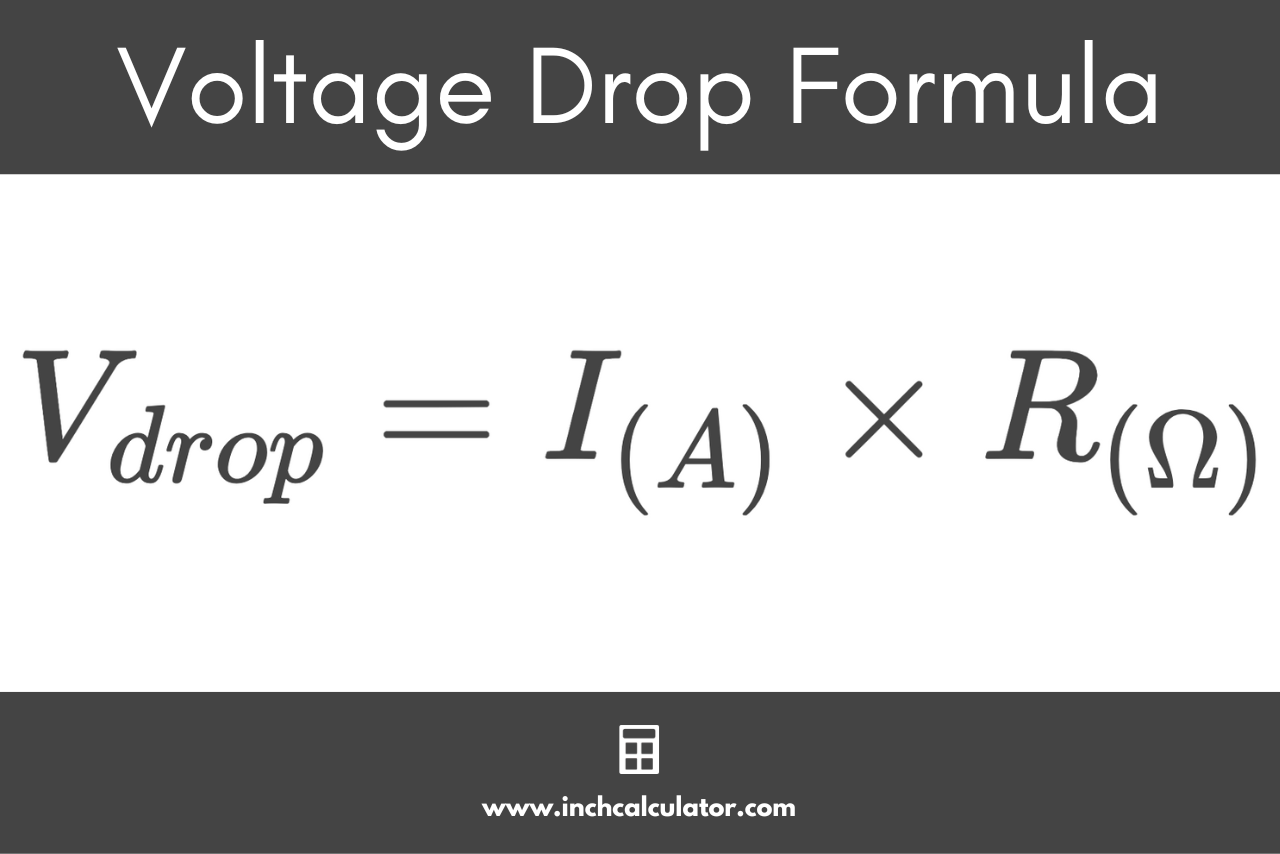
I have a shed with a 20A circuit that is very long from the panel. When I put an electrical meter on my outlet and start my compressor, I can watch as the voltage slowly drops from 120V to 100V. The motor is rated at 17A but it trips the breaker now. Can old motors get tired and require more amps to keep going? I am going to get a clamp on amp meter and check the amp draw on this circuit before I toss the compressor or get a new compressor motor.
 
To avoid these ads, REGISTER NOW!

Bert_

Well-known member
Joined
Dec 24, 2016
Messages
9,753
Location
NW Iowa
Trips the breaker on startup or take several minutes as air builds up?

Motor start and run capacitors can go bad and make the motor draw more amps.
 
OP
E

etherhuffer

Well-known member
Joined
May 20, 2016
Messages
88
Location
West Seattle
12 gauge, 80 feet from panel. New motor and pressure components. 17A motor rating. When you put a meter on the line, starts at 120V and slowly drops to 100V as load goes up. My thought is that amps exceed circuit size with load
 

mm08822

Well-known member
Joined
Jan 13, 2012
Messages
5,988
Location
NJ
Pull the cb and inspect connection between panel buss and cb.

Inspect any other splices/connections.

What does slowly mean?

How far upstream have you checked and found constant voltage?
 

Codyboy

Well-known member
Joined
Jan 31, 2019
Messages
1,674
Location
S.E. TEXAS
80ft is not far imo.
Many houses and buildings have 100ft of wire from one side to the other.

Is this a 120v circuit? I assume it is with a 17A motor.

How does the power in other parts of the house react when you start the compressor?
 
OP
E

etherhuffer

Well-known member
Joined
May 20, 2016
Messages
88
Location
West Seattle
120V and 17A motor. I have not seen other parts of the house respond. I have a shorter separate circuit that it runs fine on.
 

fitter30

Well-known member
Joined
Jun 23, 2019
Messages
2,986
Location
Peace Valley,mo
Compressor have a unloaded on it where it starts unloaded? 17 amps are running amps. Check all connections for tightness from breaker out.

 
Last edited:

paulsomlo

Well-known member
Joined
Jul 16, 2013
Messages
3,897
Location
Northern Colorado
AWG 12 has a resistance of 1.6 ohms/1000 ft - that's 0.256 ohms for 160 ft of wire. Per the people at Bussmann Fuse (https://www.eaton.com/content/dam/e.../bus-ele-tech-lib-motor-starting-currents.pdf), the initial inrush current can be 20x the FLA, but only for the 1st half cycle or so, then dropping to 4 - 8x FLA for several seconds.

20 x 17 Amps x 0.256 ohms = 87 Volts

Now, I doubt that the breaker can trip in a half cycle, so...

8 x 17 Amps x 0.256 ohms = 35 Volts

And that's significant. Truthfully, that seems like a large motor to be running off 120 Volts - I would have run that off 240 V. Assuming a dedicated circuit, can you rewire the motor to 240 V and tie it to a double pole breaker back at the panel?

And I did consider inductance of the wiring, but at 60 Hz, it doesn't seem significant.
 
Last edited:

dave*99

Well-known member
Joined
May 5, 2009
Messages
4,269
Location
Coastal NJ
AWG 20 has a resistance of 1.6 ohms/1000 ft - that's 0.256 ohms for 160 ft of wire. Per the people at Bussmann Fuse (https://www.eaton.com/content/dam/e.../bus-ele-tech-lib-motor-starting-currents.pdf), the initial inrush current can be 20x the FLA, but only for the 1st half cycle or so, then dropping to 4 - 8x FLA for several seconds.

20 x 17 Amps x 0.256 ohms = 87 Volts

Now, I doubt that the breaker can trip in a half cycle, so...

8 x 17 Amps x 0.256 ohms = 35 Volts

And that's significant. Truthfully, that seems like a large motor to be running off 120 Volts - I would have run that off 240 V. Assuming a dedicated circuit, can you rewire the motor to 240 V and tie it to a double pole breaker back at the panel?

And I did consider inductance of the wiring, but at 60 Hz, it doesn't seem significant.
I think you mean AWG 12.
 

Bert_

Well-known member
Joined
Dec 24, 2016
Messages
9,753
Location
NW Iowa
I'm going to guess 100 volts was measured when the motor was trying to start. If so, it's not a big issue.

If 100 volts was measured with the motor running and pulling 17 amps, you have an issue.
 
OP
E

etherhuffer

Well-known member
Joined
May 20, 2016
Messages
88
Location
West Seattle
It starts ok unloaded. As pressure builds, the voltage drops. My unloader valve is new, pressure switch is also new. You can watch it go from 120 to 100 as it builds pressure.
 
OP
E

etherhuffer

Well-known member
Joined
May 20, 2016
Messages
88
Location
West Seattle
AWG 12 has a resistance of 1.6 ohms/1000 ft - that's 0.256 ohms for 160 ft of wire. Per the people at Bussmann Fuse (https://www.eaton.com/content/dam/e.../bus-ele-tech-lib-motor-starting-currents.pdf), the initial inrush current can be 20x the FLA, but only for the 1st half cycle or so, then dropping to 4 - 8x FLA for several seconds.

20 x 17 Amps x 0.256 ohms = 87 Volts

Now, I doubt that the breaker can trip in a half cycle, so...

8 x 17 Amps x 0.256 ohms = 35 Volts

And that's significant. Truthfully, that seems like a large motor to be running off 120 Volts - I would have run that off 240 V. Assuming a dedicated circuit, can you rewire the motor to 240 V and tie it to a double pole breaker back at the panel?

And I did consider inductance of the wiring, but at 60 Hz, it doesn't seem significant.
I wish I could pull another wire for 240 but there is a house in the way! I saw another 1 HP motor, an older Craftsman motor, for sale on the web. It was rated at 14 Amps. How does that work? A friend told me they rated them higher than they performed and to go by standards. I am going to borrow a clamp on amp meter and see what I am pulling on this circuit
 

mm08822

Well-known member
Joined
Jan 13, 2012
Messages
5,988
Location
NJ
It starts ok unloaded. As pressure builds, the voltage drops. My unloader valve is new, pressure switch is also new. You can watch it go from 120 to 100 as it builds pressure.
As pressure builds, the load on the motor increases. The amps start to increase as a result. Could be resistance in the circuit. Did you pull the cb and inspect buss stab/breaker connection?

Have someone turn on comp at 0 psi and let it run until ps stops it. Meanwhile, you're measuring the voltage back at the cb during this entire time. Measure further upstream or downstream, depending upon what you find at this branch circuit breaker.
 

paulsomlo

Well-known member
Joined
Jul 16, 2013
Messages
3,897
Location
Northern Colorado
I wish I could pull another wire for 240 but there is a house in the way! I saw another 1 HP motor, an older Craftsman motor, for sale on the web. It was rated at 14 Amps. How does that work? A friend told me they rated them higher than they performed and to go by standards. I am going to borrow a clamp on amp meter and see what I am pulling on this circuit
Is the compressor on a dedicated circuit? If so, and you rewire it for 240V, do you need a neutral? If not, use the neutral as one of the hot legs and mark it with some black electrical tape.
 
To avoid these ads, REGISTER NOW!

wyliesdiesels

Well-known member
Joined
Aug 14, 2012
Messages
20,031
Location
Modesto, CA
I would have run that off 240 V. Assuming a dedicated circuit, can you rewire the motor to 240 V and tie it to a double pole breaker back at the panel?
Is the compressor on a dedicated circuit? If so, and you rewire it for 240V, do you need a neutral? If not, use the neutral as one of the hot legs and mark it with some black electrical tape.
he said its a 20a circuit to his shed so i doubt its dedicated just for the compressor
 

American Locomotive

Well-known member
Joined
Jan 8, 2017
Messages
10,981
Location
Rhode Island
I would start by getting a clamp-on current meter. A basic one is very cheap, and check how much current the motor is actually using.

You may have a loose wire or terminal somewhere causing excessive voltage drop.
 

u2slow

Well-known member
Joined
Nov 20, 2011
Messages
3,599
Location
BC
Is the compressor on a dedicated circuit? If so, and you rewire it for 240V, do you need a neutral? If not, use the neutral as one of the hot legs and mark it with some black electrical tape.
If the other loads are just lighting (LED), or electronics, they may well be rated for 240V also.
 
OP
E

etherhuffer

Well-known member
Joined
May 20, 2016
Messages
88
Location
West Seattle
I would start by getting a clamp-on current meter. A basic one is very cheap, and check how much current the motor is actually using.

You may have a loose wire or terminal somewhere causing excessive voltage drop.
Came home with a meter, switched on the compressor, motor went chug chug and died. Sort of answers that question! I had put in a new start capacitor a year ago and the cleaned up the innards a bit. Now a no go
 
OP
E

etherhuffer

Well-known member
Joined
May 20, 2016
Messages
88
Location
West Seattle
Trying to decide if it's genius or idiocy to get a new motor for this compressor. Why the various amp ratings for various motors of same HP? I see anything from 14 to 17 amp ratings.
 

mm08822

Well-known member
Joined
Jan 13, 2012
Messages
5,988
Location
NJ
I'll go with the lies or at least misleading information.
Sure that craftsman lawnmower makes 21 hp. Its right before it turns into shrapnel.
OP is talking about replacement motors. Your example is not the same situation.

A generic motor, labeled with a specific hp on the motor nameplate (from the motor mfr) is not the same as a finished product's claims of extravagant BS from the marketing company.
 

dave*99

Well-known member
Joined
May 5, 2009
Messages
4,269
Location
Coastal NJ
OP is talking about replacement motors. Your example is not the same situation.

A generic motor, labeled with a specific hp on the motor nameplate (from the motor mfr) is not the same as a finished product's claims of extravagant BS from the marketing company.
Agreed, the marketing company moves more hot air than my 6.5 HP shop vac.
 

theoldwizard1

Well-known member
Joined
Feb 22, 2011
Messages
43,212
Location
SE MI
If the voltage is dropping that much, there is an issue with the circuit

The problem with inductive loads is that as the voltage drops current draw goes up
The first problem with inductive loads (specifically motors), is the start up current. The starting capacitor "looks like" a short circuit until it is fully charged.
 

mm08822

Well-known member
Joined
Jan 13, 2012
Messages
5,988
Location
NJ
The first problem with inductive loads (specifically motors), is the start up current. The starting capacitor "looks like" a short circuit until it is fully charged.
NO!! There are plenty of ac motors without any caps at all.

While a cap does act as a "short" across itself at the start of applied voltage, it's an ac circuit so with the applied voltage constantly changing, so it will never reaches a constant charge as it can in a dc circuit.

The current limiting in an ac motor upon the instance of startup is due only to the resistance of the ac winding in series with the "shorted" cap (if there is a cap present). All the cap does is provide a phase shift. If the cap were to burn out, it becomes an open in the circuit and the winding receives no current.

Soon the inductive reactance in the circuit greatly exceeds the winding resistance and is the reason why the inrush current decays.
 
OP
E

etherhuffer

Well-known member
Joined
May 20, 2016
Messages
88
Location
West Seattle
I was finally able to get an ammeter on this. I thought motor was dead but it starts up again. At zero tank pressure it starts at about 16+ amps and crawls up to just over 20 when at top pressure. So....I think it's my voltage drop causing just enough increase in amp needs to get past my 20A breaker. Going to go through the circuit and check all the connections next. Might be able to salvage this if just a poor connection in the circuit
 
To avoid these ads, REGISTER NOW!
Top Bottom