The fact is user interfaces are a very personal thing. Some users feel like you do (off, on) while others like having access to intermediate brightness levels or even "blinky" (strobe, SOS, beacon) modes.
One of the problems with the old on/off interface is that LED lights are now capable of such high output that offering only the option of off, or retina searing high just isn't practical. In the old days, "high" was less than a hundred lumens so it was practical to simply have off and on. But now, you've got tiny little pocketable lights that make over 1,000 lens at turn on, so having just off and retina searing high doesn't make as much sense. Yes, you could make a light that is regulated to just 100 lumens of max output (and some of us would and do buy them) but many buyers are still focused on that max output spec.
Fortunately, manufacturers are starting to come around to the notion that UI is important, and it's not just all about output specs. The way this is being implemented may not always be ideal for a minimalist such as the OP, but it can help.
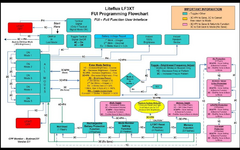
For example, many lights now offer the option of programmable interfaces where you can choose a group of modes that work best for you. Maybe you want just off/on where "on" is a predetermined brightness level. Maybe you want L-M-H with no memory (always comes on in low), or with memory (comes on in the last mode used), or you want access to blinky modes, but you want them hidden so there's little chance of accidentally activating them (e.g. click 5 times to activate strobe).
I know it sounds daunting but when implemented well, it really can have the effect of being exactly what you want, without requiring the manufacturer to make umpteen different versions of a light to suit UI preferences.
There are certainly lights out there that cater to users who want simple or tactical mode selection like off/off (Surefire, Malkoff, Elzetta, etc) but those are sort of niche products nowadays and command a price premium. The vast majority of lights sold today offer more complex user interfaces sought by the majority of users, but some are starting to implement customization that allows users to pick their preferred user interface with some modest initial setup.