I am looking to purchase a 4 post for vehicle storage. I'm looking at the way most are designed in regards to the safety latch system. It appears that they have a latch ladder in each post that the locks engage. It looks like the ladder is basically attached at the top of the post with a threaded stud that "hangs" the ladder and then there is a bolt and spacer at the bottom that locates the ladder at the bottom at the correct spacing. This is done so that the 4 corners can be individually adjusted to make everything level. So the entire load is basically hanging from those 4 threaded points at the top of the ladders? Just seems like a lot of load for each point. The ladders in my 2 post lift are welded at multiple place inside the post to spread the load.


You are using an out of date browser. It may not display this or other websites correctly.
You should upgrade or use an alternative browser.
You should upgrade or use an alternative browser.
4 post lift design question
- Thread starter gregs
- Start date
The threaded parts that you see are the ends of the cables that is used for lifting and lowering the ramps/vehicle.
When the locks are engaged, there’s no tension on those threaded parts and the cables are loose. The locks have spring tension on them to keep them closed/locked.
There are multiple lock points welded inside each of the four posts.
When the locks are engaged, there’s no tension on those threaded parts and the cables are loose. The locks have spring tension on them to keep them closed/locked.
There are multiple lock points welded inside each of the four posts.
Yes there are the end of the cables also at the top. But most of the lifts on the market have adjustable ladders that attach at the top.The threaded parts that you see are the ends of the cables that is used for lifting and lowering the ramps/vehicle.
When the locks are engaged, there’s no tension on those threaded parts and the cables are loose. The locks have spring tension on them to keep them closed/locked.
There are multiple lock points welded inside each of the four posts.
whateg01
Well-known member
At only 36kpsi, four 3/8" diameter steel rods would hold 10k. How big are the cables that hold the whole thing up?
finn
Well-known member
Not all four post gifts have ladders. Several, including mine, have rectangular box tubing uprights with rectangular openings pierced into one wall for the safety latch.
The folded steel design uses the separate ladder.
The folded steel design uses the separate ladder.
kngelv
Well-known member
I have a Backyard Buddy. Mine has cutouts in each post. No ladder. There are others like this too. I like it better than the ladder types.
James
James
logical
Well-known member
Not sure of the size, grade and thread pitch on a given 4 post lift, but as an example:I am looking to purchase a 4 post for vehicle storage. I'm looking at the way most are designed in regards to the safety latch system. It appears that they have a latch ladder in each post that the locks engage. It looks like the ladder is basically attached at the top of the post with a threaded stud that "hangs" the ladder and then there is a bolt and spacer at the bottom that locates the ladder at the bottom at the correct spacing. This is done so that the 4 corners can be individually adjusted to make everything level. So the entire load is basically hanging from those 4 threaded points at the top of the ladders? Just seems like a lot of load for each point. The ladders in my 2 post lift are welded at multiple place inside the post to spread the load.
A 1/2 inch grade 5 bolt has a tensile load failure rating at around 17,000 pounds...
and you would have four of them.
Viper98912
Well-known member
Yes, the ladder is held by the bolt. Scary eh?
At the same time, the cable is also held by a bolt on the same plate. So if the ladder bolt/nut were to fail, it'd only fall just a little bit because the cable still has slight tension on it.
At the same time, the cable is also held by a bolt on the same plate. So if the ladder bolt/nut were to fail, it'd only fall just a little bit because the cable still has slight tension on it.
Thanks for the replies. Guess I wasn't thinking about what the tensile strength is of those bolts. The best I can tell it looks like most use a 5/8-11 grade 5 bolt for that part. Also most are using 3/8 cable for these storage lifts.
racecougar
Well-known member
Yep. You can downgrade to the non-adjustable square tube posts if you're worried about it, but the threads that hang each adjustable ladder are capable of supporting more than the rated load of the whole lift, and again, you have four of them.
kbuhagiar
Well-known member
Nothing scary about it, that's merely an emotional perception.Yes, the ladder is held by the bolt. Scary eh?
At the same time, the cable is also held by a bolt on the same plate. So if the ladder bolt/nut were to fail, it'd only fall just a little bit because the cable still has slight tension on it.
Nor is one design any better - or worse - then the other. Both have their pros and cons.
Used properly, these lifts are extremely safe.
Here’s another question. When the lift is at its lowest position are the cross beams just resting on the bottom of the post? Or are they somehow engaged in the ladders or on the floor?
I understand using the ladders to level the lift in the raised position, but if the posts are at different heights what keeps it level when it’s all the way down?
I understand using the ladders to level the lift in the raised position, but if the posts are at different heights what keeps it level when it’s all the way down?
racecougar
Well-known member
The crossbeams contact the pads at the base of each column. The locks are not engaged until the lift has raised a fair bit off the floor (varies by model and ladder height adjustment).Here’s another question. When the lift is at its lowest position are the cross beams just resting on the bottom of the post? Or are they somehow engaged in the ladders or on the floor?
Nothing. It rests at whatever heights the column bases are at.I understand using the ladders to level the lift in the raised position, but if the posts are at different heights what keeps it level when it’s all the way down?
whateg01
Well-known member
I'm not sure if that's a serious question or notSo I guess if its a little off +- 1/4" everything has enough slop or flex to compensate.
logical
Well-known member
It will flex a whole lot more than that if something stops one corner and not the other 3...you don't want to make it do that trick.So I guess if its a little off +- 1/4" everything has enough slop or flex to compensate.
Even if the crossbeams all hit simultaneously once on day #1, it will change with loading, cable stretch, etc. 1/4 inch is nothing.
logical
Well-known member
Four of those add up to 80,000 pounds proof load and over 100,000 pounds to failure. Just avoid parking more than a Semi Truck and fully loaded 53' Trailer on it.Thanks for the replies. Guess I wasn't thinking about what the tensile strength is of those bolts. The best I can tell it looks like most use a 5/8-11 grade 5 bolt for that part. Also most are using 3/8 cable for these storage lifts.
kbuhagiar
Well-known member
Perhaps - but my garage floor has a bit of slope, so I used shims under the posts - and adjusted the locking ladders - to bring everything to dead nuts level. Another critical note is adjusting the cables so that all four of the lock latches are synchronized.So I guess if its a little off +- 1/4" everything has enough slop or flex to compensate.
Here’s another question. When the lift is at its lowest position are the cross beams just resting on the bottom of the post? Or are they somehow engaged in the ladders or on the floor?
I understand using the ladders to level the lift in the raised position, but if the posts are at different heights what keeps it level when it’s all the way down?
The cables should keep it level if they're adjusted right.
Viper98912
Well-known member
As a mechanical engineer, I'm well aware of the strengths of the bolts, even in lowest grades. But regardless, it's just one of those things that makes you think twice because just like anything, stuff can fail. Once you get past the initial emotional perception, you think, "yeah that's fine". Even so, I still think about it when I'm tightening up suspension or brake components too, thinking about the loads that occur when doing an emergency slow down from 70mph while consecutively hitting a bad pothole at the same time.Nothing scary about it, that's merely an emotional perception.
Nor is one design any better - or worse - then the other. Both have their pros and cons.
Used properly, these lifts are extremely safe.
Here’s another question. When the lift is at its lowest position are the cross beams just resting on the bottom of the post? Or are they somehow engaged in the ladders or on the floor?
I understand using the ladders to level the lift in the raised position, but if the posts are at different heights what keeps it level when it’s all the way down?
The ladders are essentially floating in the posts (and the cross beams slide up and down them). When the cross beams are at their lowest, they are resting on the base plates of the columns. So if your floor is uneven, when your lift is all the way down, your crossbeams and ramps will be angled.
But, the lock ladders and the cables have about an inch or two of thread, so when you're lifting and locking, you'd have the four posts independently threaded to the correct height to make sure that you raise level and that you lock level. Most of the time because of slight slopes in concrete, this means your front columns are threaded much higher than the rears to lift/lock level.
kngelv
Well-known member
Downgrade? You don't know what you are talking about. Both styles have been proven to work just fine. The ladder type will wobble like heck if you don't anchor them while the solid post type doesn't need anchors to maintain stability.Yep. You can downgrade to the non-adjustable square tube posts if you're worried about it, but the threads that hang each adjustable ladder are capable of supporting more than the rated load of the whole lift, and again, you have four of them.
James
racecougar
Well-known member
Yes. The square tube columns don't provide the adjustability of the lock ladders.Downgrade?
You don't know what you are talking about.

finn
Well-known member
A simple plywood shim under the post near the floor drain was a pretty simple, and free solution in my case. If you so desired, a metal shim would be an appropriate substitute.Yes. The square tube columns don't provide the adjustability of the lock ladders.
It can hardly be called an issue, and took less effort and thought than adjusting the ladders on a shaky folded metal lift.
racecougar
Well-known member
I didn't call it an issue, just a downgrade.
racecougar
Well-known member
Then it wouldn't be adjustable (an upgrade).You could also easily claim the adjustable kind is the downgrade because they didn't solidly build it into the posts.
Yankeefarmer
Well-known member
I don’t understand why people get so concerned about having their lift perfectly level, when, in the days before having a lift, they likely set their cars on jack stands that would have been sitting on a not-level floor, or had their vehicle sitting directly on that not level floor.
racecougar
Well-known member
 It's nice not having tools and cars roll off the runways. Pretty great for chassis setup/adjustment, too.
I'd be just as concerned about having a level floor though, so YMMV.
finn
Well-known member
Let it go.
I'd be just as concerned about having a level floor though, so YMMV.
I recall this same “debate” maybe six months or a year ago, well before the Piling On thread.
We understand, you love ladders.
I’m ok with that. You be you.
Then it wouldn't be adjustable (an upgrade).
It doesn't have to be adjustable if its on close to level floor to begin with and if it needs to be adjusted that much it's one more thing to deal with if you're someone who moves the hoist around. So it's more of a nieusence then an upgrade.
racecougar
Well-known member
I’m ok with that. You be you.
 Likewise.
If the floor is level, no further adjustment is warranted once dialed in. What is a nieusence?It doesn't have to be adjustable if its on close to level floor to begin with and if it needs to be adjusted that much it's one more thing to deal with if you're someone who moves the hoist around. So it's more of a nieusence then an upgrade.
If the floor is level, no further adjustment is warranted once dialed in. What is a nieusence?
It's several more steps. If the floor is level the stops built into the posts are already level ready for use and there's no need for the extra adjustments.
It is possible Bendpak used engineers to design the HD-9 four post lift with ladders hanging inside the posts. It started making 4 post lifts over 40 years ago. The HD-9 is one of few 4 post lifts with ALI certification. You can still screw it up by not setting it up correctly so all 4 locks engage and disengage at the same time, but that is installer error in my opinion.
finn
Well-known member
The Advantage four post lifts have AlI certification, and I bet several others do too. If that sort of thing is important to you.It is possible Bendpak used engineers to design the HD-9 four post lift with ladders hanging inside the posts. It started making 4 post lifts over 40 years ago. The HD-9 is one of few 4 post lifts with ALI certification. You can still screw it up by not setting it up correctly so all 4 locks engage and disengage at the same time, but that is installer error in my opinion.
The certification is money up front and there’s probably a per unit royalty. Pretty competitive market out there, and those fees come off the top before the vendor makes a nickel, so it’s understandable why some brands forgo certification. You can, or at least could in the past find identical lifts as both certified and non certified products sold by different vendors.
kngelv
Well-known member
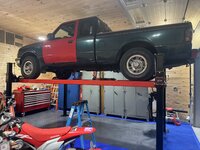
Where do you get the notion that the column type are not adjustable. The cables are routed to the top of the posts and you use those to adjust or square your lift. You have to have adjustments because all lift cables will stretch over time. Mine is dead nuts level across the bridges and the ramps. Every few months I double check things and make minor adjustments if necessary. Some advantages to the column lift is they don’t wobble if they are not anchored and when they are on the stops there is no tension on any cable or hardware. If you have an un-level floor you can shim the base as needed. The advantage of the ladder type is you don’t need to shim anything with an un-level floor. The disadvantage is you have to anchor it if you don’t want it to wobble and a lot of weight is held by the ladder bolts. Yes they are rated to handle the weight. If you buy a Bendpak or similar with the ladders then I would not be worried. A lot of people on here are cheapskates and buy no-name junk. Those would concern me. Like are you really getting properly graded hardware etc? BTW my Backyard Buddy is ALI cerified.Then it wouldn't be adjustable (an upgrade).
James
racecougar
Well-known member
Nieusence = several more steps?It's several more steps.
Correct, if your floor is level, the adjustable lock ladders don't offer much benefit for you. In that case, I'd focus more on other upgrades, like hidden/protected lock linkages, cables tucked into the columns, etc. BTW, I skipped over it before, but your statement in post #19 is not correct. The runways should not be supported by the cables when all the way down.If the floor is level the stops built into the posts are already level ready for use and there's no need for the extra adjustments.
Yup.It is possible Bendpak used engineers to design the HD-9 four post lift with ladders hanging inside the posts. It started making 4 post lifts over 40 years ago. The HD-9 is one of few 4 post lifts with ALI certification. You can still screw it up by not setting it up correctly so all 4 locks engage and disengage at the same time, but that is installer error in my opinion.
By "column type", I'll assume you're referring to the square tube or "boxed" style. Those do not have adjustable lock heights. Cables are adjustable on all.Where do you get the notion that the column type are not adjustable. The cables are routed to the top of the posts and you use those to adjust or square your lift. You have to have adjustments because all lift cables will stretch over time.
Yes, you've explained the benefit of the upgrade (additional feature above and beyond) in your post here.The advantage of the ladder type is you don’t need to shim anything with an un-level floor.
logical
Well-known member
I am not sure I understand the wobble. Both designs have clearances for what ever is sliding up and down, in, out, or around the columns. Some no doubt are more stable than others but is it really inherent to the style?
logical
Well-known member
Why would you ever need to do it a second time. If it's OK if it can't be done, why would it need to be done just because you can?It doesn't have to be adjustable if its on close to level floor to begin with and if it needs to be adjusted that much it's one more thing to deal with if you're someone who moves the hoist around. So it's more of a nieusence then an upgrade.
Where do you get the notion that the column type are not adjustable. The cables are routed to the top of the posts and you use those to adjust or square your lift. You have to have adjustments because all lift cables will stretch over time. Mine is dead nuts level across the bridges and the ramps. Every few months I double check things and make minor adjustments if necessary. Some advantages to the column lift is they don’t wobble if they are not anchored and when they are on the stops there is no tension on any cable or hardware. If you have an un-level floor you can shim the base as needed. The advantage of the ladder type is you don’t need to shim anything with an un-level floor. The disadvantage is you have to anchor it if you don’t want it to wobble and a lot of weight is held by the ladder bolts. Yes they are rated to handle the weight. If you buy a Bendpak or similar with the ladders then I would not be worried. A lot of people on here are cheapskates and buy no-name junk. Those would concern me. Like are you really getting properly graded hardware etc? BTW my Backyard Buddy is ALI cerified.
James
I wasn't referring to the column type in general , I was referring to the locking part of it thats been discussed. One style the slots are solidly part of the column, the other type is separate and needs to be adjusted the same as the cables.
Last edited: