To avoid these ads, REGISTER NOW!

Concrete / Anchor / Lift discussion

hammlm

Well-known member
Joined
Jun 21, 2005
Messages
677
Location
SE PA
It's time for me to get a lift. I'm undecided among scissors, max jack or quick jack. But that is the topic of another thread.

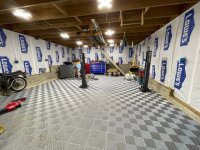
If I decide to go the MaxJack route, I have a suspicion that my concrete does not meet the thickness specification. And, I think it's probably cracked (it's under RaceDeck that has been down for 11 years) in the vicinity of the post placement.

So -- If I go this route, I'll need to cut out some of the floor and place new concrete (appropriate thickness, with rebar, and keying it, etc..) in the areas of the post. No problem there.

My question is, would I be better off *carefully* placing anchors in the concrete during placement, or should I wait until it's fully cured and then drill for the wedge-type anchors that are included from BendPak?

If the best approach is to place the anchors ahead of time, what's the best solution in terms of anchors? Brand, type, features are all things I'd like to hear about from those that really know.

Thanks!
 
To avoid these ads, REGISTER NOW!

Junkman

Well-known member
Joined
Dec 18, 2006
Messages
6,656
Location
Northeastern CT
If you are going to replace the concrete to create a better footing for the MaxJack posts, I would drill the anchor holes as soon as the concrete is hardened to the touch. It will be easier to drill the holes in the fresh concrete than to wait the month it takes for the concrete to fully cure. Don't install the anchors in the holes until the concrete is fully cured. Only have the holes ready to accept the anchors.
 

racecougar

Well-known member
Joined
Jan 26, 2021
Messages
5,197
Location
Missouri
Do you intend to ever move the lift in the future? A big upside to MaxJax is that they are intended to be portable. If you set your anchors when you pour, you're only recourse is to cut the anchors if you move the lift.
 
OP
H

hammlm

Well-known member
Joined
Jun 21, 2005
Messages
677
Location
SE PA
If you are going to replace the concrete to create a better footing for the MaxJack posts, I would drill the anchor holes as soon as the concrete is hardened to the touch. It will be easier to drill the holes in the fresh concrete than to wait the month it takes for the concrete to fully cure. Don't install the anchors in the holes until the concrete is fully cured. Only have the holes ready to accept the anchors.
This is exactly the kind of advice I was looking for here - makes so much sense, but I wouldn't have considered that. Thank you @Junkman
 
OP
H

hammlm

Well-known member
Joined
Jun 21, 2005
Messages
677
Location
SE PA
Do you intend to ever move the lift in the future? A big upside to MaxJax is that they are intended to be portable. If you set your anchors when you pour, you're only recourse is to cut the anchors if you move the lift.
Interesting -- I intend to use the portability feature of the lift and stow it when not in-use. I hadn't considered it relocating the lift to another garage or a different spot in the garage. I guess I would just buy new anchors if I did that. Good stuff, thanks.
 

racecougar

Well-known member
Joined
Jan 26, 2021
Messages
5,197
Location
Missouri
Interesting -- I intend to use the portability feature of the lift and stow it when not in-use. I hadn't considered it relocating the lift to another garage or a different spot in the garage. I guess I would just buy new anchors if I did that. Good stuff, thanks.
Even if you're just stowing it when not in use, I'd recommend recessed anchors so that you don't leave behind a trip hazard.

 
OP
H

hammlm

Well-known member
Joined
Jun 21, 2005
Messages
677
Location
SE PA
Right. Exactly how I intend to proceed, if the answer is "drill and use wedge anchors". I was only trying to convey that if I actually move it (to another location), I'd probably buy new anchors and not pull out the existing wedge anchors --- or the ones I set in wet concrete if I go that way. Appreciate your feedback, and it all helps as I noodle through this.
 

Hooked

Well-known member
Joined
Sep 24, 2010
Messages
445
Location
League City, Texas
If you are going to replace the concrete to create a better footing for the MaxJack posts, I would drill the anchor holes as soon as the concrete is hardened to the touch. It will be easier to drill the holes in the fresh concrete than to wait the month it takes for the concrete to fully cure. Don't install the anchors in the holes until the concrete is fully cured. Only have the holes ready to accept the anchors.
Looks like I screwed up (again....lol). When I had the slab poured for my metal building the crew made a mistake on the anchor bolts in one corner. Discovered the mistake when we were setting the corner frame so I cut those and installed new anchors (drill and install with epoxy). This was over 20 years and it held through hurricane Ike so hoping my mistake doesn't bite me down the road.

Thanks for the insight. Learn something new everyday and the reason I read almost every thread completely.
 

racecougar

Well-known member
Joined
Jan 26, 2021
Messages
5,197
Location
Missouri
That's what I came here to find out.... what, if any, are the recommended anchors if I place them at time of concrete.
The only anchors that I can picture wet-setting are the typical L-bolts. Again, that results in a trip hazard when you move the lift.
 

wssix99

Well-known member
Joined
Mar 2, 2011
Messages
5,166
Location
Chicago, IL
DO NOT wet set anchors. J bolts have failure modes that differ from wedge anchors and you need an engineer to calculate an equivalent replacement. A 3/4" J bolt is NOT an automatic substitute for a 3/4" wedge anchor. If memory serves me, you typically need J bolts to go deeper because the fail in a way where they can just straighten out and worm out the hole under load. (Deeper placement gives them more resistance to this.)

^ The lift companies haven't done this math for you. So, stick to the manufacturer recommended or spec'd anchors and you are golden. If you are getting a lift that is mobile, then the recessed anchors are a great/clean way to go.

I would also NOT drill holes early. The concrete is shrinking (and can form cracks) during the first 30 days. Any hole is going to encourage cracking (through) the hole and would cause you to start over from scratch. Again -> just follow the instructions and process for the lift and you can't go wrong.

Most lifts will come with appropriate anchors, so you will not need to worry about the purchase. (If you have a recessed anchor option, those may come in a special kit with the proper epoxy.) BTW - Epoxy anchors are a tricky thing for lifts also and even more critical to stick to the manufacturer's specs. If you can go with wedge instead of epoxy, that is generally the best way to go, but can't be avoided for the recessed anchor option.

The BEST investment that can be made here is to buy a brand new hammer drill bit and use a good drill. (Rent a heavy duty one if you need to.) Having a brand new bit that drills clean holes will pay for itself vs. taking a chance with an old/worn bit that could lead to oval or oversize holes! If you might drill through rebar, having a rebar cutting bit is also a worthwhile investment.
 
OP
H

hammlm

Well-known member
Joined
Jun 21, 2005
Messages
677
Location
SE PA
Excellent. Thanks. I wasn't going to set j-bolts (for all the reasons, but mostly because of the trip hazard issue. I just didn't know if there were anchors for "wet set" or early placement -- apparently not! Thanks for the all the advice on this.
 

strength_and_power

Well-known member
Joined
Apr 26, 2015
Messages
1,430
If the concrete is coming out, what about making an embed plate with rebar welded to the underside to tie into the slab? Rather than drill and tap the plate, drill the bolt pattern and weld coil nuts to the underside. Cap a piece of tubing and weld those over the coil nuts. Coil nuts/bolts are used in concrete work, securing rigging to tilt wall panels and are designed to be self clearing and designed to be reused. Wedge anchors in my opinion are great if used for permanent anchoring. If a wedge anchor spins out, not much recovering from that. Exposed threads get buggered up, same thing.

* let the, “ you’ll need an engineer sign off etc” comments begin
 

dave*99

Well-known member
Joined
May 5, 2009
Messages
4,290
Location
Coastal NJ
DO NOT wet set anchors. J bolts have failure modes that differ from wedge anchors and you need an engineer to calculate an equivalent replacement. A 3/4" J bolt is NOT an automatic substitute for a 3/4" wedge anchor. If memory serves me, you typically need J bolts to go deeper because the fail in a way where they can just straighten out and worm out the hole under load. (Deeper placement gives them more resistance to this.)

^ The lift companies haven't done this math for you. So, stick to the manufacturer recommended or spec'd anchors and you are golden. If you are getting a lift that is mobile, then the recessed anchors are a great/clean way to go.

I would also NOT drill holes early. The concrete is shrinking (and can form cracks) during the first 30 days. Any hole is going to encourage cracking (through) the hole and would cause you to start over from scratch. Again -> just follow the instructions and process for the lift and you can't go wrong.

Most lifts will come with appropriate anchors, so you will not need to worry about the purchase.
(If you have a recessed anchor option, those may come in a special kit with the proper epoxy.) BTW - Epoxy anchors are a tricky thing for lifts also and even more critical to stick to the manufacturer's specs. If you can go with wedge instead of epoxy, that is generally the best way to go, but can't be avoided for the recessed anchor option.

The BEST investment that can be made here is to buy a brand new hammer drill bit and use a good drill. (Rent a heavy duty one if you need to.) Having a brand new bit that drills clean holes will pay for itself vs. taking a chance with an old/worn bit that could lead to oval or oversize holes! If you might drill through rebar, having a rebar cutting bit is also a worthwhile investment.
I'd like to see this post become a sticky. It's the answer to thousands of posts on GJ aimed at reengineering lift installation.
 

ericm

Well-known member
Joined
Apr 17, 2016
Messages
1,963
Location
Southern Oregon
I'd like to see this post become a sticky. It's the answer to thousands of posts on GJ aimed at reengineering lift installation.

Also every lift manufacturer documents the requirements both for an existing slab and for the replacement slab if you have to cut the old one out. There's no need to wing it.
 

Smoker

Well-known member
Joined
Sep 4, 2009
Messages
167
Location
San Antonio
DO NOT wet set anchors. J bolts have failure modes that differ from wedge anchors and you need an engineer to calculate an equivalent replacement. A 3/4" J bolt is NOT an automatic substitute for a 3/4" wedge anchor. If memory serves me, you typically need J bolts to go deeper because the fail in a way where they can just straighten out and worm out the hole under load. (Deeper placement gives them more resistance to this.)

^ The lift companies haven't done this math for you. So, stick to the manufacturer recommended or spec'd anchors and you are golden. If you are getting a lift that is mobile, then the recessed anchors are a great/clean way to go.

I would also NOT drill holes early. The concrete is shrinking (and can form cracks) during the first 30 days. Any hole is going to encourage cracking (through) the hole and would cause you to start over from scratch. Again -> just follow the instructions and process for the lift and you can't go wrong.

Most lifts will come with appropriate anchors, so you will not need to worry about the purchase. (If you have a recessed anchor option, those may come in a special kit with the proper epoxy.) BTW - Epoxy anchors are a tricky thing for lifts also and even more critical to stick to the manufacturer's specs. If you can go with wedge instead of epoxy, that is generally the best way to go, but can't be avoided for the recessed anchor option.

The BEST investment that can be made here is to buy a brand new hammer drill bit and use a good drill. (Rent a heavy duty one if you need to.) Having a brand new bit that drills clean holes will pay for itself vs. taking a chance with an old/worn bit that could lead to oval or oversize holes! If you might drill through rebar, having a rebar cutting bit is also a worthwhile investment.
If memory recalls J bolts are also designed for shear loading, not tension loading.
 

wssix99

Well-known member
Joined
Mar 2, 2011
Messages
5,166
Location
Chicago, IL
If memory recalls J bolts are also designed for shear loading, not tension loading.
They can hold tension, but with the extra depth required (for them to actually hold tension) and all the great modern options with wedge anchors and (some) epoxy anchors that can be accurately placed after a pour, they don't make a lot of sense except for shear applications.
 

wssix99

Well-known member
Joined
Mar 2, 2011
Messages
5,166
Location
Chicago, IL
If the concrete is coming out, what about making an embed plate with rebar welded to the underside to tie into the slab?
The welds become critical in this application and unless they are perfect, they can fail under tension. A wedge anchor is a zero-fail option if one can drill a hole properly. Making a welded contraption perfectly is very difficult to do with confidence.
 
To avoid these ads, REGISTER NOW!

Dodgeboy2020

Well-known member
Joined
Dec 10, 2020
Messages
45
Location
WI
Maybe I'm missing something (and yes this is GJ afterall) but why do we get these kinds of questions somewhat frequently (often related to vehicle hoists but sometimes other things as well)? The lift manufacturers have spent the time and expertise to tell us exactly what to use and how to use it and yet it seem so many want to find the 'better mousetrap' to anchor the lift in place. I have installed a few hoists over the years, mostly 2 post but a couple 4 post, and have always just followed the instructions including using the provided anchors and don't think twice about it. I walk under a 13K truck up in the air on the hoist and the last thing I want to have to worry about is the darn thing falling down on top of me.

I'm not directing this at the OP specifically but just a general comment/observation. I respect those of us that want to question the hows and whys of things we come across but this is one of those things that just should be left in the hands of the manufacturer in my opinion.
 

threepiece

Well-known member
Joined
Dec 18, 2014
Messages
110
Location
Detroit Suburbs Michigan
The lift manufacturers have spent the time and expertise to tell us exactly what to use and how to use it and yet it seem so many want to find the 'better mousetrap' to anchor the lift in place.
I respect those of us that want to question the hows and whys of things we come across but this is one of those things that just should be left in the hands of the manufacturer in my opinion.
Well, it is important to remember two things here. Manufacturers usually design products with cost in mind, not necessarily to create a robustness. This is where ”engineering” really shines. Also, to increase sales, manufacturers develop products that can be used by a large demographic, not necessarily to those with unusual or special resources available to them.
 

dave*99

Well-known member
Joined
May 5, 2009
Messages
4,290
Location
Coastal NJ
I love the shaming! Sometimes it's just helpful to have a discussion in your very own context and not everyone elses. But if making a sticky helps others, I love that too!
Nothing on GJ attracts a reengineering discussion like a lift discussion.
 

firebirdparts

Well-known member
Joined
Jun 8, 2016
Messages
10,684
Location
Kingsport, TN
Maybe I'm missing something (and yes this is GJ afterall) but why do we get these kinds of questions somewhat frequently
I think it just kinda "seems better". When I bought my lift, it seemed better to me, but what I figured out is that I wasn't willing to place wet anchors with the necessary precision AT ALL. If I had not drilled my holes through the actual lift I would never have been okay.

wedge anchors don't "seem like" they'd be all the strong nor reliable if you've never used them.
 

Beemer

Well-known member
Joined
Jun 21, 2020
Messages
1,424
Location
Northeast
It's time for me to get a lift. I'm undecided among scissors, max jack or quick jack. But that is the topic of another thread.

If I decide to go the MaxJack route, I have a suspicion that my concrete does not meet the thickness specification. And, I think it's probably cracked (it's under RaceDeck that has been down for 11 years) in the vicinity of the post placement.

So -- If I go this route, I'll need to cut out some of the floor and place new concrete (appropriate thickness, with rebar, and keying it, etc..) in the areas of the post. No problem there.

My question is, would I be better off *carefully* placing anchors in the concrete during placement, or should I wait until it's fully cured and then drill for the wedge-type anchors that are included from BendPak?

If the best approach is to place the anchors ahead of time, what's the best solution in terms of anchors? Brand, type, features are all things I'd like to hear about from those that really know.

Thanks!
"Carefully place", LOL.
In a lifetime of designing and supervising construction of buildings there are more cases of misplaced anchor bolts than properly placed ones. It usually resulted in hacking up the steel baseplates and and adding reinforcing to the plates.
The best chance of being in the right neighborhood might be to make a solid template to keep the bolts in place during concrete placement, but I'd say perhaps better off using epoxy set anchors after the fact. Research the specific anchors for the loads that the lift manufacturer requires. The strength of chemical anchors is surprisingly high for major manufacturers like Hilti, Red Head, Simpson etc but research the specific anchors on line because there are so many and capacities vary.
 

threepiece

Well-known member
Joined
Dec 18, 2014
Messages
110
Location
Detroit Suburbs Michigan
I have always had an issue with standard lift mounting. I’m not familiar with what the original poster wants to install, I am referring to two post lifts here.

I have always been suspicious of concrete anchors and relatively small base plates. I worry about deteriorating/rusting anchors loosing hold in the concrete over time. I also worry about integrity of concrete over time as the ground below changes.

I have seen fellows raise vehicles overhead that were clearly way over balance. This practice becomes more dangerous as the lift goes higher. If they don’t heed my warning I leave.
 

firebirdparts

Well-known member
Joined
Jun 8, 2016
Messages
10,684
Location
Kingsport, TN
Well, a 2 post lift certainly puts a big strain on the anchors. They do fall sometimes due to anchor pullout. It's a valid concern.

All vehicles are "over balance" on a 2 post. The columns are independent, even when they don't look like it. Each column has half a car cantilevered.
 

ericm

Well-known member
Joined
Apr 17, 2016
Messages
1,963
Location
Southern Oregon
All vehicles are "over balance" on a 2 post. The columns are independent, even when they don't look like it. Each column has half a car cantilevered.

It would be easy to make the cross bar be a structural member. The fact that they don't must mean that the concrete anchors are a lot better than we think they are.
 

dave*99

Well-known member
Joined
May 5, 2009
Messages
4,290
Location
Coastal NJ
It would be easy to make the cross bar be a structural member. The fact that they don't must mean that the concrete anchors are a lot better than we think they are.
I agree - and they can make an invisible top cross bar like this one too:

1770578157377.png
 

mepstein

Well-known member
Joined
Sep 17, 2010
Messages
1,291
I did a lot of research and read dozens of maxjax threads before installing mine. My suggestion. Make sure the proper concrete is in place. If it isn’t, cut, dig and put down new concrete. Use a real size drill with a proper bit. The drills are easy to rent and the bit is $30-40. Drilling is super easy with the right equipment. It took me about 45 seconds per hole with just light pressure on the drill to guide it. Use the lift base as a template for the holes. Use the epoxy anchors and buy an extra tube of epoxy. Sure the wedge anchors work most of the time and you will check torque from time to time but the epoxy anchors are one and done. No loosening, checking or worry. The epoxy can actually strengthen the concrete vs the wedge anchors digging in to the concrete and damaging it. 10 mounting bolts, epoxied in to good concrete should be worry free for the life of the lift.
 

racecougar

Well-known member
Joined
Jan 26, 2021
Messages
5,197
Location
Missouri
I did a lot of research and read dozens of maxjax threads before installing mine. My suggestion. Make sure the proper concrete is in place. If it isn’t, cut, dig and put down new concrete. Use a real size drill with a proper bit. The drills are easy to rent and the bit is $30-40. Drilling is super easy with the right equipment. It took me about 45 seconds per hole with just light pressure on the drill to guide it. Use the lift base as a template for the holes. Use the epoxy anchors and buy an extra tube of epoxy. Sure the wedge anchors work most of the time and you will check torque from time to time but the epoxy anchors are one and done. No loosening, checking or worry. The epoxy can actually strengthen the concrete vs the wedge anchors digging in to the concrete and damaging it. 10 mounting bolts, epoxied in to good concrete should be worry free for the life of the lift.
The OP needs to be able to easily remove and reinstall the anchor bolts on his MaxJax. The recessed anchors provided with the MaxJax are the way to go here.
 

mepstein

Well-known member
Joined
Sep 17, 2010
Messages
1,291
The OP needs to be able to easily remove and reinstall the anchor bolts on his MaxJax. The recessed anchors provided with the MaxJax are the way to go here.
I don’t think you understand the type of epoxy anchors that are used to secure the maxjax lift. Epoxy anchors are easily removed when desired. The lift is held secure by 5 large bolts that screw into the metal anchors. The anchors are flush to the ground so when the lift is removed, there is nothing above grade. I would want the epoxy anchors over the wedge type even more if removal was desired.
I dont have current pics but while I was installing my maxjax, I set it up so I could easily remove the tower in the middle in case I wanted to park a car on the other side of the lift. If the tower was fixed, I could never get a car in that side with the offset door.
 

Attachments

  • IMG_6527.jpeg
    IMG_6527.jpeg
    193.9 KB · Views: 27
  • IMG_7916.jpeg
    IMG_7916.jpeg
    195.5 KB · Views: 29
  • IMG_7915.jpeg
    IMG_7915.jpeg
    100 KB · Views: 30
  • IMG_7918.jpeg
    IMG_7918.jpeg
    1.5 MB · Views: 30
Last edited:

threepiece

Well-known member
Joined
Dec 18, 2014
Messages
110
Location
Detroit Suburbs Michigan
Each column has half a car cantilevered.
I had never considered this lateral force until I read your comment. My focus has always been on the longitudinal force created when a vehicle is positioned with its centered of gravity not at the columns.

Thinking ahead, it seems prudent then to orient the risers so they oppose each other whenever possible. It’s not a fail safe option but it may help reduce load cycling of the anchors a bit.
 

C-S-H

Well-known member
Joined
Jan 18, 2024
Messages
145
My question is, would I be better off *carefully* placing anchors in the concrete during placement, or should I wait until it's fully cured and then drill for the wedge-type anchors that are included from BendPak?
Cast-in can be best if you build a good jig and template. But hard to go wrong with the drop-in expansion anchors provided by BendPak.
If the best approach is to place the anchors ahead of time, what's the best solution in terms of anchors? Brand, type, features are all things I'd like to hear about from those that really know.
The general pecking order is:
1. Cast-in anchors
2. Post-installed adhesive anchors
3. Post-installed expansion anchors

You can get all three types in female / drop-in style. But check anchor capacity against the lift manufacturer's specified strength.
Lots of companies sell them:
Redhead
Hilti
Dayton Superior
Meadow Burke
Williams Forms
Alp Supply
McMaster Carr
etc.

When I need maximum strength for shear or tension, I use cast-in headed anchors. When post-installed anchors are required I use Hilti HIT RE 500 with rebar or threadbar, and coupler when needed.
 

dave*99

Well-known member
Joined
May 5, 2009
Messages
4,290
Location
Coastal NJ
Cast-in can be best if you build a good jig and template. But hard to go wrong with the drop-in expansion anchors provided by BendPak.
Seems you have extensive knowledge and experience anchoring stuff to concrete. And you are content with the lift manufacturers design. Good stuff!
 

racecougar

Well-known member
Joined
Jan 26, 2021
Messages
5,197
Location
Missouri
I don’t think you understand the type of epoxy anchors that are used to secure the maxjax lift. Epoxy anchors are easily removed when desired. The lift is held secure by 5 large bolts that screw into the metal anchors. The anchors are flush to the ground so when the lift is removed, there is nothing above grade. I would want the epoxy anchors over the wedge type even more if removal was desired.
I dont have current pics but while I was installing my maxjax, I set it up so I could easily remove the tower in the middle in case I wanted to park a car on the other side of the lift. If the tower was fixed, I could never get a car in that side with the offset door.
Gotcha. I was picturing epoxy anchor studs from your post, not recessed threaded sleeves.
 

willymakeit

Well-known member
Joined
Apr 27, 2009
Messages
1,245
Location
Springfield Mo.
What psi concrete are you using for the pad pours? I would go 3500 minimum and 4000 wont hurt. Typically concrete will reach design strength in 7 days [not the same as cure]. A lot will do it in 3-4 days but I have testing for that.
Use the bolts[anchors] recommended] for insurance reasons.
 

Rusted Nut

Well-known member
Joined
Dec 11, 2022
Messages
1,837
Location
Northern Arizona
What psi concrete are you using for the pad pours? I would go 3500 minimum and 4000 wont hurt. Typically concrete will reach design strength in 7 days [not the same as cure]. A lot will do it in 3-4 days but I have testing for that.
Use the bolts[anchors] recommended] for insurance reasons.
Concrete does not typically reach its design strength for 28 days. Depending on mix, you’ll get around 70% in 7 days.
 

Skooterj

Well-known member
Joined
Mar 11, 2021
Messages
752
Location
Indiana
I've never seen(nor looked for) wet set bolt sleeves. Makes sense that they exist, though I have no idea how you keep them clean and clear of wet concrete while also keeping them completely flush. But again, I've never seen them. I can tell you we use wedge anchors in my factory all the time, for really heavy stuff. They hold great, but we never ever try to pull them out when we move stuff. Ideally, we drill all the way through the 12 inch slab, use 6 inch anchor until we move stuff around and drive the anchor bolt flush with a hammer. If the previous install didn't drill all the way through, we cut them as flush as possible them pound them till they flatten out, usually chipping some concrete out with it, then fill the crater with epoxy. I wish we would just use sleeves.
 
To avoid these ads, REGISTER NOW!
Top Bottom