To avoid these ads, REGISTER NOW!

Ding filling in woodwork before painting

lund

Well-known member
Joined
Nov 2, 2019
Messages
795
Location
Michigan
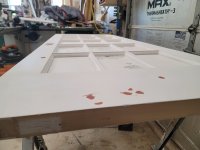
I have been touching up woodwork in my house now that my sons are older and no longer destructive maniacs (and they can now also join in the fixing of their damage ... yea!!). This touch up is mostly painting over numerous bump and scrape dings. Sometimes the wood underneath was compressed without breaking the paint. Other times, the paint (several layers thick) is chipped off over some limited region. If I directly paint over these damages, of course, the result is not so hot up close. So I have been filling and sanding before painting.

First, I tried using drywall compound/mud. That did NOT work well. Drywall mud shrinks too much and sands off too easy when used in thin layers (with a damp wipe after sand before paint) and it also absorbs paint and primer leaving the patches noticeable (both scrapes and dings) under the new paint. Sanding perfectly flat through a few layers of paint, if one would take that approach, is also a lot of work with a messy cleanup. I typically use drywall mud for filling small brad nail holes in new woodwork. That works ok, but is also not so hot due to the shrinkage and absorption issues for larger repairs. But it is easy and good enough (unless very picky) for small brad type nail holes.

Next, with the fail of drywall mud, I tried Bondo type spot and glazing putty:
https://www.amazon.com/3M-Pinholes-Scratches-Hairline-Fiberglass/dp/B0002JM8PY/?tag=atomicindus08-20
This is typically used for auto body touchups. It dries fast (solvent based), sands reasonably well though more effort than drywall mud), and does not appear to change shape via moisture absorption when washing for paint prep and then painting. The end results of this are super. HOWEVER, I find that I need to prime the spots and cover with 3 coats at least (rather than two) to not have the red putty show through the paint (even with high quality trim paint). So it generates more work via the 3 coats of paint. However the Bondo spot putty goes on easy with a putty knife (easy to get little excess to sand) and has very minimal shrinkage on setting. Primer and paint adhere well to it. But if one does any touchup and resand for more spot iterations (often takes another pass when things are quite banged up), then one needs multi-layers blended in at the touch up point where you expose the bright red Bondo again. I think this see through issue does not occur on auto body work to a similar degree since they spray prime and paint several coats very uniformly with spray and they want a color (like the dark red used) to enhance viability of issues in spot touchup before priming and painting.

Do you guys have any suggestions on something that would preform like the Bondo glazing putty and would be less of a problem painting over (just two coats rather than prime + 3 coats)?

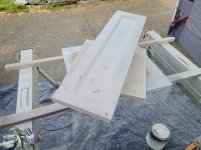
Doors I fixed look like newafter the Bondo chain though. The only real issue is avoiding 3 coast + primer. One door was damaged by my son at 2 ish was playing "fireman" with a plastic axe. He must have dinged the door a hundred times (was kind of humorous at the time so it was hard to get mad at him but it looked like ****). It came out near perfect. I guess option #2 is to paint over everything and let the house have it's history shown. That path of least resistance is the typical path how old houses look like old houses when not extensively renovated. I can see why people do things like replace doors and trim over a lot of scuffs and dings rather than repair them due to the effort and mess (though replacing a lot gets involved too). However, the older woodwork (on doors in particular) is much better quality than all but the most expensive new stuff. So I think it is worth sprucing up.

Thanks in advance for the advice!
 
Last edited:
To avoid these ads, REGISTER NOW!

whateg01

Well-known member
Joined
Mar 13, 2006
Messages
11,366
Location
doo dah, kansas, usa
What kind of paint? Once the paint dries on drywall mud, it can't absorb more paint. If your primer isn't covering the glazing putty, I think you need a different primer/sealer.
 

strutaeng

Well-known member
Joined
Dec 12, 2011
Messages
2,279
Location
Dallas, TX
Try wood filler like Minwax or the Elmer's products.

I've also had really good luck with the 5 minute "hot mud" joint compound on wood repairs and drywall repairs, which I learned about a buddy of mine that's been in the tape and bed business since he was a kid with his Dad. It's technically a Plaster of Paris product. Only mix enough for what you need, and immediately clean your putty knife. Wear a mask when sanding (for any of product actually). On the hot muds, shorter the set time, the less shrinkage and the 5 minute hardly shrinks any.

The 2 part JB Weld epoxy putty or the equivalent for wood also work really good for more deeper repairs. I've used that for exterior deep rot in sills and stuff like that. It's expensive, but beats replacing the entire piece often times.
 

Codyboy

Well-known member
Joined
Jan 31, 2019
Messages
1,665
Location
S.E. TEXAS
Bondo makes a wood filler product and there are other "plastic" wood fillers.

The last one I used was a tube of filler by Minwax or could have been Gorilla. It was a little loose/runny but worked out ok.
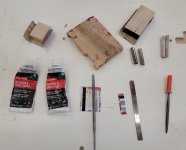
I had to build a form from a paint stir stick as a guide to rebuild a 1x4 corner on a cased opening. Turned out really well and matching the paint was the hardest part. White is not white.
 

Shiftless

Well-known member
Joined
Mar 9, 2014
Messages
14,553
Location
East Bay SFO
The 2 part JB Weld epoxy putty or the equivalent for wood also work really good for more deeper repairs. I've used that for exterior deep rot in sills and stuff like that. It's expensive, but beats replacing the entire piece often times.
I also use 2 part epoxy putty for deep damage like after I dig out rotted areas. For inside work on dinged up trim, I use the red Bondo scratch filler. It sands like a dream. But it does take one or 2 coats of primer prior to the finish 2 coats. My latest job was to repair and refinish a door where a dog was apparently desperately trying to get out for a long time. The Bondo 907 did a fantastic job. It took multiple applications to get it perfect. It does shrink a tiny bit. Tip: You can thin it a bit with acetone and do a skim coat and then sand with 220. I apply with a rubber squeege just like the auto body shop guys use. After spot priming, I primed the whole door, including all 3 sides of trim, light sanded it again and then did 2 top coats. Ended up looking like a brand new door.

A84C570E-5A21-41AC-8781-F9892FBE2040.png
 
Last edited:

Shiftless

Well-known member
Joined
Mar 9, 2014
Messages
14,553
Location
East Bay SFO
I had to build a form from a paint stir stick as a guide to rebuild a 1x4 corner on a cased opening. Turned out really well and matching the paint was the hardest part. White is not white.
That too makes me crazy. I just give up and paint the entire door and/or all 3 sides of the trim.
As long as the piece you finished painting doesn’t actually touch the old painted surfaces, a very slight mismatch on the color won’t be noticed by anybody but you. Let’s face it… even if you come back a couple years later and touch up a painted surface with more paint from the same can you used back then, it won’t match perfectly with color or gloss level and in a critical light situation, you’ll see lap marks.
 

DGersic

Well-known member
Joined
Mar 12, 2017
Messages
6,333
Location
DeKalb, IL
have been touching up woodwork in my house now that my sons are older and no longer destructive maniacs (and they can now also join in the fixing of their damage ... yeah). This touch up is mostly painting over numerous bump and scrape dings. Sometimes the wood underneath was compressed without breaking the paint.

I mostly use Rock Hard Water Putty for wood patching.

IMG_5847.jpeg

For the dents, you might need to rough up the surface first. Give it a better surface to stick to.
 
OP
L

lund

Well-known member
Joined
Nov 2, 2019
Messages
795
Location
Michigan
What kind of paint? Once the paint dries on drywall mud, it can't absorb more paint. If your primer isn't covering the glazing putty, I think you need a different primer/sealer.
The primer covers the Bondo glazing putty. BUT the bright red shows thorough till it has primer and a full 3 layers of paint over it.

I am using Sherwin Williams trim paint (white). It paints well and has high pigment.
 

nadogail

Well-known member
Joined
Jan 23, 2009
Messages
31,969
Location
Coronado, CA
Bondo is sold at all the paint suppliers i have used in San Diego, I use it to hide those places in boards that I choose not to replace.
 
OP
L

lund

Well-known member
Joined
Nov 2, 2019
Messages
795
Location
Michigan
Try wood filler like Minwax or the Elmer's products.

I've also had really good luck with the 5 minute "hot mud" joint compound on wood repairs and drywall repairs, which I learned about a buddy of mine that's been in the tape and bed business since he was a kid with his Dad. It's technically a Plaster of Paris product. Only mix enough for what you need, and immediately clean your putty knife. Wear a mask when sanding (for any of product actually). On the hot muds, shorter the set time, the less shrinkage and the 5 minute hardly shrinks any.

The 2 part JB Weld epoxy putty or the equivalent for wood also work really good for more deeper repairs. I've used that for exterior deep rot in sills and stuff like that. It's expensive, but beats replacing the entire piece often times.

Thanks. I will look into it. I did not consider the quick set mud compounds you mix. That also may make sense as a good intermediate. But generally repairing extensive rot with putty is not a good idea. It is just dings and paint chips in this case.
 
OP
L

lund

Well-known member
Joined
Nov 2, 2019
Messages
795
Location
Michigan
Bondo makes a wood filler product and there are other "plastic" wood fillers.

The last one I used was a tube of filler by Minwax or could have been Gorilla. It was a little loose/runny but worked out ok.
I had to build a form from a paint stir stick as a guide to rebuild a 1x4 corner on a cased opening. Turned out really well and matching the paint was the hardest part. White is not white.

I may try this in some experiments and see how it sands etc.
 

mechcsu

Active member
Joined
Oct 7, 2011
Messages
42
I like 3M High Strength Small Hole repair. It has the primer already mixed in with it but you might find it too similar to the drywall mud you already tried.
 

whateg01

Well-known member
Joined
Mar 13, 2006
Messages
11,366
Location
doo dah, kansas, usa
The primer covers the Bondo glazing putty. BUT the bright red shows thorough till it has primer and a full 3 layers of paint over it.
That's a contradictory statement. Either the printer covers or it doesn't. If the primer is less expensive than the topcoat I would apply another coat of primer. Or get a putty that isn't deep red.
 

four.cycle

Well-known member
Joined
Oct 19, 2015
Messages
28,953
Location
Tacoma, Washington
One used to be able to buy "Spackle" in a powder form. Unfortunately that no longer appears to be the case.

In lieu of Spackle (in powder form) the next best option is a product called "Fix-it-All" (formerly known as "Fix-All"), which comes in a powder form.

Instead of water, use Marine Spar Varnish. Mix to a constistency of a heavy paste. Lay on with a good knife, making sure to level it out nicely, leaving a feathered edge.
Shrinkage will be minimal.
Sanding the stuff is damn near impossible - it will load up 120-grit paper in a jiffy. Drop to 80-grit and you'll see the scratch marks on the finished piece. Again - lay it on nice and level with the knife.

Works way better if you're working on a primed surface, although the Marine Spar Varnish will provide enough adhesive property to the mix that 90% of the time you can lay it right into bare wood and you're good. You will need to prime it before painting, of course, or you'll end up with that "shiny spot" where the fix was.

This trick was passed on to me by Don Feitz, former owner of Lincoln Hardware. Works great. Lot of work, but the patch will stay put and not fall out when the door is slammed. (y)
 

jar944

Well-known member
Joined
Jul 26, 2010
Messages
5,931
Location
Northern VA
The reason to use 907 is specifically because it's fast drying and easy to sand. Anything harder than the wood or primer sands more slowly and leaves a surface defect that is visible.

Just use more primer.
Screenshot_20260626_125449_Gallery.jpg


1st primer coat and point up with 907
Screenshot_20260626_125515_Gallery.jpg


Second primer coat
Screenshot_20260626_125524_Gallery.jpg
 

four.cycle

Well-known member
Joined
Oct 19, 2015
Messages
28,953
Location
Tacoma, Washington
^ true, one can use "Bondo".
Unfortunately, it's RED, and being red, it requires three coats of primer to hide it.

The "Fix-it-All" and Marine Spar Varnish mix will be a buff color - not white, but not brown - and will cover with one coat of primer.
The "trick" is laying it off with the knife as though you were finishing it - you want to keep the sanding to an absolute minimum.
 
To avoid these ads, REGISTER NOW!

jar944

Well-known member
Joined
Jul 26, 2010
Messages
5,931
Location
Northern VA
^ true, one can use "Bondo".
Unfortunately, it's RED, and being red, it requires three coats of primer to hide it.

The "Fix-it-All" and Marine Spar Varnish mix will be a buff color - not white, but not brown - and will cover with one coat of primer.
The "trick" is laying it off with the knife as though you were finishing it - you want to keep the sanding to an absolute minimum.

That was covered in 1 coat of primer, 2 total.
 
OP
L

lund

Well-known member
Joined
Nov 2, 2019
Messages
795
Location
Michigan
I mostly use Rock Hard Water Putty for wood patching.

IMG_5847.jpeg

For the dents, you might need to rough up the surface first. Give it a better surface to stick to.

Thanks. I may experiment with that and see how it works in terms of sanding and show through when painting. But "rock hard" does not sound good for easily sanding the fills -- which along with low shrinkage and fast setting (both of which is great for Bondo spot putty) is essential to making it a fast and reasonably easy process.
 
Last edited:
OP
L

lund

Well-known member
Joined
Nov 2, 2019
Messages
795
Location
Michigan
"Bondo" comes in different colors...

Tan is pretty easy to paint over

Ah ... I will have to look for it in other colors. I just bought what was on the shelf at WalMart and it was the same red color I remember as a kid doing some car body work. I assumed that it was only available in that color.

Thanks.
 
Last edited:
OP
L

lund

Well-known member
Joined
Nov 2, 2019
Messages
795
Location
Michigan
The reason to use 907 is specifically because it's fast drying and easy to sand. Anything harder than the wood or primer sands more slowly and leaves a surface defect that is visible.

Just use more primer.
Screenshot_20260626_125449_Gallery.jpg


1st primer coat and point up with 907
Screenshot_20260626_125515_Gallery.jpg


Second primer coat
Screenshot_20260626_125524_Gallery.jpg

Thanks. I agree multi-coats of primer and more patience might be the best answer if I cannot get the bondo in other colors as mentioned by PCustoms. I gather you are spraying the primer also and spraying may work a bit better than brushing it. That is the same situation in an auto body shop where they put a few spray coats over with good uniformity ... so they choose colors where you can see the fills easily to help with sanding prep.
 
Last edited:
OP
L

lund

Well-known member
Joined
Nov 2, 2019
Messages
795
Location
Michigan
One used to be able to buy "Spackle" in a powder form. Unfortunately that no longer appears to be the case.

In lieu of Spackle (in powder form) the next best option is a product called "Fix-it-All" (formerly known as "Fix-All"), which comes in a powder form.

Instead of water, use Marine Spar Varnish. Mix to a constistency of a heavy paste. Lay on with a good knife, making sure to level it out nicely, leaving a feathered edge.
Shrinkage will be minimal.
Sanding the stuff is damn near impossible - it will load up 120-grit paper in a jiffy. Drop to 80-grit and you'll see the scratch marks on the finished piece. Again - lay it on nice and level with the knife.

Works way better if you're working on a primed surface, although the Marine Spar Varnish will provide enough adhesive property to the mix that 90% of the time you can lay it right into bare wood and you're good. You will need to prime it before painting, of course, or you'll end up with that "shiny spot" where the fix was.

This trick was passed on to me by Don Feitz, former owner of Lincoln Hardware. Works great. Lot of work, but the patch will stay put and not fall out when the door is slammed. (y)

Anything not sandable seems likely to be a poor option to me. That will likely result (outside of maybe brad holes) in a fairly visible repair. I tried Fix-All for other repairs some years back and did not get good results overall. But I may have done a poor job mixing or applying it. I recall it is hard to sand even with power sanders.
 
Last edited:
OP
L

lund

Well-known member
Joined
Nov 2, 2019
Messages
795
Location
Michigan
Spot prime it until you can't see the red.

Thanks. That is reasonable. I was using very light primer in spots to blend without seeing any raise underneath. That was probably not wise and resulted in 3 paint coats being needed. I can do a couple of primer blend coats fanning out and avoid 3 full paint coats. Others mention white and gray bondo being available and I can try that and combine it with with a little more priming. That might work out best. The bondo spot putty works fantastic so with a better color choice and priming that may be safest to stick to.
 
OP
L

lund

Well-known member
Joined
Nov 2, 2019
Messages
795
Location
Michigan
I use the bondo spot putty, it's the easiest option I've found.
20260411_204904.jpg20260418_133349.jpg

Thanks. My use is close to yours with more dings. I agree it works fantastic and the only issue is the red color.

Several mention it being available in tan and gray and that successive priming coats (maybe spot fanning out) might help. I will likely try those to speed up the repainting. At least my sons are no longer elite level door and door frame manglers!
 

gahrajmahal

Well-known member
Joined
Dec 12, 2008
Messages
2,537
Location
Cincinnati, Ohio
I believe I have Icing, polyester glaze filler. You mix it with a hardener just like bondo. It sets up within five minutes or less. It is white with a pale green hardener. It should cover with one coat of primer. Bigger holes I use the Water Putty. I had a vintage table with fragile plywood legs that was missing some pieces. Once I had the legs securely attached I filled the voids with the water putty, then I carved it back to shape, primered and painted with Chalk paint.


PCustoms

Well-known member
Joined
Jul 23, 2011
Messages
23,072
Location
VT
Ah ... I will have to look for it in other colors. I just bought what was on the shelf at WalMart and it was the same red color I remember as a kid doing some car body work. I assumed that it was only available in that color.

Thanks.

Yep, different color fillers and different hardeners.

I have tan/gold filler and blue right now, so green "Bondo"

You can get white or clear hardeners.

But your issue is not enough primer
 

four.cycle

Well-known member
Joined
Oct 19, 2015
Messages
28,953
Location
Tacoma, Washington
Anything not sandable seems likely to be a poor option to me.
Well, if it's going to involve sanding it later, yes. On the face of an old kitchen drawer, however, if you lay it down nice and smooth, just a bit of flash sanding will level it off, and you can prime and paint it.
I wouldn't advise using it for large areas, because you've got to apply it and get it leveled off before it begins to set up - and even using the oil base varnish, it's not enough time for big areas.
I've never tried the "Bondo" option. Sounds interesting. Just never tried it.
 

PCustoms

Well-known member
Joined
Jul 23, 2011
Messages
23,072
Location
VT
To each there own, but mixing dry filler and a puddle of varnish doesn't sound like the greatest option.

So many purpose made fillers, especially the epoxy materials for outdoor use.
 

DGersic

Well-known member
Joined
Mar 12, 2017
Messages
6,333
Location
DeKalb, IL
Thanks. I may experiment with that and see how it works in terms of sanding and show through when painting. But "rock hard" does not sound good for easily sanding the fills -- which along with low shrinkage and fast setting (both of which is great for Bondo spot putty) is essential to making it a fast and reasonably easy process.

“Rock Hard” is the name. In practice, it sands like a softwood.
 
OP
L

lund

Well-known member
Joined
Nov 2, 2019
Messages
795
Location
Michigan
Yep, different color fillers and different hardeners.

I have tan/gold filler and blue right now, so green "Bondo"

You can get white or clear hardeners.

But your issue is not enough primer


I looked a little. For Bondo Spot Filler Putty (no mixing, fast dry and easy sanding: designed only for thin coats), I am finding it is only available in the deep red color:
The spot filler putty works fantastic for purpose: fast setting, no mixing, easy to sand, and no shrinkage. BUT if you are not spraying a lot of coats (multiple primer and/or top coats) the deep red can show through. I am brush painting the doors and trim white with thin coats. For auto applications, I suspect for auto applications the dark red spot putty color is no issue: and the deep red color helps pick up where it is for touch up and multiple spray coats are used. For brush priming, it may take several coats (I was giving one light primer coat and that has not been enough) with fan out or full surface priming to not be visible. Another big problem for me is I tend to do iterations with rounds of extra fill and spot sand: I tend to notice more dings after the 1st round and try to spot those which requires a lot of prime and paint again fanning out. That becomes a PAIN with more bright red exposed on the touch up with a lot of layers needed to fully cover the new red spot filler.

I looked around and found this possibly similar product to automotive bondo spot filler that is **white** and hopefully easier to cover:
https://www.amazon.com/dp/B003P6I5KS?tag=atomicindus08-20
This is about 2x more expensive (per ounce, bigger tube) than the auto stuff above. I ordered some and will try it. Hopefully this will be similarly easy to use and easier to cover with brushed paint relative to the automotive spot filler putty. If so, it will be worth the extra cost for what I am doing. I will try to let people know if this works since it may help others with similar problems. I suspect I am not the only parent trying to recover from door and trim damage due to indoor play from active kids who are now sufficiently past their peak destructive stages to dare making repairs !
 
OP
L

lund

Well-known member
Joined
Nov 2, 2019
Messages
795
Location
Michigan
For small dents and depressions, you might try steaming them out first....

I use the method you describe with stained and varnished furniture that is high quality to be worth sprucing up. That can work for modest dents. I use a wet cloth and soldering iron for the steaming and make a few passes, then sand, carefully touchup stain to match, and finally touch up or redo surface finish (lacquer or whatever). That can work surprisingly well. BUT it takes a big amount of time per ding (!), and does not address paint scuffs. In door and molding woodwork repairs, most of the damage from dings remains under an unbroken paint layer that would also need to be carefully removed to expose the wood grain for steaming. All in all, this would take far too much time to repair many (hundreds) of door and molding dings in my case (thanks kids!). Maybe I could chain my now teenage sons to areas and demand they be fixed as described before freedom ;) But I think I would quickly have a revolt and/or end up locked up by some protective services agency !!
 
OP
L

lund

Well-known member
Joined
Nov 2, 2019
Messages
795
Location
Michigan
“Rock Hard” is the name. In practice, it sands like a softwood.

Ok, may be worth a try then. I am will be trying another product though first (see my other reply to another person above) that appears to be close to bondo spot filler putty in properties but is white so it may work out well. That product is more expensive than I was wanting. But if it works well like bondo spot putty while being easy to paint over, that may be ok since it will save a lot of effort on the several pass iterative fixes I am doing.
 
To avoid these ads, REGISTER NOW!
Top Bottom