Having two compressors tied into the main air line doubles your air receiver capacity. And is a highly effective way to optimize a compressed air system, especially for high-volume, intermittent tools. This upgrade drastically changes how your system stores and delivers air, altering your compressor's motor duty cycle and run times. It's best to stage the two compressors. The second compressor cuts in when the pressure falls below set point.
The heart of my compressed air system consists of two 80 gallon vertical five HP compressors that are piped together. Devair and Benpack. I run the Devair compressor 24 hours a day year round. Except when I leave town. When the first compressor drops below 110 pounds. The Bendpak compressor kicks in. Delivering twice the CFM output. That only happens when I'm sandblasting or using the 1” air impact wrench. The compressors are located in the large detached garage.
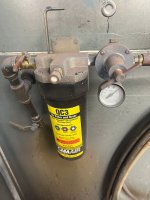
Moisture, oil, and dirt are the enemy in any compressed air system. Each tank has an auto drain valve at the bottom that's timed at 30 minute intervals to drain off any water in the tank. The compressed air first passes through a coalescing filter that removes oil, water, and contaminants. Then enters the refrigerated air dryer that extracts gaseous water vapor to ensure completely dry. Followed through a second particular filter before exiting to the shops in 1" black pipes to each of my seven garages. Braided rubber hose run under ground through 2" PVC pipes to the other buildings. Each of my six garages have 1" main runs that are routed on top of the ceiling joists. Most of the 1/2" steel drops are hidden in the walls, between the siding and drywall. For precaution the paint booth has a Devilbiss Camair filtration system that'll remove any missed contaminants.