To avoid these ads, REGISTER NOW!

How to fix wallowed out backhoe mounts? Kubota backhoe

Slowboat

Well-known member
Joined
Nov 5, 2010
Messages
609
Location
Green Mountains
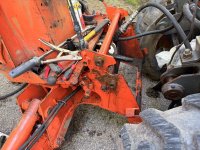
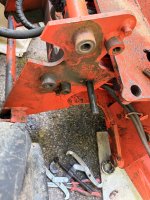
I recently purchased a Kubota L35 with BT900 backhoe. There is a fair amount of slop in the backhoe mount. I have gone through the top of it and everything is decent. Finally decided that my slop is in the bottom hook/rest mounts. The hooks are part of the frame and pretty wallowed out. The “pins” the sit in them are also worn down, but it is a welded rod and part of the hoe frame.

How should I build back up the material? It doesn’t have to be a perfect fit, but the better it is, the less slop in the system.

I have a small plasma cutter and a mig welder.

Options I see
  • mig on material and grind down
  • Cut a tube in half and weld in (or use as a grind guide)
 

Attachments

  • IMG_5102.jpeg
    IMG_5102.jpeg
    574.4 KB · Views: 114
  • IMG_5103.jpeg
    IMG_5103.jpeg
    570.7 KB · Views: 109
  • IMG_5029.jpeg
    IMG_5029.jpeg
    751.1 KB · Views: 112
To avoid these ads, REGISTER NOW!

RoninB4

Well-known member
Joined
Jul 22, 2020
Messages
3,582
Location
Under My House
The hooks are part of the frame and pretty wallowed out. The “pins” the sit in them are also worn down, but it is a welded rod and part of the hoe frame.
-Do the hooks need to be aligned to one on the other side? Seems like it would but your photos don't show a pair. Is taking the frame components off to machine them possible? The "pins" need a similar but different solution.
How should I build back up the material? It doesn’t have to be a perfect fit, but the better it is, the less slop in the system.
-If there's a working pair then this needs to be part of the solution.
Options I see
  • mig on material and grind down
-If there's a working pair that needs alignment with each other then free hand grinding (while maintaining alignment) will be a bit difficult. Not impossible but not easily done either.
  • Cut a tube in half and weld in (or use as a grind guide)
-JMO but I'd be more inclined to oversize the hook and drop in bushings with a round bar that hold the bushings in alignment. Weld, pin, or use fasteners to hold them in place and then cut out the segment needed to open them. Welding in half of a tube will get deformed when welding it. You'll also need to bear in mind that if this is a pivot surface that it will wear down over time so bushing material (or weld material) should be chosen with wear in mind. My suggestions may not be good ones, I'm not there and can't determine what the entire assembly looks like or how it functions. More info might get a better reply.
 
OP
S

Slowboat

Well-known member
Joined
Nov 5, 2010
Messages
609
Location
Green Mountains
Can't believe the seller didn't tell you about this!
I knew all about this on my own. Took me 1.5 days to get the levers unfrozen and off the machine and to get the top part working. I had assumed the slop was due to the top being seized, but this is all bottom end wear.
 

Attachments

  • IMG_5023.jpeg
    IMG_5023.jpeg
    965.9 KB · Views: 86
  • IMG_5019.jpeg
    IMG_5019.jpeg
    1.1 MB · Views: 78
  • IMG_5031.jpeg
    IMG_5031.jpeg
    767.2 KB · Views: 88

Firebrick43

Well-known member
Joined
May 12, 2015
Messages
14,111
Location
West central Indiana
We used graphite rods to repair wallowed out drawbar holes. slip the rod in the hole, clamp it in place and weld. We used two old machinist clamps to hold the rod. One clamped onto the rod itself lightly and the other to clamp that clamp to the bottom of the drawbar.


I have heard of guys using copper rods but I have never used them, although I have used copper backing plates to fill **** joints or build up an edge and it has worked

The trick for you is to hold them in correct alignment.

You would need to bevel it out a little before you start so you can get the electrode down where it needs to be. Weld half depth from one side and then the rest from the other.
 

cannuck

Well-known member
Joined
Nov 30, 2021
Messages
4,647
Location
Rural SK
You can't just cut a piece of tubing and stick it into the worn area - because the worn dimension is not round - but oval on fore and aft axis. The only way to fit such a bushing would be to fly cut (bore) to bushing OD, weld the length in place then saw cut from the entry slot to open up to re-establish the slot. Would be an expensive nightmare. IMHO the right solution is to laser cut 2 new hooks, cut the existing off and weld new ones in place.
 

larry4406

Well-known member
Joined
Jan 27, 2006
Messages
19,383
Location
Northern Virginia
You can't just cut a piece of tubing and stick it into the worn area - because the worn dimension is not round - but oval on fore and aft axis. The only way to fit such a bushing would be to fly cut (bore) to bushing OD, weld the length in place then saw cut from the entry slot to open up to re-establish the slot. Would be an expensive nightmare. IMHO the right solution is to laser cut 2 new hooks, cut the existing off and weld new ones in place.

Never heard it describe that way...
Line boring?

Cutting Edge Engineering (YouTube) shows line boring on many of his videos where he restores worn holes like this. Temporary arbors are welded in place and then a shaft fitted. A welding head is then spun on the shaft to weld up the oblong holes by some amount. Weld head removed, lathe type tooling installed, then the holes are bored concentric restoring the original alignment.

Not sure how DIY that approach is....
 

PCustoms

Well-known member
Joined
Jul 23, 2011
Messages
23,144
Location
VT
Line boring?

No, fly cutting an ID to match and OD...

Aside from a weird way to phrase it, though maybe technically correct, as cannuck pointed out it's not a round bushing so boring wouldn't fit anything.

Backyard fix: build it back up with filler, use a cardboard template and die grinder to get the profile close but oversized. Final passes with hard face rod.
 

RoninB4

Well-known member
Joined
Jul 22, 2020
Messages
3,582
Location
Under My House
I had assumed the slop was due to the top being seized, but this is all bottom end wear.
-It appears (to my eyes) as though somebody has already had a go at some problems by welding....and wasn't very good at it. Tubing insert/inlay? You'd want a real thick wall tubing to avoid distortion and the material most tubing is made from is on the soft side IMO for a pivot surface. I don't think (from my limited understanding of the assembly in photos) line boring is required here but an alignment factor will be. This isn't a +/- .003 fitment tolerance of shaft-to-bushing. It's slow speed rotation so it could be described as a "running fit" with alignment factoring in.

-The OP will have to estimate his/her skill level at hand grinding, welding ability, and how much labor intensive operations are worth the time and trouble. From my days working with Ag-Con machinery this looks like a fairly standard repair process. Never said it will be easy but it's not a show stopper either. Perhaps @zkdiesel might want to weigh in on this?

-Cutting out/off the hooks and welding on new ones is an option, provided there's the means to cut through/out the old ones. This also risks the only reference (OEM locations) even if it's somewhat worn. Welding in new bushings (rod aligned) will be more tedious but perhaps less chance of entirely losing the OEM attachment location or needing to open the ID bores very much.

-There's still the possibility of working each point in pairs off the machine but the OP hasn't volunteered this info.

-Available equipment (access to a lathe?) and "eye of the beholder" opinion of what's the best approach can only be answered by the OP.
 

RoninB4

Well-known member
Joined
Jul 22, 2020
Messages
3,582
Location
Under My House
Aside from a weird way to phrase it, though maybe technically correct, as cannuck pointed out
-Not to be contentious but I have on occasion done boring with a fly cutter when the shop boring head was incapable of reaching the diameter required. A square HSS bit and tedious advancement of the cut achieved a final +/- .0015 tolerance. It's a PITA but that was the best option
it's not a round bushing so boring wouldn't fit anything.
-A round bushing (better material selection) could be fit to the area (hand grinding) under alignment. Welded in. pinned, or secured with fasteners (for ease of replacement or welding skills are lacking) and then cut out the top segment of the bushing so it's open.
Backyard fix: build it back up with filler, use a cardboard template and die grinder to get the profile close but oversized. Final passes with hard face rod.
-This may be the only fix the OP decides upon. My suggestions are tedious and labor intensive. My suggestions may be absurd, what do you think?
 

Gmonkee

Well-known member
Joined
May 9, 2010
Messages
2,848
The ancient Case 580 series with hook and clamp on backhoe setup were about the same. Just a bit bigger. We were asked to weld one permanent as the tractor was already half cobbled to death.
He wasn't good going to remove it ever, it was the primary use.
 
To avoid these ads, REGISTER NOW!

NUTTSGT

Super Moderator
Staff member
Joined
Sep 14, 2009
Messages
51,026
Location
Northern Central Ohio
Weld it up, grind it till it fits


It’s a clamp on fake back hoe. Good enough is fine
Probably what I would do unless replacement parts are easily found and cheap at the orange dealership.

Another option if they are replaceable is a tractor junkyard. There's a local place that does this.
genes » Page 1 of 7 https://share.google/XO0TH9pCYm8Iig2v9
 

john.k

Well-known member
Joined
Jun 4, 2024
Messages
1,155
Weld metal is much harder and tougher than pipe (try to hacksaw weld and pipe).........although I once worked at a place the boss had me reconstruct small dozer sprockets with pieces of pipe ......good enough to sell it.
 

Dumber than lumber

Well-known member
Joined
Dec 19, 2015
Messages
1,920
I recently purchased a Kubota L35 with BT900 backhoe. There is a fair amount of slop in the backhoe mount. I have gone through the top of it and everything is decent. Finally decided that my slop is in the bottom hook/rest mounts. The hooks are part of the frame and pretty wallowed out. The “pins” the sit in them are also worn down, but it is a welded rod and part of the hoe frame.

How should I build back up the material? It doesn’t have to be a perfect fit, but the better it is, the less slop in the system.

I have a small plasma cutter and a mig welder.

Options I see
  • mig on material and grind down
  • Cut a tube in half and weld in (or use as a grind guide)
There is a young guy on Youtube with a channel called Classic Work. Have you watched any of his stuff.
He is something of a miracle worker + a genius (well, that might be an exaggeration). Anyway, he specializes in solving problems like yours. https://www.youtube.com/results?search_query=classic+work
 

zkdiesel

Well-known member
Joined
Oct 6, 2013
Messages
8,361
Location
chicagoland cornfields
So you weld up the hole, and then cut it back to size, right?

How do you bore a slot/U?
With a boring bar and jigs. It’s all welded on alignment stuff in the field. The boring bar just won’t be removing material on the top….

But this is not a line bore job as far as cost/function. This is 20 minutes with a welder and grinder job. Line bore guy won’t have his tools all out and alignment jigs tacked on before I’m out digging with it again
 

PCustoms

Well-known member
Joined
Jul 23, 2011
Messages
23,144
Location
VT
With a boring bar and jigs. It’s all welded on alignment stuff in the field. The boring bar just won’t be removing material on the top….

But this is not a line bore job as far as cost/function. This is 20 minutes with a welder and grinder job. Line bore guy won’t have his tools all out and alignment jigs tacked on before I’m out digging with it again

I know, on both accounts.

Genuinely curious though, and the expert before you didn't reply, how would they handle the interrupted cut and straight section if they did like bore this?
 
Last edited:

RoninB4

Well-known member
Joined
Jul 22, 2020
Messages
3,582
Location
Under My House
how would they handle the interrupted cut
-An interrupted cut is a somewhat common occurrence in boring and lathe work. Does this affect the cut? Yes but we're not aiming for close tolerance work here. There are techniques for close tolerance boring on an interrupted cut but that's a different discussion.
and straight section if they did like bore this?
-I've made a couple of suggestions but perhaps you weren't asking me directly so I'll stop here.
 

Gmonkee

Well-known member
Joined
May 9, 2010
Messages
2,848
Having worked on a 1942 vintage drill press of the industrial size that had been used as a mill with special bits we made, I do understand line boring for new bushings and such.

I have spent many hours of my life doing it on ruined backhoe buckets.
We might replace the plate with new, fill weld or overbore for bigger bushings depending on the job. Running the bore bar through weld was the worst option.
Working with new steel for new mounting plates the best. We could get it near perfect.
 

RoninB4

Well-known member
Joined
Jul 22, 2020
Messages
3,582
Location
Under My House
Running the bore bar through weld was the worst option.
-Cutting through weldments almost always risked trashing the cutter in the process. It may be a faster method to lay fillet for buildup but machining it could be unpredictable (depending upon the filler used).
Working with new steel for new mounting plates the best. We could get it near perfect.
-Seems like more trouble to some but I prefer using new steel too. Laying in a new plate also allows the option of choosing a separate bushing material that would hold up longer than most plate steels will. A flanged bushing could even be fastened to the plate (drilled and tapped) for easy replacement.
 
To avoid these ads, REGISTER NOW!
Top Bottom